El-Tanein Diet

Womans Hand Taking Food From Cafe Table With Dips And Drinks

I don’t do diets, not the ones that are temporary fixes at least. Your diet should refer to what you are ingesting on a daily basis, not the starvation fads that cut out entire food groups. It is essentially what you’re putting in your system’s fuel tank and is your primary source of energy. I pride myself on being someone who has a lot of self-control and discipline but that is catapulted out the window when it comes to food and all things cheese. Unfortunately, munching on a box of Cheez-its while vegetating on the couch does not go unpunished when trying to maintain a healthy lifestyle.

And so comes the challenge: how to make better eating choices while sticking to a regular active routine. How painfully boring and trendy this quinoa-loving way of life has become but becoming a chia cheerleader is not the point. It’s about being fit.

After spending a few years behind an iMac screen for hours on end and my metabolism turning the ripe age of 27, my physical fitness is not at its peak. Ever since I started boosting my hours at the gym, I’ve been feeling stronger and tighter. Even though I do more reps now, have a Fitbit, and use 3kg baby-weights instead of the 1.5kg I started with, I still can’t tell if it’s really working. I have yet to really keep track of my progress and when you don’t keep track, you may not be pushing hard enough. Your body adapts and you have to shake things up again.

TOOLS

Gym: Membership that includes various classes, home treadmill
Wearables: Fitbit Flex, iPhone 5S
Apps: Fitbit, Nike+ Training Club, Nike+ Running

GOALS

  • Do regular push-ups (I currently do modified bent-knee)
  • Plank for 2 minutes straight post-cardio
  • Lose 12kg by January 12, 2016 (2kg/month for ~6 months)
  • Work my way up to 6kg weights
  • Wear shorts to the gym without feeling the jiggles

Accountability is an effective tactic when it comes to motivating someone to change their behavior. It’s the main reason I can’t do DVD workouts. Besides the fact that a group’s energy is contagious, I need the public shaming to keep me going when I start to slow to a stop. El-Tanein Diet* is going to be my weekly post about my fitness journey. Every Monday, I’ll post about my week’s activities, total steps, weight loss, cheat meal and cheesy inspirational lesson. I’ll also try to throw in one outdoor activity to share. You don’t have to follow or read it but putting it out there will make me feel bound to an invisible contract (and audience) that will keep me in check. I’m not Serena, but whatever effort I put in, I’m #betterforit.

*a Lebanese phrase that roughly translates to “Diet on Monday” and is said out of guilt after hoovering an entire table of mezze over the weekend. However, the diet never comes and is always a Monday away.

Wake-up Calls

Courtesy of Death to Stock Photo

Courtesy of Death to Stock Photo

There are some conversations that serve as wake-up calls. You may not notice them when they happen and the person you’re talking to may not realize that they’re snapping you out of a hypnotic routine. They’re not telling you anything you don’t already know but they’re a human catalyst forcing you to react and turn off autopilot. Below are 3 of my own.

Spring 2007
I had wanted to change the major on my enrollment card before starting my first year at AUB but decided to give pre-med a try. Worst case, I would transfer to architecture after a semester. But every term, I’d start out strong, get encouraged to stick to it, and then steadily plummet to mediocrity by the time finals rolled around. In this particular class of my second pre-med semester, I had survived my 3rd quiz of organic chemistry with Dr. Kaafarani. By survived, I mean my average was now suffering thanks to tanking on the last quiz before the final.  Kaafarani noticed this trend and asked me how I was doing in my other classes. I told him the truth, that I was doing very well in anything that wasn’t pre-med and it wasn’t something I was used to since I had always been a high-achiever. “Have you ever considered pursuing a major in humanities?”

When someone says that in our society, especially an instructor, it’s as if saying you’re not good enough for the science route. But coming from him and the way that he asked about my academic history, interests, and saw that I could perform well, it seemed he was telling me what would take me another 2 years to be convinced of: I could do it but I just didn’t want it badly enough. I graduated from AUB and went into the design program at LAU that same year.

June 2014
I had just finished up with an AIGA ME event at Coop D’etat for Beirut Design Week. A couple of expats had joined me for some beers so we could all catch up with each others’ lives. I was talking about my job and what I wanted more of, where I saw myself going, and what I wanted to do when my friend said, “you’re living in your worst case scenario right now.”

Where I was, at that moment, was an option that would always be available to me. If I tried to go do something else for a little while and it didn’t work out, I could return to my safety net. Home wasn’t going anywhere. But if I didn’t try to explore the possibilities in front of me, I would not move forward. I would be accepting the back-up as if it were the only path I could be on. The next day, I asked for a transfer to another office within my company’s network. It didn’t work out but it got the ball rolling.

February 2015
I’ve previously posted about this particular wake-up call. Following the passing of a high school friend and then a girl in my gym class, the words of the instructor struck a chord. He told us,“tell the people you love that you love them when you can.”

Nothing new or profound about that statement but, in retrospect, it may have been a combination of things that made his words give me chills after an hour of cardio. Love is the sole motivating force behind everything I do and I’ve always felt that you should put your entire heart into every action. That month, I was feeling stuck in molasses, trapped in a repetitive cycle that even a quick trip to Dubai couldn’t break. I was losing my drive, my passion, my self. This wake-up call was more about time, how little of it is spent wisely, and how much of it is invested in the wrong places or people. Eventually, I resigned from my job so that I could take advantage of my abilities, my privileges, and my future but, in order to do that, I wanted to have some say in the present.

I don’t know if these examples are as monumental as I’m making them seem here; like I said above, they’re usually triggers to thoughts that were already cooking, coming to a steady boil. Still, they are the sparks that light the fire under you and we could all use some heat to catapult us out of complacency. Feel the burn.

Old Beirut’s New Walking Tour

IMG_5871

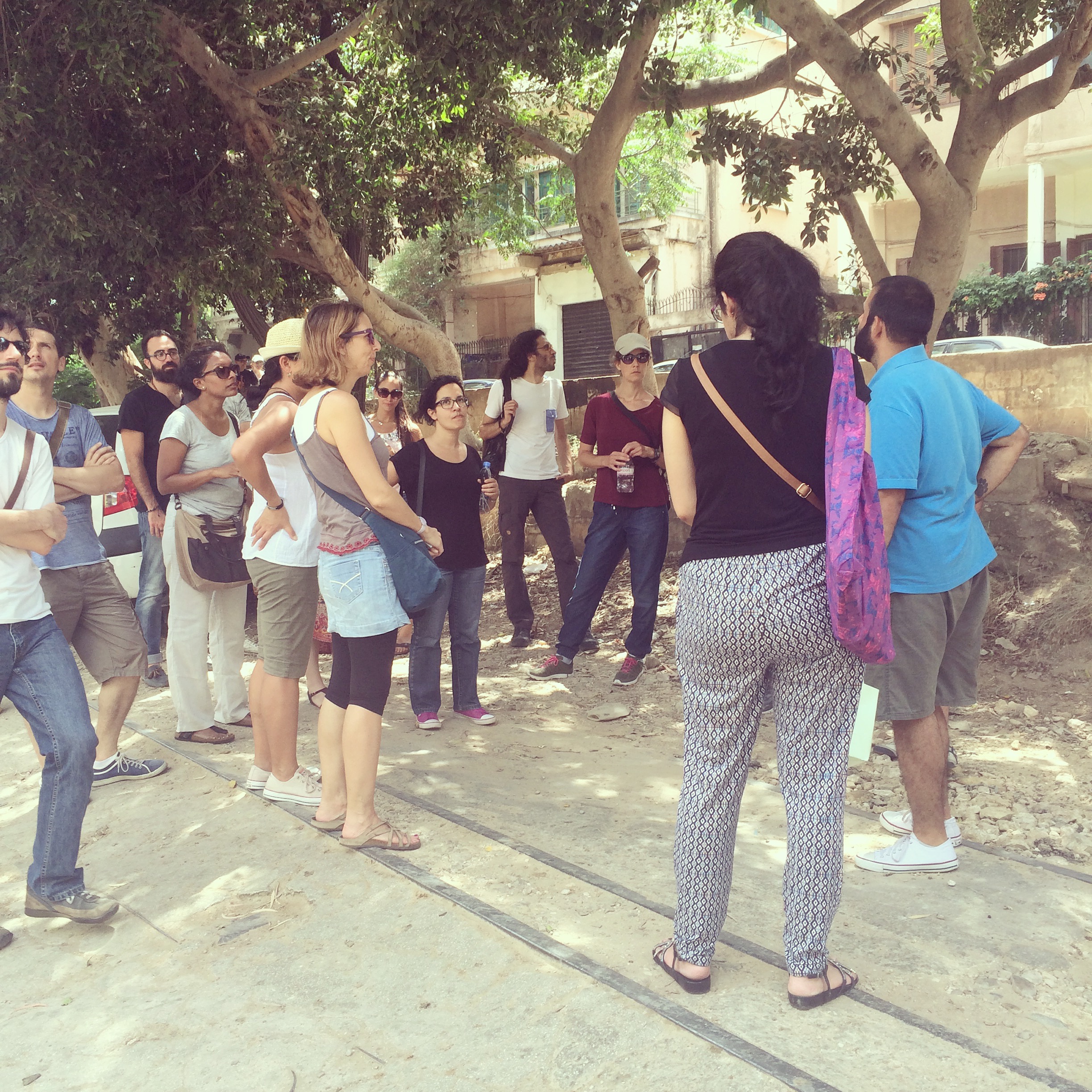
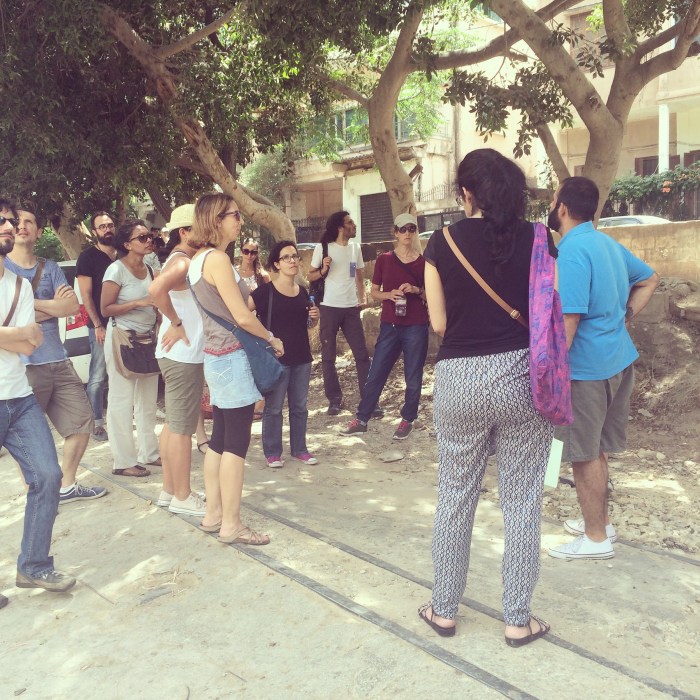
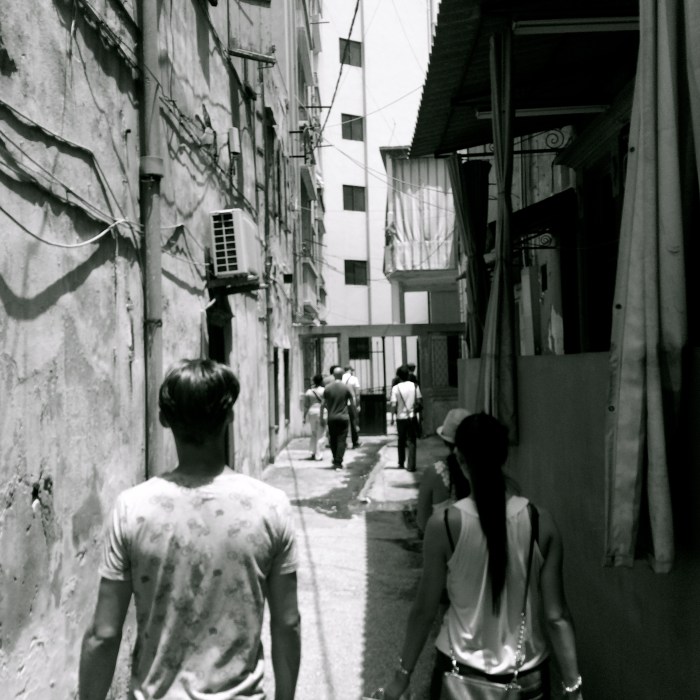
Elie, our guide, is the one in blue. Note the train tracks!

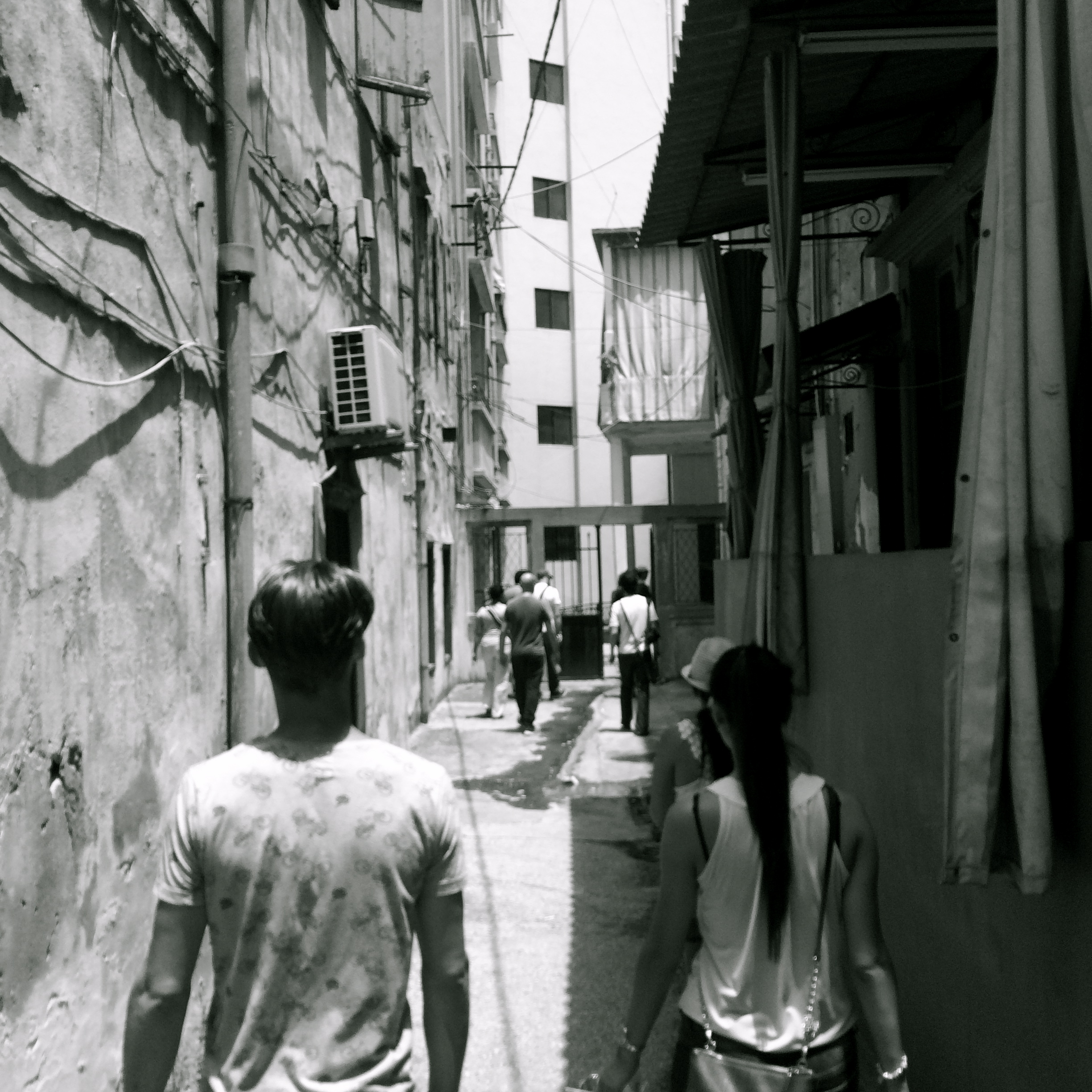
Seeing parts of a city on foot seem to be an effective way of really getting to know a place and its history. Because you’re guided by a seasoned resident, the experiential aspect of walking through an alley while being told a story lets the information stick, giving simple streets new layers of existence.

A little over a month ago, I came across a Facebook page for a walking tour of old Beirut. I’ve been on different ones in the past few years – Beirut, Mar Mikhael, Tripoli – all enriching in their own ways. I texted Elie and saved a spot for this past Sunday.

You may wonder why someone would go on a walking tour of the city they live in. Being someone who’s behind the wheel most of the time, it’s hard to appreciate the nooks and crannies of streets you take everyday, not to mention the ones you don’t. If you’re a driver like I am, you rarely get to look out the window and admire what’s around you (other than the scooters you’re trying to avoid) or know what they’re about. And you don’t get to see it through the eyes of visitors or share your view of it with them. The exchange is the most fascinating part about perusing a location with strangers. Besides, as a resident, I want to know as much as I can about my own country.

This Sunday walking tour lasts 5-6 hours and starts in the middle of Ashrafieh. It cuts through Geitawi, Gemmayzeh, Mar Mikhael, breaks at Coop d’etat, and finishes in Bourj Hammoud. Being someone who frequents Ashrafieh a lot and worked in that area for a couple of years, I already knew my way around and was pretty familiar with where we wandered. Elie, who started giving tours about 2.5 months ago, says that the aim is to get people to share stories and talk to each other; he insists “I’m not a tour guide and I’m not about to be.” If that’s the case, then it’s right on the money. The mix of foreigners and Lebanese nationals created conversation about history, relations, food, religion, and politics. I liked seeing what people already knew about Lebanon and what they were surprised to find out upon visiting.

The walk concludes with a meal at Badguèr, an Armenian Heritage Center in Bourj Hammoud. The center was founded by the Mangassarian family and tries to promote artisans and Armenian culture. The restaurant gets their ingredients from the ladies of Aanjar and all the food is prepared in an old-fashion homey kitchen. It was a great setting after a long day; the perfect relaxed way to bond with new companions.
IMG_5862

Bits & Pieces from the Day:

– The meeting point was on Charles Malek Ave at 12:30 pm by the Sagesse school gate across from Leil Nhar. All the foreigners showed up early and proceeded to wait for one tardy Lebanese attendee, staying true to our respect for punctuality.

– A multinational group of 9 was from Doctors Without Borders. Magda, a woman from Mexico City, asked me about the diaspora, the brain-drain, and a typical day in the life of a Beiruti. She saw a lot of parallels between her home and Beirut: the love/hate push/pull of a chaotic city.

– A guy from the Netherlands is here interning for Bassma, a Turkish NGO dedicated to empowering families. He’s interested in international development and said, “Lebanon’s the perfect place to learn about that.” Indeed.

“That’s the most spiritual I’ve ever felt walking into a church and I’ve been to a lot of churches,” said one tourist after walking into the St. Georges Orthodox Church by the St. Georges Hospital (Moustashfa Al-Roum)

– A woman from Finland landed a week ago. She’s here to spend a year working with UNHCR and seems to have already fallen under Beirut’s spell. We were passing by Electricite du Liban when she told me, “I feel like if I had always lived here and I had to leave, I would miss this.” Some people are born here, live here all their lives, but don’t feel that way. And yet, to others, Beirut is the lover you can’t forget.

– Gemmayzeh is named after the Arabic word for sycamore tree (jumayz) because the street used to be filled with them years ago.

The streets of Bourj Hammoud have the same names as the streets of Armenia. I was mistakenly labeled as an Armenian resident of Ashrafieh because I knew about the Laziza brewery and taught the table how to eat mante. #proudchameleon

– Gibran Khalil Gibran and Nabih Berri both attended College de la Sagesse in Ashrafieh.

– Madame Arpi of Badguèr, while talking about the importance of a culture’s language, told us about an Armenian saying that I loved: “Even if you forget your mother, don’t forget your mother tongue.” 

Overall

In comparison to WalkBeirut, the Old Beirut Walk is less researched. It’s more like a friend taking a group through his neighborhood. It’s less structured, a tad less informative in terms of hardcore facts. Again, I’m not a fair judge since I am someone who has spent a lot of time in Ashrafieh; however, for a first-timer in the area, it’s a fine dose of Beirut’s character. Getting access to the Mar Mikhael train station would be an excellent addition to the stops included so attendees can see it during the day in its frozen glory (rather than at night in a club setting).

More residents of Lebanon should attend these tours because you become an additional tour guide and each one of us has their own basket of stories to tell about Lebanon. By attending, you give your unique take on the place you call home, learn about other nationalities, and you may even make some new friends, here and abroad.

Elie is hoping to expand the tour into Sodeco, Monot, and Basta but is looking for interested guides. Stay updated on upcoming tours here – the fee along with dinner/drinks will cost ~$40.

10 Signs You’re a Lebanese Designer

DeathtoStock_Clementine6-2

Courtesy of Death to Stock Photo

1. You frequent coffee shops based on their internet connection, not their coffee. That, and their interior decor. If you can pretend you’re in Brooklyn or Berlin, then you’re a loyal customer. This is why Urbanista is designer headquarters; it’s got the best wifi and if you stay there long enough, you’ll eventually feel like your #deskfortheday is across from Central Park on Lex.

2. The words “hipster” and “designer” are not interchangeable although you are the token-hipster amongst your non-designer friends. This has nothing to do with the fact that you like fedoras, plaid shirts, and craft beer. One pair of fruit socks does not a hipster you make. Okay maybe it does? But it’s not your fault H&M released a Coachella collection in Lebanon. You only shop there for basics anyway. And Balmain in November.

3. Papercup and Antoine Stationery are places you cannot visit if you are past the 20th of the month. If you do, you will not be eating until your next paycheck because you pulled a Carrie Bradshaw and bought a design biannual issue that costs $40. You don’t need another Moleskine notebook, a Rifle Paper Thank You card, or Choux a la Creme stickers. It’s best to stay away otherwise you’ll be caressing paper goods like you’re in a romcom sponsored by Fabriano.

4. If you identify yourself as an illustrator, you probably wear Converse. If you’re an art director, you have at least one pair of Nike AirMax. And if you’re a fashion designer, you probably own one pair of laced up brogues. If you’re just a creative in general, you have all three.

5. You use yamli.com to get words typed in Arabic.

6. As an undergrad, you interned at a top ad agency and you a) decided that that’s what you’ll do for a few years b) despised it and went to work in a boutique design firm in an old house in Gemmayzeh with high ceilings c) eventually left the country to do your Masters in Milan, Amsterdam, or the States

7. You’ve never bought original Adobe CS software (or any other software) because your university/office/Interlink installed it for you.

8. Your MacBook Pro had the price tag of a small used car. It is your child and if it were to ever get hurt, you would sit in the corner wondering which organ to sell to replace it.

9. Working on anything bilingual makes you go cross-eyed because Arabic and Latin have different rules when it comes to typography. Let’s not even mention the existence of trilingual briefs.

10. Your Teta still doesn’t know what you do. As far as she’s concerned, you’re a “drawing engineer” which got her approval because it means you studied هندسة. Thanks Yamli.

Bourdain: Off-Balance in Beirut

Being a fan of “No Reservations” and other various food-travel TV shows, I was very excited to see Anthony Bourdain’s take on his 3rd visit to Beirut. After reading his thoughts on it and seeing the teaser flood my Newsfeed, it looks like we were all hoping for the visual version of what he says below:

“We soon met lovely people from every kind of background. We found fantastic food everywhere. A city with a proud, almost frenetic party and nightclub culture. A place where bikinis and hijabs appeared to coexist seamlessly — where all the evils, all the problems of the world could be easily found, right next to and among all the best things about being human and being alive.

This was a city where nothing made any damn sense at all — in the best possible way. A country with no president for over a year — ruled by a power sharing coalition of oligarchs and Hezbollah, neighbor problems as serious as anyone could have, history so awful and tragic that one would assume the various factions would be at each others throats for the next century. Yet you can go to a seaside fish restaurant and see people happily eating with their families and smoking shisha, who in any other place would be shooting at each other.”

When you read this, you expect that Bourdain is going to tell the world’s greatest love story. I couldn’t wait for YouTube. I streamed it last night. After watching all 42 minutes, the first word that comes to mind is heavy.

It’s not that he didn’t show an accurate side of Lebanon, it’s that he stressed more on one than the other. A massive refugee population, a strong resistance party fighting in Syria, and ISIS in our backyard. All true. After all, we were recently named the no.1 country with the most refugees/1000 inhabitants. BUT,  there are other “parts unknown” that Bourdain didn’t highlight which is a major disservice for a country that already has a negative connotation in the media. Just ask Jad Aoun.

What bugged me was his episode didn’t look any different than what is normally featured on CNN: a statue of the Virgin Mary followed by a slow pan of a lingerie ad in a window, a duality common to their productions involving anything Lebanese. The channel tends to present Beirut in a very polarized manner: we’re either the really sexy party-animals of the Levant or a war-ravaged diamond lost in the backward ways of the Arabian peninsula. In Beirut by Samir Kassir, the city is described as “a convenient stopover on the road to the romance of the East, far enough from home that travelers could claim to have penetrated a remote world, but one that at the same time was agreeable enough to dissuade them from pressing on into the interior.” Yup, that sounds about right. That’s what I was told Singapore was to the rest of the Far East: the right ratio of West and East so that you felt like you were comfortably away from home.

He did state that his first visit to Beirut made him feel like his shows needed to be about more than just food:

“I came away from the experience deeply embittered, confused—and determined to make television differently than I’d done before. I didn’t know how I was going to do it—or whether my then network was going to allow me—but the days of “happy horseshit”, the uplifting sum-up at the end of every show, the reflex inclusion of a food scene in every act, that ended right there.”  

But seriously, where was the food? He’s done Beirut food episodes so maybe he was trying to look at it with a new lens, serving us another installment of his experience here. Nothing featured in the episode was an untrue depiction of our city. Bourj el Barajneh and Dahieh are not our finest areas but they’re still part of Beirut (Greater Beirut) and we cannot deny what exists just because it isn’t shiny or flattering. It was a straight dose of what we’re currently dealing with. The only thing Bourdain is guilty of is not showing both sides of the coin for viewers who’s first helping of Bourdain’s Beirut would be this episode alone. That, and using the ski-and-swim-in-one-day cliche. Just no.

The beauty of Beirut is that it is home to destruction and decadence, a playground for the unfortunate plight of Syrian refugees, the vacationing Arabs of the gulf, and the rainbow of multifaceted Lebanese people. There was a lot missing if he was going to go the socioeconomic route: where was the talk about our activists fighting for equal human rights and heritage? The focus on the gentrification/development of the creative hub of Mar Mikhael that doesn’t solely revolve around hip-hop music, but also includes an old train station, design studios, and an at-risk semi-private garden? The start-up ecosystem brewing here? Hanna Mitri’s homemade ice cream? Our culinary game isn’t just about kibbeh neyyeh.

I’m sure Bourdain would’ve been bashed if he only talked about Joseph’s shawarma and parties at Garten/Decks/Grand Factory. It is a challenge to find a balance when talking about Beirut’s pros and cons – but it’s an even bigger challenge to capture them all on film and pack them into 42 minutes. He ended it nicely. I’ll give him that.

“Everybody should come here. Everyone should see how complicated, how deeply troubled, and yet at the same time, beautiful and awesome the world can be. Everyone should experience, even as the clouds gather, what’s at stake, what could be lost, what’s still here.”

I read through some of the episode’s comments on his Facebook page. Bourdain’s team did not include enough of what the Lebanese think of their own city and he’s definitely hearing what they think now. I just hope that the Lebanese people are as honest with their country’s reality as he was. We should keep in mind that, like the bullet holes in the buildings, we don’t see everything the way an outsider would. He was off-balance when it comes to showing the world what Beirut is about but let’s make sure we don’t do the same mistake when we defend it.

Now can someone tell me where Broasted Rizk is?!

You Have Your Lebanon

IMG_3417

And I have mine.

Sietske, a Dutch blogger who’s been in Lebanon for ~20 years, recently posted about the tendency we have to sulk about our “situation.” It is a topic that I’ve discussed with my friends on multiple occasions: how there is an inclination for some nationals to diss Lebanon, be it from home or abroad.

Well, guess what? I can’t have that. You may have your Lebanon and I may have mine but, to the outside world, they are one and the same.

By being Lebanese, or a citizen of anywhere, you are effectively a representative of your nation. This does not mean that you gloss over its problems, pretend that it’s perfect, or downplay the serious obstacles that are incessantly popping up there. It does mean that you put these problems into their historical context, that you try to create understanding with an audience that may be misinformed or not know enough to pass judgment, and that you contribute to the inspiring image that your country can have if you let it.

Part of why Lebanon’s golden age is considered the 60’s is because that period’s been praised and talked about so much since then. How about instead of focusing on a time when Lebanon used to be glorious, we put the same amount of energy into portraying the greatness that Lebanon has today?

When someone asks you about Lebanon, if you answer with all the negatives and are quick to deem it a sinking ship, then you are choosing the easy route. This place can be difficult to defend and there is resentment. You feel that you should not be expected to be loyal to a place that never did anything for you but give you severe road rage, an overpriced lifestyle, and a useless passport.

I can sympathize with those who tease our system, our politics, our obsession with religion. I’m entertained by it just like anyone else who understands how aggravating these things can be. It’s comforting, in a way, to laugh it off when it feels like that’s all that can be done. On the other hand, when you nag just for the sake of it, you are filling a cesspool that does not need replenishing. If you are not satisfied with what is happening (or what isn’t happening) in the country, then there are three options: take action, stay silent, or leave. However, if you do leave, try not to trash the place that shaped you as an individual.

If you are abroad and you’re talking smack about your country, painting an ugly Monet of what we are, then you are being ineffective as citizens. You are lucky that you had the option to pursue other opportunities that may not have been available to you in Lebanon but you are not better than any other Lebanese person just because you left. Leaving does not mean that what you’re saying about the country has no relation to you. You are still Lebanese.

The more you insult your place of origin, the more you give others the right to do the same because it clearly doesn’t bother you since you agree with them. As a result, you’ve perpetuated the Let’s Take a Crap on Lebanon trend.

Let me put it like this: it’s like when you rant about how annoying your sibling is. Only you can complain about her annoying dietary preference for gluten-free no-wheat-flour falafel. As soon as your audience joins in on the bashing, it’s suddenly not okay anymore. It’s also similar to how some girls allow themselves to be called “bitches.” You using the term does not mean that you claimed ownership and made it empowering. It means you’re okay with its use, its derogatory connotation, and you’re indirectly saying “I’m fine with you using this term to describe me.” That’s exactly what you’re doing by allowing someone to call Lebanon a failure. You’re saying you’re okay with them calling you a failure. Should you be critical of its development, its government, its progress? Absolutely, but it should be constructive criticism and come from a place that hopes for more. Is it cosmopolitan, organized, and solid? No. But what you say about your own country, the place that is intertwined with your identity whether you like it or not, is a reflection of your character.

You are an ambassador of Lebanon to the world; after all, the best byproduct this country ever produced was the people that came from it. If the country has not made you proud, then prove that you are worthy of something better. Show others that this place that “still suffers from the echoes of civil war” is not a place that births damaged people. Change what it means to be Lebanese by being successful regardless of what your country couldn’t do for you. Prove that being from Lebanon is a strength, not a curse. Tell Lebanon’s story. Doing otherwise just makes me (and the rest of us) look bad and I won’t stand for someone falsely representing what I am. Stop associating my country, my heritage, and my identity with everything you (and I) don’t want it to be. Start embracing who you are or should be: a member of the community that is pushing back.

The Launch of Maktoub 3 Loubnan

IMG_0313

The more I toy with the idea of leaving Lebanon, the more I realize how many Lebanese have gone through the same contemplation at one point or another. Many left and many returned but most stayed in their new adopted homelands, setting up a life and roots for the future. What I find peculiar about our diaspora is how connected one becomes with the country after leaving it. This is not special to us alone – after all, you can’t be homesick if you never leave home. But beyond the undying tie to the land, for once, you find people identifying themselves as “Lebanese” rather than as a member of a sect or political party. Why must we leave to create this kind of solidarity with the one thing that unites us all together?

Thinking about how spread out my fellow nationals are led me to start this project:
Maktoub 3 Loubnan. I want to create a record of those who were once here or feel linked to Lebanon by paper, blood, or memory. If you’re Lebanese and not living in Lebanon at the moment, please send a postcard indicating your new homebase to the address below:

Maktoub 3 Loubnan
P.O. Box 16 – 7115
Sassine Square
Beirut, Lebanon

All I ask is that you share a written memory of Lebanon and send it home. I want to unite these memories and share them with the world. I want to tell the story of who Lebanon has given to the world and what Lebanon has given to its people.

Postcards will be uploaded on the photoblog under the same name effectively building a visual archive of the Lebanese diaspora.

Care to be a part of it?

For the Love of Airports

IMG_3963 copy

Although the 3-hour cab rides through the heart of Moscow and the layovers in Istanbul are not always thrilling (not to mention the malfunctioning digestive system side effects of cabin pressure), there was one aspect of travel that you admired in a detached way as if you were a narrator of a Woody Allen film. An outer-body experience that made it feel as if this was the kind of thing you would be explaining to your grandkids one day because they would be of the public space-shuttling generation and they would find these transatlantic journeys so primitively historic. Then again, you were supposed to be of the flying-car generation so who knows what travel will really mean in the decades to come.

You want to roll through an airport and have the narration in your head begin as you people watch, where are they from? Where are they going? A father asks you to photograph him and his daughter in Frankfurt Airport. The little girl has a fabric bracelet with the Jamaican flag colors. What language are they speaking? It’s not French. Where is her mom? Maybe they’re divorced. You try to go Sherlock on them and read their story through their mannerisms and nonverbal behavior, appearance, and clothing. A group of high-schoolers are lining up. Their teacher is screaming who’s on the waiting list and passing out passports to kids in oversized hoodies emblazoned with various college acronyms and university crests. What a strange and fascinating place an airport can be. A stopover where all people abide by a system as if there is a guidebook of rules as to how one is to internationally travel. It’s the one ritual that all citizens do in the same way: carry-ons, portables, chargers for our devices, check-in counters, baggage claims, money exchange. Don’t even think about packing the cosmetic scissors.

And then you observe a foreign city from the air. Residents going about their days because your existence does not relate to theirs. Where are they driving to? All these people living their lives completely unaware that you’re flying over them heading to some plant nursery in Bucharest. I wonder if the driver in that white sedan on the highway is happy. I wonder if he looks up at my plane climbing overhead and thinks, ‘I wonder where that plane is heading. I wonder if the girl on that plane is happy.’ Lives continuing simultaneously while we throttle across the sky and into the clouds. Parallels physically and figuratively.

You spend hours next to strangers, at gates or in lounges or even onboard budget flights that make you feel like you’re flying in a recycled Pringles tube with wings. You judge your neighbor by whether or not they’ve heard of your home country, the notorious troubled Lebanon, that exotic sliver of hedonism and resilience hidden in the bosom of the Arab and thus, conservative Middle East. Beirut usually gets more recognition, although not knowing that it’s a capital (not a country) doesn’t exactly sedate your fears of where the education system is heading. Either way, bonus points if they show geographical knowledge not just polite interest in your brief exchange before either one falls asleep or puts on headphones. Another internationally recognized symbol for travel for please leave me alone, thanks. 

IMG_3980

You find yourself missing cities as if they were people you know. With all of your friends relocated to opposite ends of the earth, you’d think you were not looking for more to miss – the roster should be full by now. And yet, you are longing for breakfast on Brooklyn rooftops, a walk through Gorky Park, and a lazy cappuccino before the Dubai Mall fountains start their sunset dance. You’re homesick for places that were never home and wishing that you didn’t find comfort in those washed-out Tumblr photos with the word wanderlust scribbled in handwritten font across the center.

But maybe, it isn’t wanderlust. Maybe it’s just curiosity and the need to see beyond your balcony or border. Maybe it’s embracing another place’s magic and your own home’s chaos. Maybe it’s just about feeling like you’re part of humanity. That every place can be part of your story that some other person at an airport is trying to read off of you.

A Community without a President

DSC_0534

Today marks two anniversaries for Lebanon: 15 years since the liberation of the South and 1 year since the beginning of our presidential vacuum. Twelve months of a second round of headless chicken syndrome and yet, I find that there are signs that Lebanon’s community is still there. We are still pushing forward, trying to create a country out of what we have.

Instead of having Lebanon associated with suicide bombings, political ambivalence, or whether or not it can withstand the increasing number of refugees, there is evidence that this place is made of more than the troubles it carries.

It seems there is more to a country than the person who runs it – there is its people.

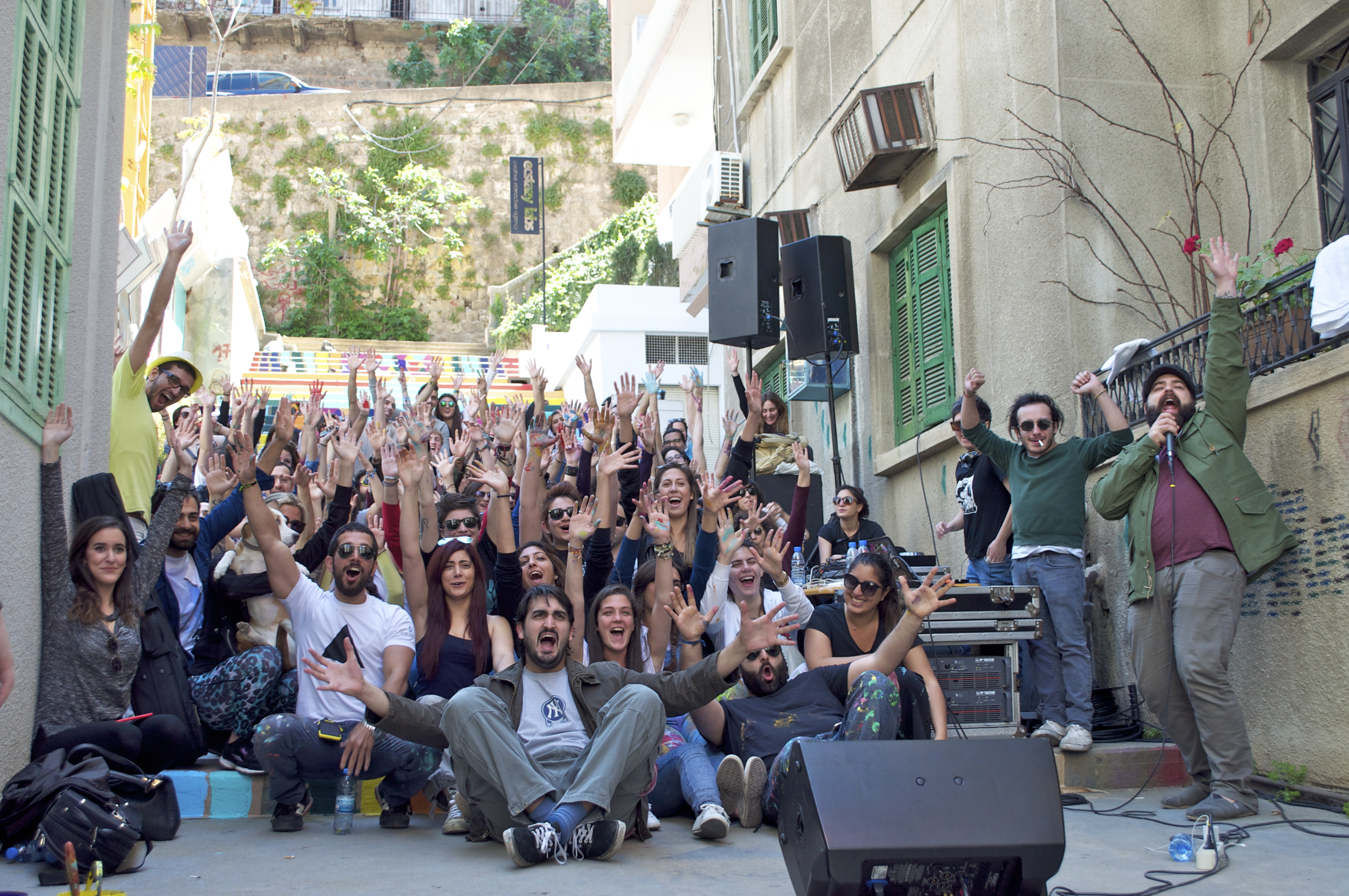
The community is those who are fighting against domestic violence. They are the youth who give the staircases in Mar Mikhael a fresh coat of paint. They are the organizers of street festivals that remind us of the beauty of our Mediterranean sunshine and attraction to life. The community is the designers and artists coming together for Beirut’s 3rd Design Week. They are the people coming up with a civil campaign against the privatization of Dalieh. They are the activists pushing for more public green space, equal rights of migrant workers, and ethical treatment of animals. They are the dignified Armenians who ask for recognition of a crime against humanity rather than an apology or vengeance. Sure, they’re the ones throwing and attending the parties and concerts too. The community is those who are not waiting for a president to create their Lebanon. The community is made up of people who are building it anyway.

Big Questions in Brooklyn

IMG_4009

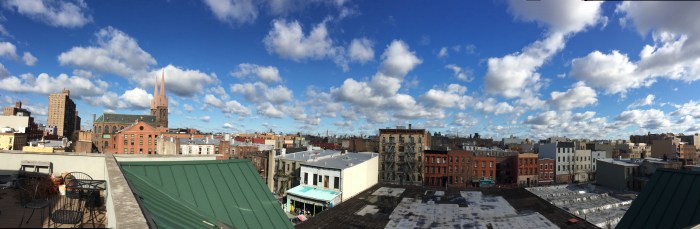
Being in New York City can make you feel small. And when you’re arriving from a dot on the map, it can make you feel like a speck of dust in a sandstorm. It was the first time that I stopped to think, not only about all that has happened to me in the last few years, but also where I may be heading in the ones to come. Turns out, I didn’t want to wait another 3 years to reevaluate – by then, it would be too late.

Spending a week in NYC was more of an investigative trip. I wanted to see if it could be a new frontier, the next step that would shove me out of my comfort zone and teach me more about who I am. The more I thought this way, the more I felt like a high school senior in need of a gap year, a lost guppy who wanted to find herself or was on some journey of self-discovery, a walking millennial cliche. Basically, I felt like a spoiled brat because I wanted more when I was and am already quite fortunate.

Honestly, only those who are blessed enough to have options at their fingertips have the luxury to think this way. When you are tied down with responsibilities and bills to pay, the path in front of you has limitations. But when you’re not surrounded by commitments that dictate your decisions, you only have you to answer to. The possibilities are overwhelming and have never been more daunting. It brings on inner monologues and sidewalk soliloquies that have your brain pondering things like What am I really doing? Why am I restless after 3 years at the region’s best agency? Am I satisfied with where my life is now? And if not, why am I wasting time being stuck? But where do I go?

If I were to move to NYC, or move anywhere that wasn’t my dear Lebanon, would I survive it? Am I as strong as I think I am? Like many people who were strolling the streets of Brooklyn, I found that I was having discussions with myself out loud; I was asking the big questions that come with being in a big city. Am I doing everything in my power to make sure the life I want will come to be? What is the life I want?

My closest friends are all abroad and the days are numbered when it comes to those who are still here. Most of my phone contacts have country acronyms next to their names because they’re abroad trying to make something of themselves. Am I selling myself short by staying behind? Is there more for me out there? In a country that can be so much but give so little, I am finding it increasingly difficult to pass up opportunities that would empower me as a young professional, experiences that would equip me with new skills, and chances that would expose me to hidden facets of myself I have yet to know. Can Lebanon give me that? Am I still betraying my country if I want more for myself? If I stay but don’t move forward, who am I really helping? In the end, wasted potential serves no one.

I’m grateful I don’t have parents that poke and prod about when I’m going to walk down the aisle or make them grandparents. Instead they entertain the same questions that I struggle with. My dad recently asked me if I ever give any thought to where my personal life is at. I think he worries that he instilled in me such a spirit of ambition that my careerist ways have backfired. Regardless of whether it shows or not, I do think about it. Even more now that I have entered Wedding Territory. For the next 5-7 years of my life, I will have, on average, 3 engagements/weddings to attend annually. Not out of desperation, lack of self-esteem, or fear of becoming a cat lady, but this brings on big questions as well: Will I find that person? Would I notice them if I did? Have we already met? What am I missing? and then the worst one of all: Is something wrong with me? 

If I were to move to NYC, or any other city that disconnects me from the world I’ve known for so long, would I become more guarded than I already am? Would I be so good at surviving that I become too strong? Would I be lonely? Will I miss out on special milestones for the sake of my own selfish drive? Does going solo really matter if it means you’re sacrificing moments with the ones you care about the most? If I leave, dad won’t be around to make Spanish omelettes with Kalamata olives on Sunday mornings. If I stay, I’ll never make them for myself. There’s always a fine line when trying to decide what’s best for you. In the Arab world, sometimes you have to cut the cord yourself.

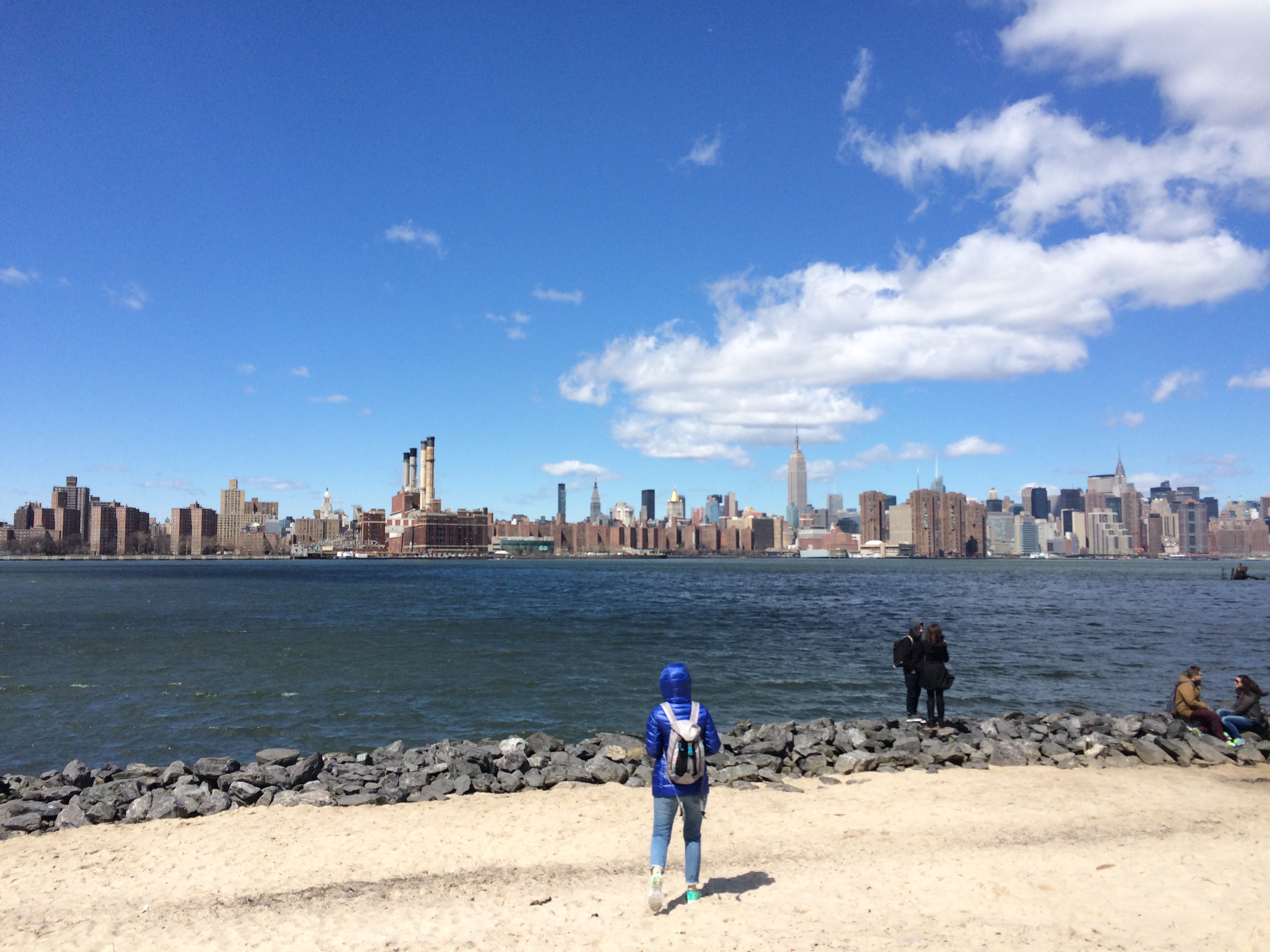
I resigned from my job before boarding my flight to the States. A week after landing, as I stood on the edge of East River Park looking at the Manhattan skyline on my last morning in Brooklyn, a small voice asked, will Beirut be okay without me?

I know I want to find out.