Some of you may know that I dabble in what is known as graphic design. And by dabble, I mean I have a degree in it and work in the creative department at an ad agency. Tough hours and strict clients mean you don’t always get to stretch your artsy muscles so you must turn to side projects for that much needed exercise.
And so…
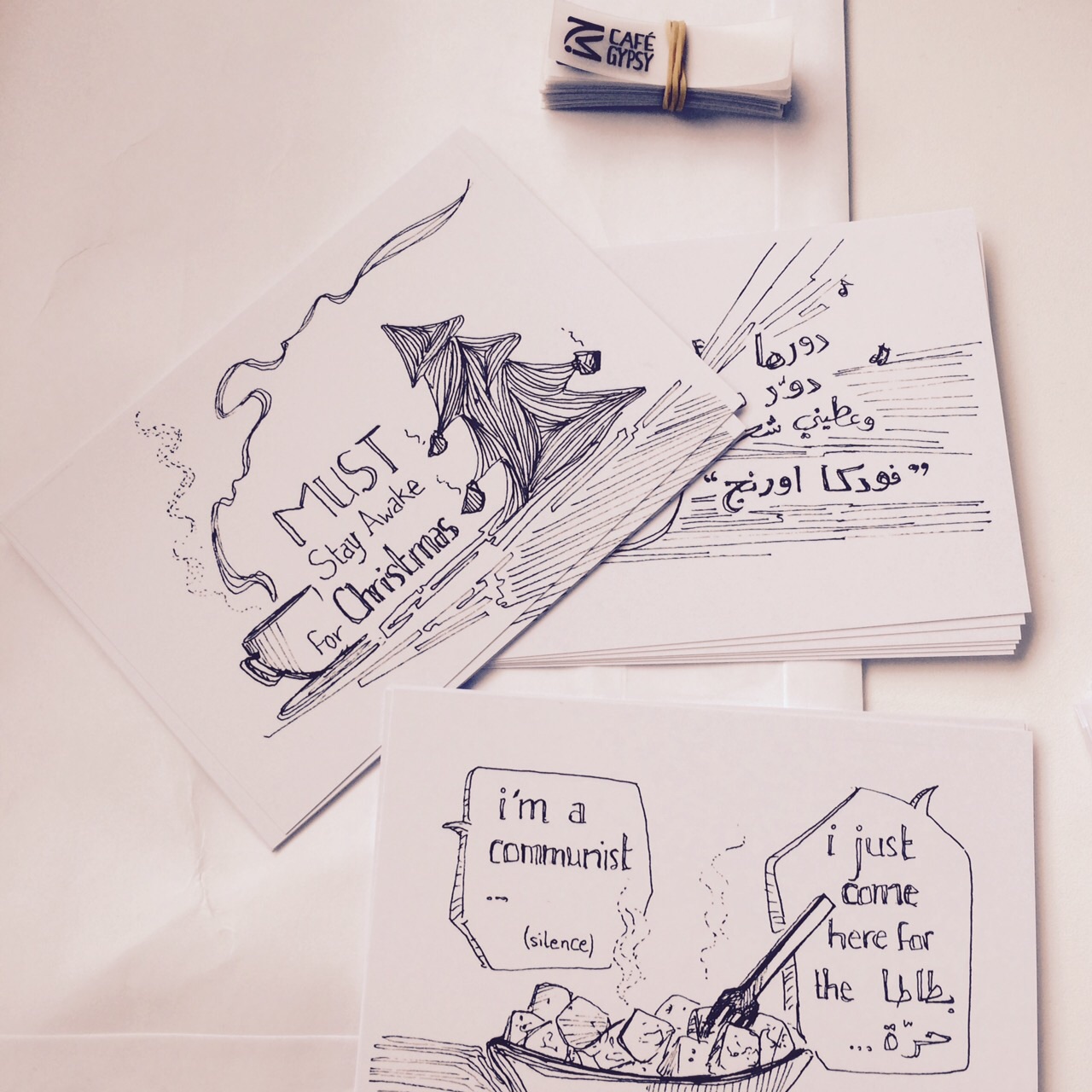
I will be participating in this weekend’s Dar Bistro & Books 1st Annual Christmas Market. Although I wasn’t prepared to jump into something like this, I’ll have my first small collection of Christmas/NYE cards on sale for the 3-day affair. Nothing like pressure to make you start & finish a side project you always wanted to do…in one week. Here’s a sneak peek of my collection: Each card will be sold for 8,000 L.L. and 3 for 20,000 L.L. (including a gold or silver envelope for each). Hala, my former classmate and AIGA ME teammate, will be splitting the stand with me so be sure to check out her illustrated totebags and postcards too! Dar Bistro is located between the Central Bank and the AUB Alumni Association office in Hamra (go down the small alley next to the Wardieh station before CMC). It’s all weekend long so pass by for a hello, a coffee, and a card!
At the BDL Accelerate 2014 two-day conference, plastic surgeon Dr. Jean Nehme gave a presentation about an app he co-founded: Touch Surgery. By visually showing doctors (and med students) surgeries step-by-step, they can learn about the process through interactive diagrams of a digital patient rather than read it from a book, wait for a cadaver, or practice on a living patient. It also allows for the patients to understand procedures and what would happen to them if they were to undergo a surgery of some kind. After all, when you have all the information available on the internet, you end up going to Google for medical answers…which is a huge mistake. Touch Surgery provides you with accurate information from credible sources and can show you what will happen by mapping out the entire operation in detail.
It’s got two phases: learning and testing. Learning comes with instructions as the user is taught a procedure with 3D simulations and testing comes without the instructions. And get this, the app is for FREE because, as Dr. Nehme put it, this is the age of the knowledge economy and information should be open and shared.
This is a great use of technology and I can imagine many pre-med students (and med students) using this as a new way to review material and train your brain. When it comes to operating, Dr. Nehme said, “it’s about 75% decision making and 25% technical skill.” The interactive method enables a physician a chance to practice and, thus, be able to operate without having to waste precious time and energy figuring out what the next step is. You eliminate the decision-making pauses and increase efficiency without using up physical resources or risking anyone’s life. The app also indicates things to look out for when someone’s under the knife (like important arteries).
Clearly, this doesn’t rule out shadowing and actual rounds at the hospital. All surgeons need to learn technique and IRL skills. Plus, not all medical situations are predictable and not all patients have a 3D model’s anatomy. There are unexpected complications and specifics that go into each case; however, Touch Surgery is still an excellent app to use when learning the ABC’s of an appendectomy, for example.
THE EXPERTISE The app is created by practicing surgeons so you know it’s got the doctor’s seal of approval. Since it’s an app for smartphones, it can constantly be updated with new discoveries, experiences from numerous sources, and techniques meaning that it will be cutting edge (no pun intended), unlike an old textbook or an outdated resident. The procedures are downloadable so the possibilities are endless in terms of variety and inventory.
TEAMING UP WITH OCULUS RIFT The learning isn’t restricted to your fingertips. There are plans to incorporate Oculus Rift headsets into the existing app’s functionality. The virtual reality device would allow for users to enter an operating room and perform a surgery as if it were actually happening. #nerdilicious
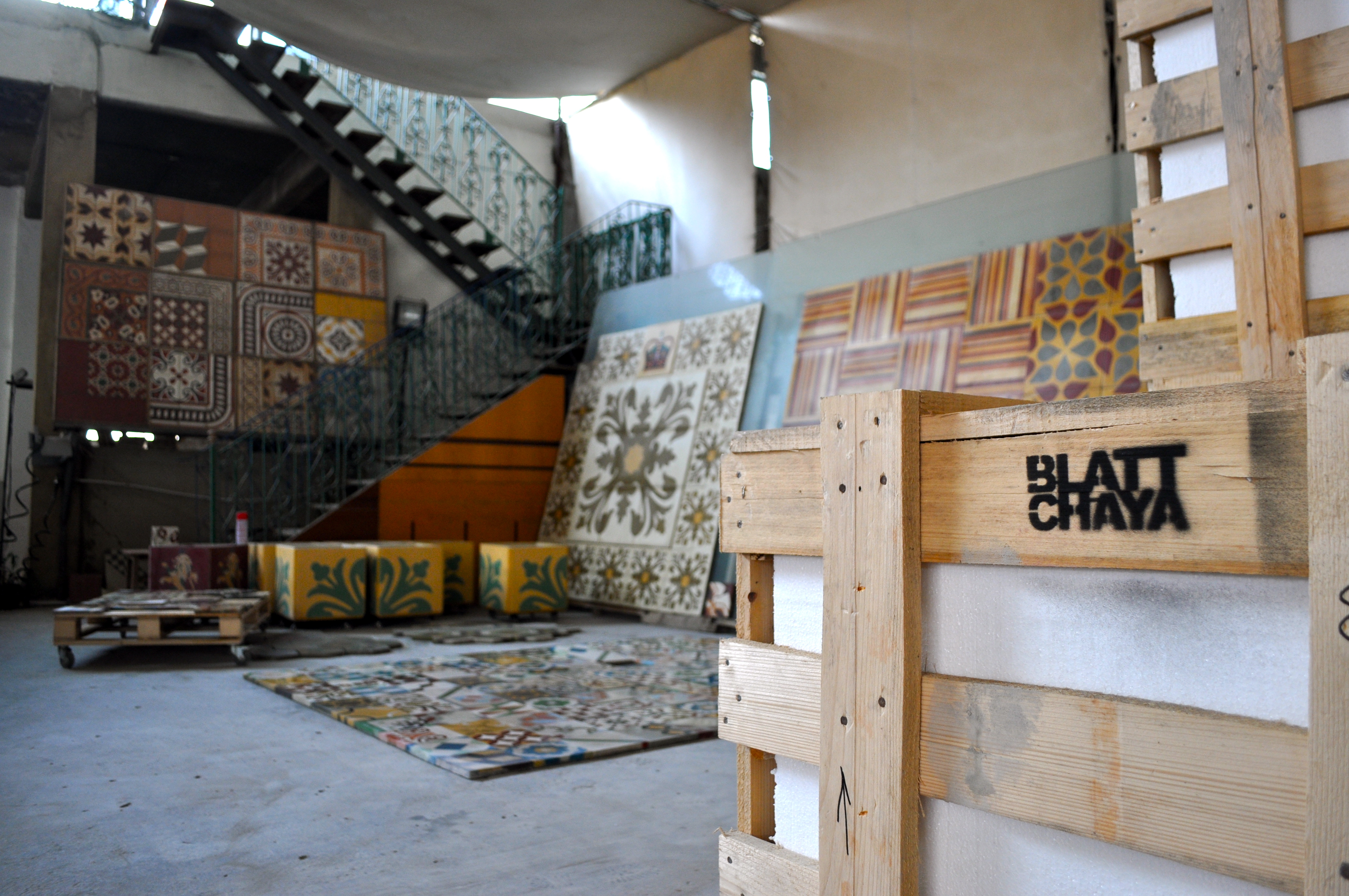
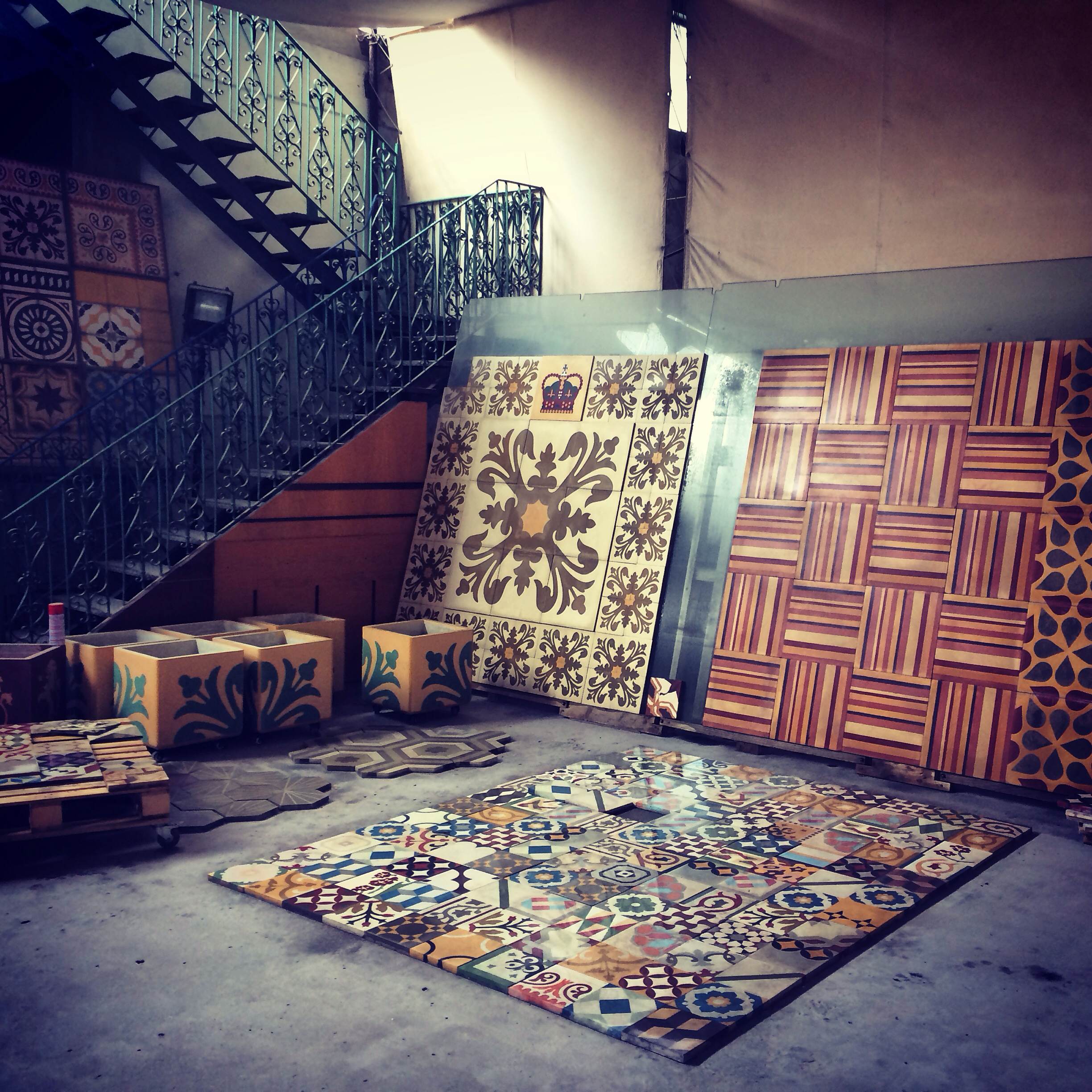
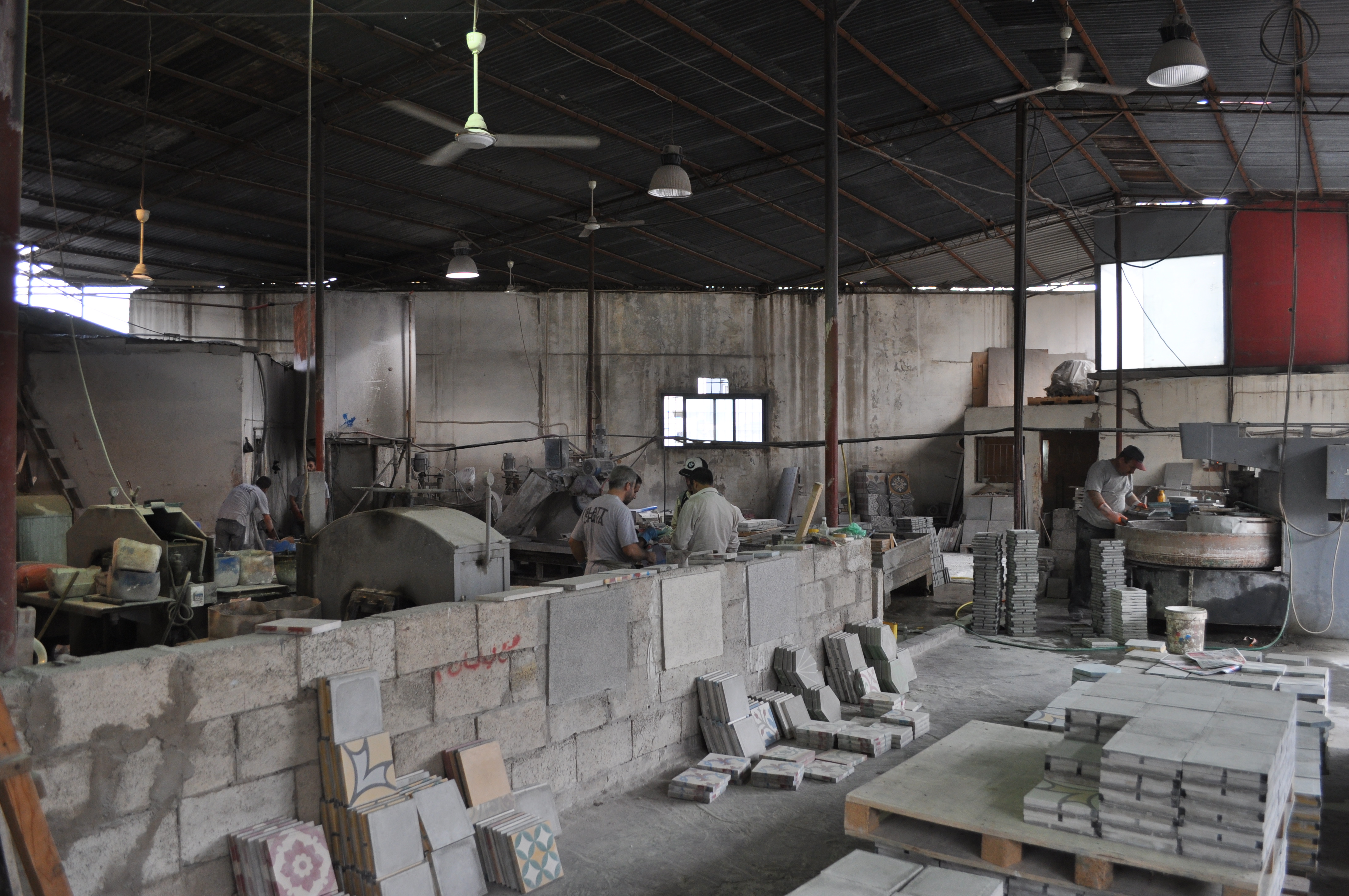
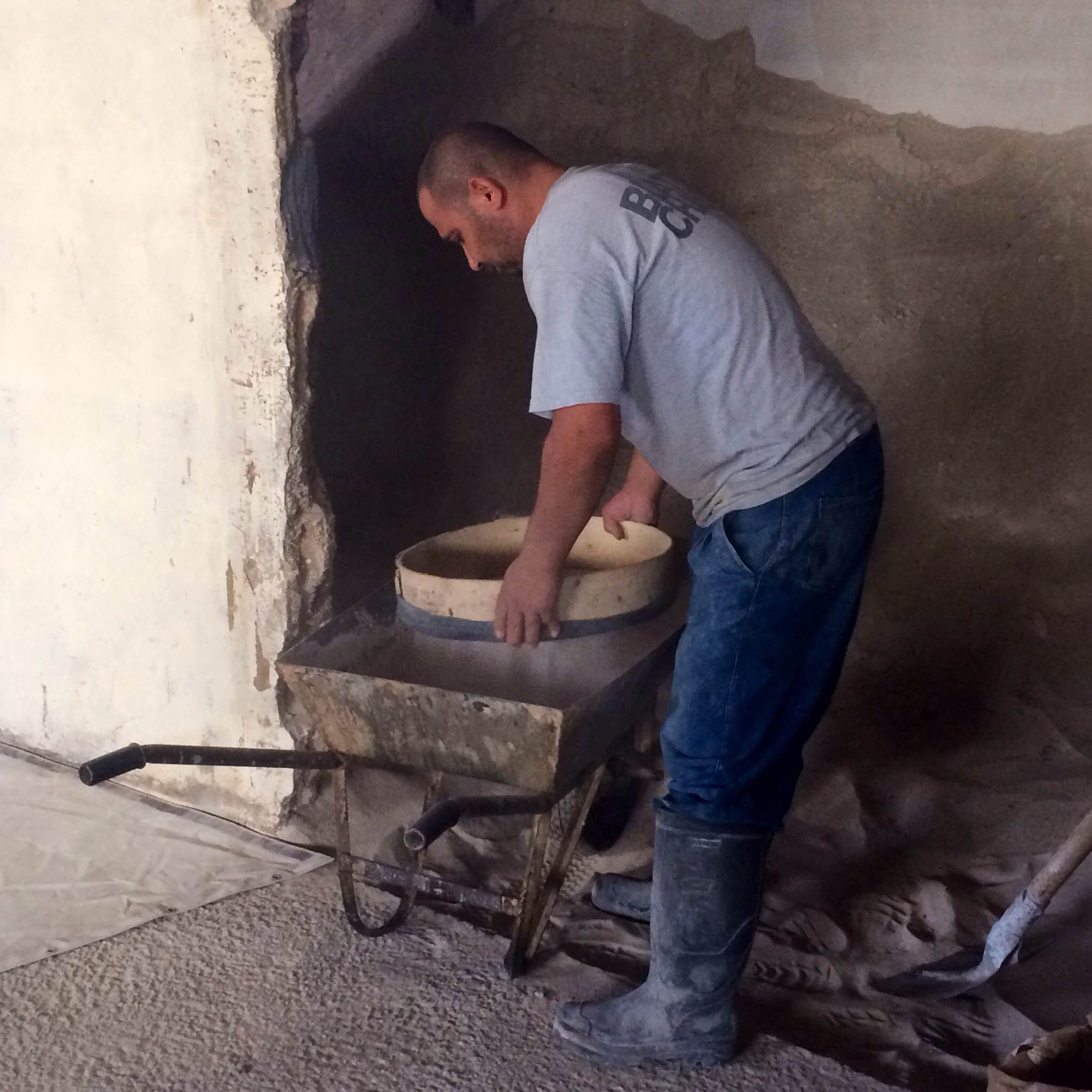
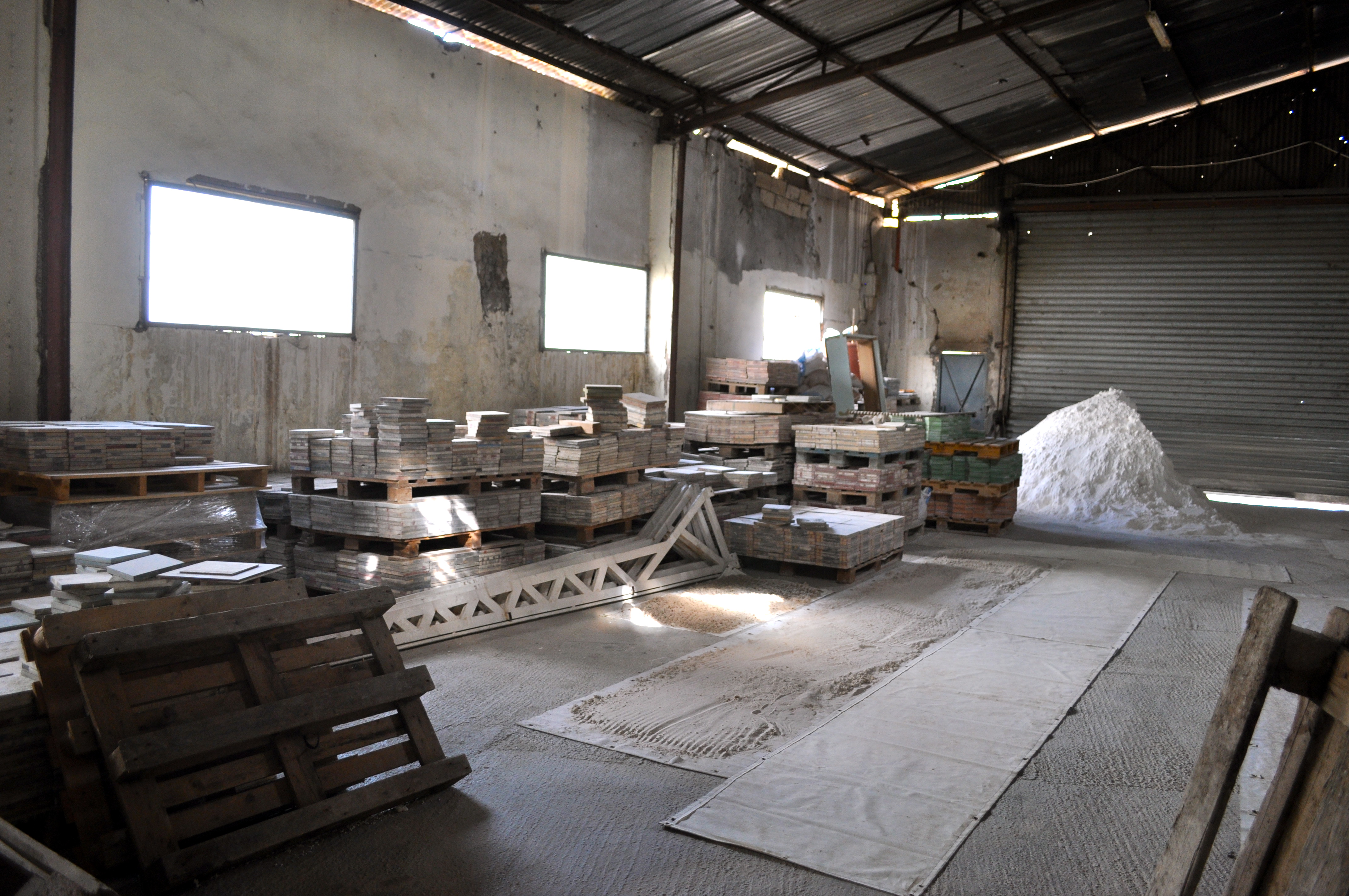
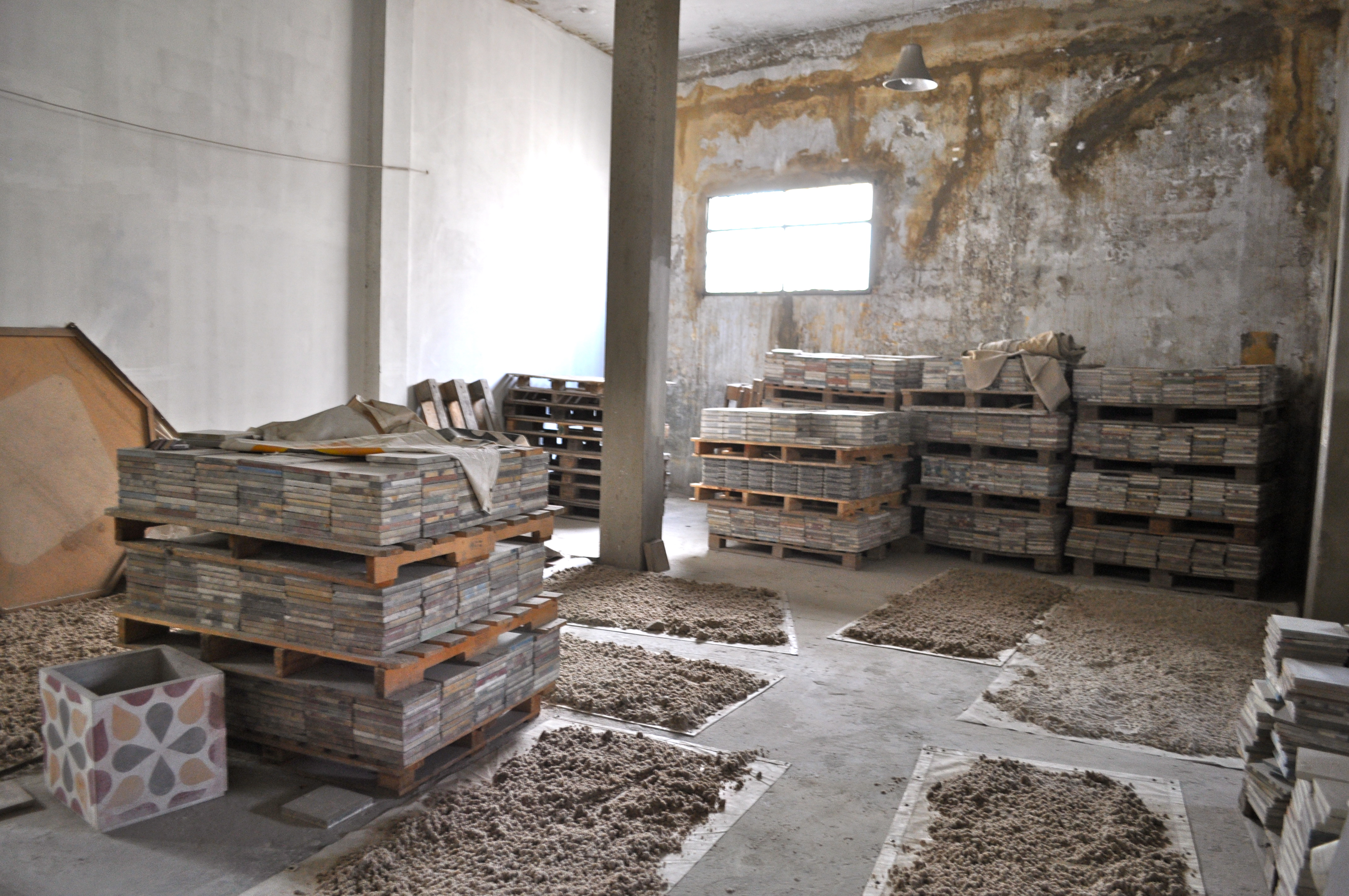
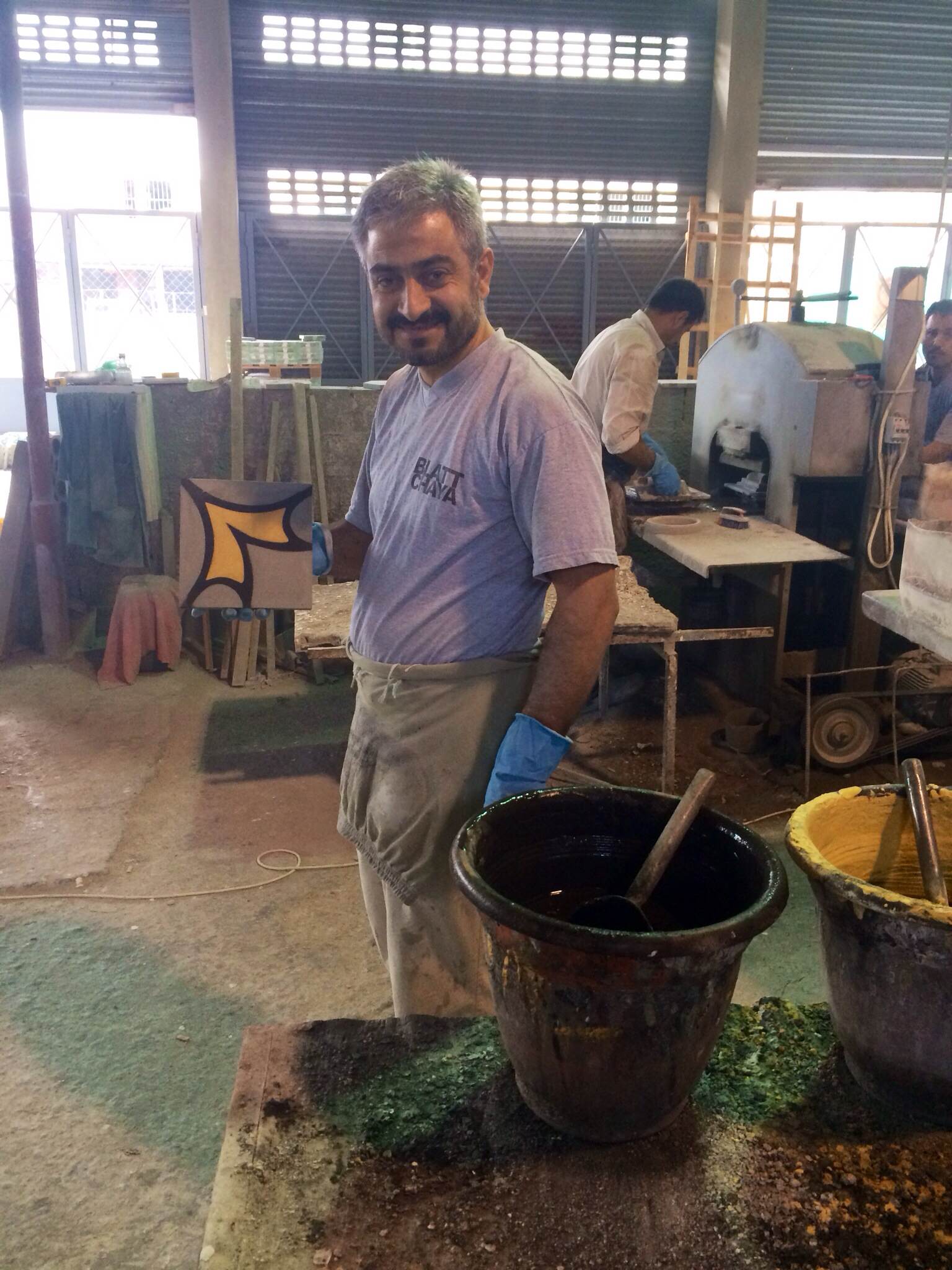
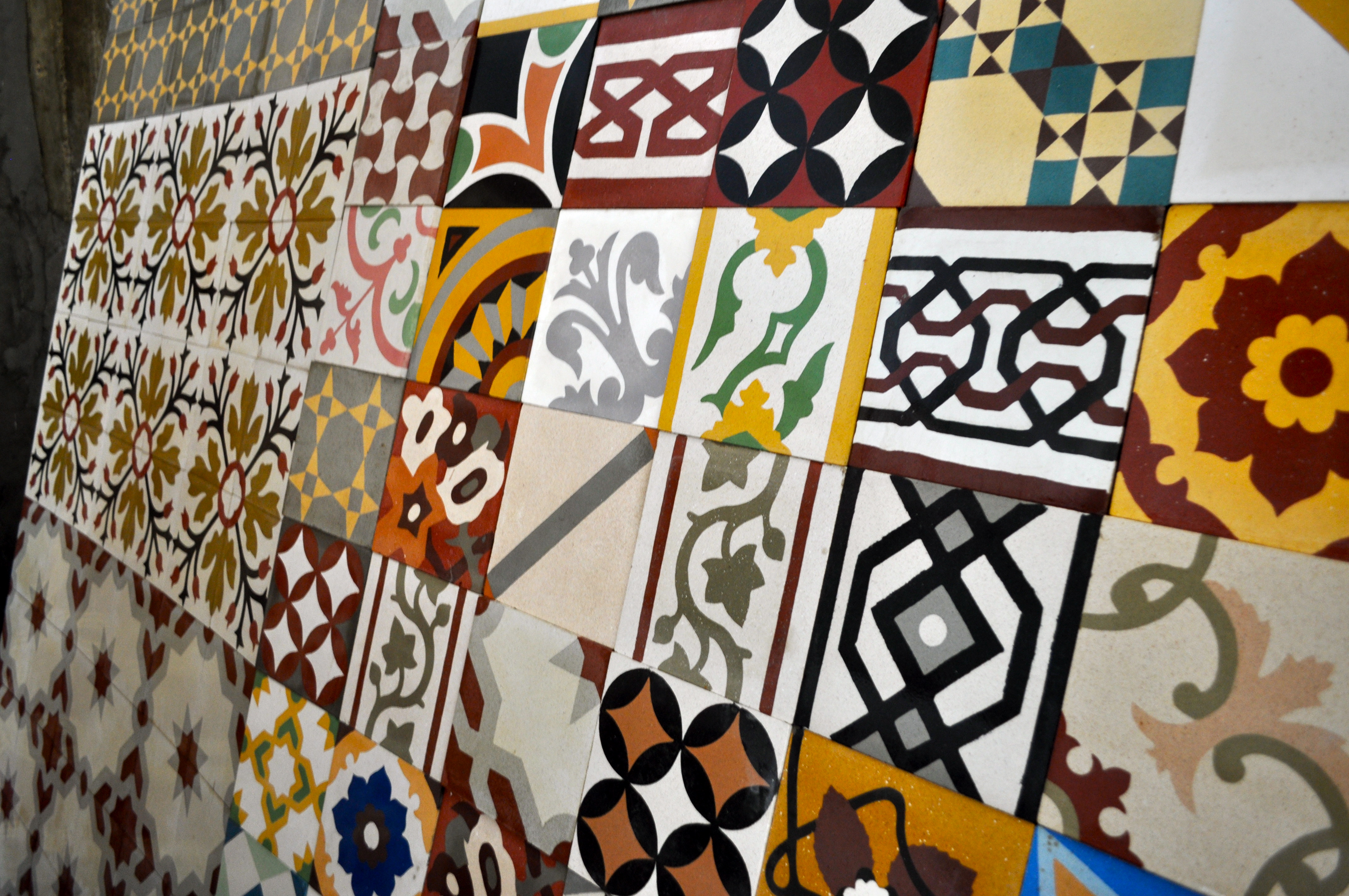
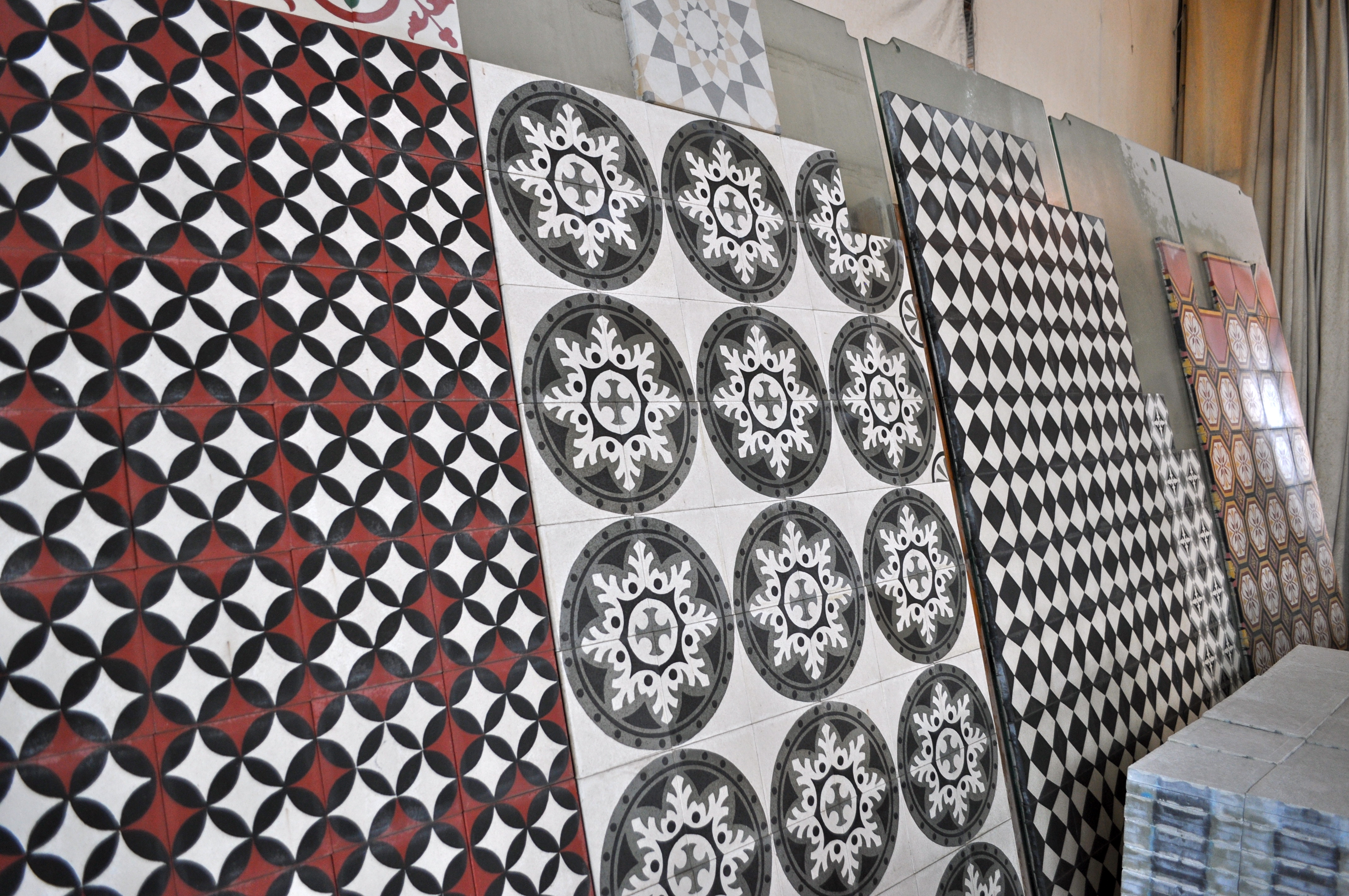
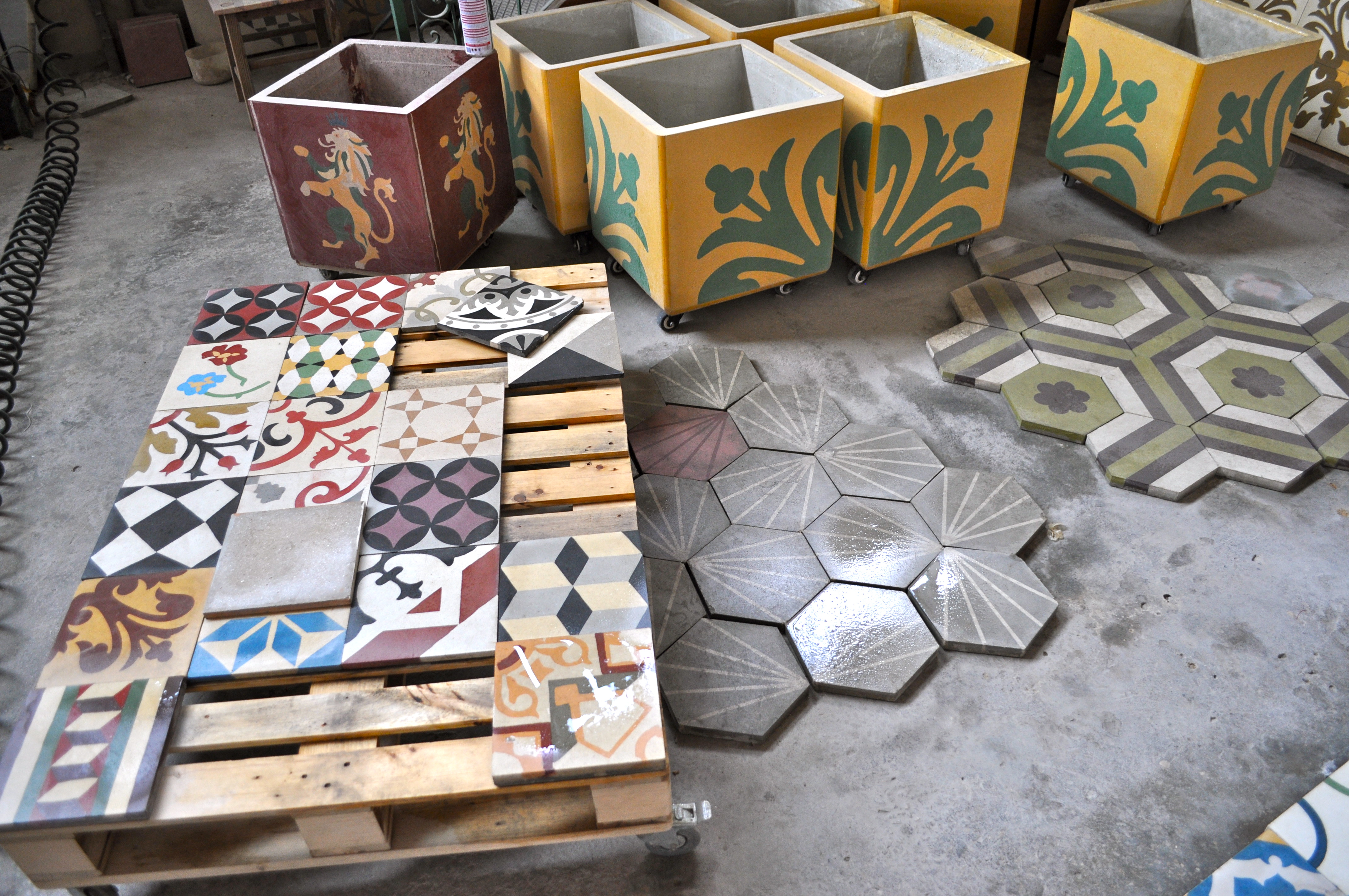
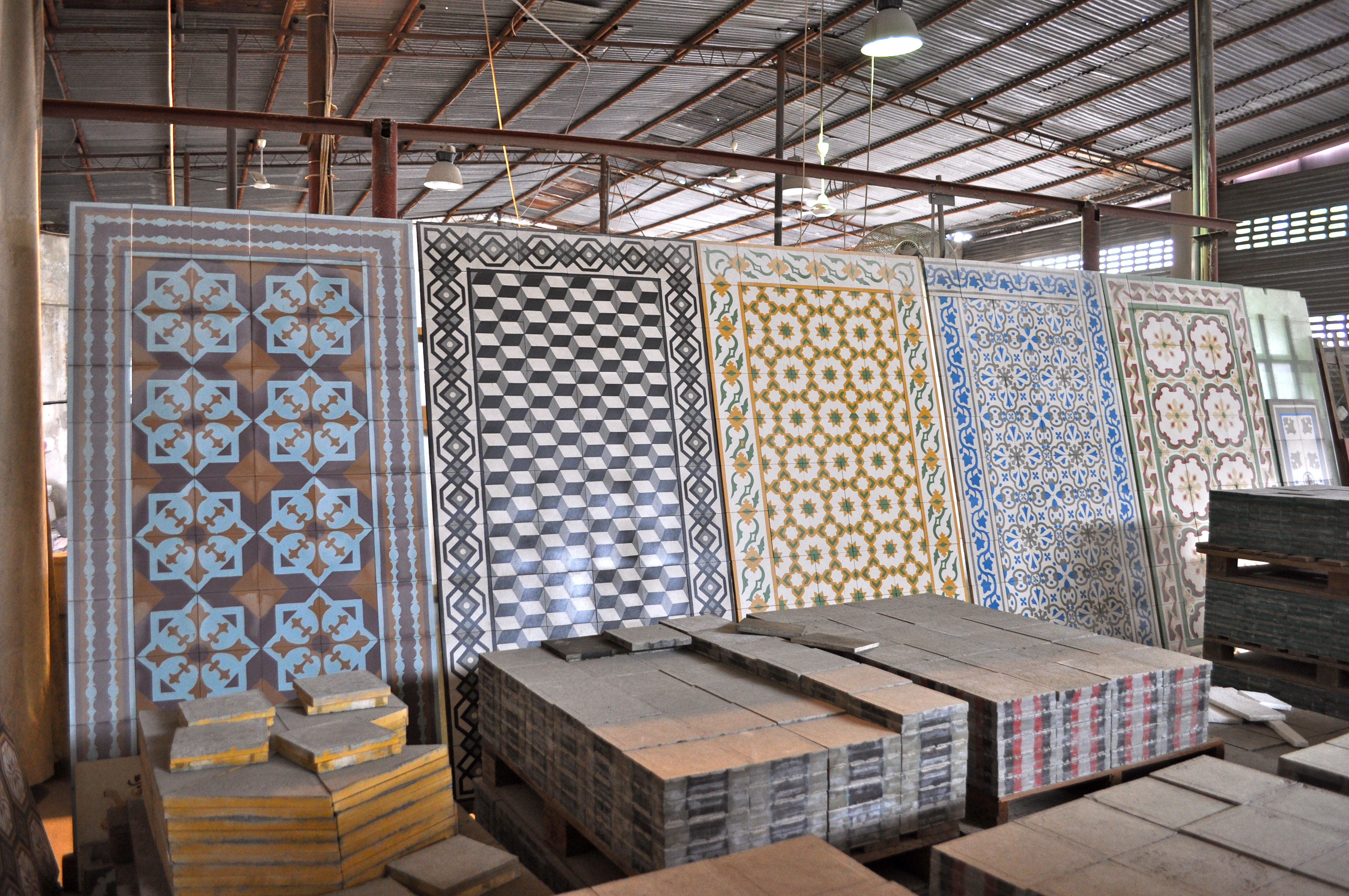
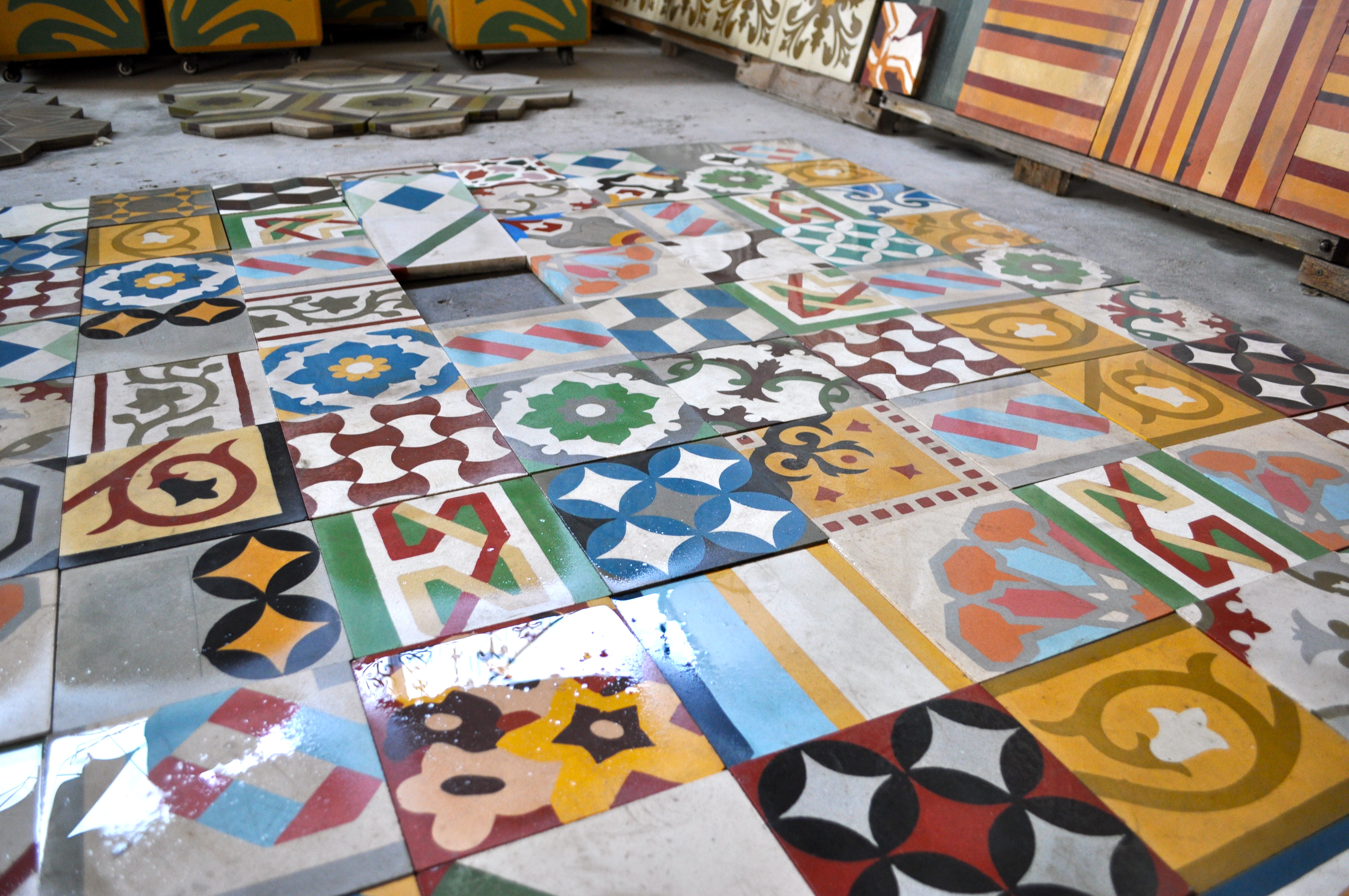
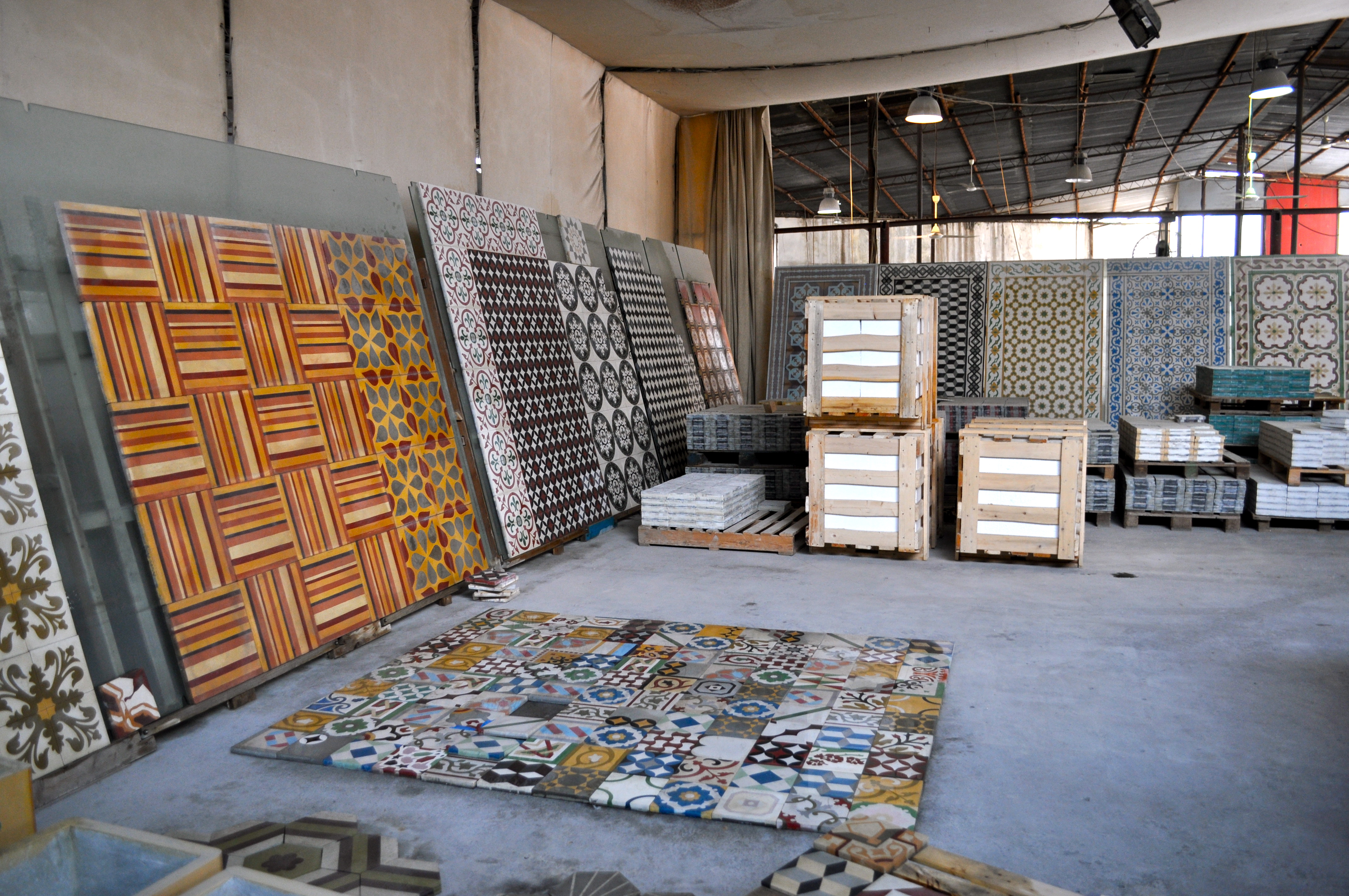
“Do you like your coffee with or without sugar?” I didn’t have the heart to tell him that I’m not a fan of Turkish coffee. It reminded me of how my teta still asks if I want chai with my eggs on the morning of every Eid even though she knows I don’t like tea. I was never good at being a hardcore Arab. How do you say “no, thanks” to a man who is the embodiment of the Lebanese jiddo? Although my jiddo was more of a Paul Sorvino kind of grandpa, Mr. Edgard Chaya is the man I would imagine when I hear about an artisanal craft that requires patience and pride but has long been locked away in a drawer. He smokes a pipe, wears suspenders with his suit, and tucks a handkerchief in his jacket lapel. He is the essence of Blatt Chaya because he has an old-school aura, as if he is from the time of the tiles that bear his name: a time when elegance was done for one’s self not for everyone else, when it was effortlessly debonair and respected. I wanted to learn about the process that created these tiles that I’d seen in various places around town. So after shooting an email and making a few calls, there I was, not entirely awake at the Blatt Chaya factory in the industrial quarter of Dekwaneh, meeting with Mr. Chaya for very dark coffee on a very early random Saturday morning. Blatt Chaya has been operating for fifteen years but it took Mr. Chaya four to perfect the technique of producing terrazzo tiles like his great-grandfather. It wasn’t just a matter of finding the old molds but also figuring out how to keep the colors from mixing when removing the metal stencil. Not that he wanted impeccable tiles – Mr. Chaya prefers the ones with mistakes because it makes them human. “Every tile is unique,” he says, because the dyes are mixed each time so the color isn’t always the exact same hue, the molds are manually set, and even the sand used is sifted and laid out to dry by hand. The imperfections that result from this process are evidence that these pieces were made by a person, not a plugged-in machine. “Finish your coffee and then I’ll walk you through the whole process.” I kept drinking until I tasted the coffee grinds. I realized I’d gone too far to prove I’d finished my cup but it was my initiation into the fraternity of Blatt Chaya: it had to be done if I wanted to make it into the factory. With a small team of 12, the sand is first sifted through a netted strainer to remove all dust and impurities then washed with water five times. The wet sand is set out on fabric in gray cottage cheese-like mounds until it dries, resulting in a fine clean powder. Using the molds within a framing, naturally-colored or dyed cement is poured into the stencil and sealed. The frame is pressed at 130 psi to solidify the tile. After being dried and sanded down to a smooth finish, the environmentally friendly ingredients have become immortalized works of art. Because terrazzo tiles have color within the cement mix, it withstands weathering and deterioration. Unlike painted tiles, the design and color remain as the tile is worn down over time.
Sifting through the sand
The sifted and washed sand is laid out to dry
Sand drying out among the stacked tiles
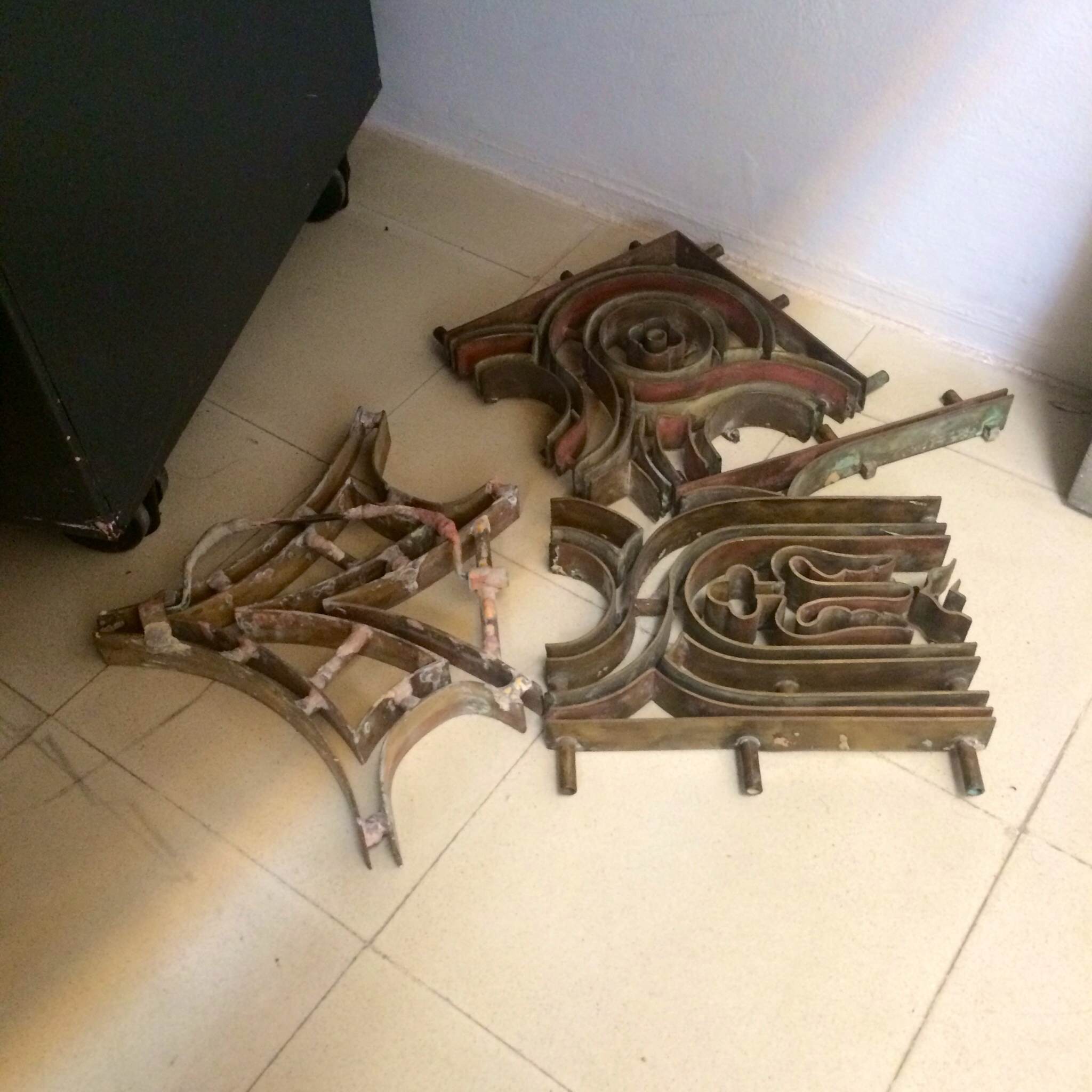
Metal molds used as stencils for the cement
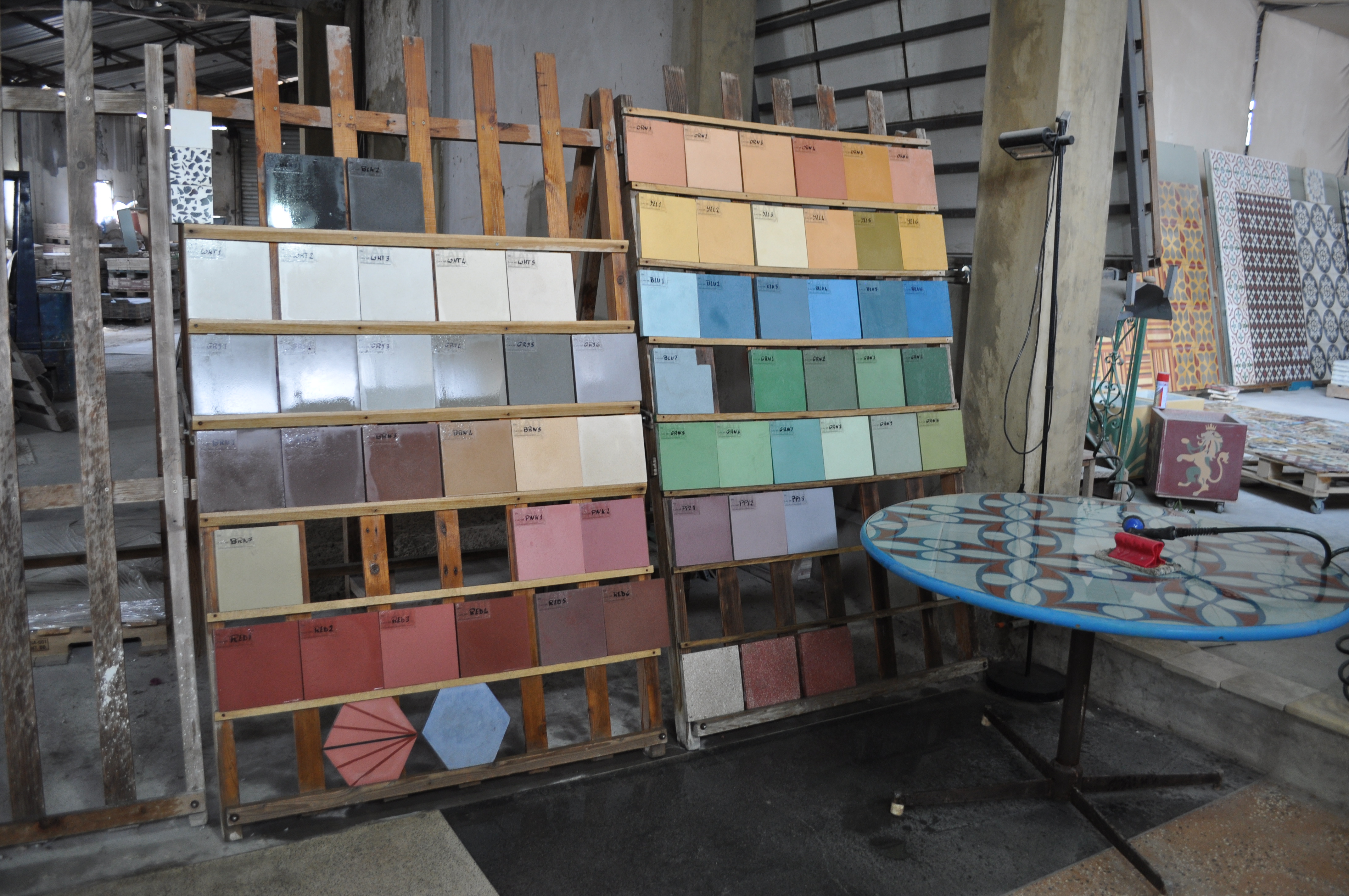
Blatt Chaya’s color palette
Videos of the process are on my Instagram account
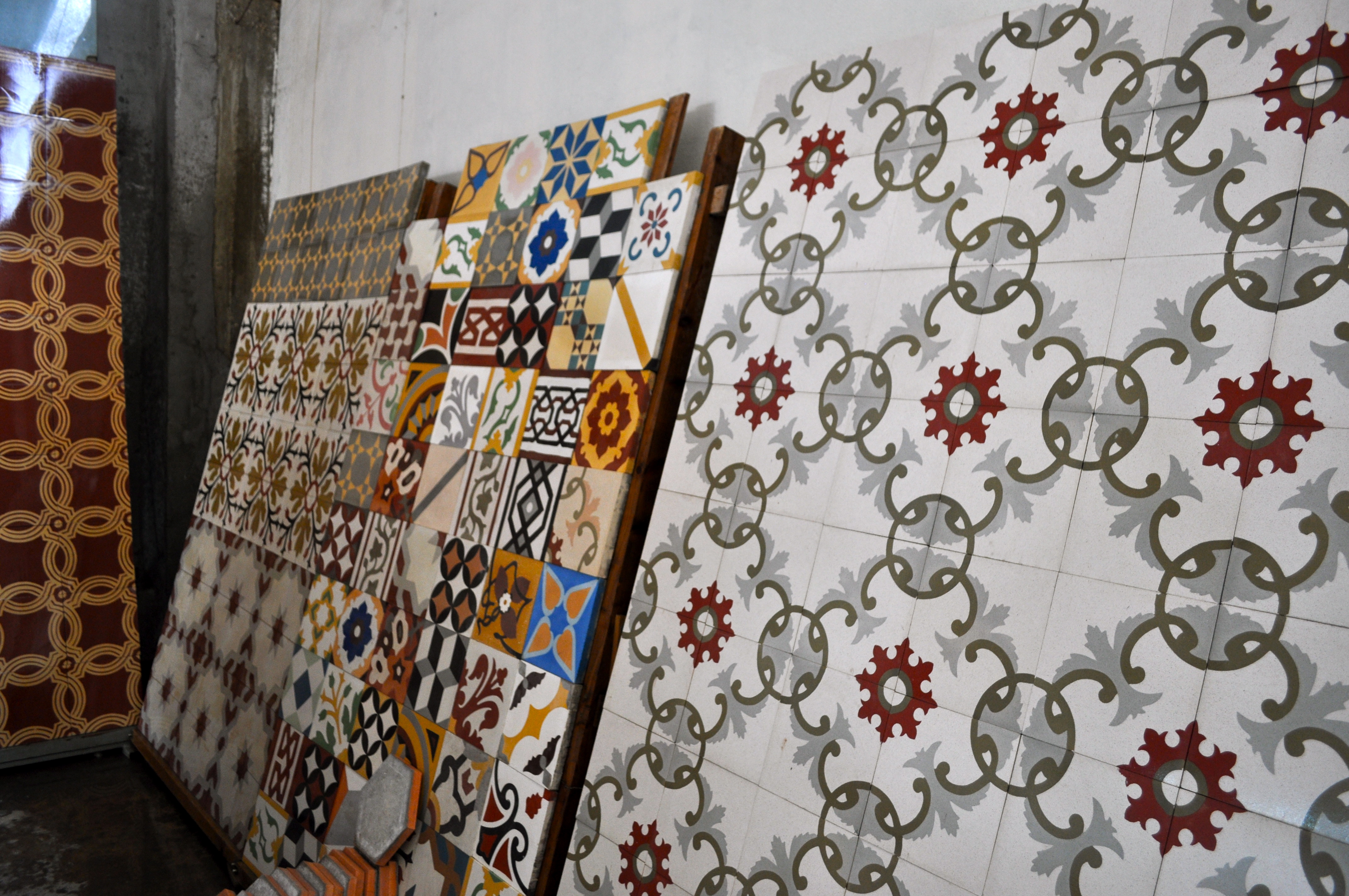
Four 20x20cm Macanaka tiles come together
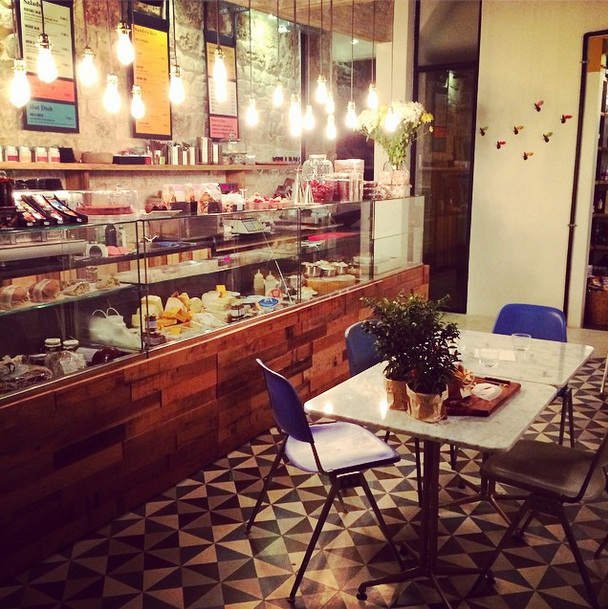
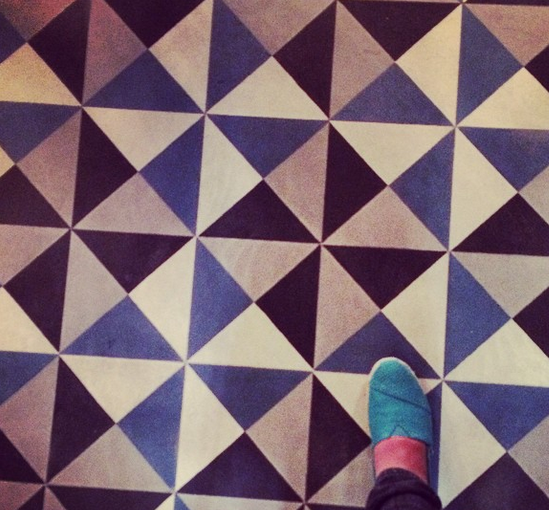
Because you can choose the colors you want for each part of the mold, every tile has a different outcome. Once laid together to create the final pattern, it’s a whole new canvas. Even the simplest mold can make an intricate geometric motif once multiplied on a larger scale. On the Blatt Chaya website, you can simulate how your desired pattern will turn out based on the mold and colors you want. I told him I wanted to recreate the tiles of my jiddo’s house in the South and asked him if he would name it after our day3a because each mold is named after an area or village in Lebanon. When I asked Mr. Chaya which mold was his favorite, he told me “I don’t have a favorite, they’re my children.” That’s not far from the truth; one 20 x 20 cm tile is named Macanaka, an amalgam of the names of his children: Maxime, Caline, Nabil, and Karim. He says it takes passion. He says you need to love it for the process because it’s not easy or rewarding. He says that crafts like his family’s are dying out because the number of people who appreciate the art are outnumbered by the number of people who want to make a profit that is easier to get from mass production high-tech factories. He knows that his work is being recognized though. Blatt Chaya has become its own class of tiles in the same way that Kleenex is tissue paper. They’re not interchangeable but they are their own category; when choosing tiles for a home, architects and designers have marble tiles, ceramic tiles, or Blatt Chaya. When asked about expanding, Mr. Chaya is not interested. He wants to preserve the artisanal expertise and you can’t do that if you take on more than you can handle. Will it stay in the family? Fortunately enough, his children, Karim and Caline, are his biggest supporters and the ones who want to continue the Chaya legacy. Karim is a prominent industrial designer who works on new molds and tile designs for the company. Caline’s daughter, Youmna, also has a knack for the business. Besides working with her jiddo, Youmna dabbles in cuisine and recently designed the menu of new Mar Mikhael deli, The Food Dealer, also home to blue Bhorsaf Blatt Chaya. She’s even painted the portrait of her jiddo that hangs in his office, a room appropriately adorned with flawed mismatched tiles.
Blatt Chaya at The Food Dealer, Mar Mikhael
Although I was like a clueless American on a Double Decker tour bus, he was patient with me. When Mr. Chaya was done walking me through the factory and answering all my amateur questions, he left me to take all the photos I want. “Wait no, don’t take photos.” He hosed down all the tiles: “you have to see them the way they truly are, haram not to get the colors.” Perhaps this newfound need it is just part of the vintage trend that is infecting people worldwide. Regardless, I’m all for it if it creates support for an art form that keeps some of our architectural heritage alive. Trendy or not, you won’t be changing your floor tiles ever time the tide shifts. Those cement tiles don’t change with the season, they’re going to grow old with you…but you know they’re going to look damn good doing it. Blatt Chaya Dekwaneh +961 1 695 222
Crowdfunding projects, like Mashrou3 Leila’s Raasuk album and THIS Toothbrush, have been pretty successful over here and it’s even more satisfying when those projects are ones that have a positive impact on society environmentally and culturally. GGRIL, featured numerous times on the blog, is a green initiative that recycles glass bottles while simultaneously saving the glass-blowing artisanal business from dying out. Now, they need some funding help to keep the operation going.
Go to their campaign page on Indiegogo to read more about what they’re doing and what they need. In exchange for donations, you’ll get “perks” or GGRIL products once the campaign ends in December.
As the first affiliated international AIGA chapter, AIGA Middle East was launched last summer by Mo Saad & Leen Sadder, Lebanese graphic designers based in New York City. After the launch party at Coop d’etat rooftop in June 2013, the duo formed a Beirut Operations Team who would be the crew on the ground, creating a format to be duplicated in cities all over the region once the initial roots were established and AIGA ME was in full swing. Professional and student memberships for AIGA ME will be launched by the end of this year but, in the meantime, the Beirut team’s mission is to build the network, spread the word about AIGA and its importance in our part of the world, and start (and continue) a conversation about design. To avoid any confusion, this is not a promoted post. In full disclosure, I am part of the AIGA ME Beirut core team which is made up of a handful of young professionals who volunteer during their free time to make this organization work.
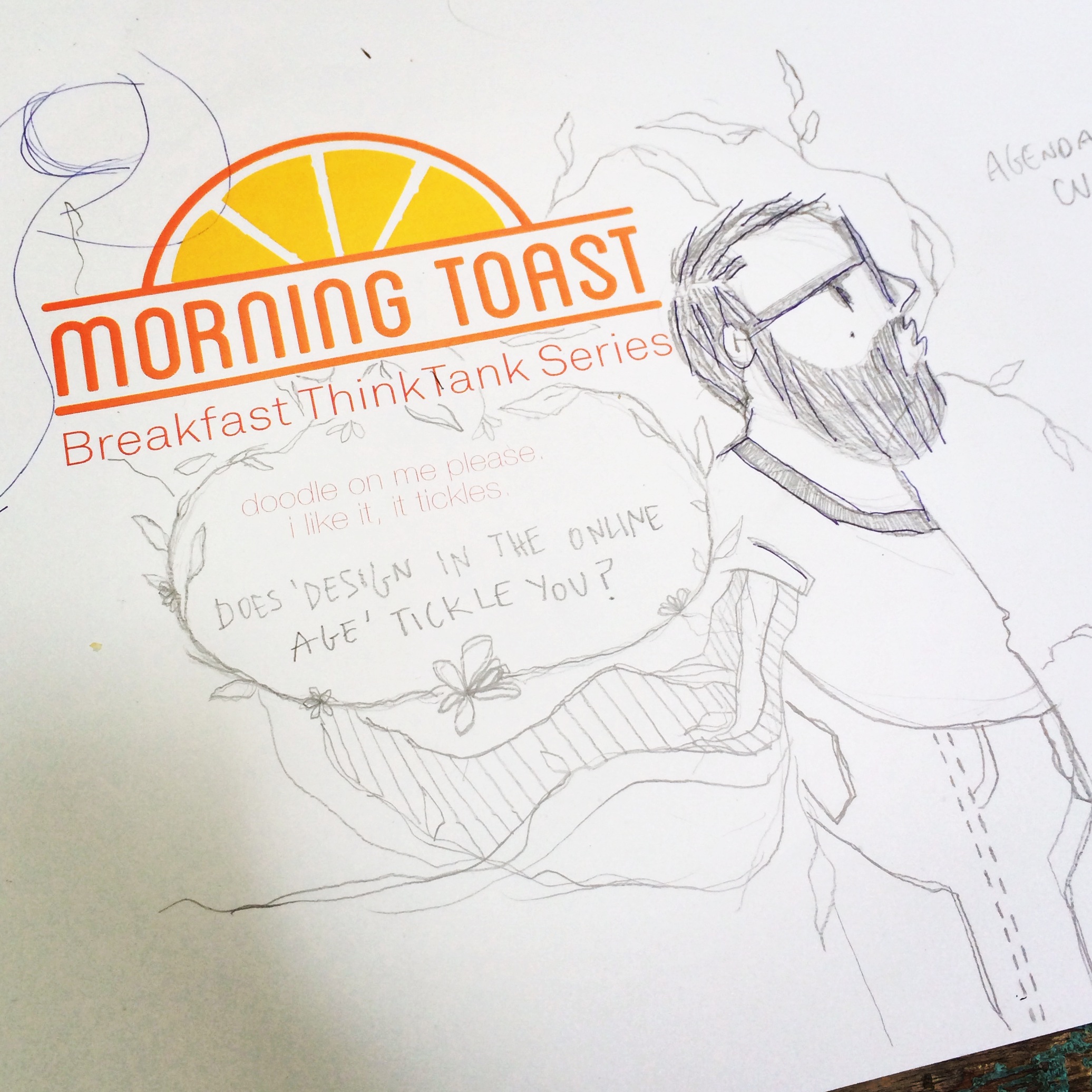
Doodled by Mo Abdouni, guest at Morning Toast Vol.2
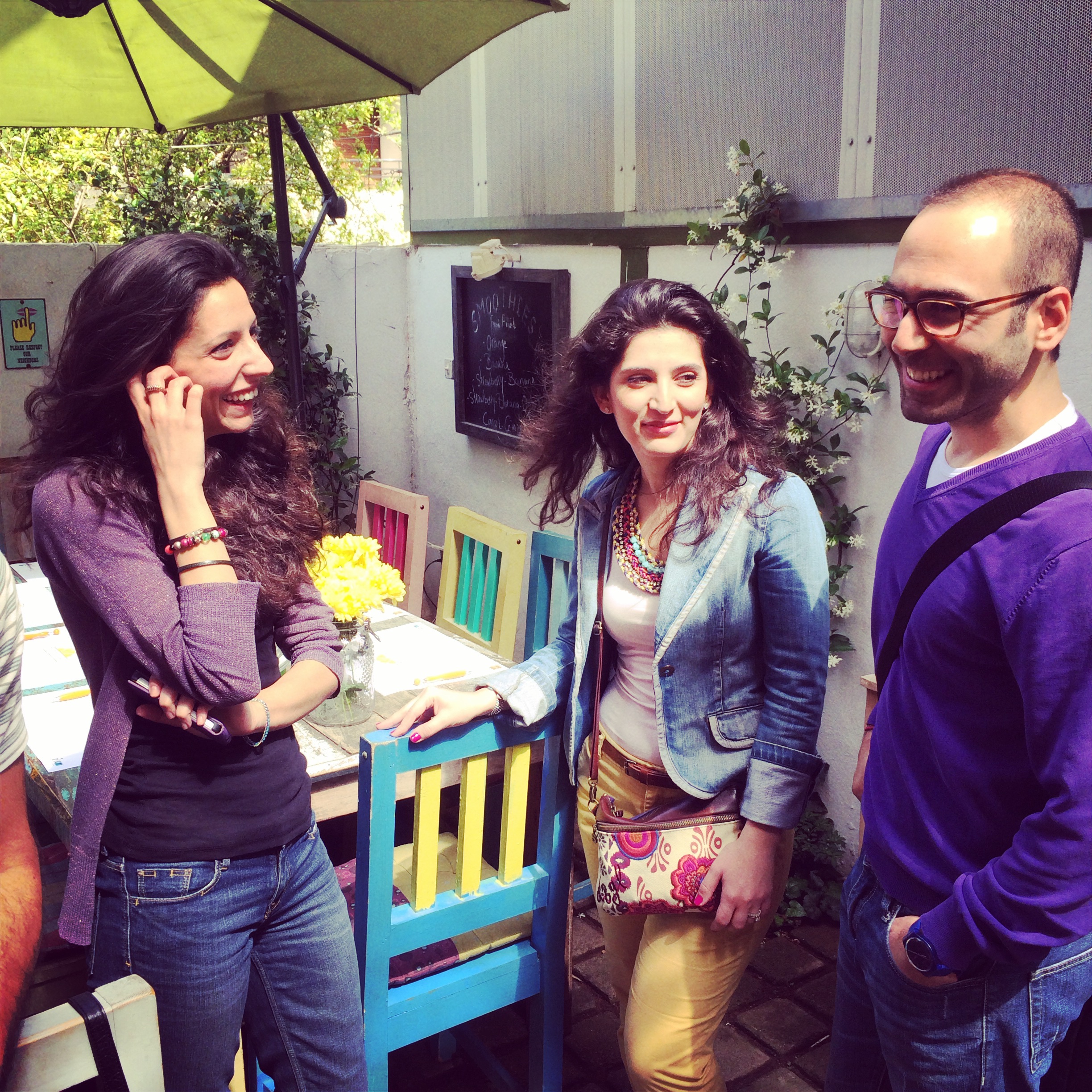
Back in March of this year, we launched Morning Toast, a breakfast think tank series. Held every two months at a local cafe, Morning Toast brings together 7 to 8 designers on a Saturday morning to talk about a design issue over coffee. Each MT is hosted by a professional who acts as a moderator for the discussion. They don’t lead or preach, they just keep everyone on topic during the allocated 2 hours. Usually, who the host is will hint as to what the Toast may be about. Themes for each Toast are announced the morning of, leaving attendees in the dark. This is not an evil surprise tactic, but meant to allow for unprepared and unpracticed rhetoric. In other words, it’s an informal get-together with potential for formal action later on. Conversation about design begins and continues because guests are put in contact with people they may not have met in other contexts. As for the 7-8 people that attend? It’s completely open: first come, first serve. There are a limited number of spots; if you snag one and confirm, you’re in.
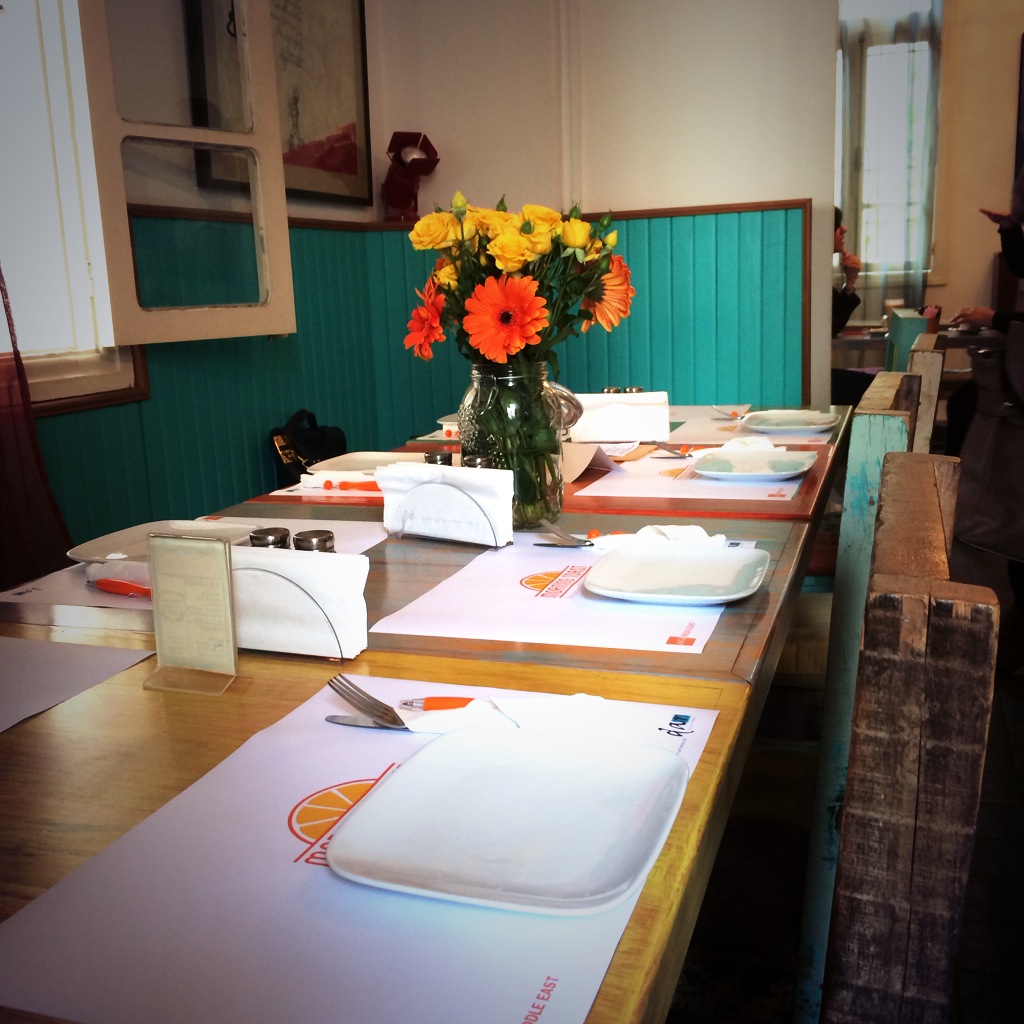
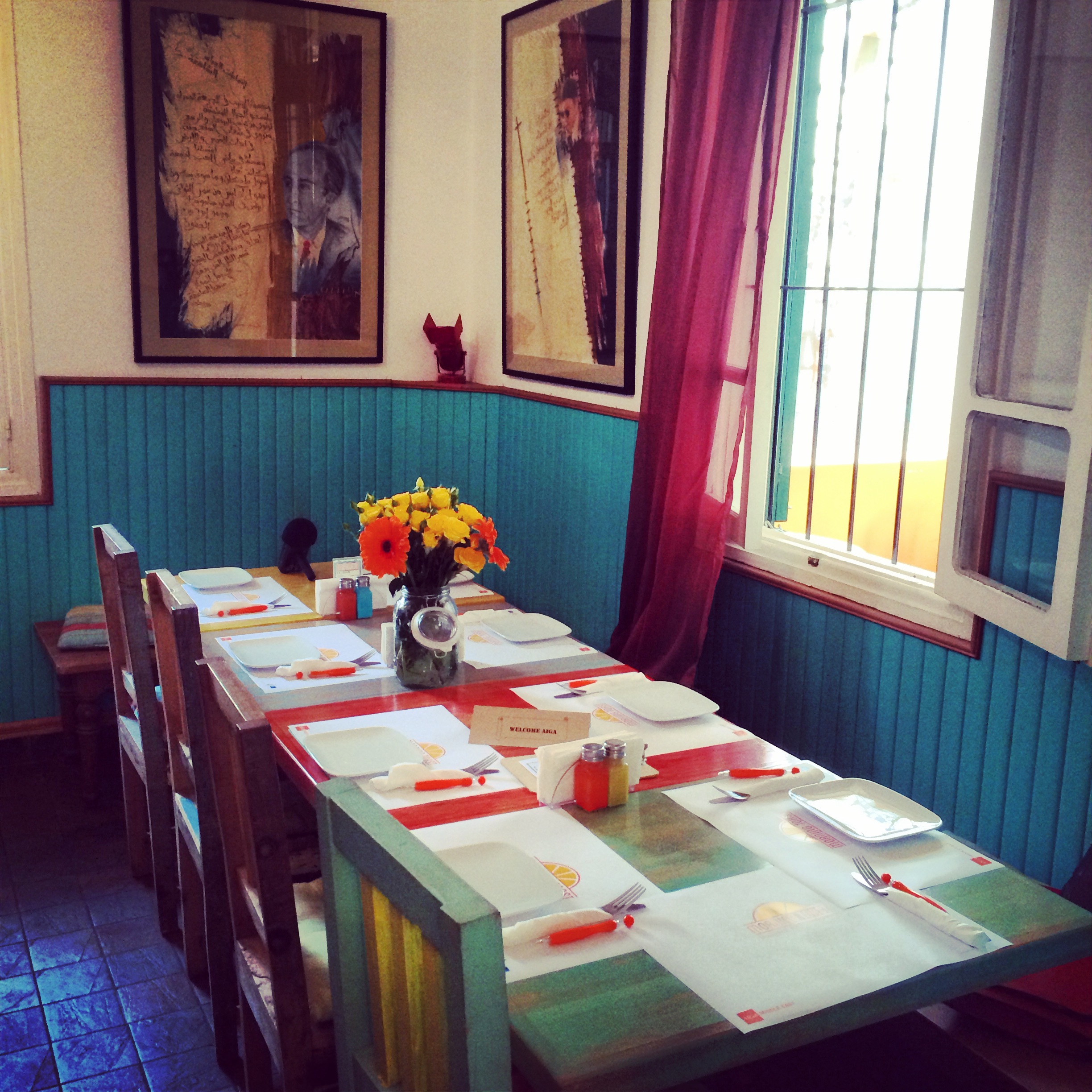
Dar Bistro & Books in Hamra, Beirut
Commonly known for supporting local initiatives, Dar seemed like the right place to launch the first string of Morning Toasts. Located between the AUB Alumni Association offices and the Central Bank, Dar is a popular spot for book and coffee lovers. It’s also a great hideout for work or chitchatting with friends as long as you don’t mind the sound of a coffee machine in the background. During our partnership, Dar was generous and gracious. They signed on for a 6-month period (3 Toasts total), offered complimentary breakfast to the MT guests, and created a space where strangers could have an open and unrehearsed discussion. On top of that, it’s photogenic and very Instagrammable: the perfect ingredients for filming the first MT webisode.
Cutting down a two-hour rich conversation into two-minutes just didn’t seem fair so we are now exploring the possibility of converting our Toasts into bi-monthly podcasts. This way, interested listeners can get a feel for the dynamic on the table and know the whole story. At the conclusion of each breakfast, comment cards are collected so that we can make every Toast better based on the feedback of those who experienced it first-hand. Because this is still a new initiative, there is room to improve and learn from what works and what doesn’t. After all, that is the job of the Beirut Operations Team – treating Beirut as the testing ground for what will eventually be a regional network of creative professionals.
MORNING TOAST VOL. 1
HOST: HANI ASFOUR, POLYPOD
THEME: THE FUTURE OF DESIGN IN THE REGION
MORNING TOAST VOL. 2
HOST: BANA BISSAT, BLOGGER OF BANANAPOOK.COM
THEME: DESIGN IN THE DIGITAL AGE
MORNING TOAST VOL. 3
HOST: KHAJAG APELIAN, MAAJOUN STUDIO & KRISTYAN SARKIS, KRISTYAN SARKIS STUDIO
THEME: DESIGN AND ARABIC TYPOGRAPHY
This is not the only attempt AIGA ME has made when it comes to connecting people. Unfortunately, when finding yourself in a networking event, it always seems forced and uncomfortable. I tend to see people gravitate to those they already know and the actual networking fails to really happen. Because of this, we thought we could learn from ArabNet’s speed-networking event. For Beirut Design Week, AIGA ME started Dak Warak: a gamified speed-networking event at Coop d’etat rooftop once again, symbolically marking our 1-year anniversary. Using a branded AIGA ME Dak Warak deck of cards, people had to go find others with matching suits, colors, or numbers during each 3-minute round, or dak. Seeing that it was a card game where people could exchange business cards too, dubbing it “Dak Warak” made sense since it translates to a round of cards. You could mingle with people, drink in one hand and an actual playing card in the other. Gamification of the networking process was the added layer that made breaking the ice just a little funner. Of course, I’m sure the free beer helped too.
The next Morning Toast is set to be held on the 13th of September at The Beazbee in Hamra, our latest partner in the MT Series. Sign-ups will be open within the next few days. Dr. Yasmine Taan, Chair of the Design Department at LAU, will be hosting this one – can you guess the theme? To stay informed about MT and other AIGA ME events & initiatives, check us out on Facebook,Twitter, or Instagram.
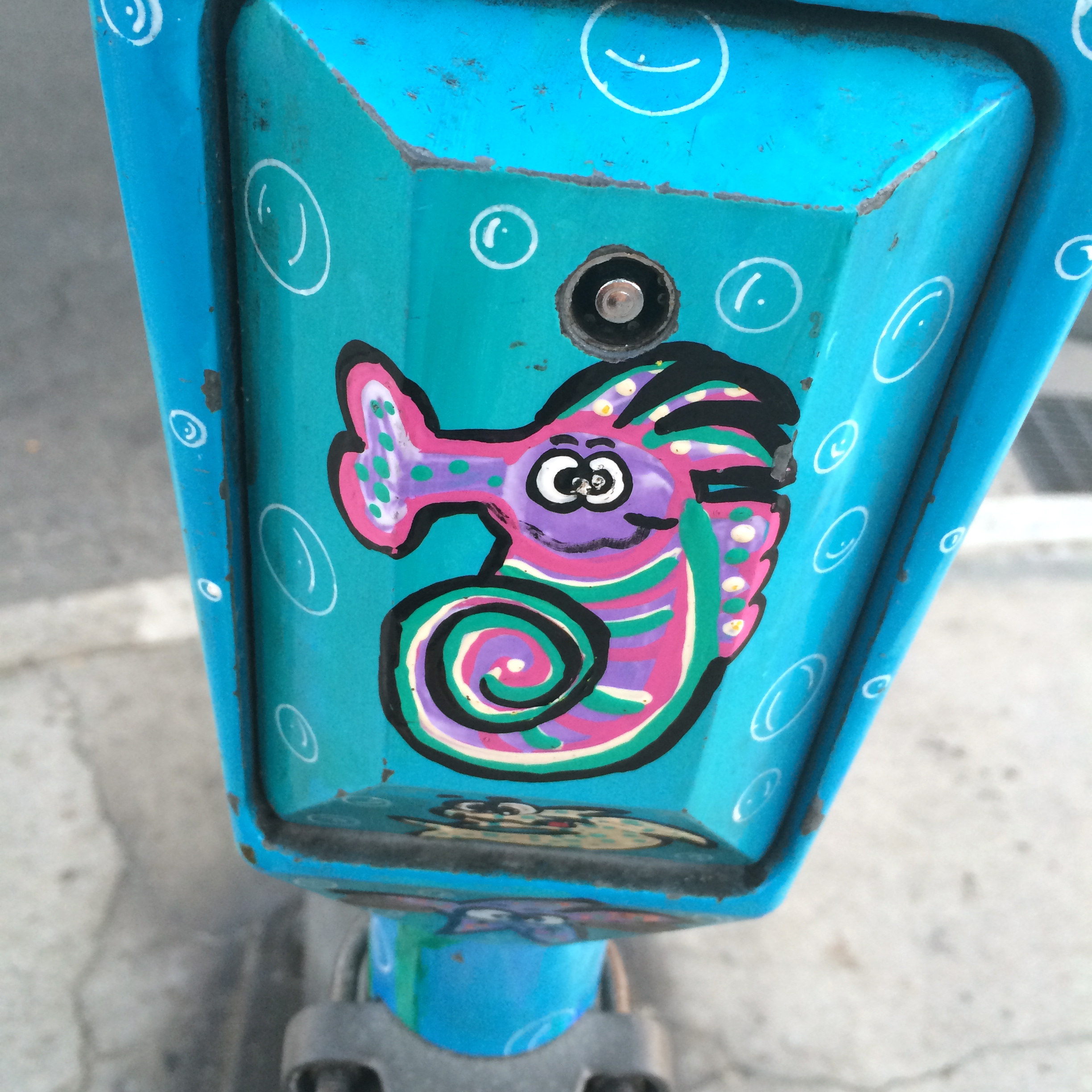
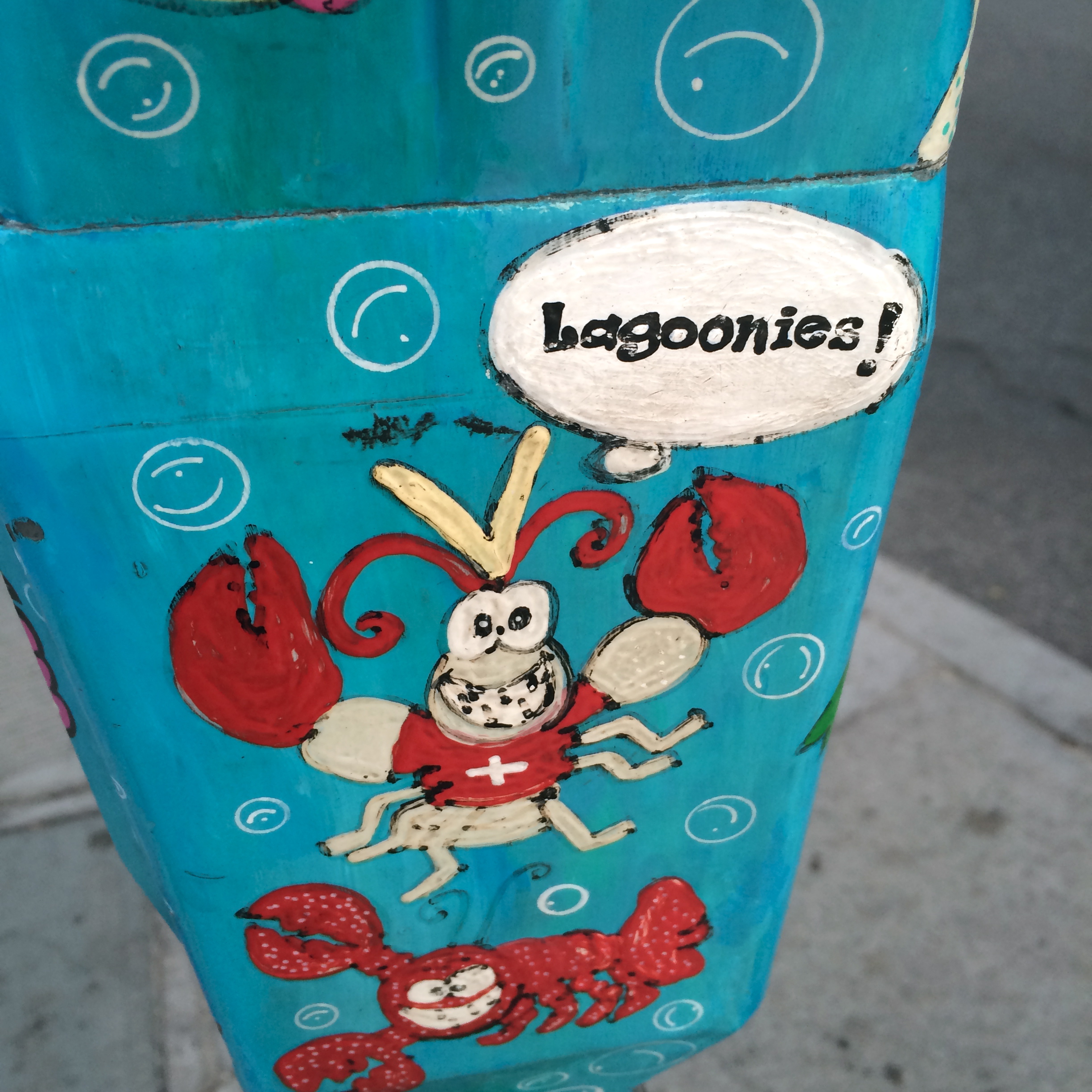
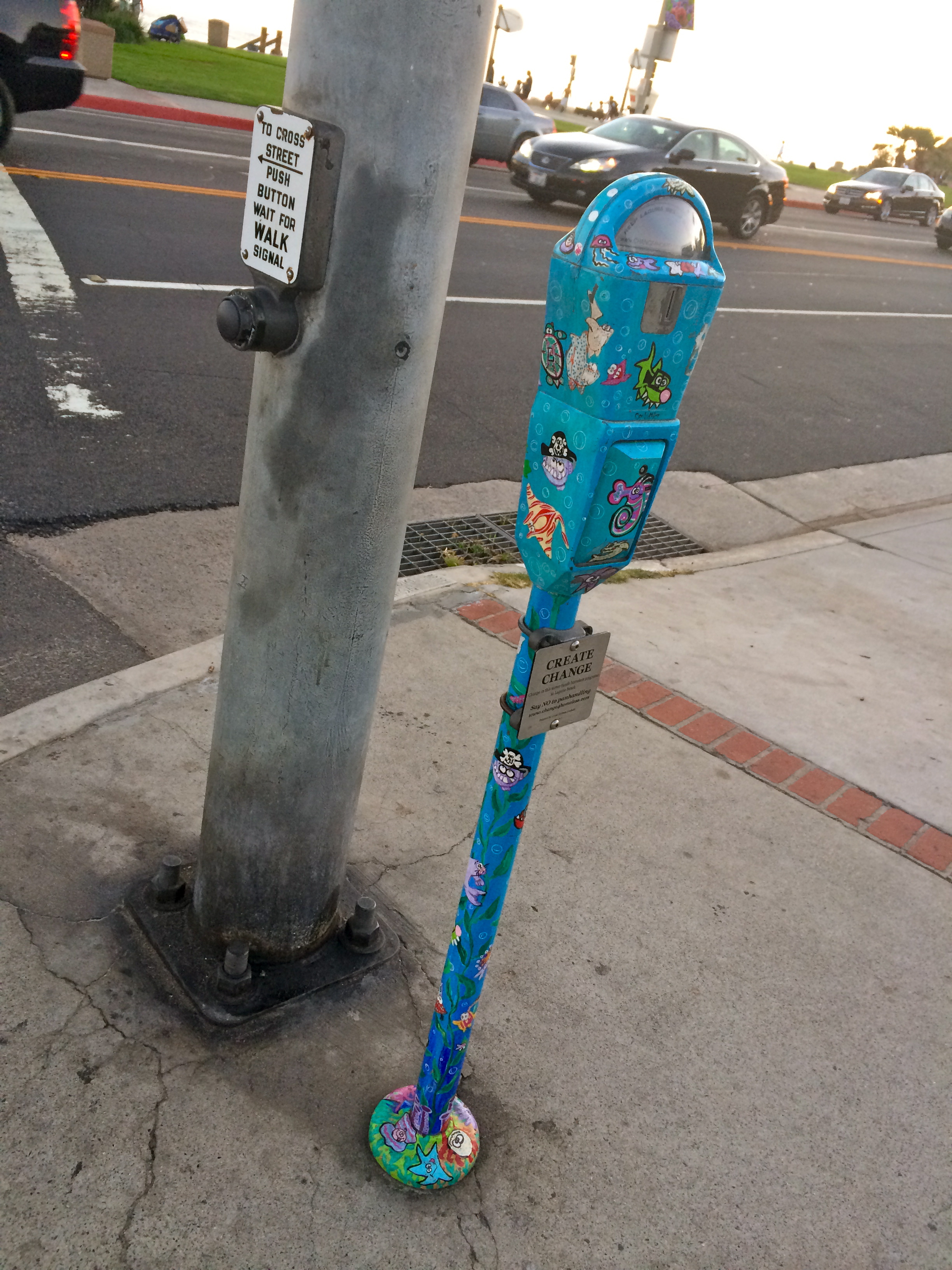
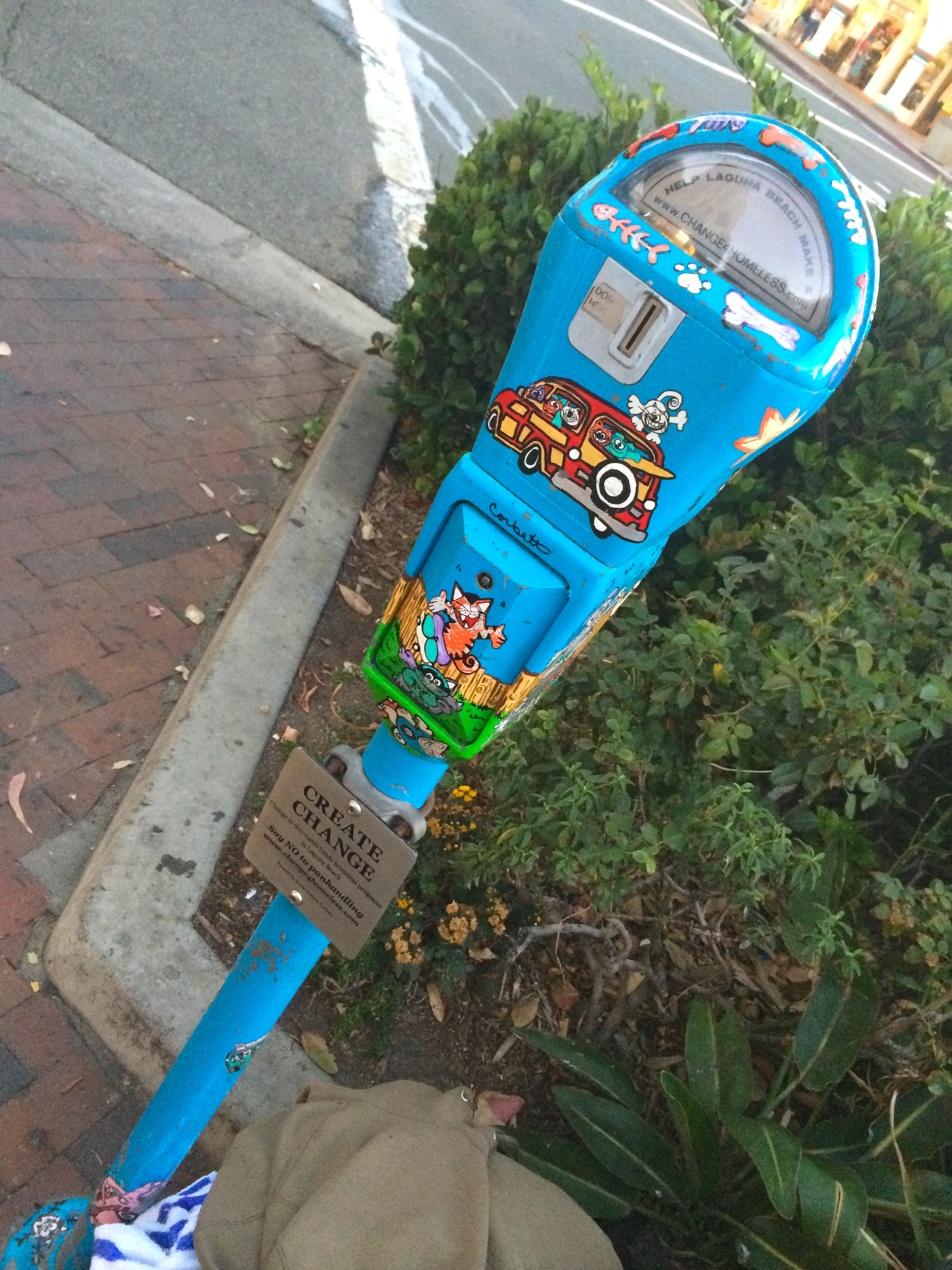
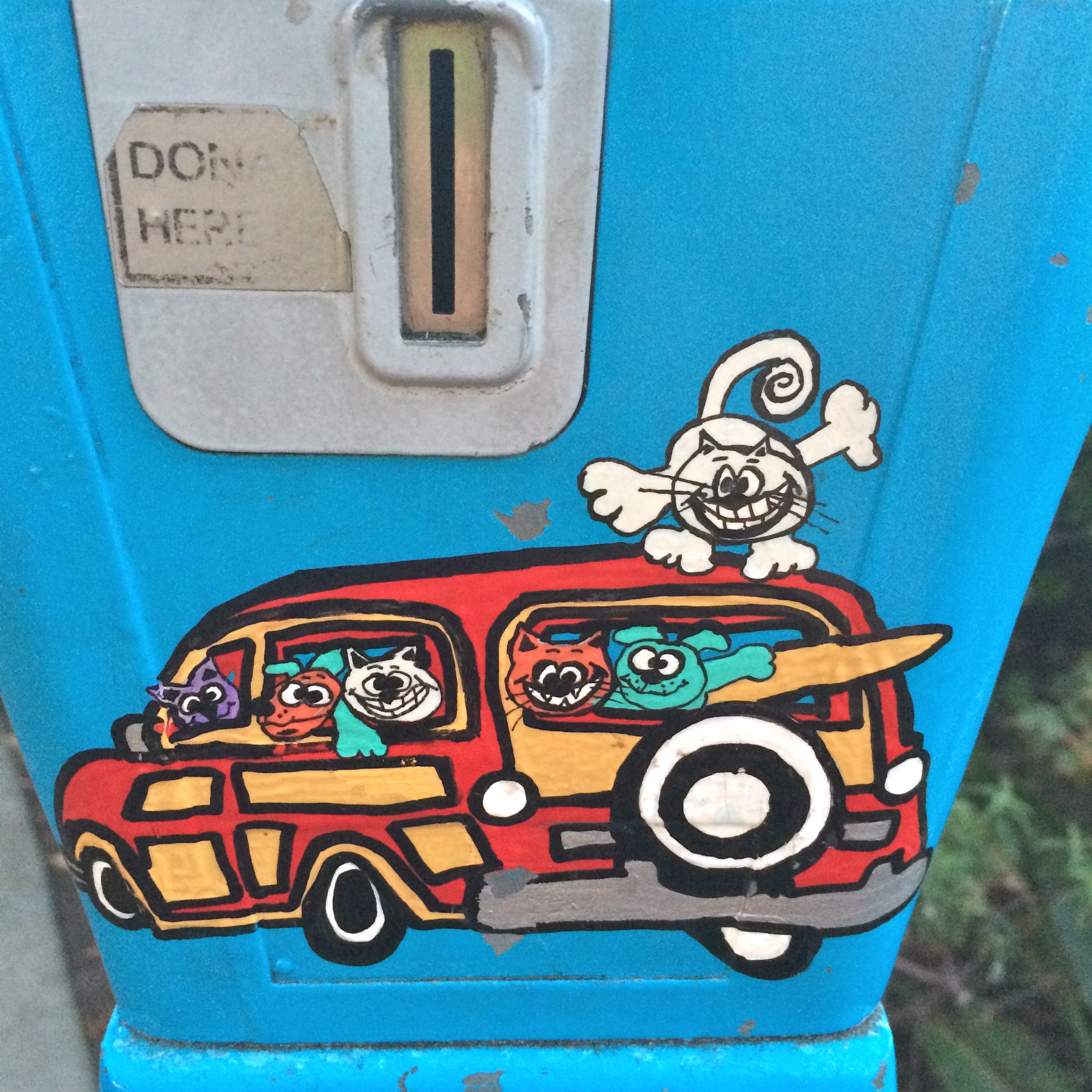
Some parking meters in Laguna Beach have been repurposed in order to avoid panhandlers. Making them colorful little pieces of art scattered around the artsy town, each meter has a plaque explaining that inserted coins will be collected and used toward efforts to aid the homeless. Assuming that these efforts have been effective, I believe this is a good controlled way (regardless of how minimal it may be) to help those in need with your loose change. Although most of us need coins for the actual parking meters since there are no change machines set up, maybe we could implement something similar in the future here in Lebanon.
Last July, I wrote about Coca Cola’s “goodvertising” efforts. Goodvertising refers to when brands do good stuff that have an impact on people through their creative ideas/campaigns. This category of inspirational life-changing work is the kind that most people in the business aspire to do at some point in their professional life – not to mention, the reason a lot of young folk pursue a career in advertising. It was definitely a reason I joined the industry of communication: I want to be part of an initiative that improves a person’s life at the most basic level with an innovative idea that is human to the core.
Cannes Lions Festival of Creativity is an annual festival that acknowledges and awards great creative work. It’s a big deal to win at Cannes because your work is up against the best content produced all over the world. Winning a Cannes Lion is like getting a black belt in advertising. In the past few years, Cannes winners tend to be campaigns or ideas that had 3 things:
a) an unanswered problem
b) useful technology that answered this problem
c) integrated approach based on one human insight
More and more winning campaigns are becoming product-based. Not as in the product that is being sold but as in the advertisers are designing products or solutions to world problems. Technology is a device or facilitator but not the most important factor. The idea is still king. It is increasingly difficult to bring an idea to life that is not condescending yet relevant to the brand’s purpose. It is even more challenging to keep your idea simple: no extra fluff, just an easy low-effort solution. The following were winning campaigns at Cannes 2014 that were just SOME of this year’s best examples of GOODVERTISING:
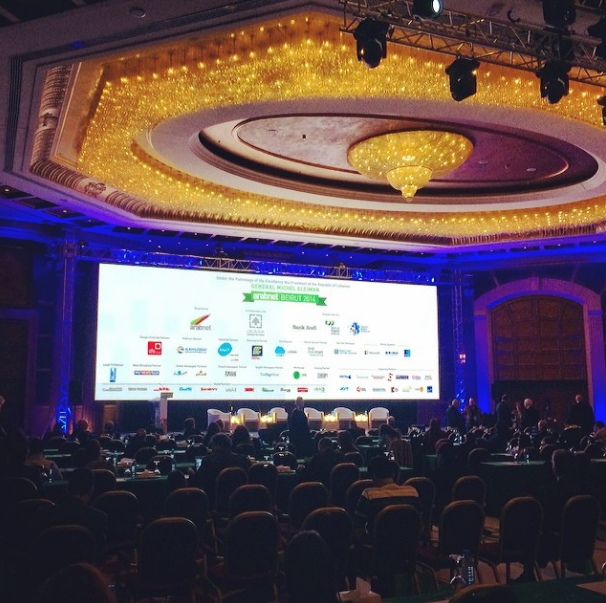
The ArabNet Beirut conference, a 3-day event held at the Hilton Habtoor Hotel, has been going for five years now. As it states on all the banners, it is the “largest regional event for the digital creative sectors.” The three days are split into one day for design & coding and two days for panels & talks (forum days). ArabNet as a whole is done in collaboration with the Banque du Liban (BDL).
This conference is organized so that digital professionals and entrepreneurs can connect and learn from each other. It also creates opportunities for new start-ups to showcase their work, young creatives to compete for funding, and throw a whole bunch of geeks into a hall so they can bond. Although I missed out on the first day, the bits and pieces I got to see were awesome and I was amused that they used a bell to signal when a break was over. We were cattle and we loved it.
I have to say that ArabNet doesn’t seem to cater to the average Lebanese employee. Sure, there are many people flying in from abroad to attend but the citizens of the hosting country cannot afford to pay for a ticket given typical salaries here. I would be worried that I wouldn’t get my money’s worth when ticket prices are that hefty. It is also scheduled in the middle of the work week meaning that, if you chose to fork over the fees, you would have to take days off to attend. Having three full days smack dab in the middle of the week is not ideal for young professionals in the workforce – many of whom would like to attend and may not have a company who will sponsor it. Seeing that this conference is made for empowering entrepreneurs and strengthening the Arab knowledge economy, I feel it could be more wallet-friendly in the future.
HOW I GOT THERE
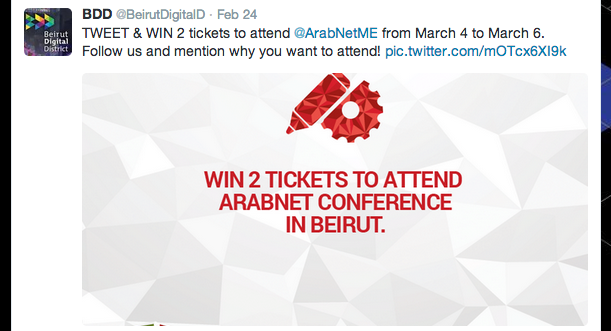
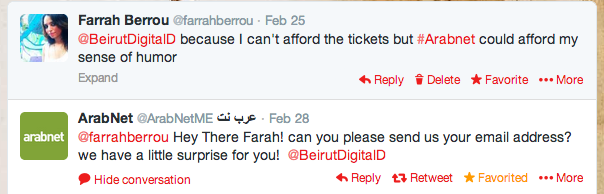
After reading my blog, the folks at ArabNet invited me as an official blogger. BAMBI FTW.
TOP 3 ACTIVITIES
Entrepreneurship and Investing in MENA (Panel)
This panel, moderated by Mike Butcher of TechCrunch, revolved around what was needed to create a better ecosystem for entrepreneurial efforts in the region. A main concern was that entrepreneurs need room to test ideas, but to have that, they need access to information, funds, and support. Other issues raised included the lack of visibility entrepreneurs have, the lack of mentors or investors to fuel the ambition in the region, and the call for the government to break down the barriers faced when setting up a company. Starting-up is challenging and moving between countries is not a simple endeavor. For example, in Lebanon, you cannot loan a company money unless you own 20% or more of said company and many entrepreneurs are afraid of dilution even though it may be best for the company in the long run and thus, more beneficial to the entrepreneur.
People can learn from those with experience and can then scale products that can penetrate the region and the world. There is an immense need for collaboration versus regional competition; we need to put our own money into the ecosystem in order to strengthen it and we need to invest in our own country’s capital. BDL seems to be on the right track: they’re to match 75% of other banks’ investments in start-ups and has pledged 400 million USD to the start-up efforts of entrepreneurs.
Speed-Networking
Based on the concept of speed-dating, speed networking is an hour and a half of 3-minute-blocks to network with a room full of people. I think this is an effective method. My experience with big conferences is that most people, when released into a crowd during coffee breaks, end up gravitating towards someone they know; networking doesn’t happen when you’re always talking to people you’ve already met. This forced-networking changes that. Hassan Kanj talked to me about MENAVERSITY, a website that offers university courses for free like coursera.com except they’re in Arabic. Lara Noujaim told me about Game Cooks, a group of game developers who created Escape from Paradise, a game app that was inspired by Lebanon. Nima Adelkhani, CEO of PITME (Progress in the Middle East), came all the way from San Francisco/Silicon Valley. When I asked him if it was his first time in Beirut, he said, “eighth.” I then asked why he keeps coming back and his reply was, “because it’s the best city in the world.” Check out his webseries titled “Technology in a Tent.” It would be a good idea to do more than one speed-networking session or schedule it on the first day so that you’ve already made some new friends from the start. You’ll be more likely to talk to them throughout the conference if you’ve exchanged names without peeking at their badge or stalking them on Twitter. I only did it once.
Creative Combat
Three teams were given a common brief they needed to create a campaign for. The panel of judges included 4 members of society: Ziad Abichaker of Cedar Environmental, Lara Tarakjian of Silkor, Ziad Nassif of Exotica, and Vera Hassan of Patchi. They’re not realms from GOT, these are companies in the Levant. The brief was to create an awareness campaign about the importance of trash separation. A lot of debate broke out regarding the language used to communicate the campaign. Should it be in English because the online population of Lebanon communicates mostly in English or should it be in Arabic because the Lebanese population communicates generally in Arabic (and makes it more culturally relevant)? After all, the campaign’s target audience was supposed to be the Lebanese population, not the people in the Emirates Hall of the Hilton. After each team presented, the judges evaluated them and questioned their thought process. I enjoyed this but maybe it’s because I work in advertising. It was interesting to just be a spectator.
HIGHLIGHTS OF THE CONFERENCE
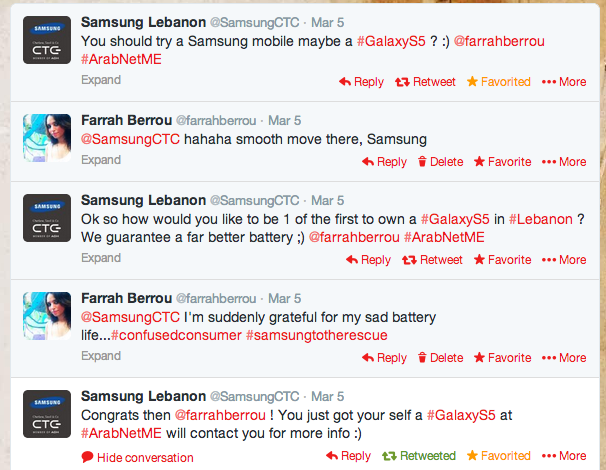
Samsung CTC
This is what happened after I tweeted that my iPhone was not made for live-tweeting implying that my battery was on the verge of death using the hashtag #batterylife.
Taste of Beirut
At the end of day two, the Beirut Digital District hosted the attendees of the conference in a white tent filled with free food & booze from 16 F&B establishments. From Couqley steak frites to Bittersweet Cocktail Bar’s passion fruit cocktails along with 961 Beer, Brgr Co. fresh-off-the-grill miniburgers, and samosas from Alhindi – let’s just say it ended with a happily self-induced food coma.
Twitter Fall
Reading the Twitter Fall while all the talks, panels, and interviews happened was as entertaining as the action on stage. Because the TF was on the screen above their heads, they were unaware of what the audience was tweeting about the discussion. Some people can be so mean from behind a screen.
In the opening ceremony, Omar Christidis, CEO of ArabNet, said that they were “committed to being and staying in Lebanon.” That’s good to hear. As Adelkhani says, “People who are busy working and building cool companies are less likely to start revolutions and fight wars.” And remember folks, good things come to those who tweet!
Lebanon’s got a smorgasbord of hidden talent. Well, maybe not hidden but they certainly don’t get enough attention for the monumental work they’re doing. Lebanon has an issue with managing landfills: we burn trash, bury it, or dump it in our sea. I read once that the country is only able to recycle a maximum of 6% of its collected waste. SIX PERCENT. What is the discrepancy between produced and actually collected?
The below are just a few instances where people are working towards a greener Lebanon which is an initiative we should all start aiming for through more environmentally-friendly plans and sustainable design & development.
Najjar is a designer at White Sur White who spoke at Pecha Kucha last week. One particular product featured in his presentation was a portable solar cell that can be used to replace electric generators. It looks like a Samsonite suitcase with wheels and everything except it offers 5-10 amperes of electricity. The 1+1 project was created by them in order to produce furniture with less waste, short-cutting the way products are made. Najjar said that 40% of a product is pollution between packaging, shipping, and additional wrapping. They bypass this by making their furniture easy to transport and assemble like stacks of flat sheets that interconnect. By doing so, they effectively take preventive measures towards producing unneeded layers of material that will just be thrown away.
Waleed, also a speaker at Pecha Kucha, is behind the latest fashion trend going around. Perhaps you’ve read about WASTE on the various sites that are talking about their work: fashion pieces made of trash. Flex material (the heavy-duty plastic that advertisements are printed on to withstand harsh weather), along with car seatbelts & the inner tubings of tires are what WASTE uses to make collections of bags and furniture. Because they’re using such materials, every piece of their collections is 100% unique too – even if they have a double of a certain advertisement. The interior of the Etihad Art Gallery Cafe in Abu Dhabi is full of re-purposed furniture all put together by WASTE’s scavenging efforts. They raided all the swap markets, antique shops, and Basta-like venues to fill it up with recycled “junk.”
Green Glass Recycling Initiative in Lebanon is led by Cedar Environmental’s Ziad Abichaker, the trash king of our nation. He spoke about his love story with garbage at TEDxBeirut 2012 and is setting quite the example when it comes to implementing sustainable waste solutions. Abichaker, who was the brains behind turning nylon bags into sturdy boards by compacting them using intense pressure, is now working to bring back the art of glass blowing (stop giggling) by giving used glass bottles a second life.
Started by Syrian Muases, Artafif is set up in Furn el Chebbak. He’s creating glassware and accessories out of sliced beer bottles. I’ve seen this done on Pinterest and it seems pretty easy: you use rope and acetone to cut the bottles, then sand the sharp edges. Of course, his process is probably more complex & aesthetic, and hopefully more effective when it comes to sanding.
I found these guys while scanning Waraq’s Facebook page. Waraq, located in Ras el Nabe3 and another group from Pecha Kucha, is a team of 4 artists who created an “artists’ community” that hosts workshops and screenings. One up-cycling workshop was held a few weeks ago with the Junk Munkez, a duo comprised of an animator and a product designer. Their Facebook page states, “We design colorfully fun objects for those who seek a lighter and greener side to life. By using eco conscious ethics in designing eco friendly products, we are trying to spread DIY and RRR principles in our rather upside world. Where consumerism and surplus reign supreme.”
“Goodvertising”, a term coming from Thomas Kolster’s book of the same title, is about how advertising can be used towards the good of mankind. Agencies and charities have come up with fantastic ideas that can make a difference, even in the most subtle and simple way. You can find out more about him and the book by watching this interview here.
One brand I want to focus on in this post is Coca Cola. Although they have not solved world hunger or started the One Laptop Per Child NGO, they are using their product and their brand to spread something that all people want and need: happiness. This year alone, Coke came up with innovative ways to push the envelope through unconventional media and technology, hashtagging it all as #workthatmatters.
1. Small World Machines
Through the use of their vending machines, Coke used basic video-calling technology and wide-angle cameras to be able to connect neighboring countries that are barred off from each other due to political conflict. Using simple gestures and tasks, they created connections between people who never get the chance to interact.
2. Sharing Can
Another spin on their product’s design, Coke created the ideal way to share a can: literally splitting it in two. The Sharing Can, brainchild of Ogilvy Singapore & France, was launched in Singapore in March but I have yet to find any info on the cans being distributed anywhere else since then. Leonardo O’Grady, director of integrated marketing communications, Coca-Cola ASEAN, related the mechanism to breaking a loaf of bread and that’s pretty accurate because it can be seen as the modern day loaf-sharing. *Aladdin and Abu* Plus, it’s a keepsake for those who admire product design (someone please send me one). 3. Smile Back
Most of the time, if a stranger smiles at you, you freak out and think the weirdo wants to kidnap you and wear your skin. No? Anyway, this shows how spreading smiles may not be as harmful as you think and when you take the chance to smile back, the universe rewards you. That was so Paulo Coelho, I’m sorry. Watch the vid though, it’s good stuff.
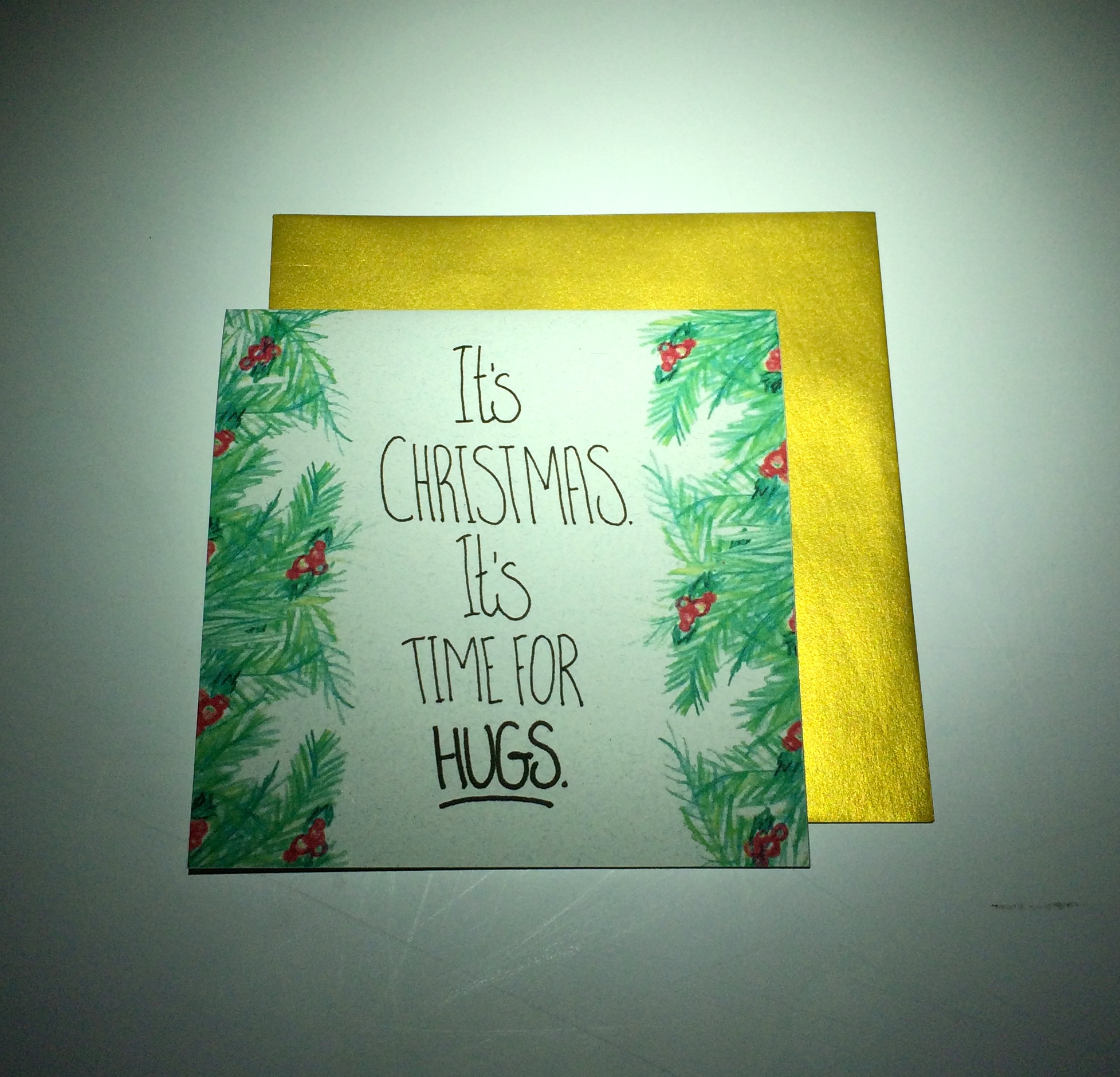
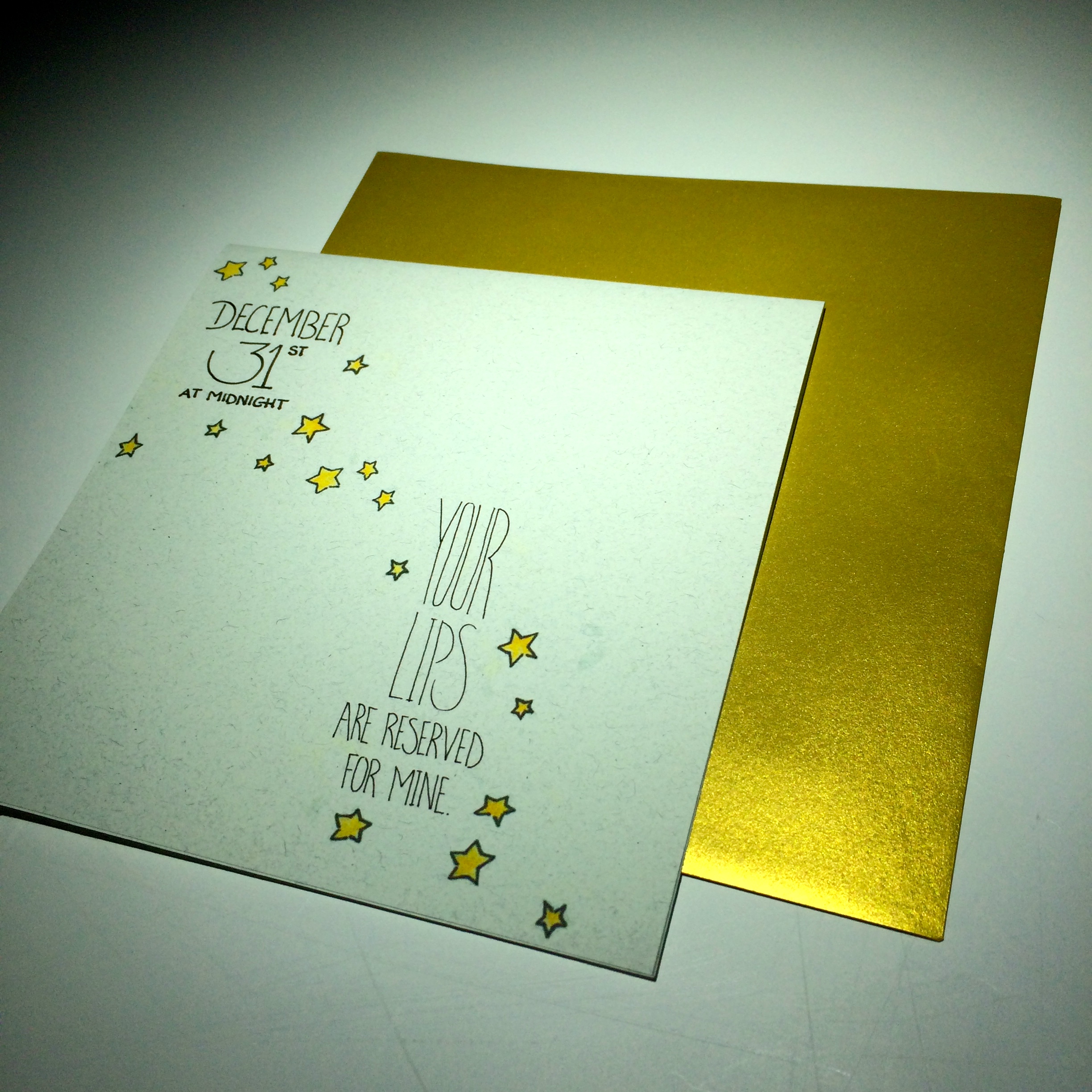
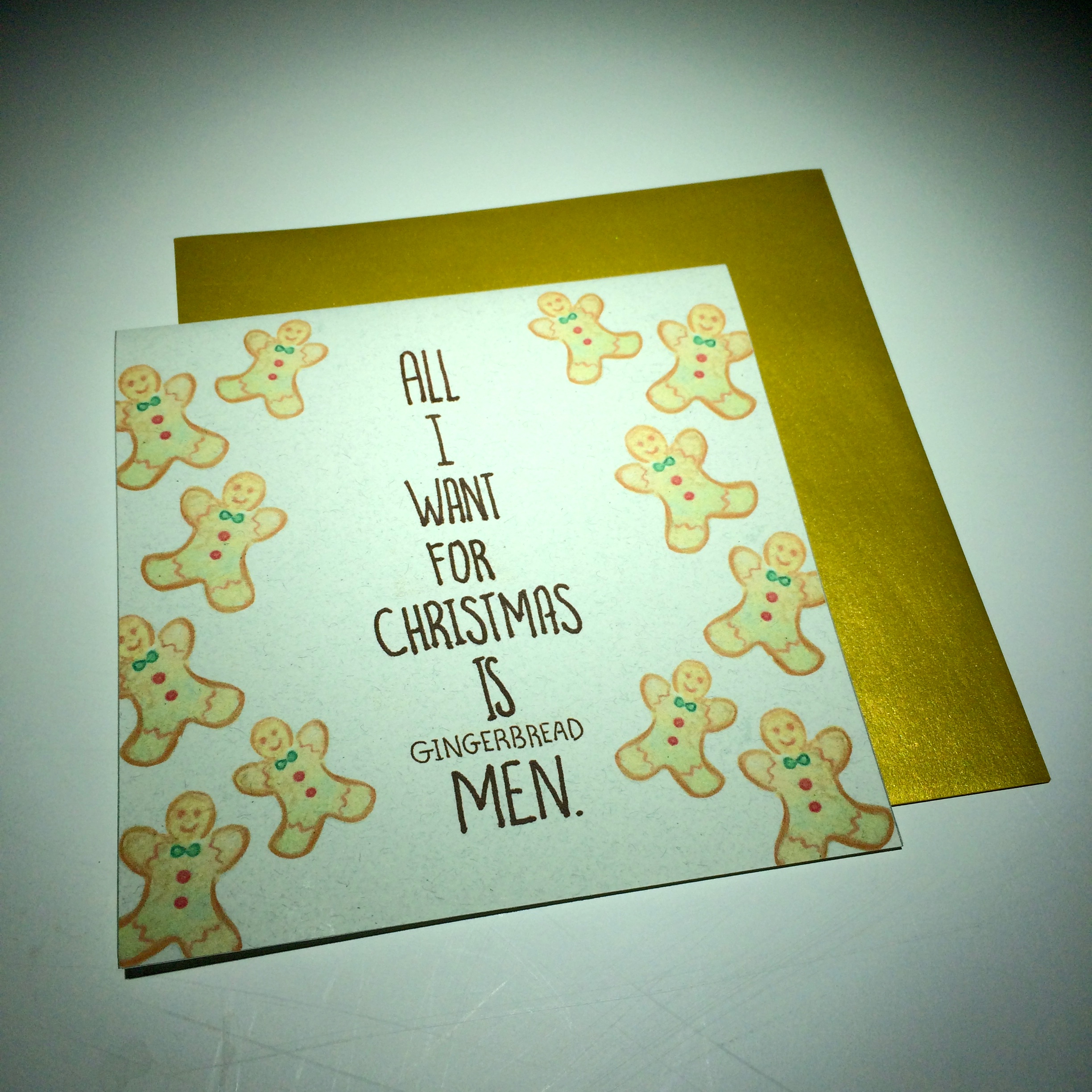 Each card will be sold for 8,000 L.L. and 3 for 20,000 L.L. (including a gold or silver envelope for each). Hala, my former classmate and AIGA ME teammate, will be splitting the stand with me so be sure to check out her illustrated totebags and postcards too!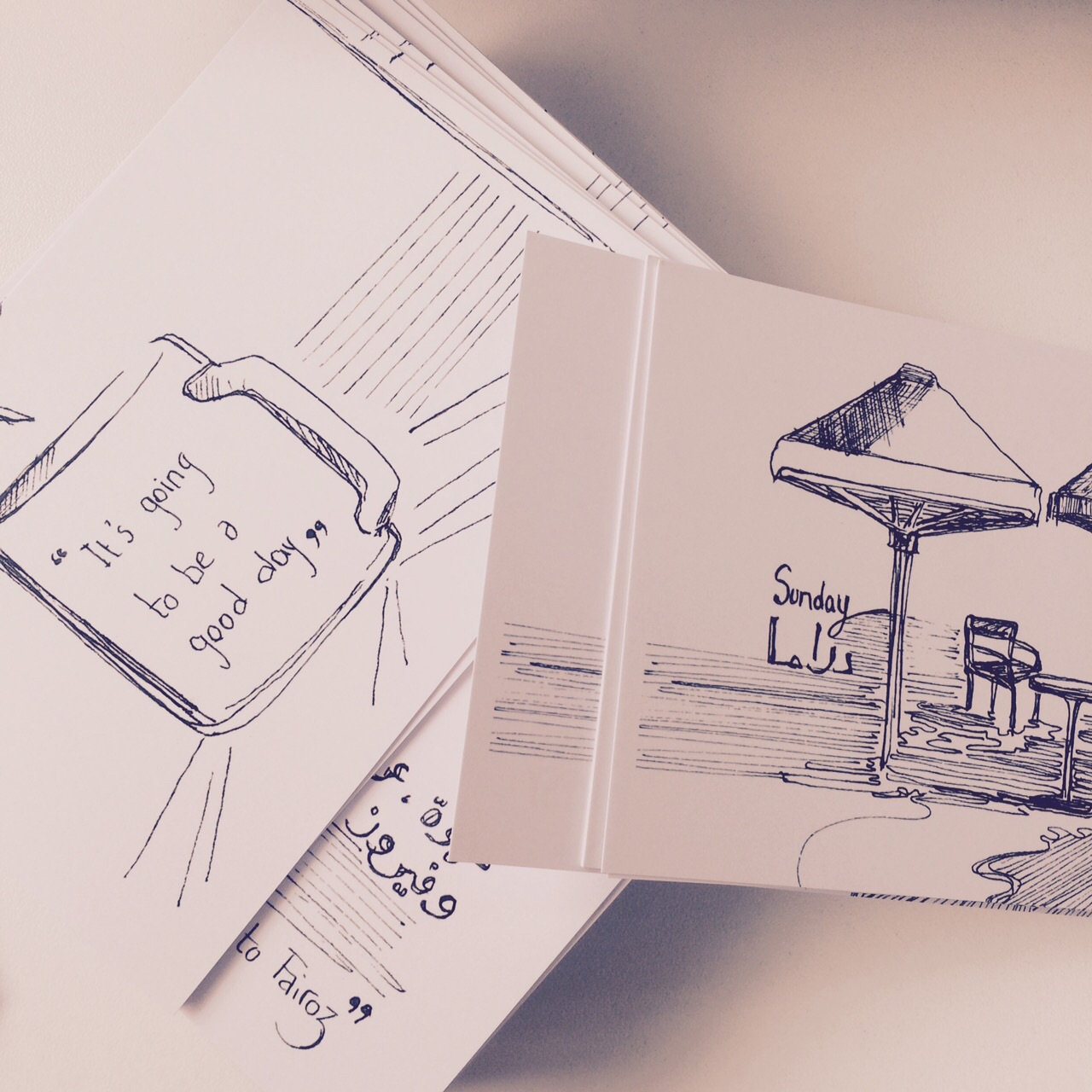
 Dar Bistro is located between the Central Bank and the AUB Alumni Association office in Hamra (go down the small alley next to the Wardieh station before CMC). It’s all weekend long so pass by for a hello, a coffee, and a card!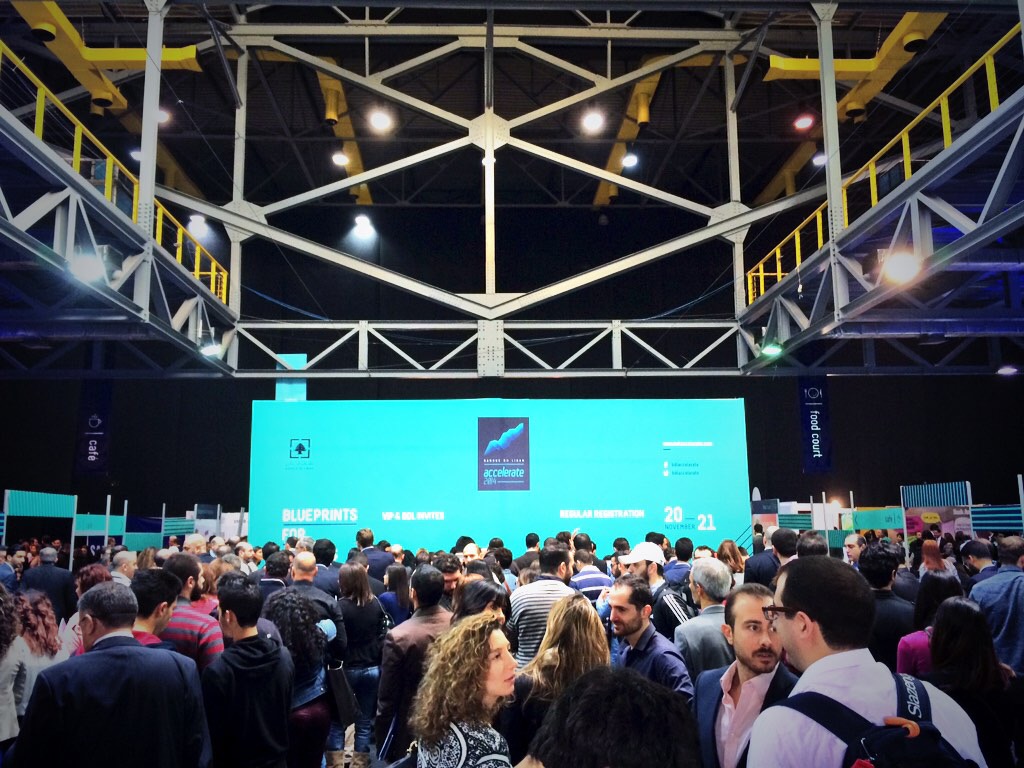




 Bambi's Soapbox