My Morning with Edgard Chaya

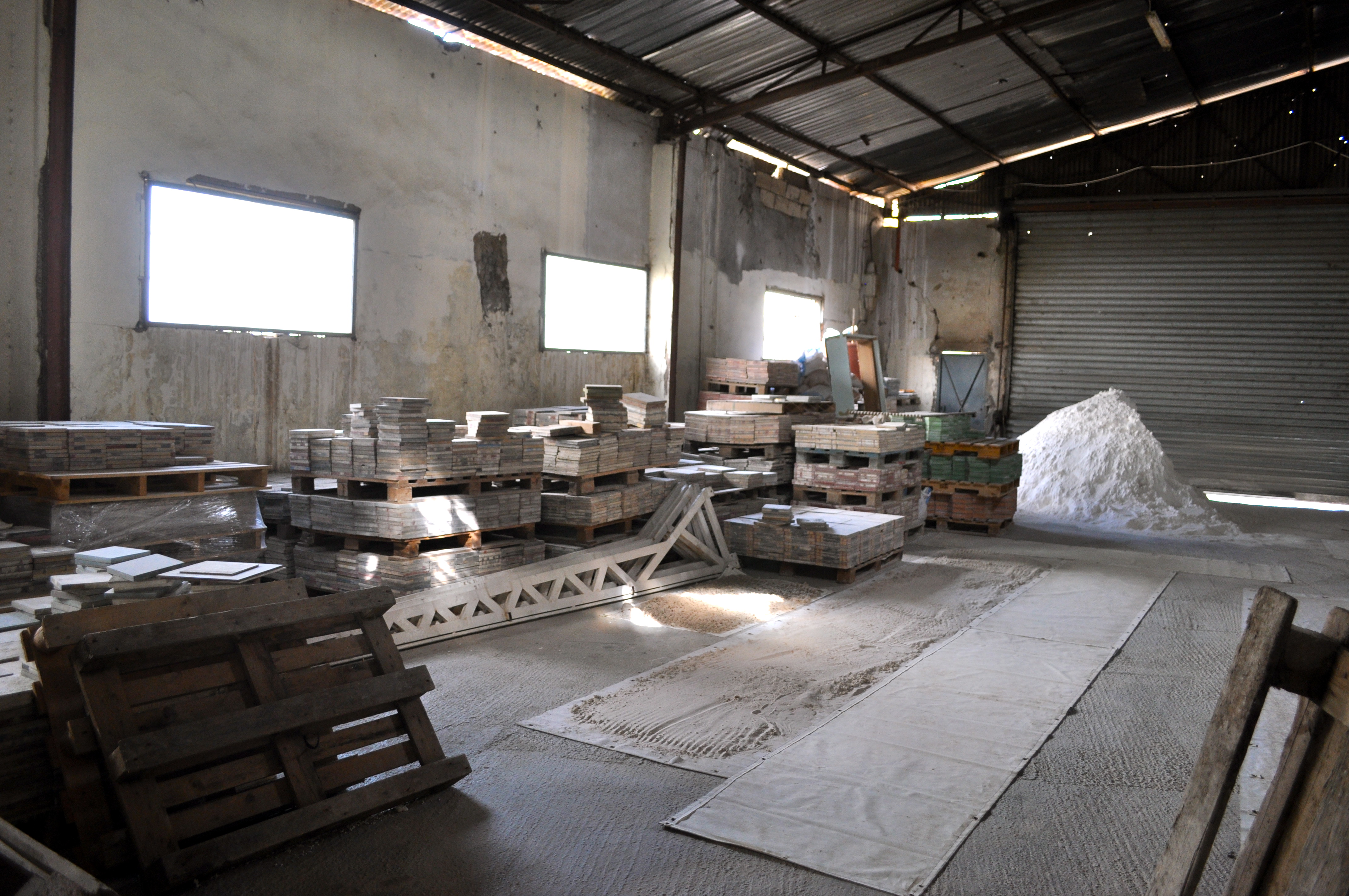
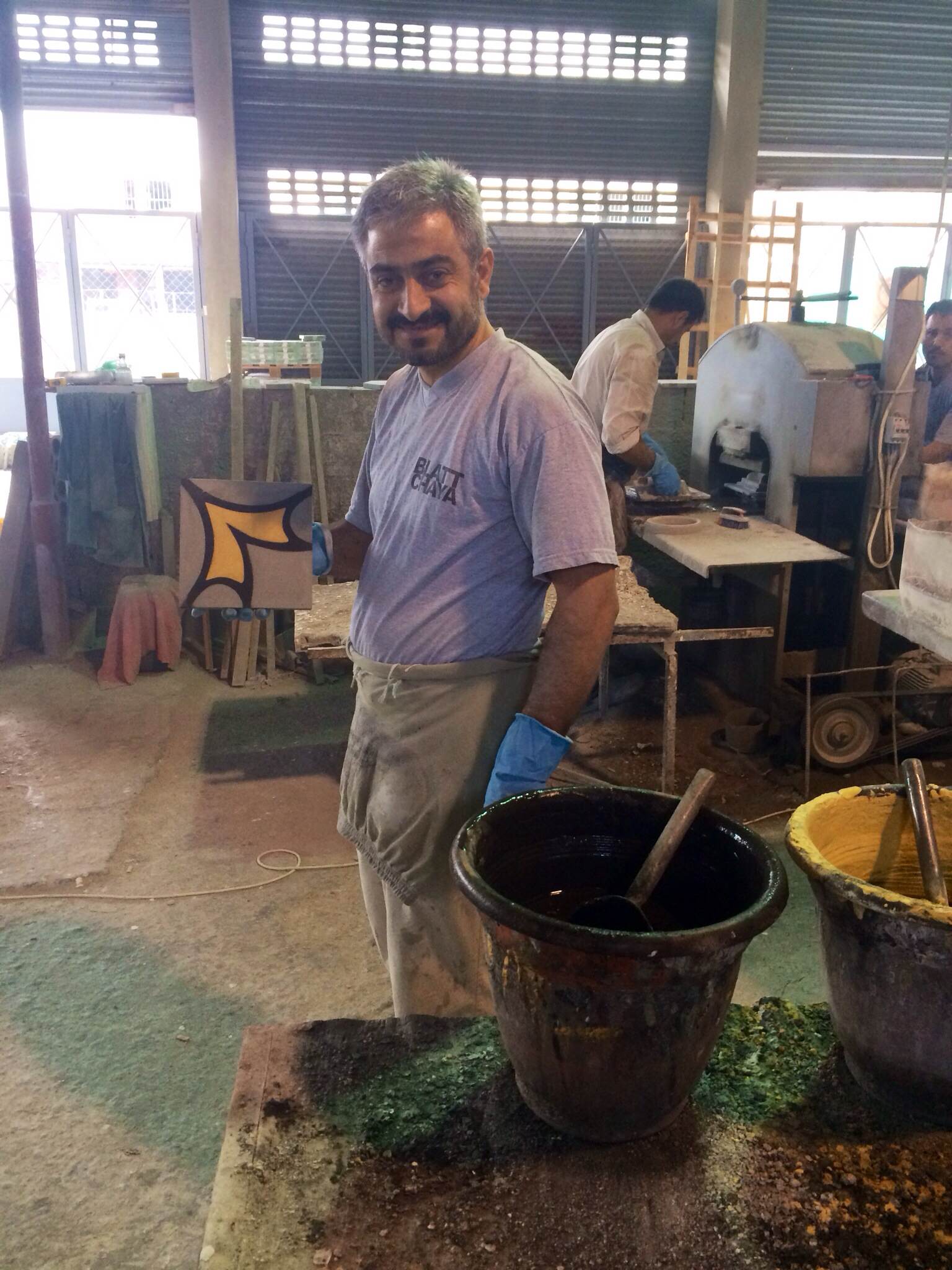
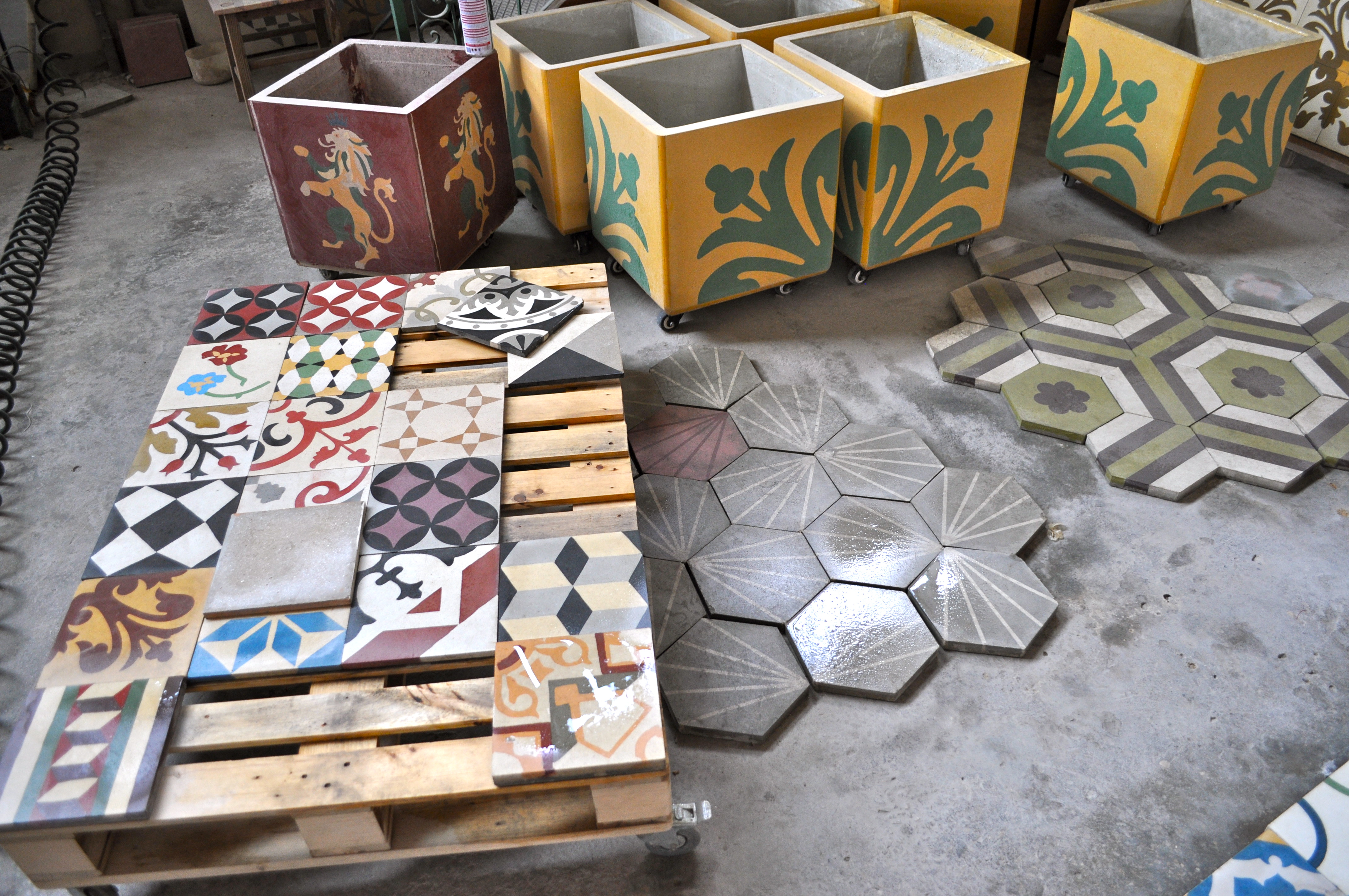
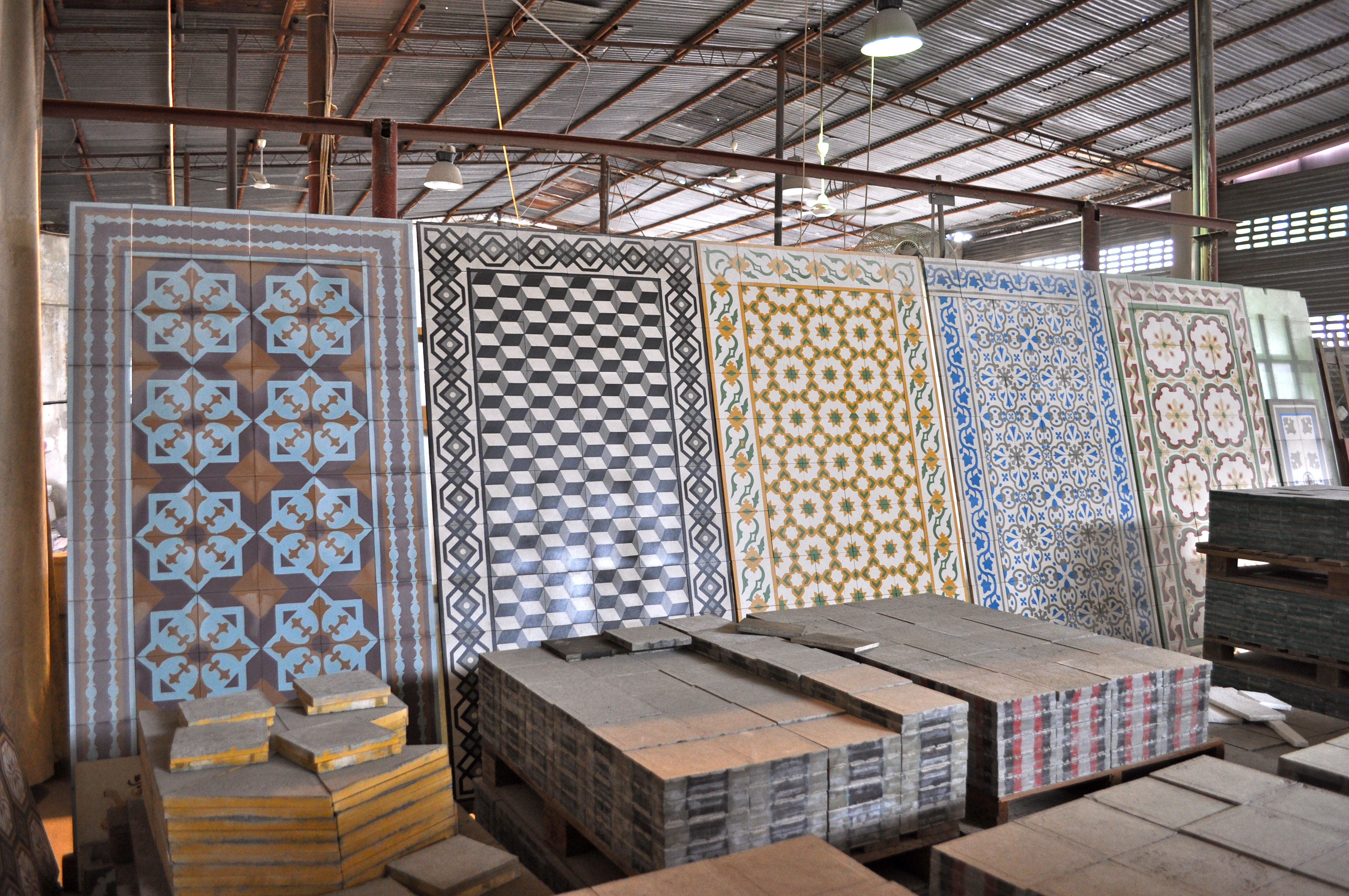
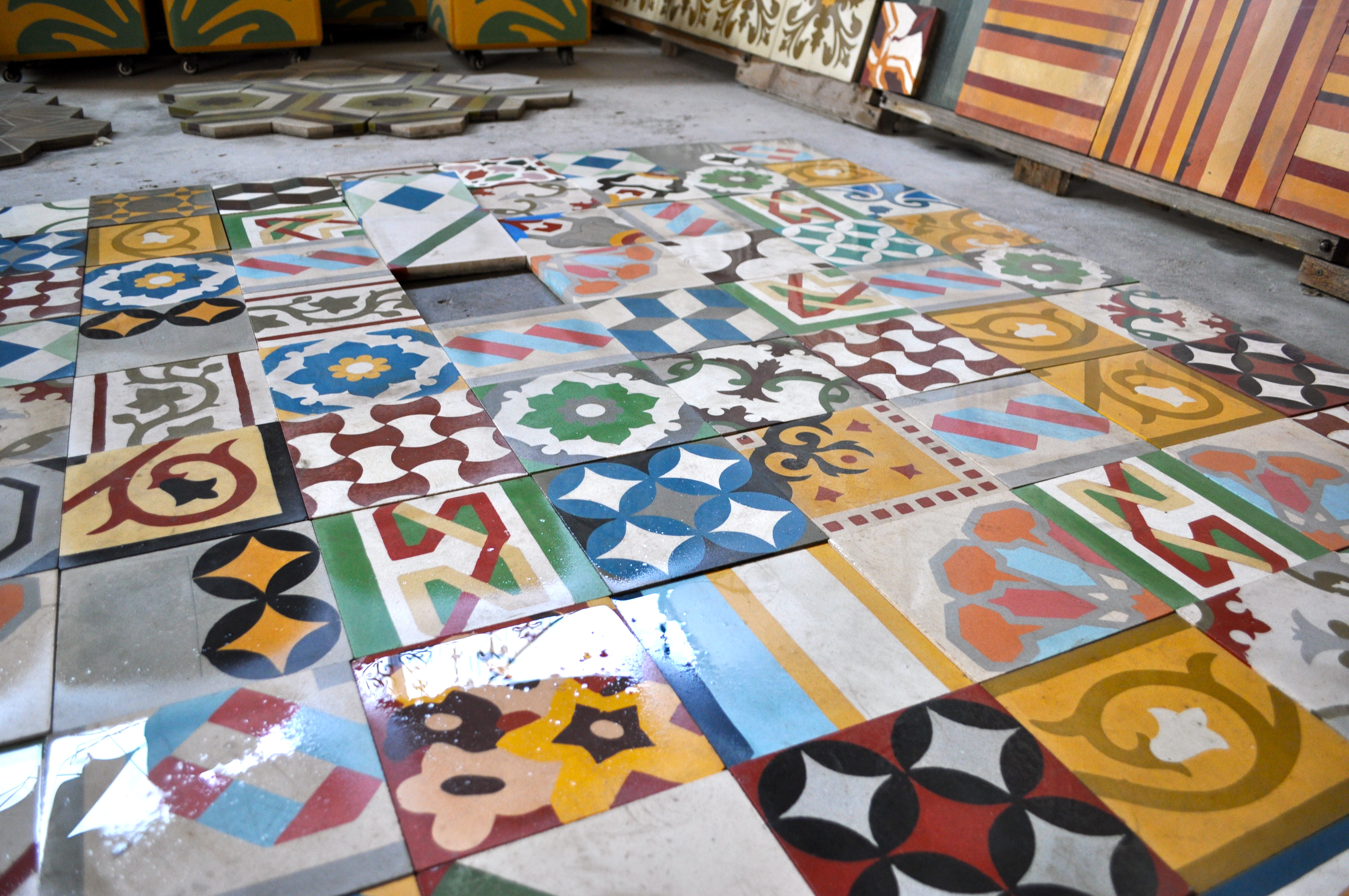
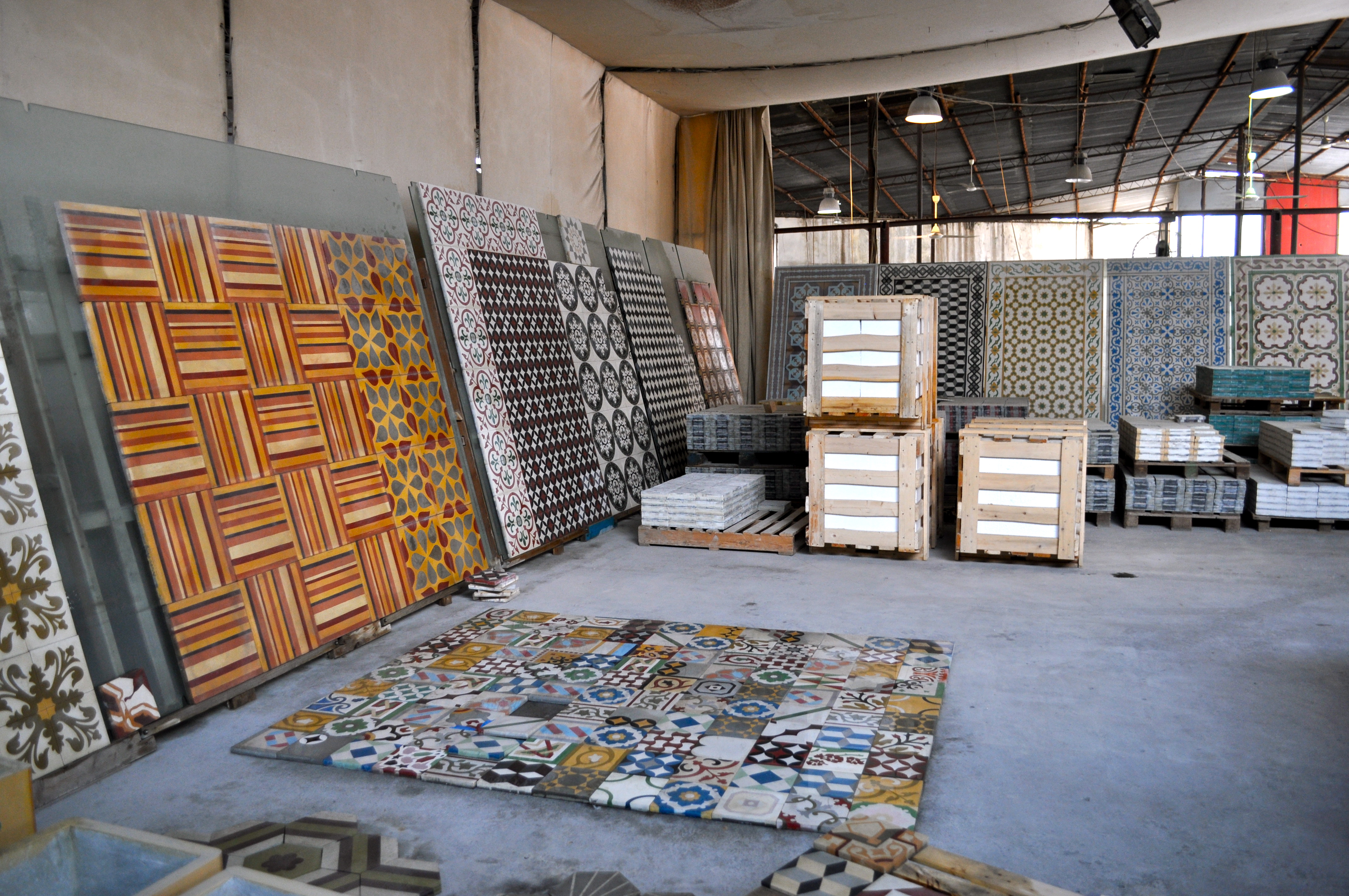
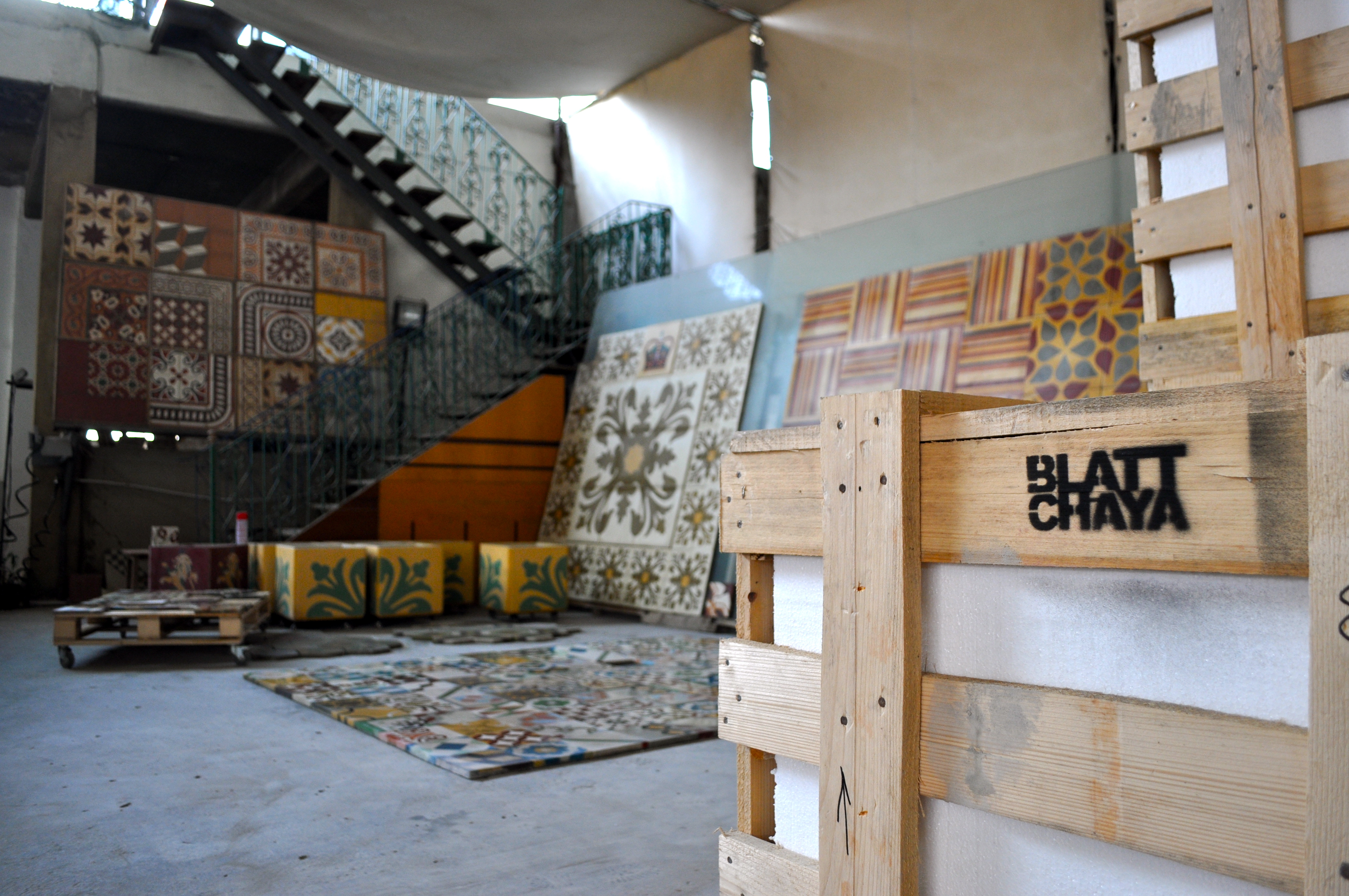
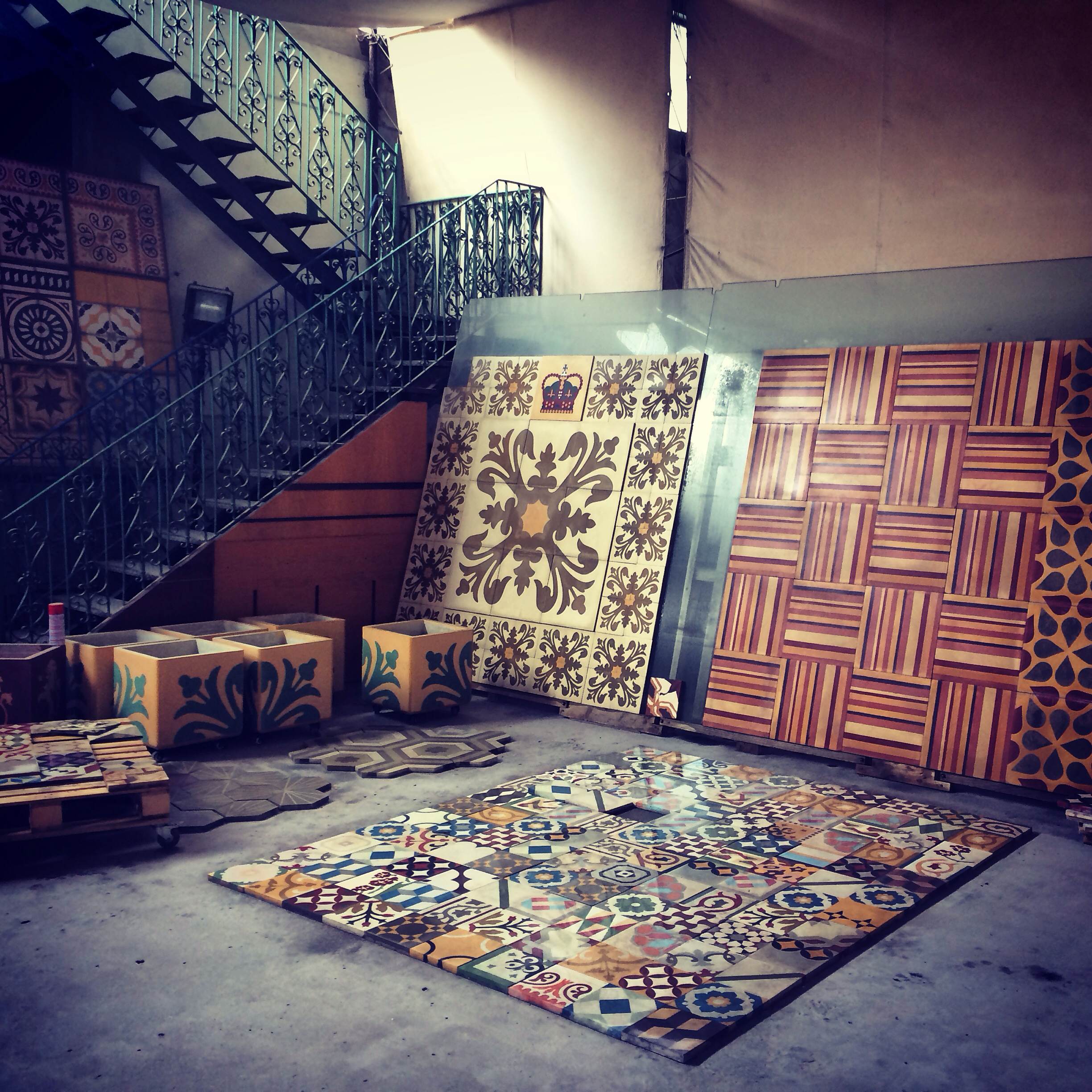
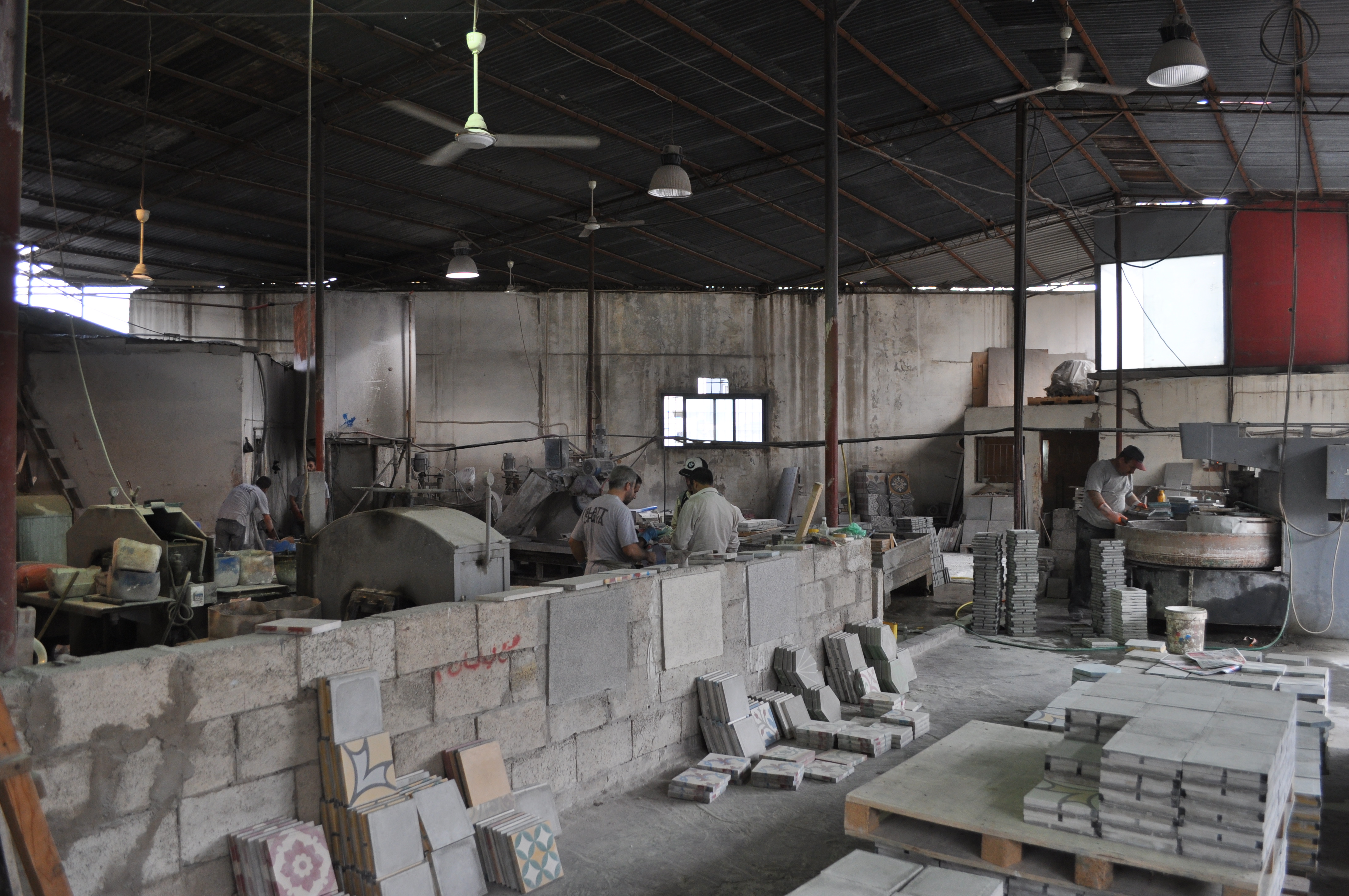
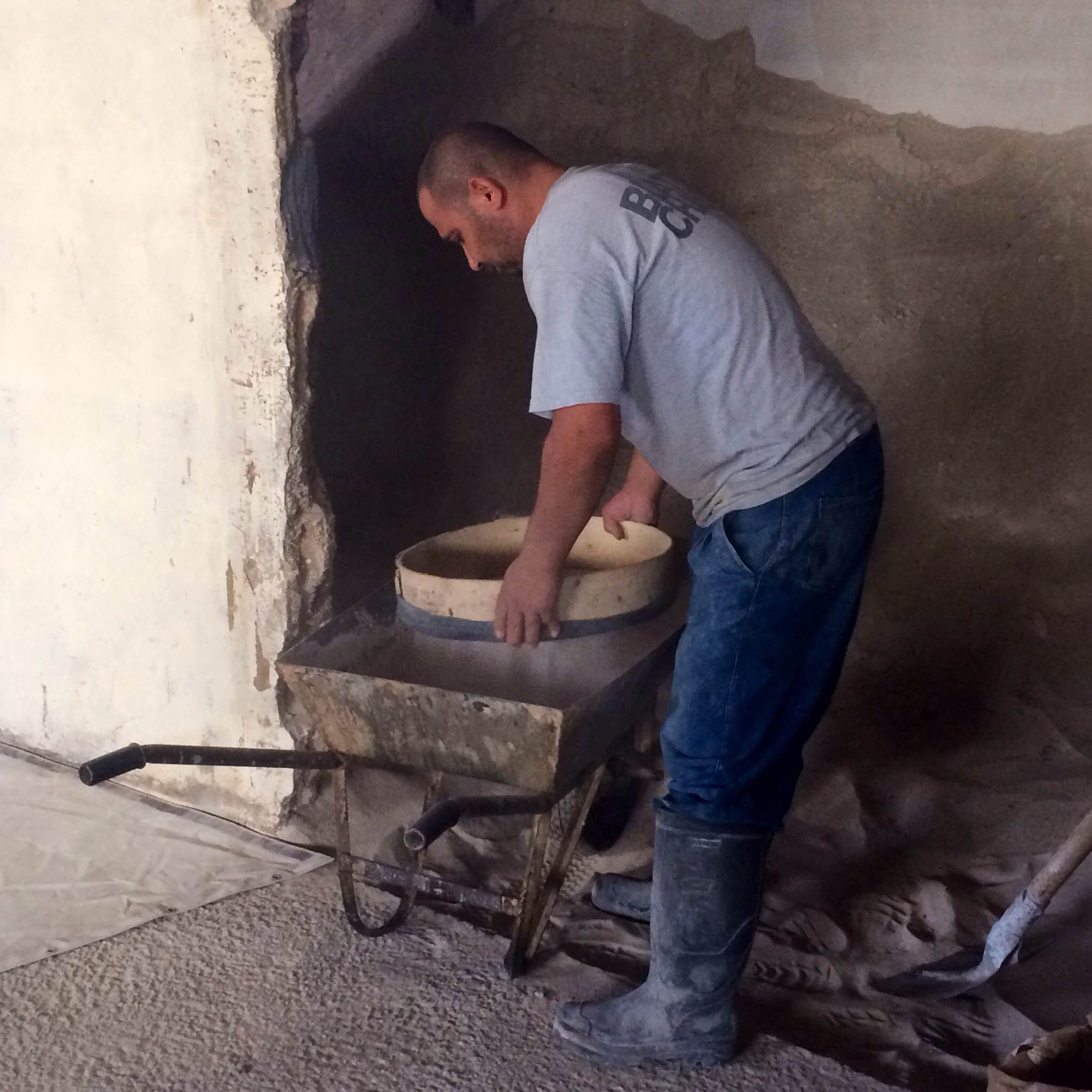
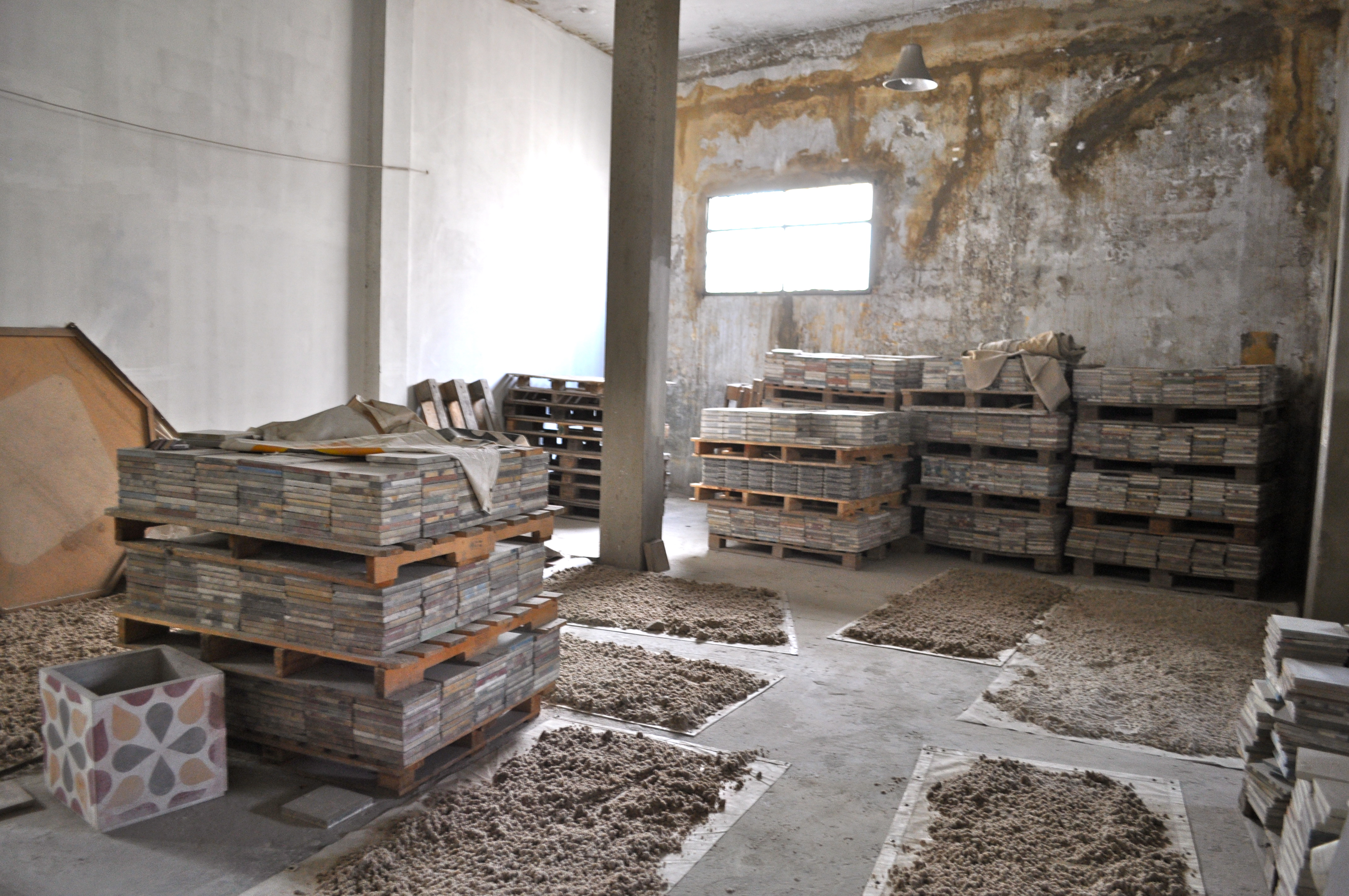
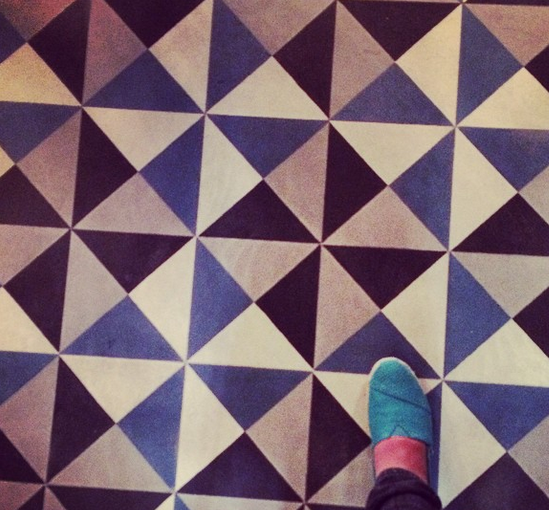
DSC_0193_2 “Do you like your coffee with or without sugar?” I didn’t have the heart to tell him that I’m not a fan of Turkish coffee. It reminded me of how my teta still asks if I want chai with my eggs on the morning of every Eid even though she knows I don’t like tea. I was never good at being a hardcore Arab. How do you say “no, thanks” to a man who is the embodiment of the Lebanese jiddo? Although my jiddo was more of a Paul Sorvino kind of grandpa, Mr. Edgard Chaya is the man I would imagine when I hear about an artisanal craft that requires patience and pride but has long been locked away in a drawer. He smokes a pipe, wears suspenders with his suit, and tucks a handkerchief in his jacket lapel. He is the essence of Blatt Chaya because he has an old-school aura, as if he is from the time of the tiles that bear his name: a time when elegance was done for one’s self not for everyone else, when it was effortlessly debonair and respected. IMG_7402 I wanted to learn about the process that created these tiles that I’d seen in various places around town. So after shooting an email and making a few calls, there I was, not entirely awake at the Blatt Chaya factory in the industrial quarter of Dekwaneh, meeting with Mr. Chaya for very dark coffee on a very early random Saturday morning. Blatt Chaya has been operating for fifteen years but it took Mr. Chaya four to perfect the technique of producing terrazzo tiles like his great-grandfather. It wasn’t just a matter of finding the old molds but also figuring out how to keep the colors from mixing when removing the metal stencil. Not that he wanted impeccable tiles – Mr. Chaya prefers the ones with mistakes because it makes them human. “Every tile is unique,” he says, because the dyes are mixed each time so the color isn’t always the exact same hue, the molds are manually set, and even the sand used is sifted and laid out to dry by hand. The imperfections that result from this process are evidence that these pieces were made by a person, not a plugged-in machine. DSC_0191 “Finish your coffee and then I’ll walk you through the whole process.” I kept drinking until I tasted the coffee grinds. I realized I’d gone too far to prove I’d finished my cup but it was my initiation into the fraternity of Blatt Chaya: it had to be done if I wanted to make it into the factory. With a small team of 12, the sand is first sifted through a netted strainer to remove all dust and impurities then washed with water five times. The wet sand is set out on fabric in gray cottage cheese-like mounds until it dries, resulting in a fine clean powder. Using the molds within a framing, naturally-colored or dyed cement is poured into the stencil and sealed. The frame is pressed at 130 psi to solidify the tile. After being dried and sanded down to a smooth finish, the environmentally friendly ingredients have become immortalized works of art. Because terrazzo tiles have color within the cement mix, it withstands weathering and deterioration. Unlike painted tiles, the design and color remain as the tile is worn down over time.
IMG_7379

Sifting through the sand

DSC_0209_2

The sifted and washed sand is laid out to dry
DSC_0210_2

Sand drying out among the stacked tiles
IMG_7378

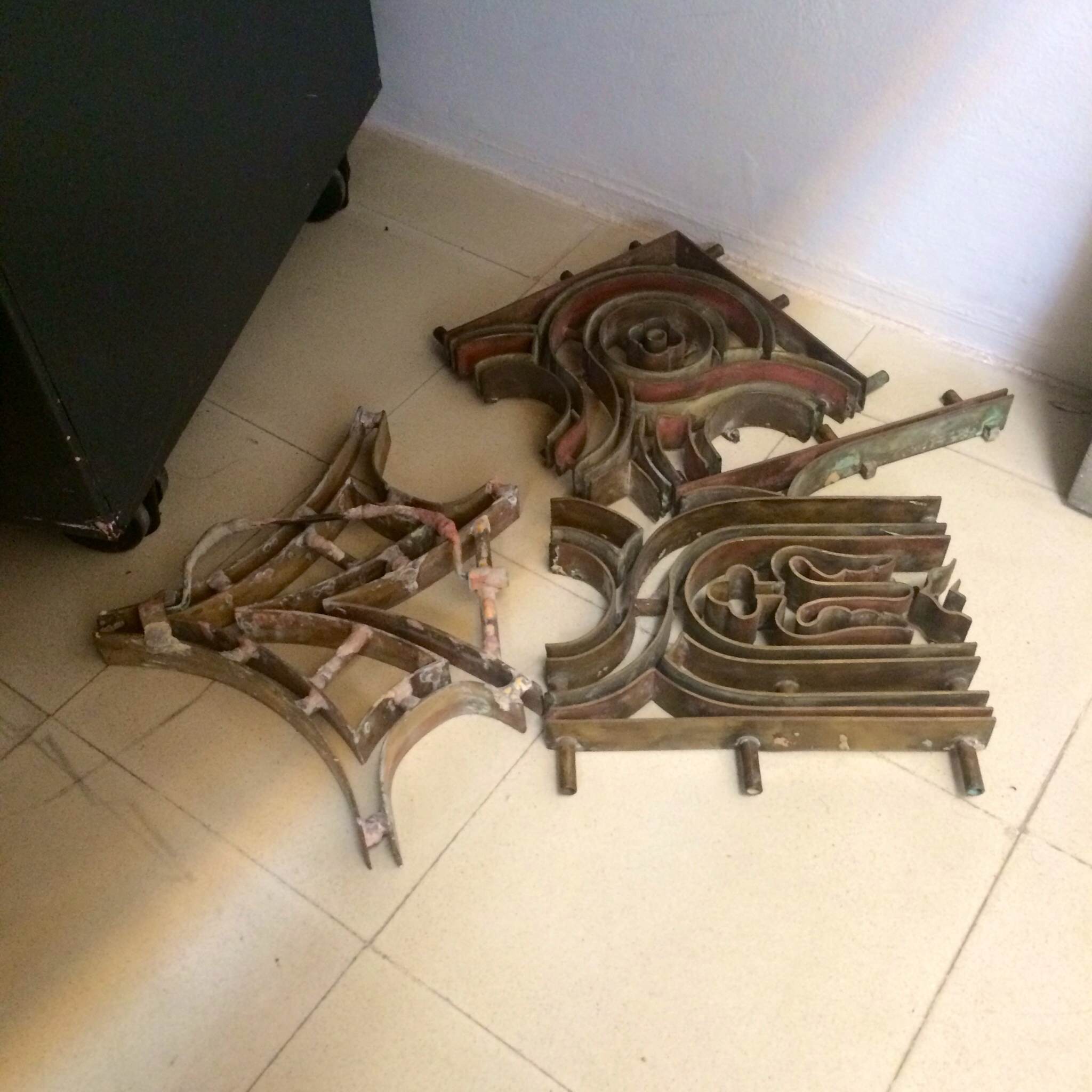
Metal molds used as stencils for the cement
DSC_0202

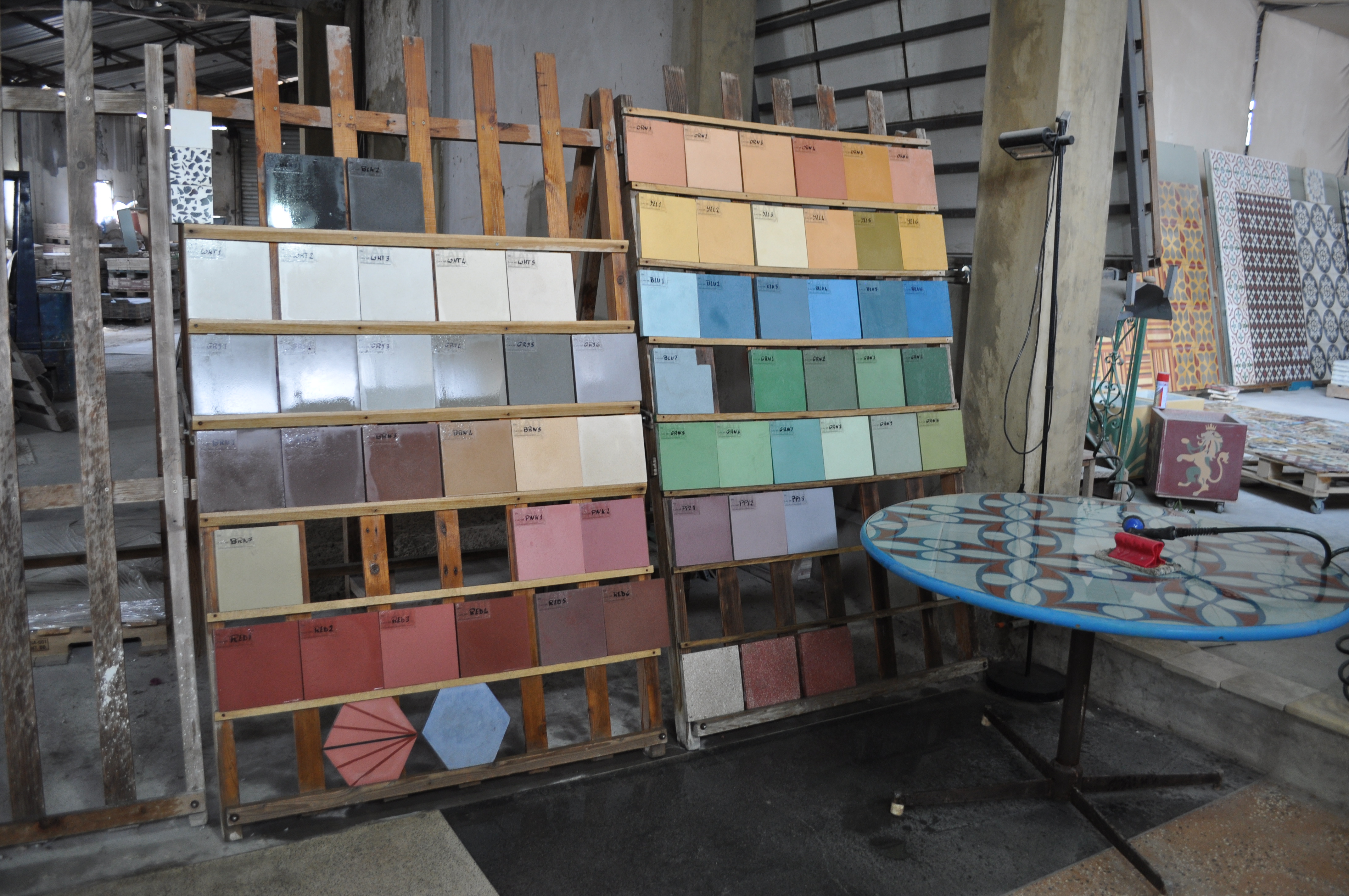
Blatt Chaya’s color palette

IMG_7411

Videos of the process are on my Instagram account

DSC_0178_2

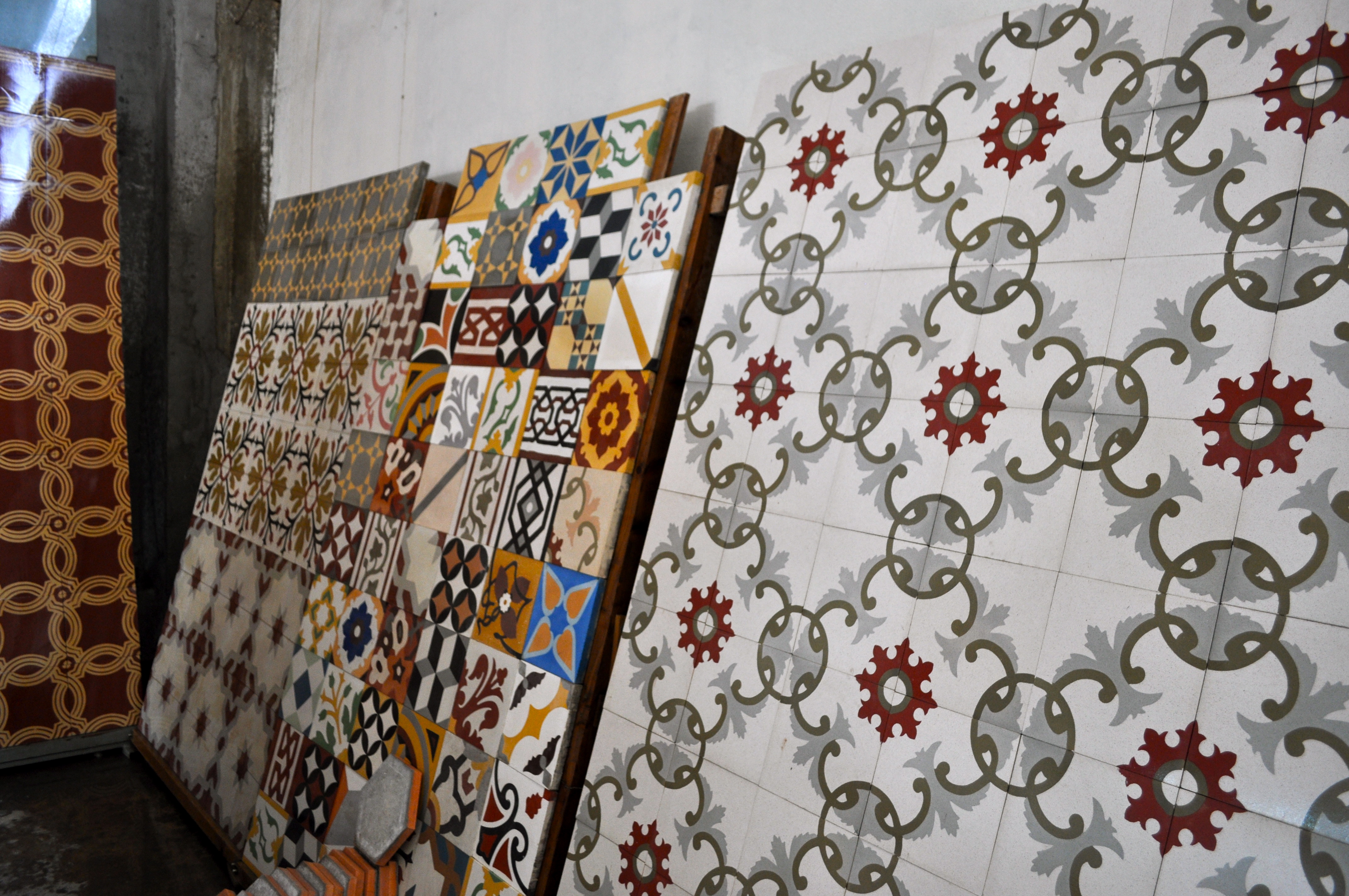
Four 20x20cm Macanaka tiles come together

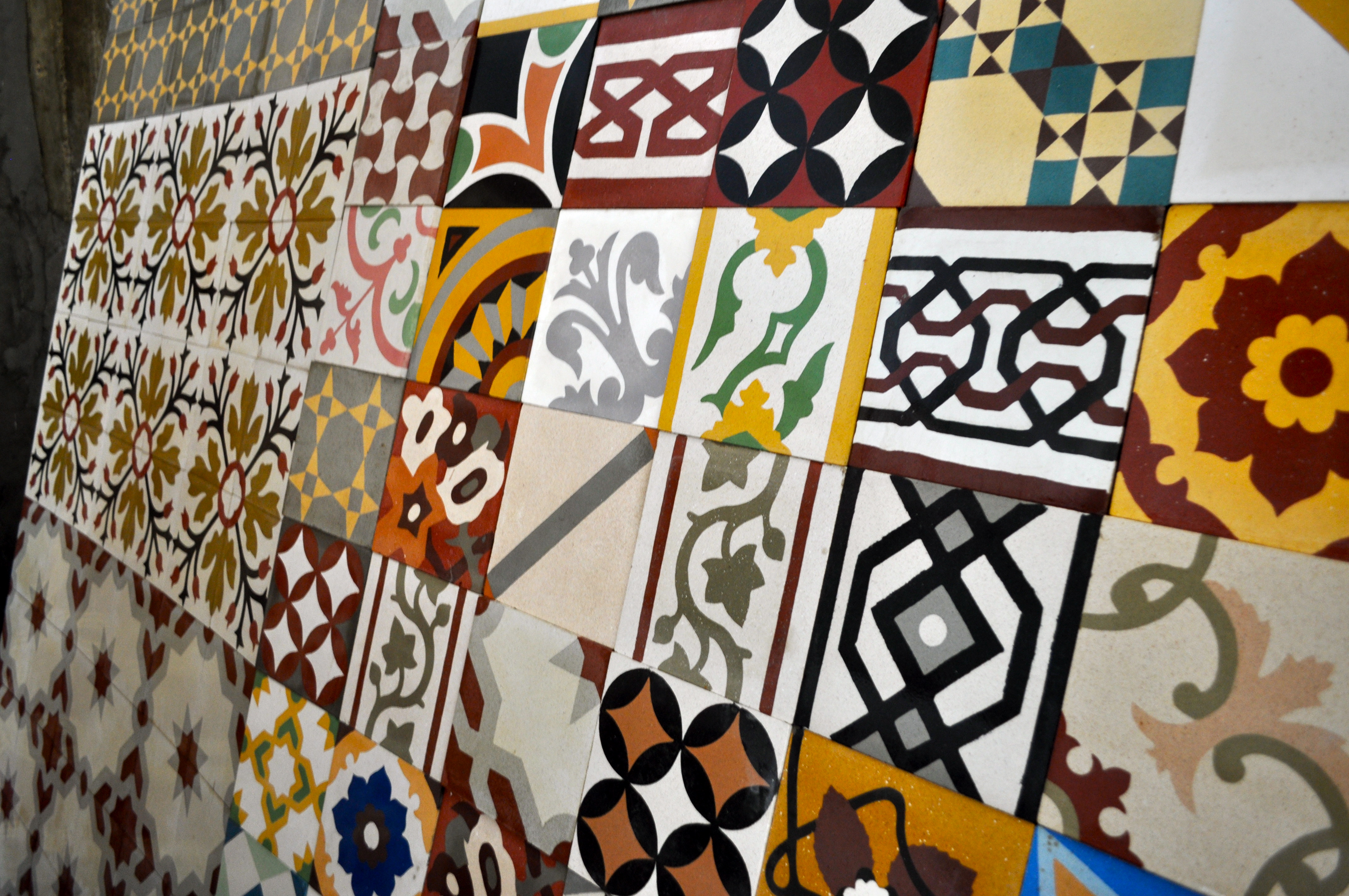
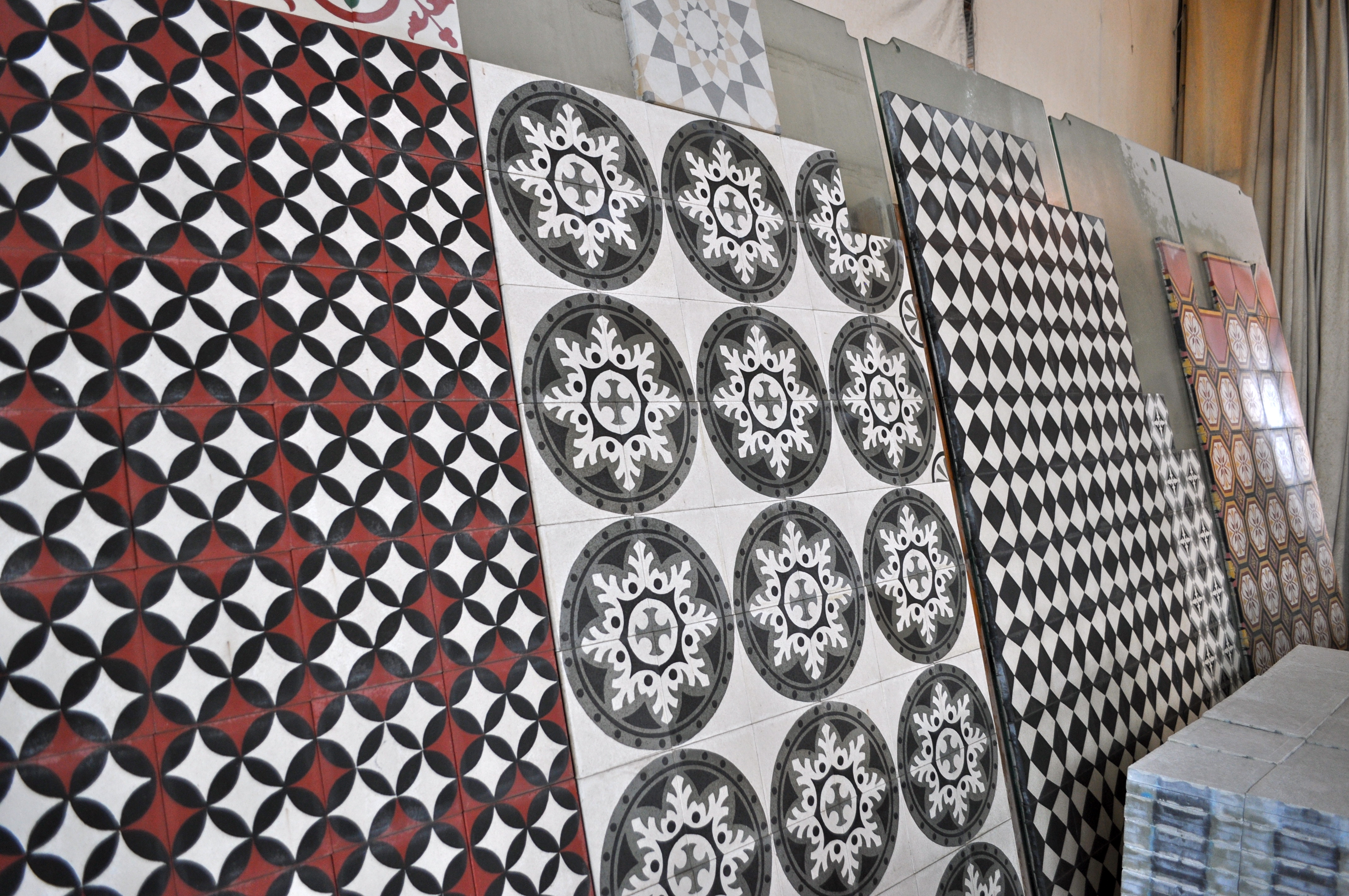
Because you can choose the colors you want for each part of the mold, every tile has a different outcome. Once laid together to create the final pattern, it’s a whole new canvas. Even the simplest mold can make an intricate geometric motif once multiplied on a larger scale. On the Blatt Chaya website, you can simulate how your desired pattern will turn out based on the mold and colors you want. I told him I wanted to recreate the tiles of my jiddo’s house in the South and asked him if he would name it after our day3a because each mold is named after an area or village in Lebanon. When I asked Mr. Chaya which mold was his favorite, he told me “I don’t have a favorite, they’re my children.” That’s not far from the truth; one 20 x 20 cm tile is named Macanaka, an amalgam of the names of his children: Maxime, Caline, Nabil, and Karim. He says it takes passion. He says you need to love it for the process because it’s not easy or rewarding. He says that crafts like his family’s are dying out because the number of people who appreciate the art are outnumbered by the number of people who want to make a profit that is easier to get from mass production high-tech factories. He knows that his work is being recognized though. Blatt Chaya has become its own class of tiles in the same way that Kleenex is tissue paper. They’re not interchangeable but they are their own category; when choosing tiles for a home, architects and designers have marble tiles, ceramic tiles, or Blatt Chaya. DSC_0174_2 DSC_0175_2 DSC_0181_2 DSC_0165_2 DSC_0182_2 DSC_0183_2 DSC_0196_2 When asked about expanding, Mr. Chaya is not interested. He wants to preserve the artisanal expertise and you can’t do that if you take on more than you can handle. Will it stay in the family? Fortunately enough, his children, Karim and Caline, are his biggest supporters and the ones who want to continue the Chaya legacy. Karim is a prominent industrial designer who works on new molds and tile designs for the company. Caline’s daughter, Youmna, also has a knack for the business. Besides working with her jiddo, Youmna dabbles in cuisine and recently designed the menu of new Mar Mikhael deli, The Food Dealer, also home to blue Bhorsaf Blatt Chaya. She’s even painted the portrait of her jiddo that hangs in his office, a room appropriately adorned with flawed mismatched tiles.
Screen shot 2014-10-21 at 9.10.22 PM

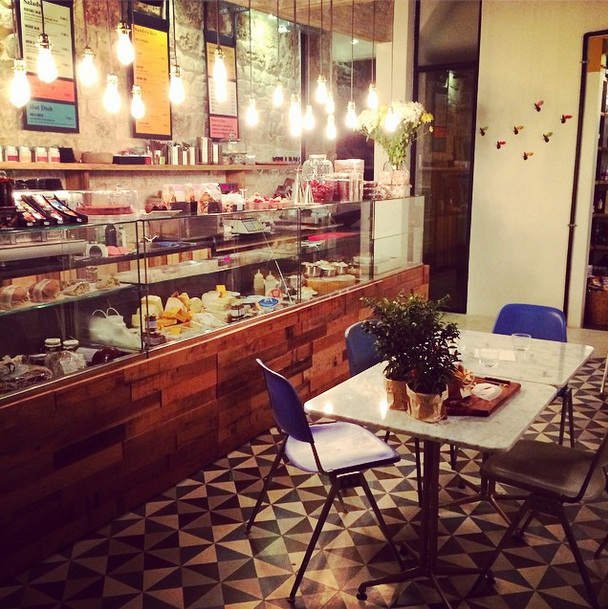
Blatt Chaya at The Food Dealer, Mar Mikhael
Screen shot 2014-10-21 at 9.10.39 PM Although I was like a clueless American on a Double Decker tour bus, he was patient with me. When Mr. Chaya was done walking me through the factory and answering all my amateur questions, he left me to take all the photos I want. “Wait no, don’t take photos.” He hosed down all the tiles: “you have to see them the way they truly are, haram not to get the colors.” Perhaps this newfound need it is just part of the vintage trend that is infecting people worldwide. Regardless, I’m all for it if it creates support for an art form that keeps some of our architectural heritage alive. Trendy or not, you won’t be changing your floor tiles ever time the tide shifts. Those cement tiles don’t change with the season, they’re going to grow old with you…but you know they’re going to look damn good doing it. Blatt Chaya Dekwaneh +961 1 695 222
Crowdfunding for GGRIL

Crowdfunding projects, like Mashrou3 Leila’s Raasuk album and THIS Toothbrush, have been pretty successful over here and it’s even more satisfying when those projects are ones that have a positive impact on society environmentally and culturally. GGRIL, featured numerous times on the blog, is a green initiative that recycles glass bottles while simultaneously saving the glass-blowing artisanal business from dying out. Now, they need some funding help to keep the operation going.

Go to their campaign page on Indiegogo to read more about what they’re doing and what they need. In exchange for donations, you’ll get “perks” or GGRIL products once the campaign ends in December.

Every little bit counts.

Partying Out of Spite or Ignorance?

IMG_3389

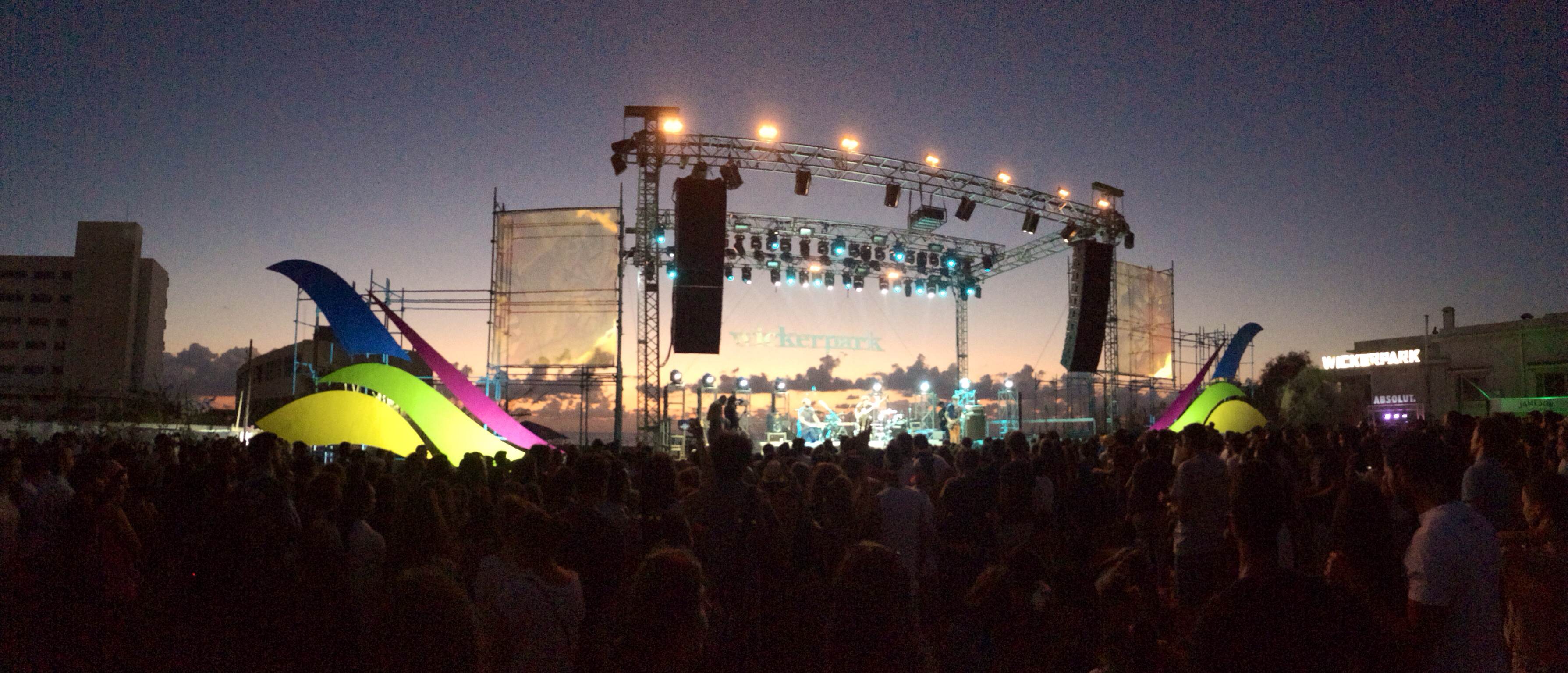
Last month, after attending Wickerpark, a friend abroad said he was impressed that Lebanon was still able to have events full of life when terror was “infesting everything else.”

For a second, I agreed. It was something to be proud of. It was a packed summer night with bands playing by the sea, people shoulder-to-shoulder with beers in hand. That we could have such a lively crowd in the middle of Batroun when the Islamic State was playing hopscotch on our borders was quite the feat. I’ve heard a lot of people say that it’s a way to fight back. To prove that Beirut will not topple over and be conquered. I’ve heard it’s a way to distract people from reality, to keep their spirits up in a situation that is out of their control, to keep their quality of life soaring in one aspect since they can’t even expect to have basic utilities available 24/7. After all, how do you stay sane in Beirut when you have every reason to lose it?

In Beirut, you party.

And I say “Beirut” because the country is not acting as one whole unit. Other cities are enduring turmoil while Beirut is in a bubble, disconnected from the other kilometers that make up our 10,452 km dot on the map. These same cities are not as far away as people imagine, it’s just that Lebanon has a different scale of distance since we’re such a small country.

IMG_6489 (1)

But then I thought, “what if it’s not out of spite?” Maybe we’re not doing this to say “F*ck Daesh.” What if that’s not the real reason people party? What if the majority have gotten so distracted that they don’t know how bad things may get because they’ve distanced themselves so much from what is really going on? The more you surround yourself with the comforting feeling that nothing’s changed and everything is okay, the more you will begin to believe that nothing is at risk of disappearing. I had heard about the beheading of another Lebanese Army soldier while being at a Decks on the Beach party. People danced the night away and I couldn’t help but wonder if they all knew the news.

I’m tired of this place being known for two extremes mashed together: bombs and hedonism. There is more to us than shrapnel and bikinis. Read Warren Singh-Bartlett’s post on Why Beirut Really Matters. Sure, I go to concerts and parties, and I live my life like nothing’s changed but maybe that’s the problem. Our spirit shouldn’t be sacrificed; I’m not suggesting we should stay indoors and just wait for the shit to hit the fan. I just worry that we may not even see the shit coming until it hits us in the face.

AIGA Middle East | Morning Toast Series

IMG_4212

As the first affiliated international AIGA chapter, AIGA Middle East was launched last summer by Mo Saad & Leen Sadder, Lebanese graphic designers based in New York City. After the launch party at Coop d’etat rooftop in June 2013, the duo formed a Beirut Operations Team who would be the crew on the ground, creating a format to be duplicated in cities all over the region once the initial roots were established and AIGA ME was in full swing. Professional and student memberships for AIGA ME will be launched by the end of this year but, in the meantime, the Beirut team’s mission is to build the network, spread the word about AIGA and its importance in our part of the world, and start (and continue) a conversation about design. To avoid any confusion, this is not a promoted post. In full disclosure, I am part of the AIGA ME Beirut core team which is made up of a handful of young professionals who volunteer during their free time to make this organization work.

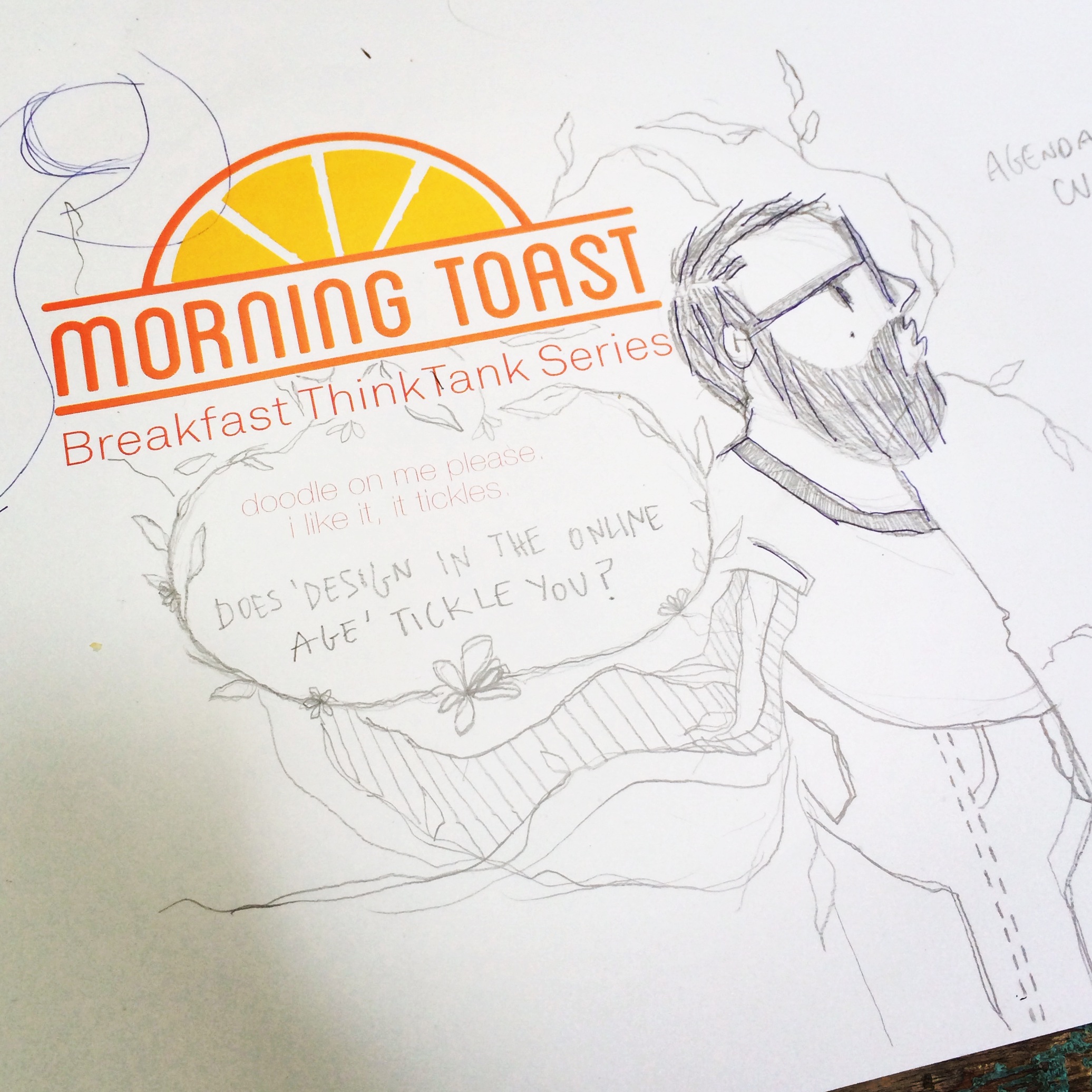
Doodled by Mo Abdouni, guest at Morning Toast Vol.2

Doodled by Mo Abdouni,
guest at Morning Toast Vol.2

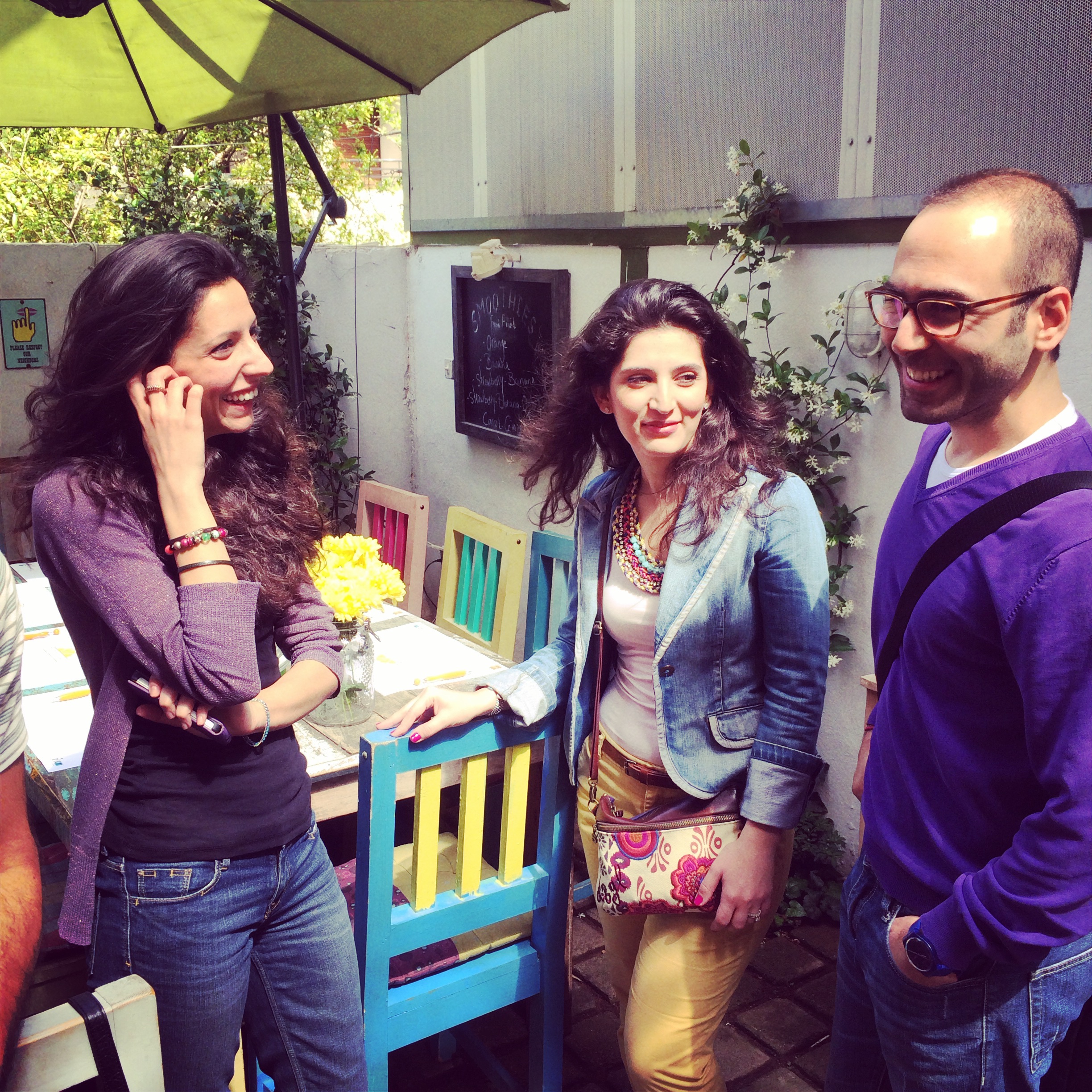
Back in March of this year, we launched Morning Toast, a breakfast think tank series. Held every two months at a local cafe, Morning Toast brings together 7 to 8 designers on a Saturday morning to talk about a design issue over coffee. Each MT is hosted by a professional who acts as a moderator for the discussion. They don’t lead or preach, they just keep everyone on topic during the allocated 2 hours. Usually, who the host is will hint as to what the Toast may be about. Themes for each Toast are announced the morning of, leaving attendees in the dark. This is not an evil surprise tactic, but meant to allow for unprepared and unpracticed rhetoric. In other words, it’s an informal get-together with potential for formal action later on. Conversation about design begins and continues because guests are put in contact with people they may not have met in other contexts. As for the 7-8 people that attend? It’s completely open: first come, first serve. There are a limited number of spots; if you snag one and confirm, you’re in.

IMG_2596

IMG_2619

IMG_2651

Dar Bistro & Books in Hamra, Beirut
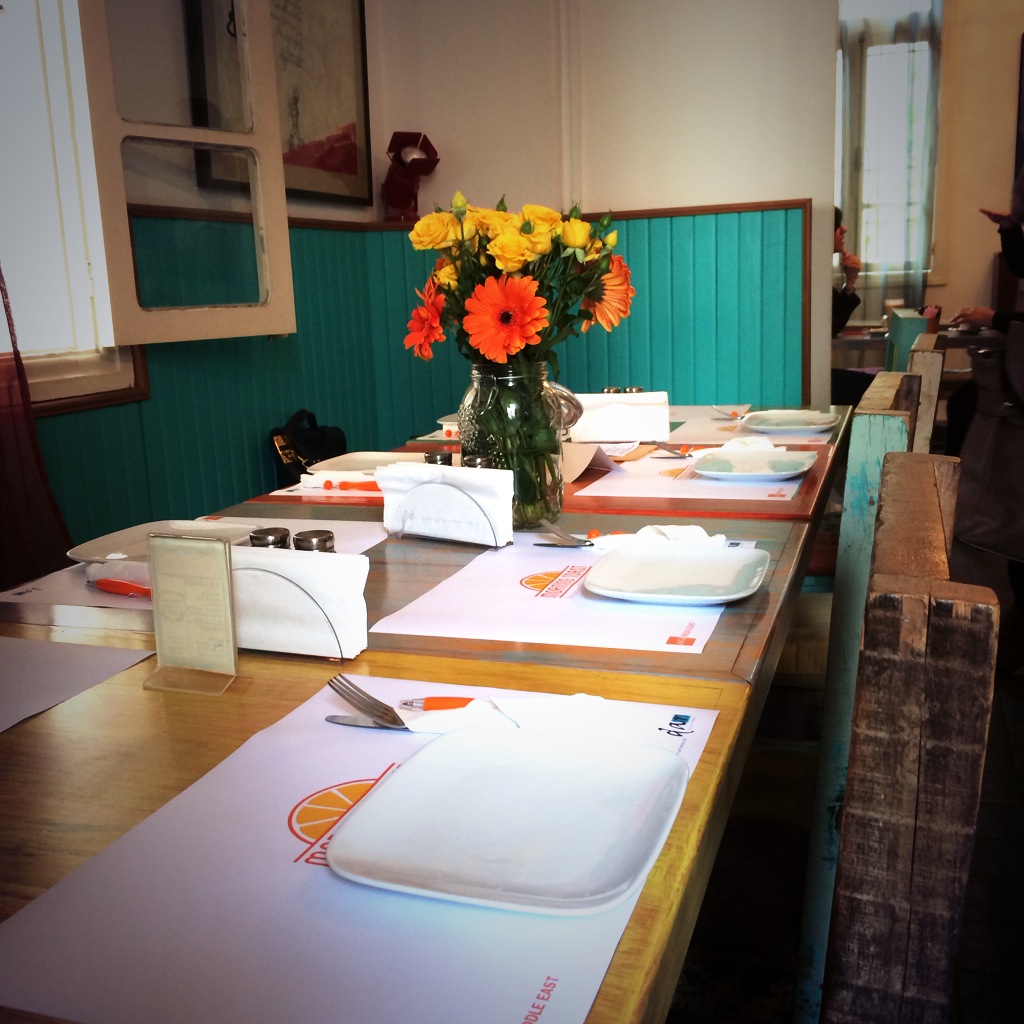
Commonly known for supporting local initiatives, Dar seemed like the right place to launch the first string of Morning Toasts. Located between the AUB Alumni Association offices and the Central Bank, Dar is a popular spot for book and coffee lovers. It’s also a great hideout for work or chitchatting with friends as long as you don’t mind the sound of a coffee machine in the background. During our partnership, Dar was generous and gracious. They signed on for a 6-month period (3 Toasts total), offered complimentary breakfast to the MT guests, and created a space where strangers could have an open and unrehearsed discussion. On top of that, it’s photogenic and very Instagrammable: the perfect ingredients for filming the first MT webisode.

Cutting down a two-hour rich conversation into two-minutes just didn’t seem fair so we are now exploring the possibility of converting our Toasts into bi-monthly podcasts. This way, interested listeners can get a feel for the dynamic on the table and know the whole story. At the conclusion of each breakfast, comment cards are collected so that we can make every Toast better based on the feedback of those who experienced it first-hand. Because this is still a new initiative, there is room to improve and learn from what works and what doesn’t. After all, that is the job of the Beirut Operations Team – treating Beirut as the testing ground for what will eventually be a regional network of creative professionals.

MORNING TOAST VOL. 1
HOST: HANI ASFOUR, POLYPOD
THEME: THE FUTURE OF DESIGN IN THE REGION

MORNING TOAST VOL. 2
HOST: BANA BISSAT, BLOGGER OF BANANAPOOK.COM
THEME: DESIGN IN THE DIGITAL AGE

MORNING TOAST VOL. 3
HOST: KHAJAG APELIAN, MAAJOUN STUDIO & KRISTYAN SARKIS, KRISTYAN SARKIS STUDIO
THEME: DESIGN AND ARABIC TYPOGRAPHY

This is not the only attempt AIGA ME has made when it comes to connecting people. Unfortunately, when finding yourself in a networking event, it always seems forced and uncomfortable. I tend to see people gravitate to those they already know and the actual networking fails to really happen. Because of this, we thought we could learn from ArabNet’s speed-networking event. For Beirut Design Week, AIGA ME started Dak Warak: a gamified speed-networking event at Coop d’etat rooftop once again, symbolically marking our 1-year anniversary. Using a branded AIGA ME Dak Warak deck of cards, people had to go find others with matching suits, colors, or numbers during each 3-minute round, or dak. Seeing that it was a card game where people could exchange business cards too, dubbing it “Dak Warak” made sense since it translates to a round of cards. You could mingle with people, drink in one hand and an actual playing card in the other. Gamification of the networking process was the added layer that made breaking the ice just a little funner. Of course, I’m sure the free beer helped too.

The next Morning Toast is set to be held on the 13th of September at The Beazbee in Hamra, our latest partner in the MT Series. Sign-ups will be open within the next few days. Dr. Yasmine Taan, Chair of the Design Department at LAU, will be hosting this one – can you guess the theme? To stay informed about MT and other AIGA ME events & initiatives, check us out on Facebook,Twitter, or Instagram.

How Laguna Beach Deals with Panhandling

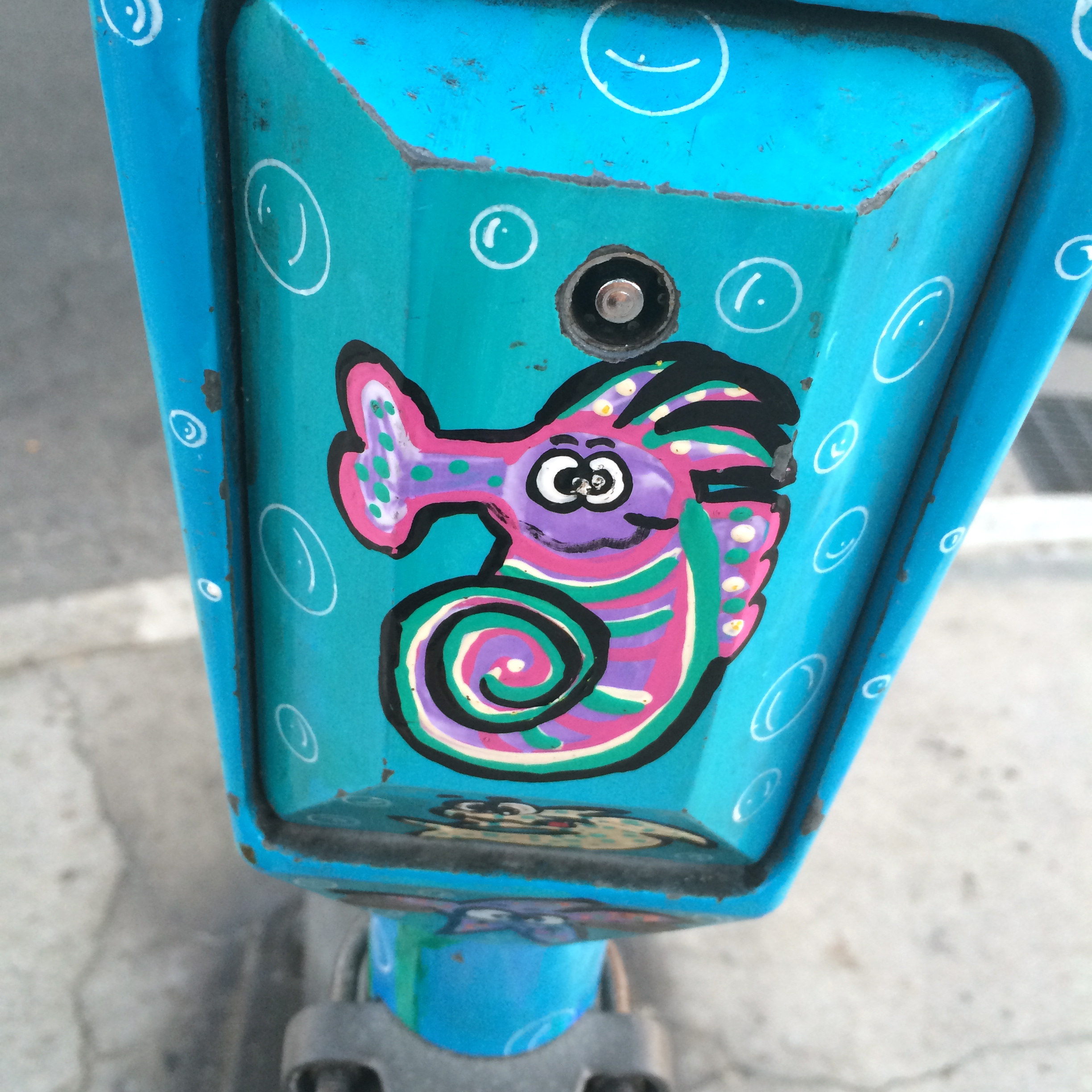
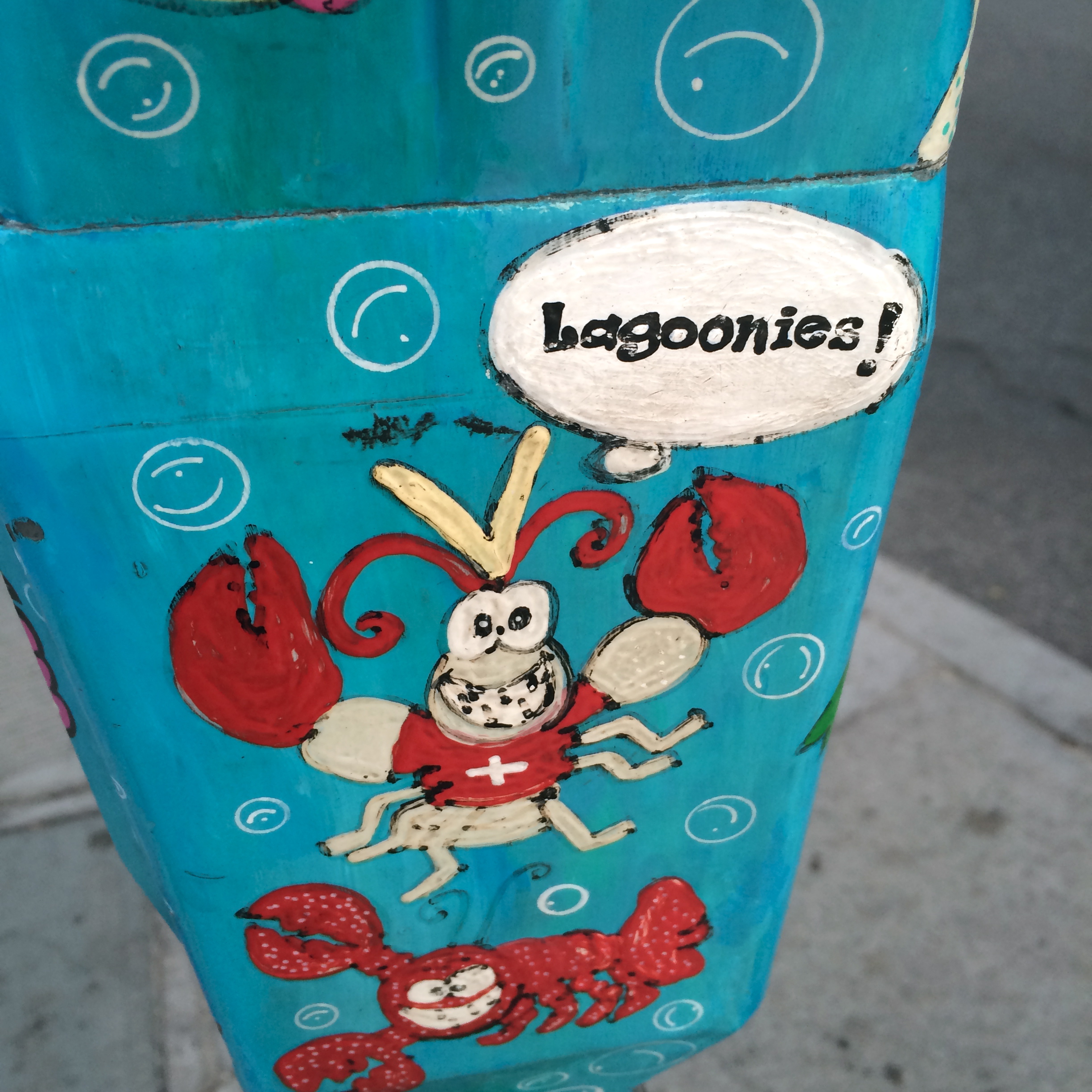
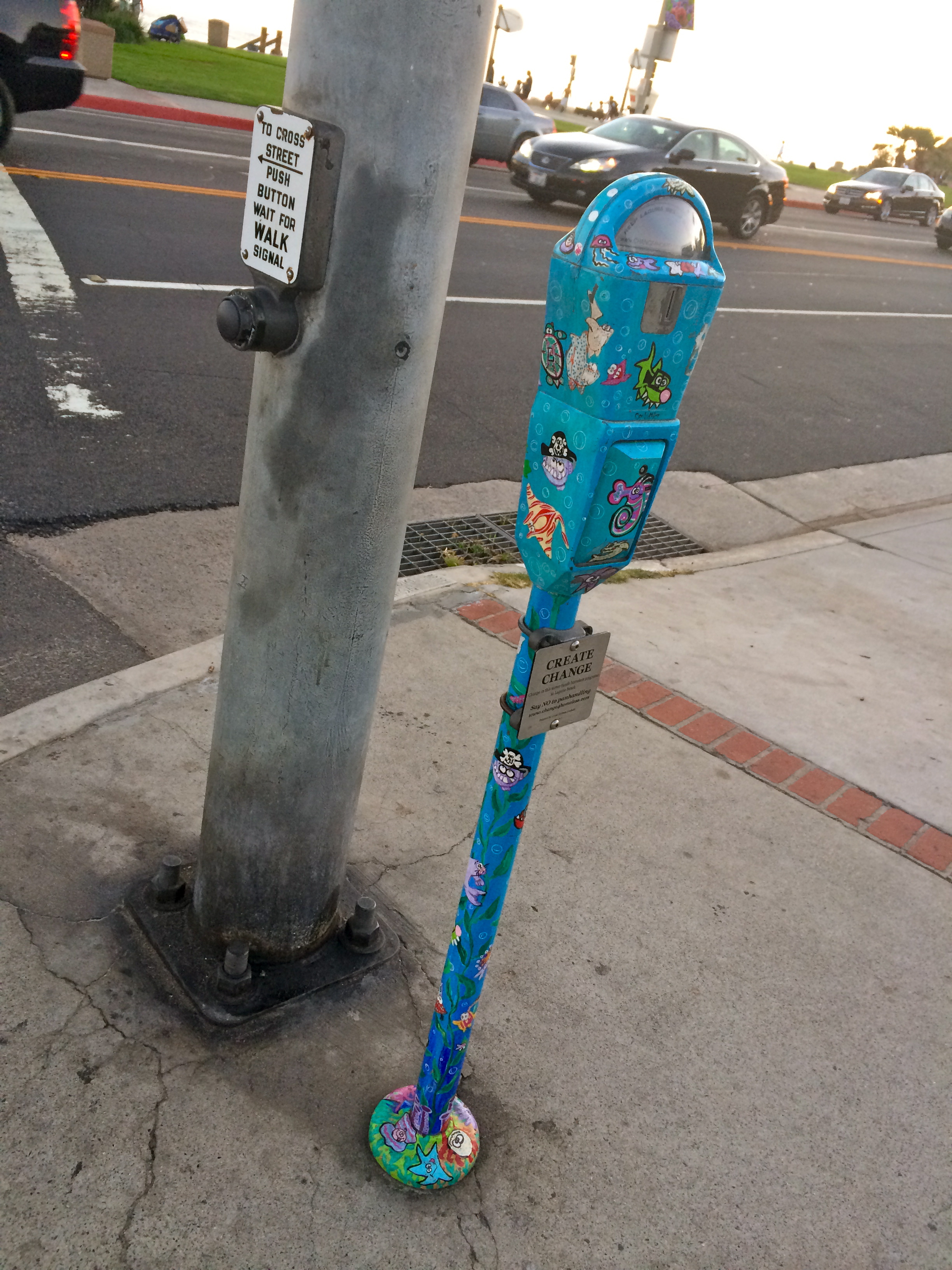
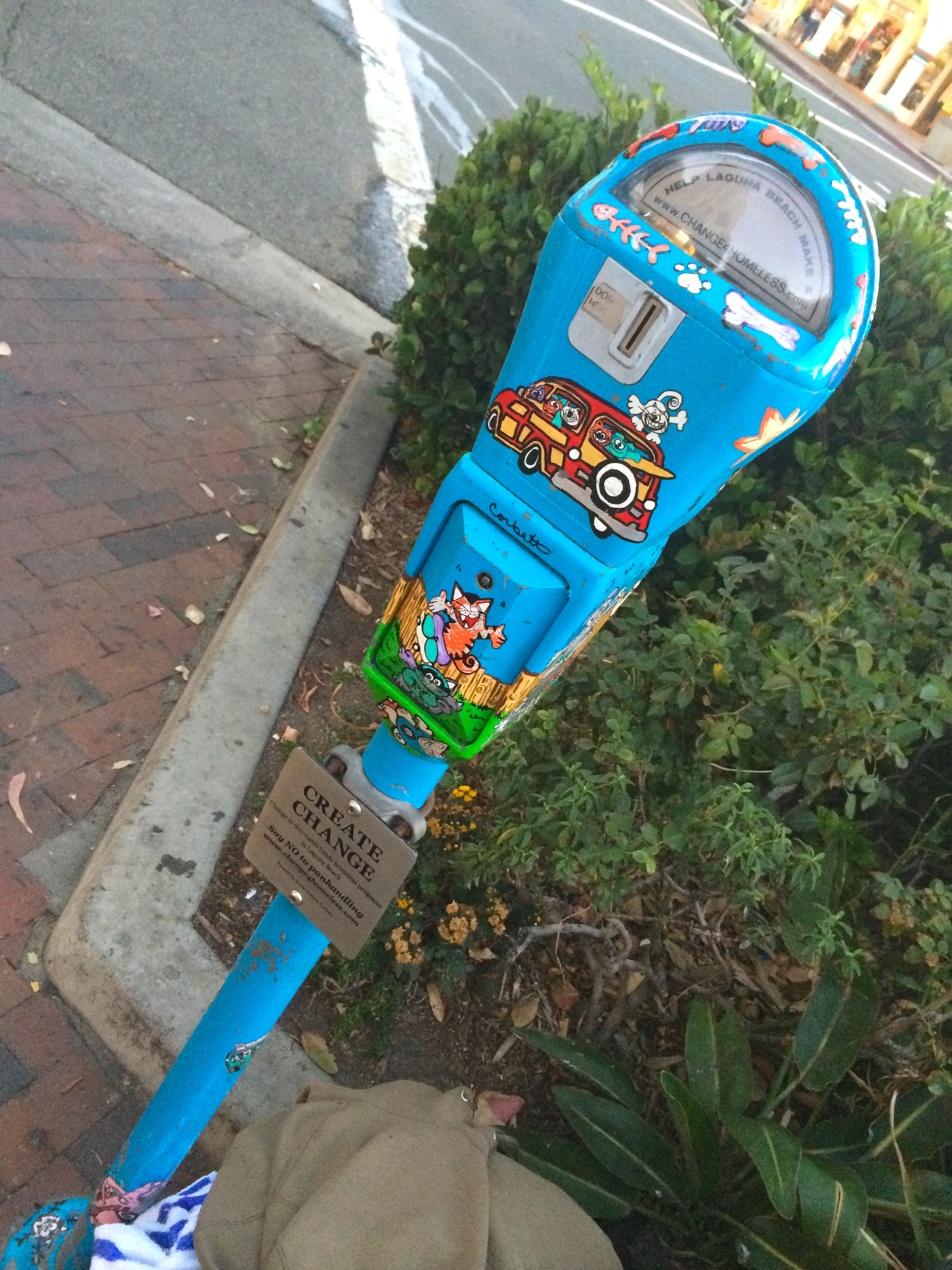
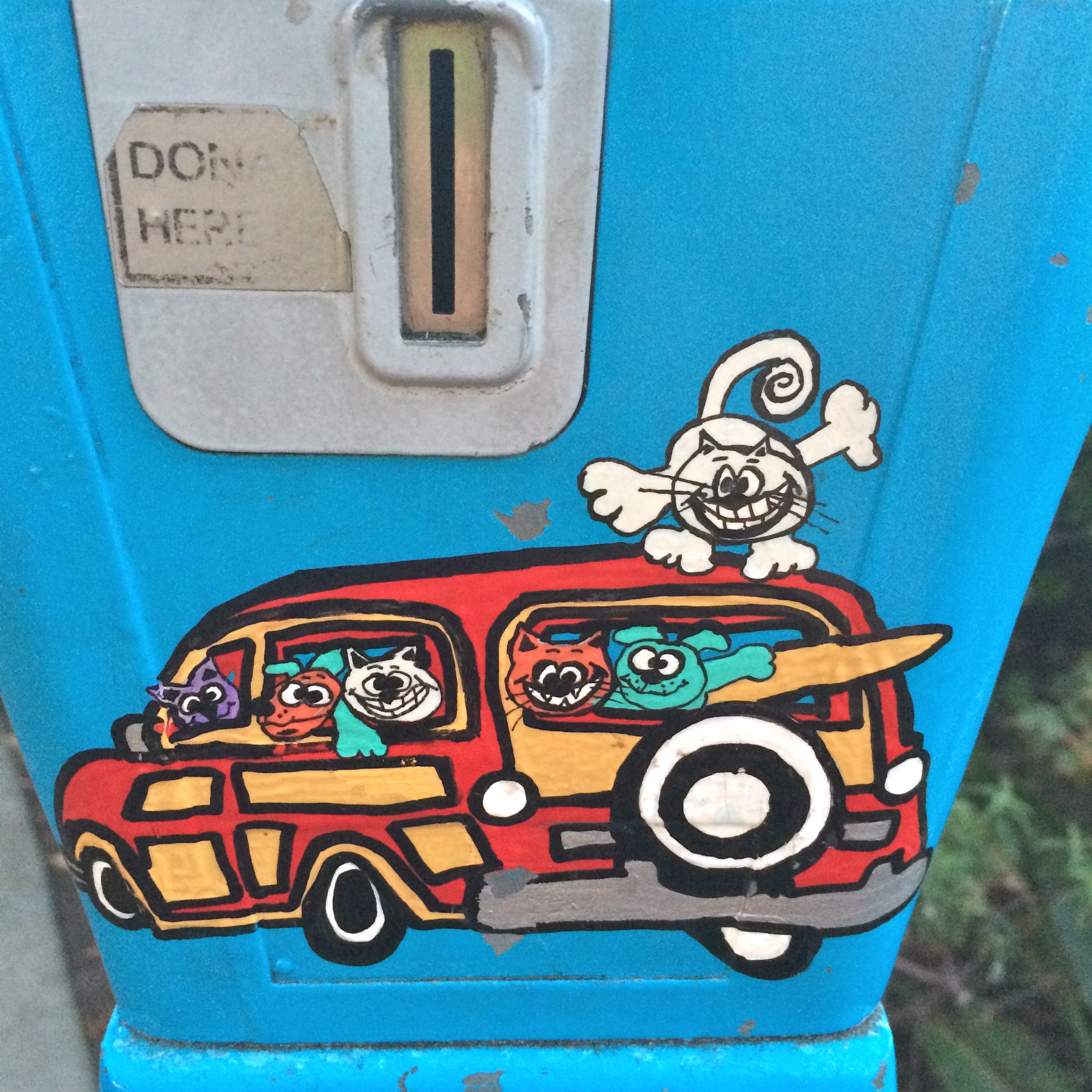
Some parking meters in Laguna Beach have been repurposed in order to avoid panhandlers. Making them colorful little pieces of art scattered around the artsy town, each meter has a plaque explaining that inserted coins will be collected and used toward efforts to aid the homeless. Assuming that these efforts have been effective, I believe this is a good controlled way (regardless of how minimal it may be) to help those in need with your loose change. Although most of us need coins for the actual parking meters since there are no change machines set up, maybe we could implement something similar in the future here in Lebanon.

IMG_5861

IMG_5860

IMG_5859

IMG_5863

IMG_5867

IMG_5868

Observing Space & Time

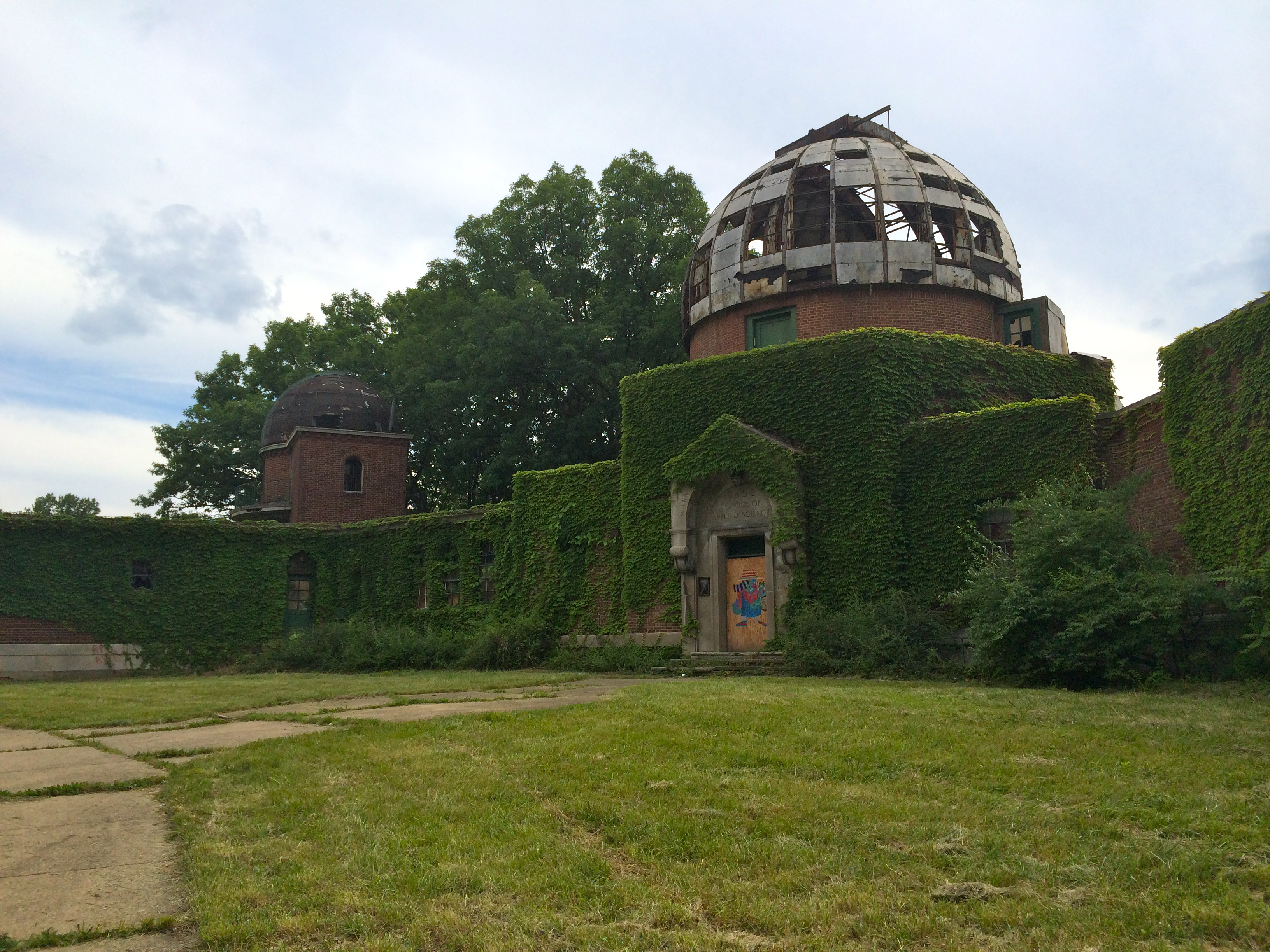
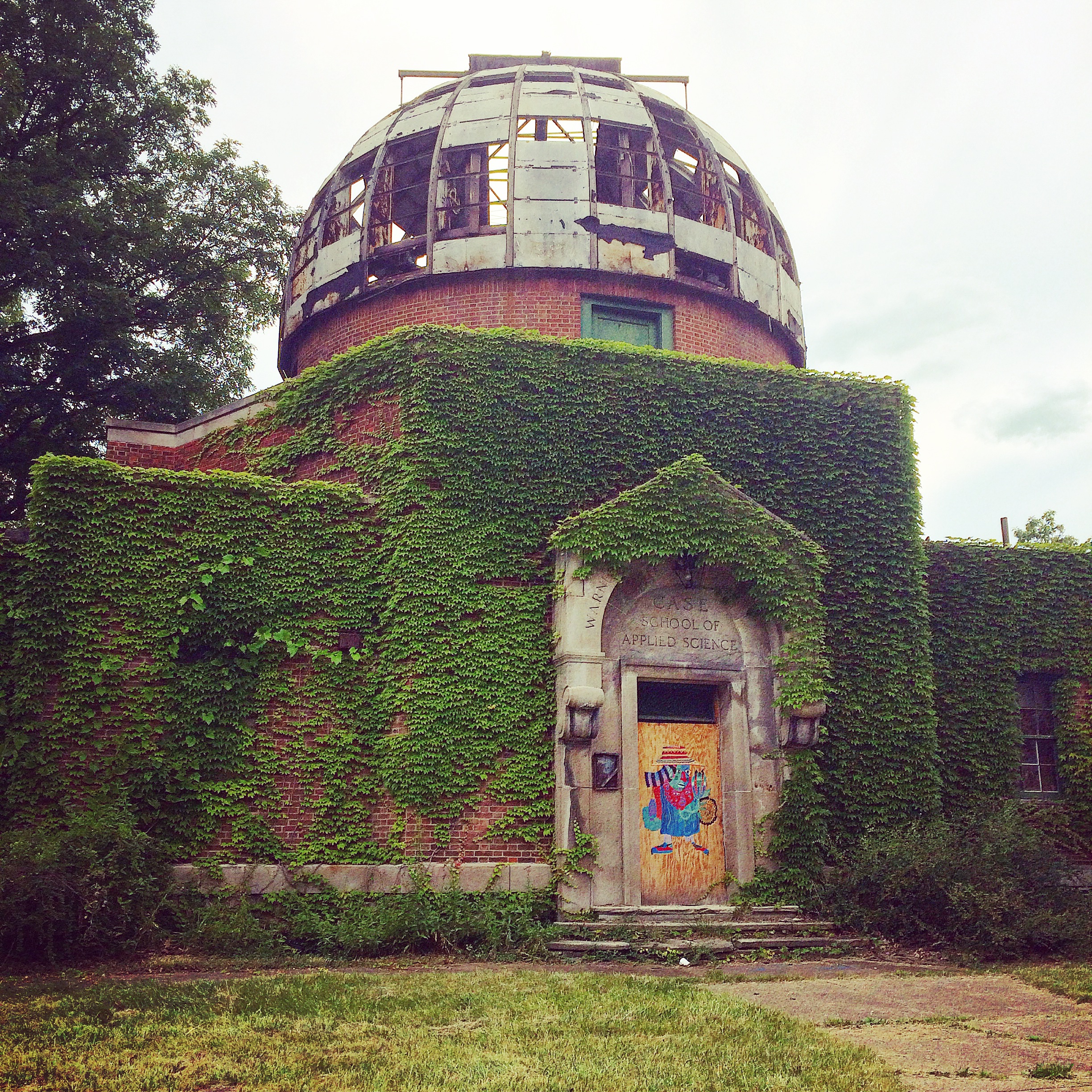
This post is dedicated to two observatories in the US of A: the Griffith Observatory in Los Angeles, California and the abandoned Warner & Swasey Observatory in Cleveland, Ohio. I encourage you to actually click on the “Click to Enlarge” pics below.

LOS ANGELES

Walking up to the Griffith Observatory

Walking up to the Griffith Observatory

Click to Enlarge

Click to Enlarge

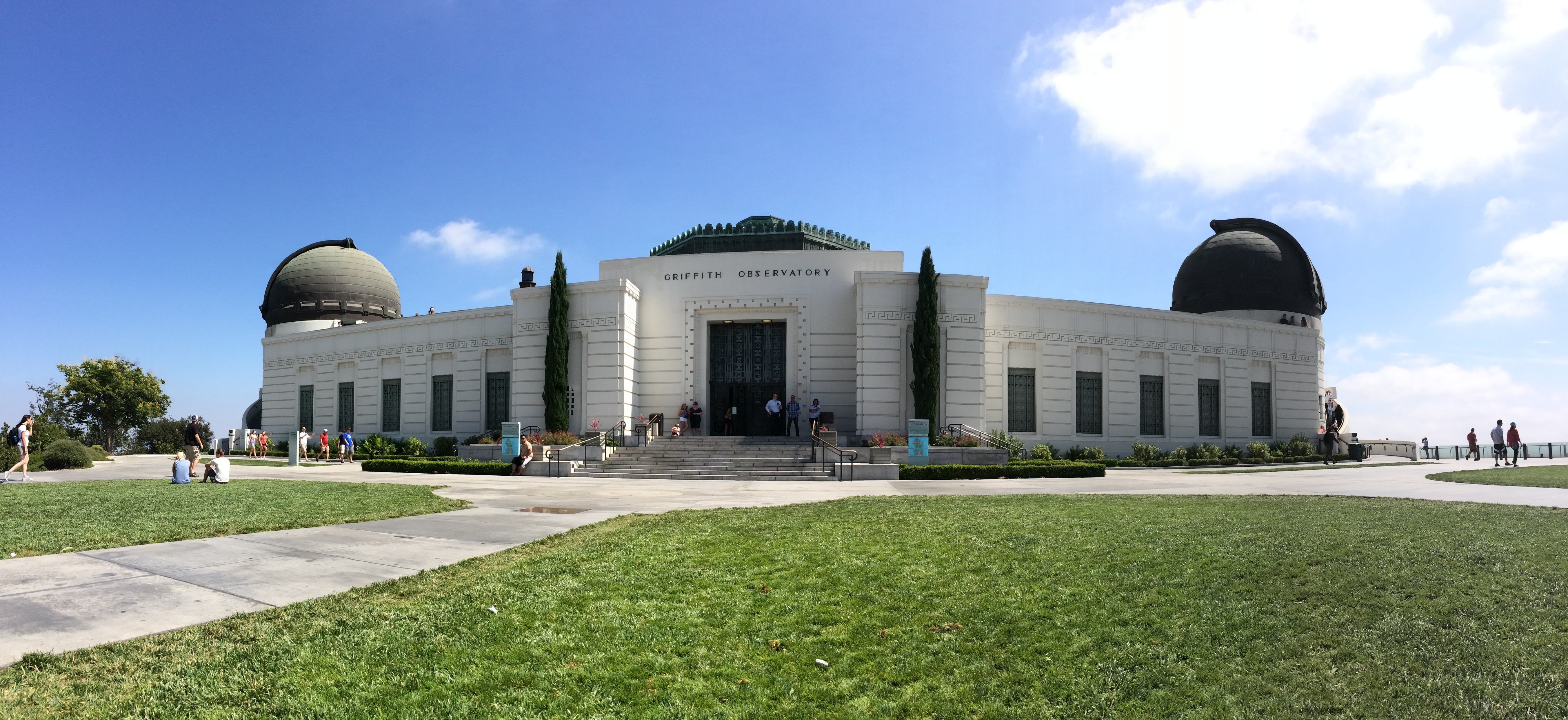
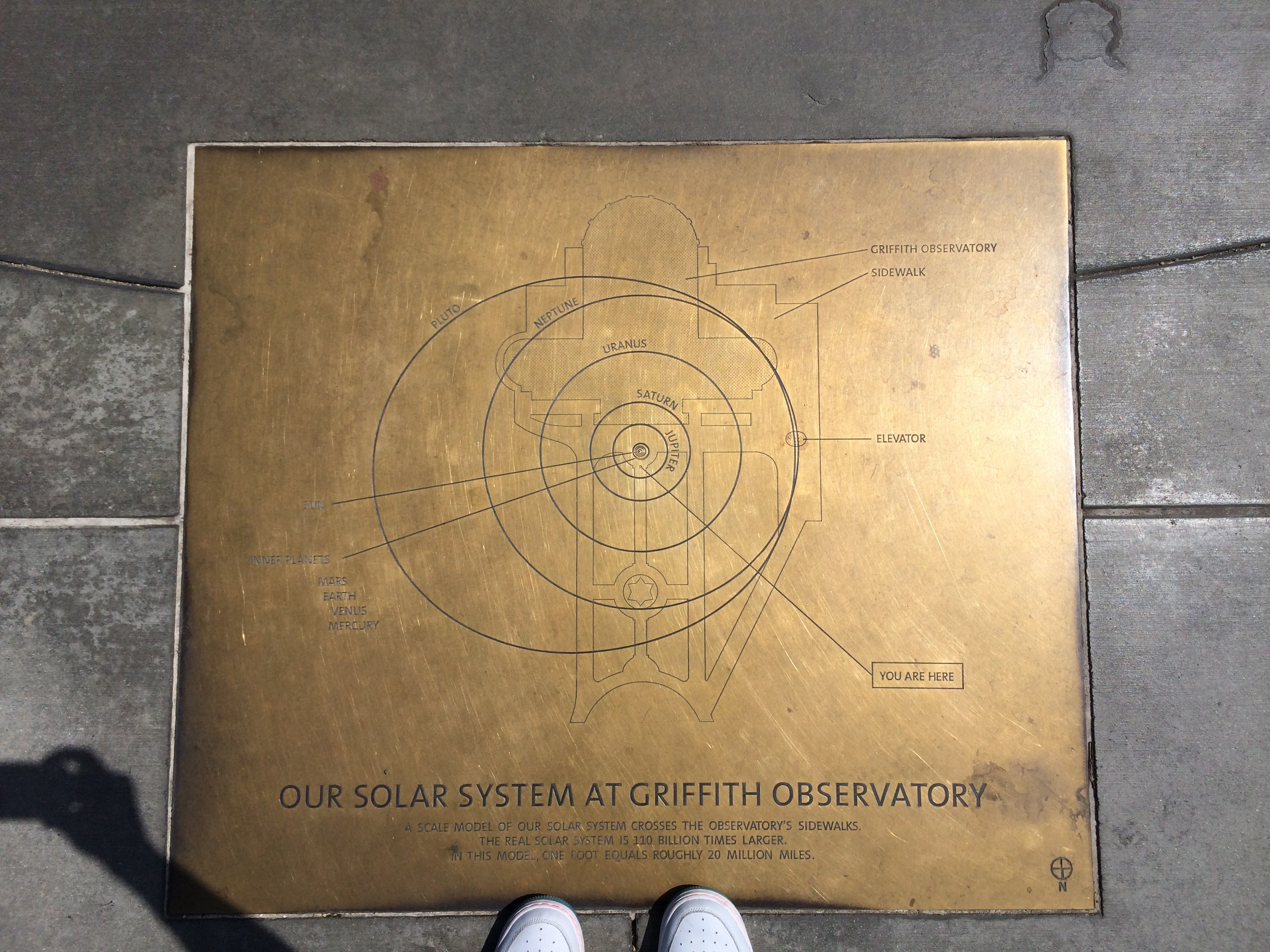
Atop a hill overlooking Hollywood within Griffith Park is the Griffith Observatory. The land surrounding the observatory was donated to Los Angeles by Colonel Griffith J. Griffith in 1896. In his will, he also donated funds for an observatory, exhibit hall, and planetarium on the donated land. Griffith’s aim in this project was to allow astronomy to be open to the public instead of cut-off from the people by being on a solitary mountain exclusively for scientists. First, the Observatory is beautiful just as an Art Deco structure on its own. An obelisk-like sculpture celebrating historical astronomers in the center of a grassy lawn that leads up to the Observatory doors, which are also beautiful. The grounds have the solar system engraved in the floors. Second, as soon as you go through the doors, there’s the Foucault pendulum hanging from a ceiling mural of Atlas and other mythical characters. Both the left and right wings have exhibitions on space exploration and discoveries in physics and astronomy. The view from the opposite side is almost a 180 of Los Angeles. Since it was featured in Rebel Without a Cause, there’s a James Dean bust near the Hollywood-sign lookout spot. The Observatory would be the ideal date spot at sunset if you’re into spacey nerdy stuff. And sunsets. Plus it’s free entrance since 1935.

The orbits of each planet run across the floor of the grounds

The orbits of each planet run across the floor of the grounds

At the foot of the entrance stairs

At the foot of the entrance stairs

View from the other side

The view (click to enlarge)

CLEVELAND

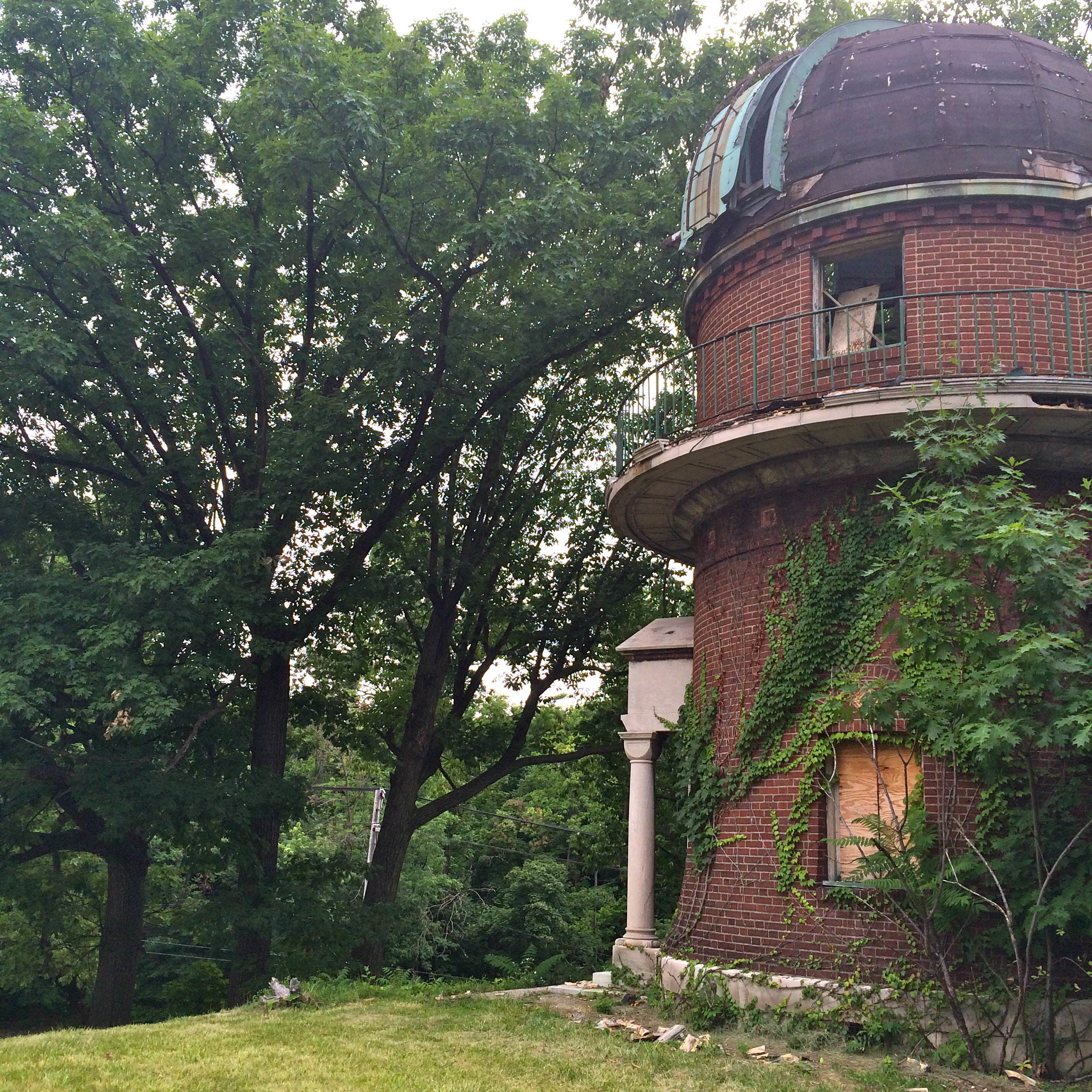
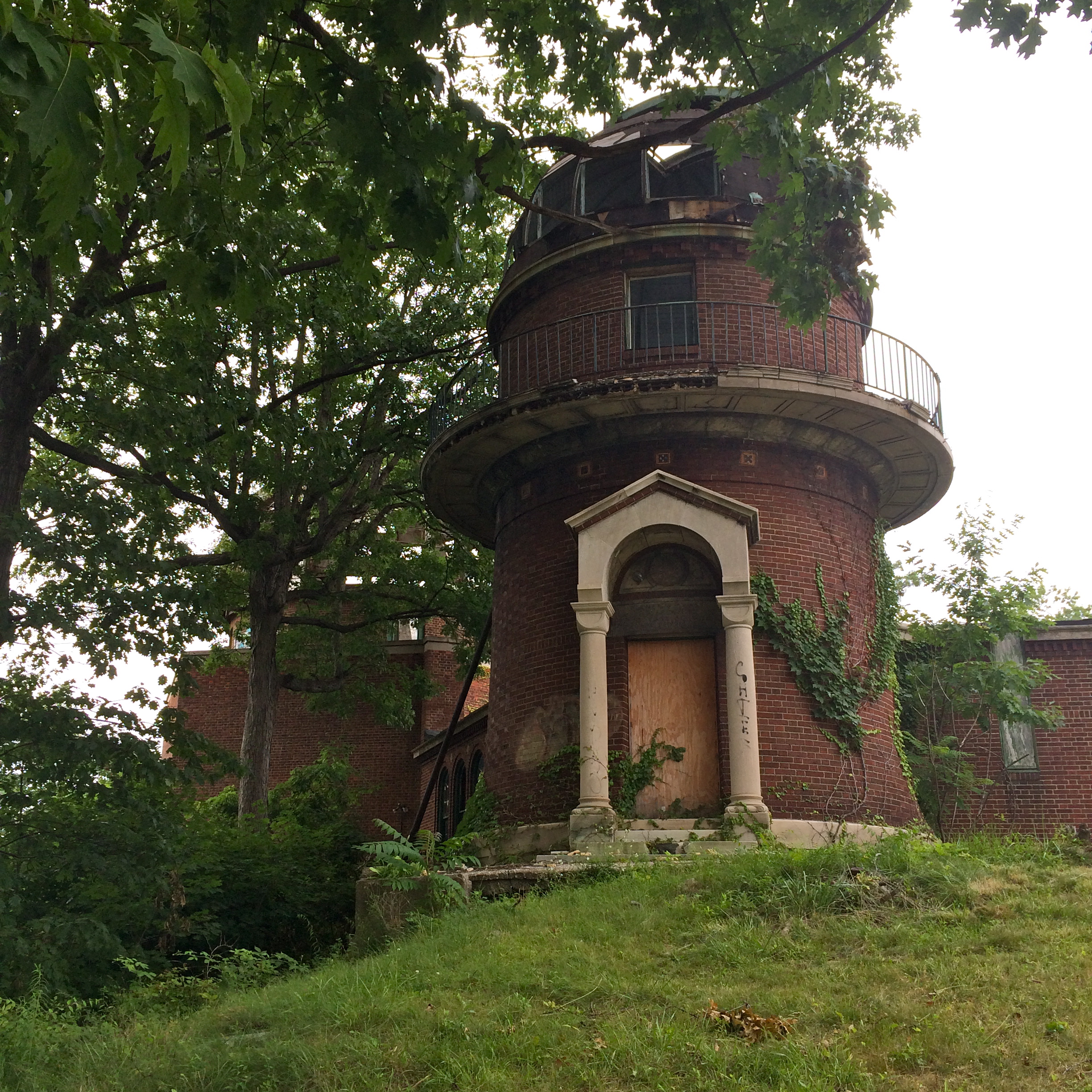
The Abandoned Warner & Swasey Observatory

The Abandoned Warner & Swasey Observatory

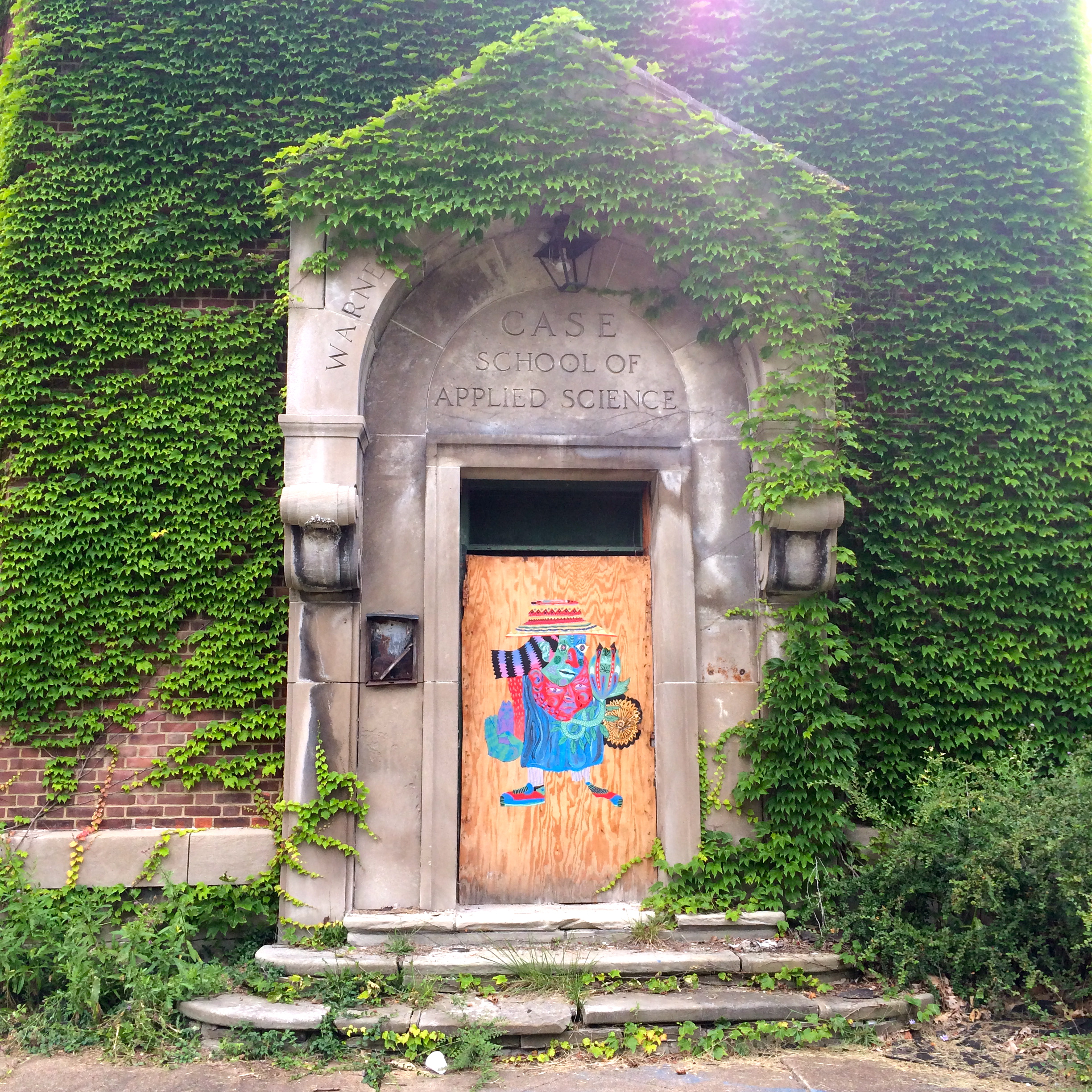
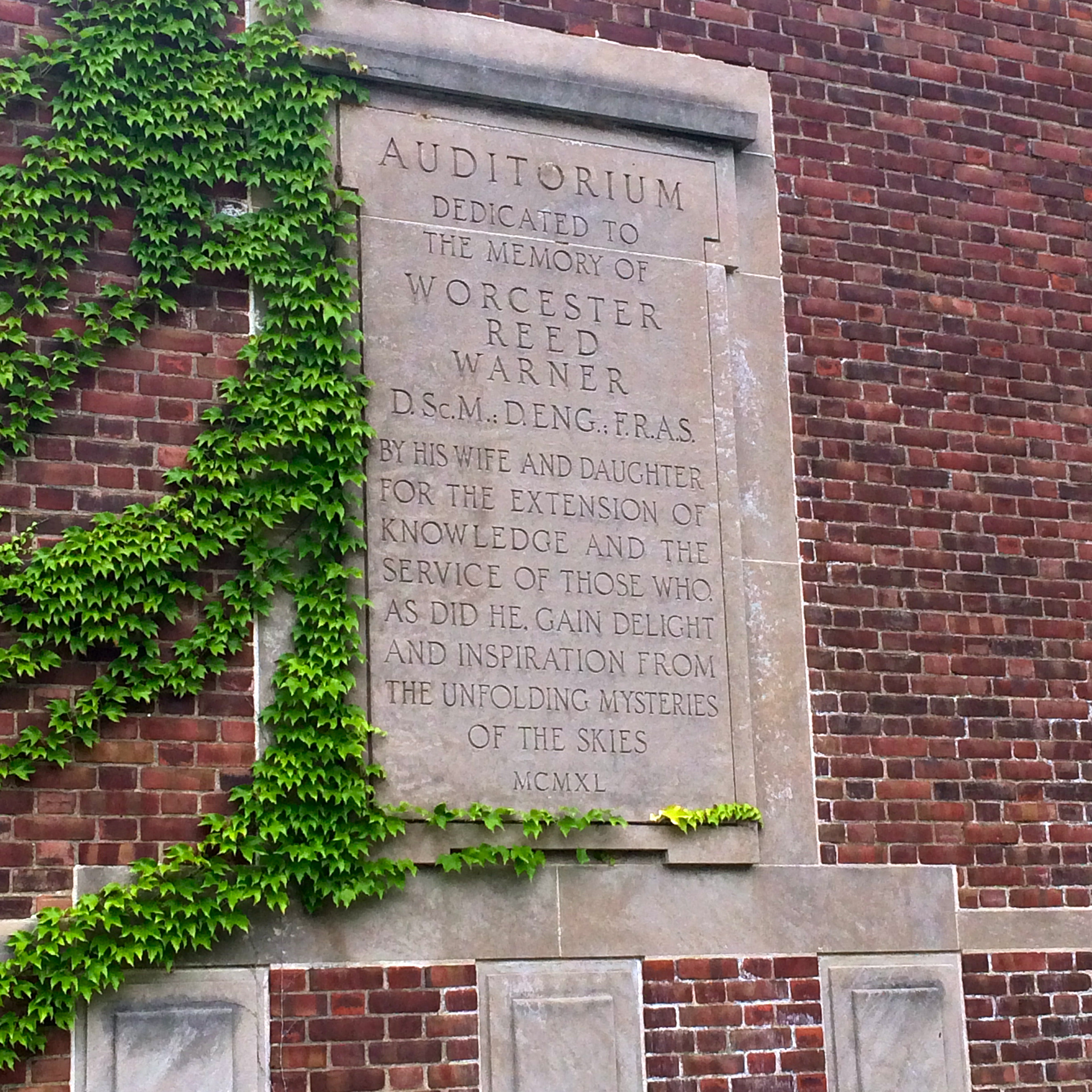
Warner & Swasey Company used to be manufacturers of machinery, including telescopes and precision instruments. The partners, Worcester Reed Warner and Ambrose Swasey, opened a machine shop in Cleveland in 1881. According to Case’s Encyclopedia of Cleveland History, “With the advent of the sewing machine, bicycle, and automobile industries, the firm began to focus on producing turret lathes.” Turret lathes are machines that make tools and interchangeable parts. W&S donated their private astronomical observatory to Case School of Applied Science (now part of Case Western Reserve University) in 1920. It expanded and grew to be the Warner & Swasey Observatory housing another telescope, a second dome, a library, and a lecture hall.

Located in East Cleveland, eventually with time, the facility was no longer viable because more light pollution (suburban sources of artificial light that brighten the night sky). It operated for 60 years but was sold sometime in the early 80s. The telescopes were relocated to other facilities and the W&S Observatory was “left abandoned, as a host to decay until some time in 2005 when it was bought by a couple to be converted into a residence. These plans were put to a halt when the new owner was convicted of mortgage fraud and sent to prison in 2007 but other sources say this had connections with a drug dealer.” The name of the fraudulent real-estate broker? Nayyir Al Mahdi of Shaker Heights. Sounds Middle Eastern. SCANDALOUS. Check out some pictures of the interior and read more on the closing here. The irony of such a place: a home to telescopes looking into space is now a decaying shell. I have never wanted to commit a B&E so badly in my life.

IMG_5561

IMG_5538

IMG_5539

IMG_5542

IMG_5552

IMG_5543

NYC: 3 Meals in 30 Hours

1. GRIMALDI’S, UNDER THE BROOKLYN BRIDGE

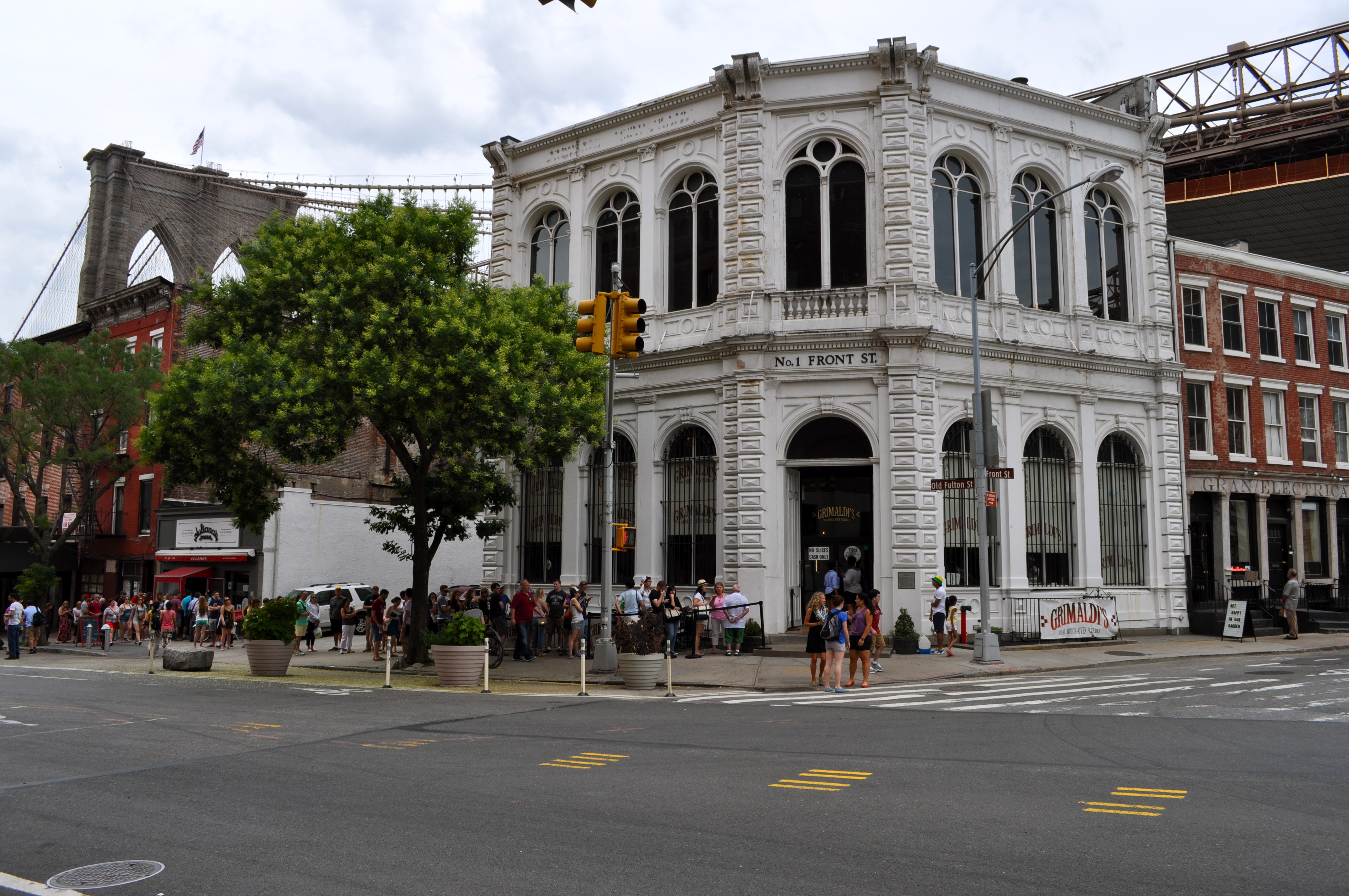
Grimaldi's, from across the street (click to see the line of people)

Grimaldi’s, from across the street (click to check out the line)


By Gracia El Ayle

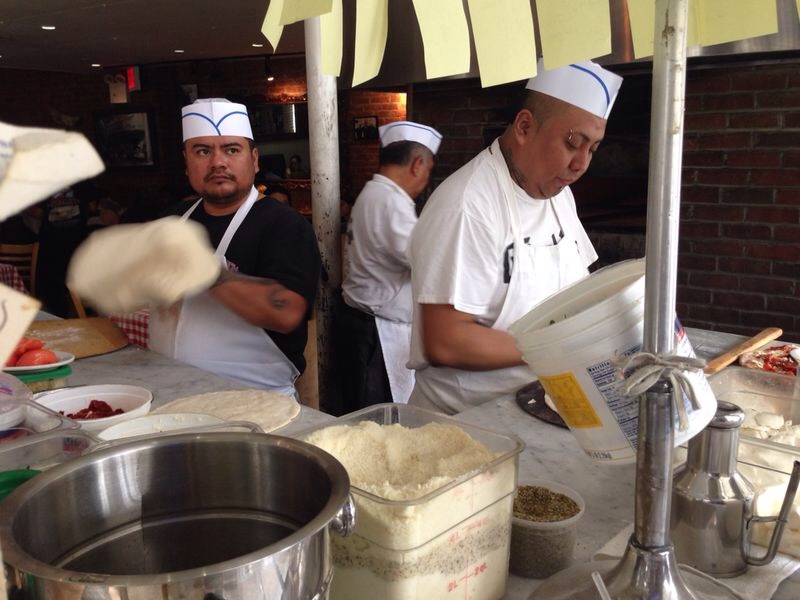
Men at work (taken by Gracia El Ayle)


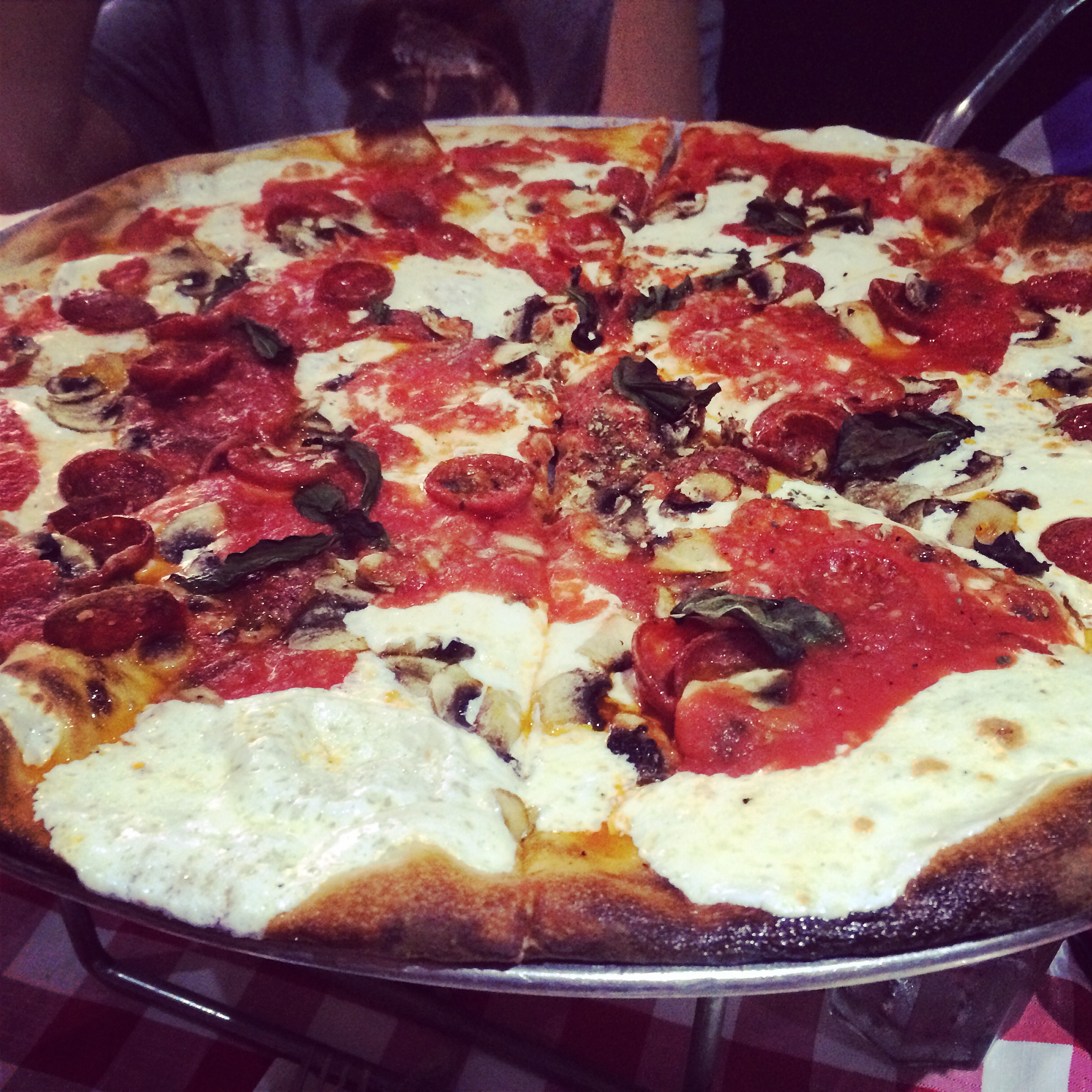
Grimaldi's pepperoni mushroom pizza

Grimaldi’s pepperoni mushroom pizza

Before heading to NYC, I looked up some places that were “musts” for a New York visitor. Grimaldi’s was listed as “the best pizza in NY” and I figured, if we ended up in Brooklyn and it wasn’t too far off, we could give it a try. I’m usually quite skeptical of places that have such titles on travel sites. After all, how many places have lines around the block and a lot of hype but end up to be flavorless disappointments? An hour into our NYC weekend, we’re roaming around Brooklyn with our luggage on our backs. Google maps led us to an old white building right under the Brooklyn Bridge, across from a red-bricked Eagle Warehouse & Storage Co. Although the line looks intimidating, it moves pretty quick. We waited for about 20 minutes and YES, it’s worth it. Each pizza is made on the spot and tossed into the coal-brick oven. You can choose all your toppings, with or without tomato sauce (white). A favorite is pepperoni mushroom with sauce. It’s Italian style (not Chicago deep-dish) and the dough is just right: it’s not too thin, soggy, or hard cardboard and there’s just enough oil to feel like you’re having pizza without needing to go TSA on it with a napkin. The portion sizes are also quite fair. Be warned: cash only, no delivery, no reservations, and they don’t serve by the slice. Whole pizzas only. If you don’t finish it, DOGGY BAG IT.

2. MAX BRENNER CHOCOLATE BAR, UNION SQUARE

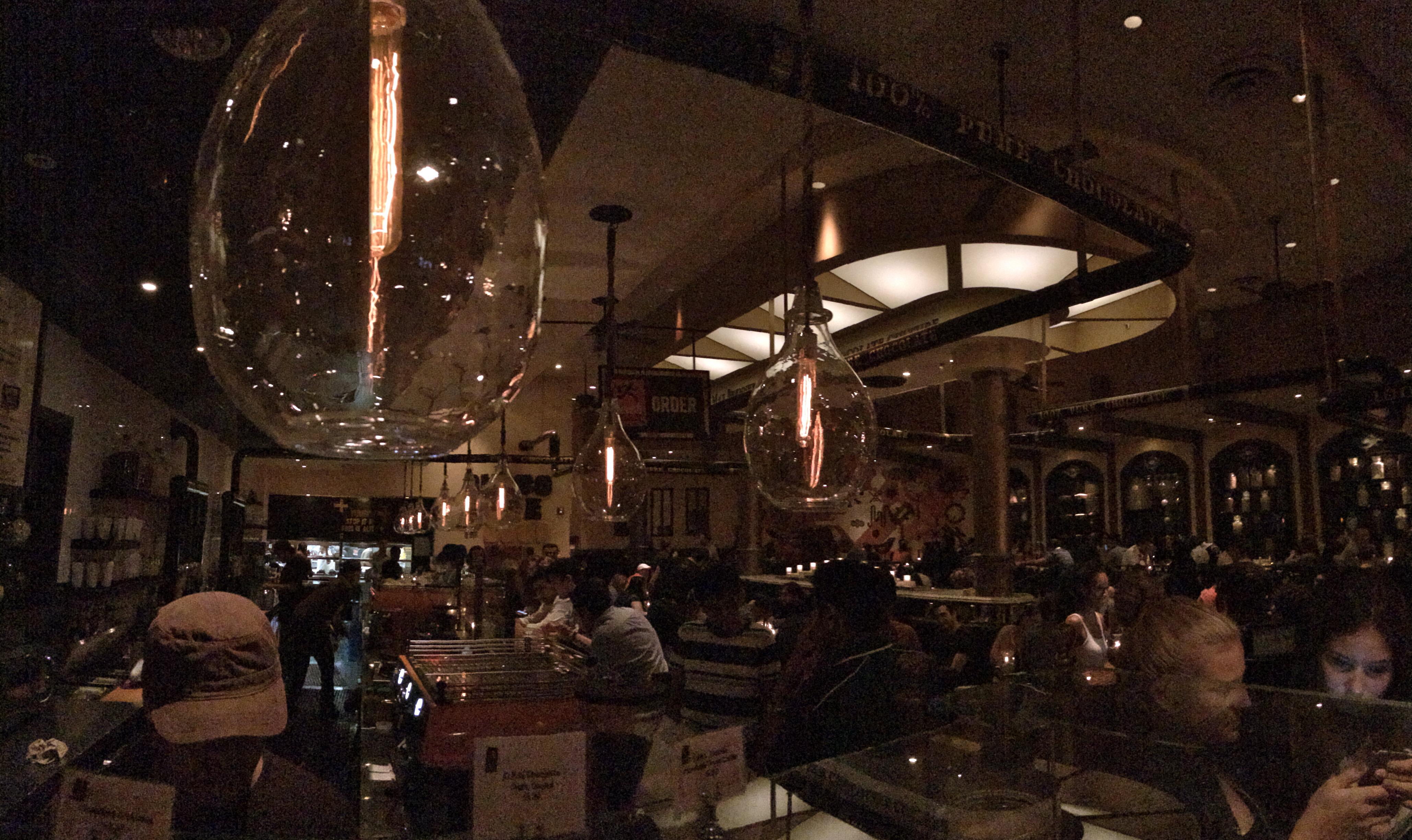
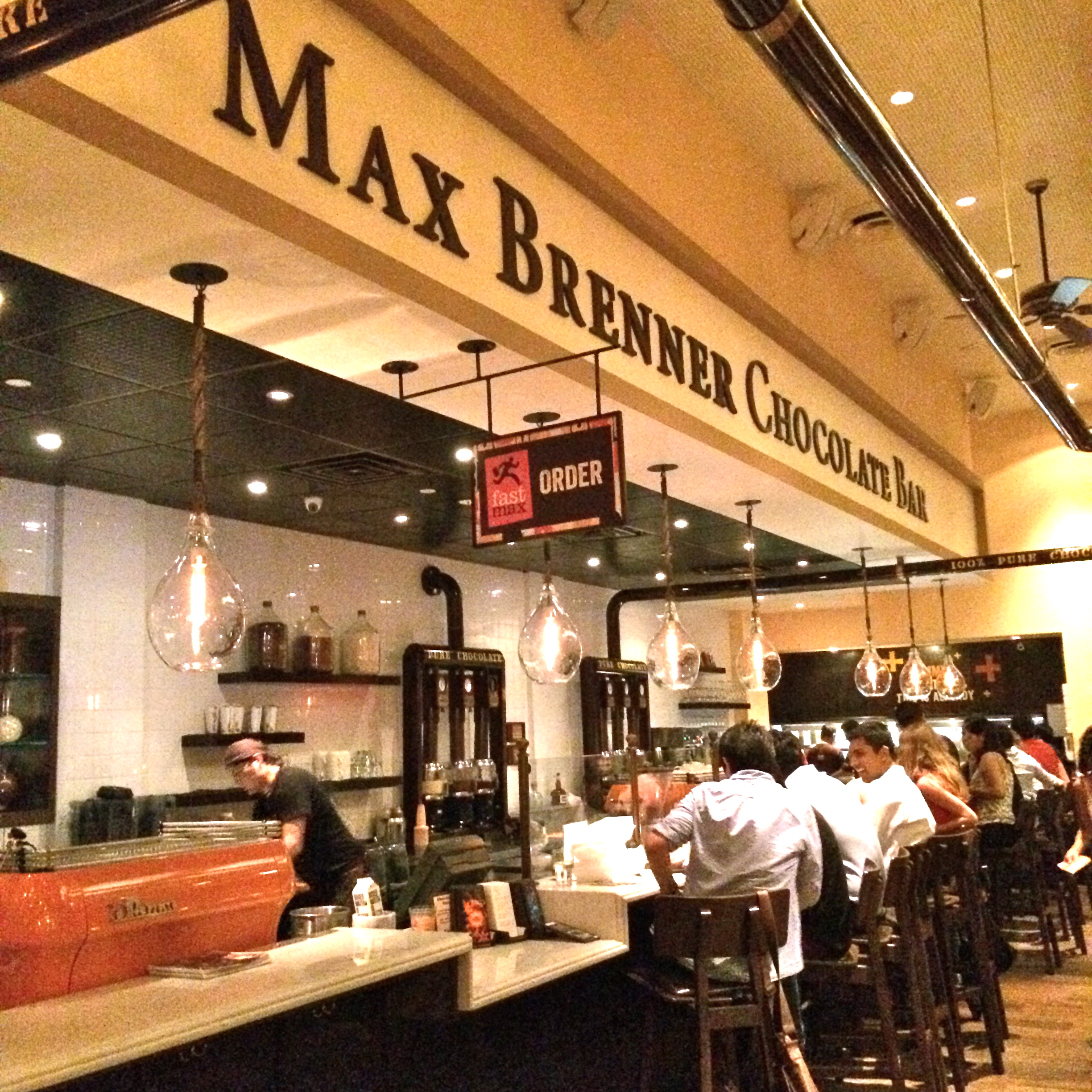
Max Brenner's, from behind the bar

Max Brenner’s, from behind the bar

The bar

The bar

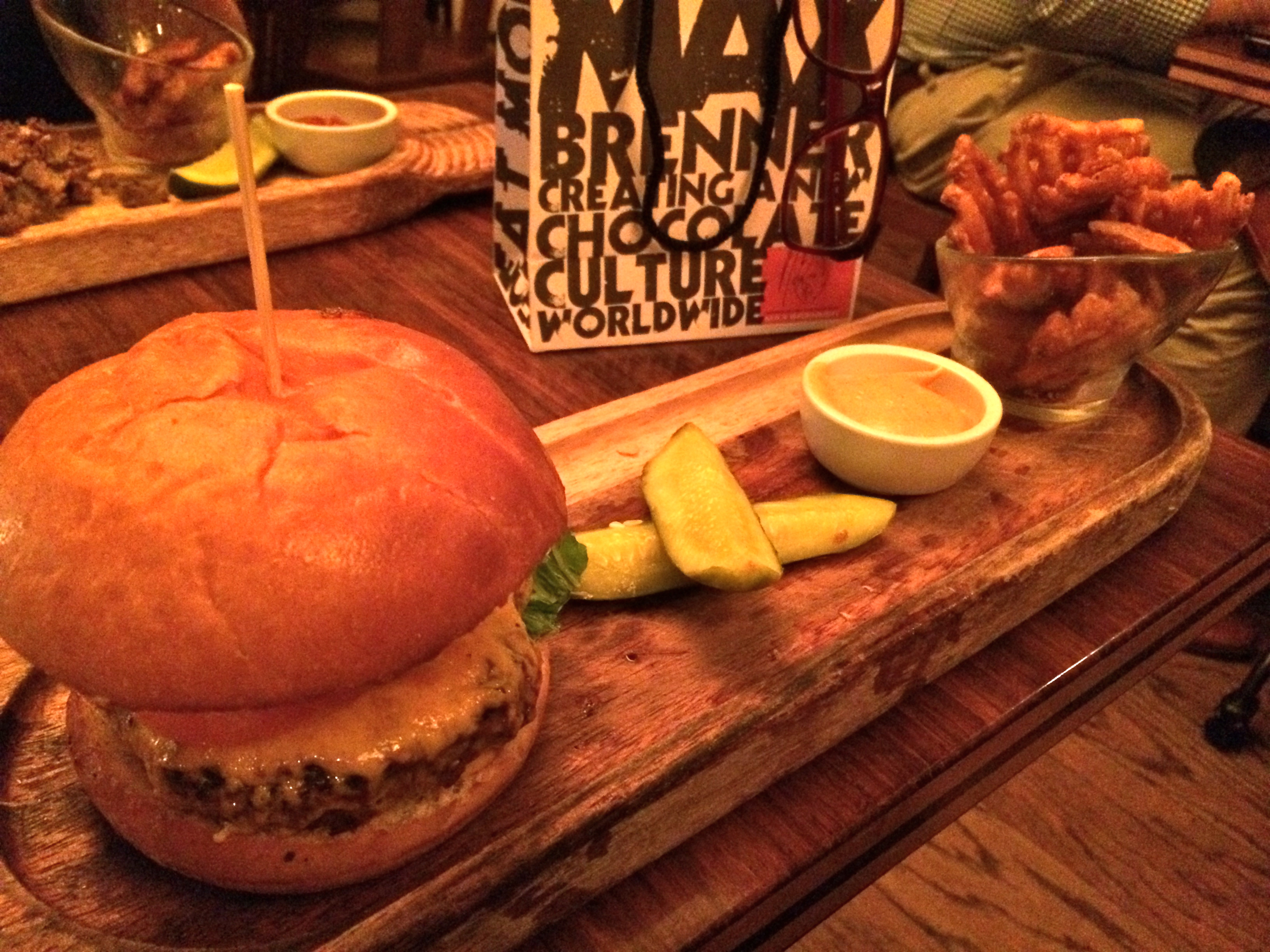
The burger

The burger

We got to this place around 11:00pm with no reservations. Big mistake. You’d think that people would be done feasting by then but we had to wait a good 45 minutes before being seated upstairs. It wasn’t so bad though because that gave us time to inspect all the chocolate boxes at the entrance. The entire place smells like you’re sitting in Willy Wonka’s factory. Although it’s a chocolate bar, we hadn’t eaten since Grimaldi’s so it was time for the pizza’s evil cousin: a fat burger. Medium well meat with a ginormous onion ring & criss-cut fries on the side. One friend got banana chocolate waffles while the other got a Philly cheese steak sandwich…in waffles. Recommended chocolate to take home: milk chocolate covered pralines dusted in cocoa powder available in a cardboard giftbox or collectible tin. There’s also mini boxes by the register next to the chocolate-scented pencils. Yes, I’m serious.

3. MAS (LA GRILLADE), GREENWICH VILLAGE

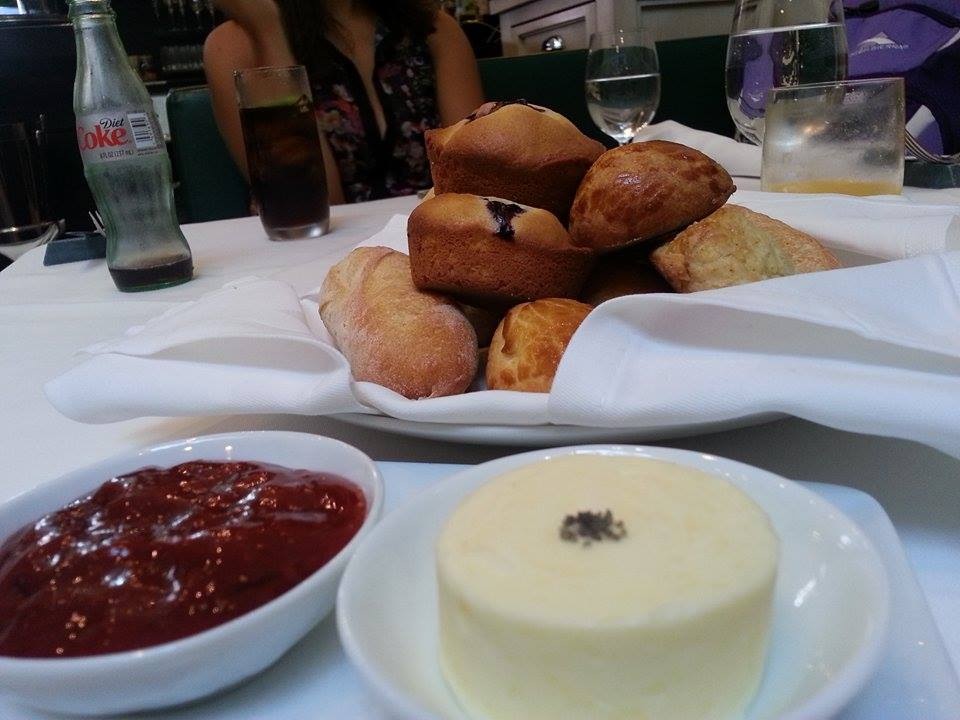
The pastries, strawberry jam, and sea salt butter (taken by May Chaker)

The pastries, strawberry jam, and sea salt butter (taken by May Chaker)

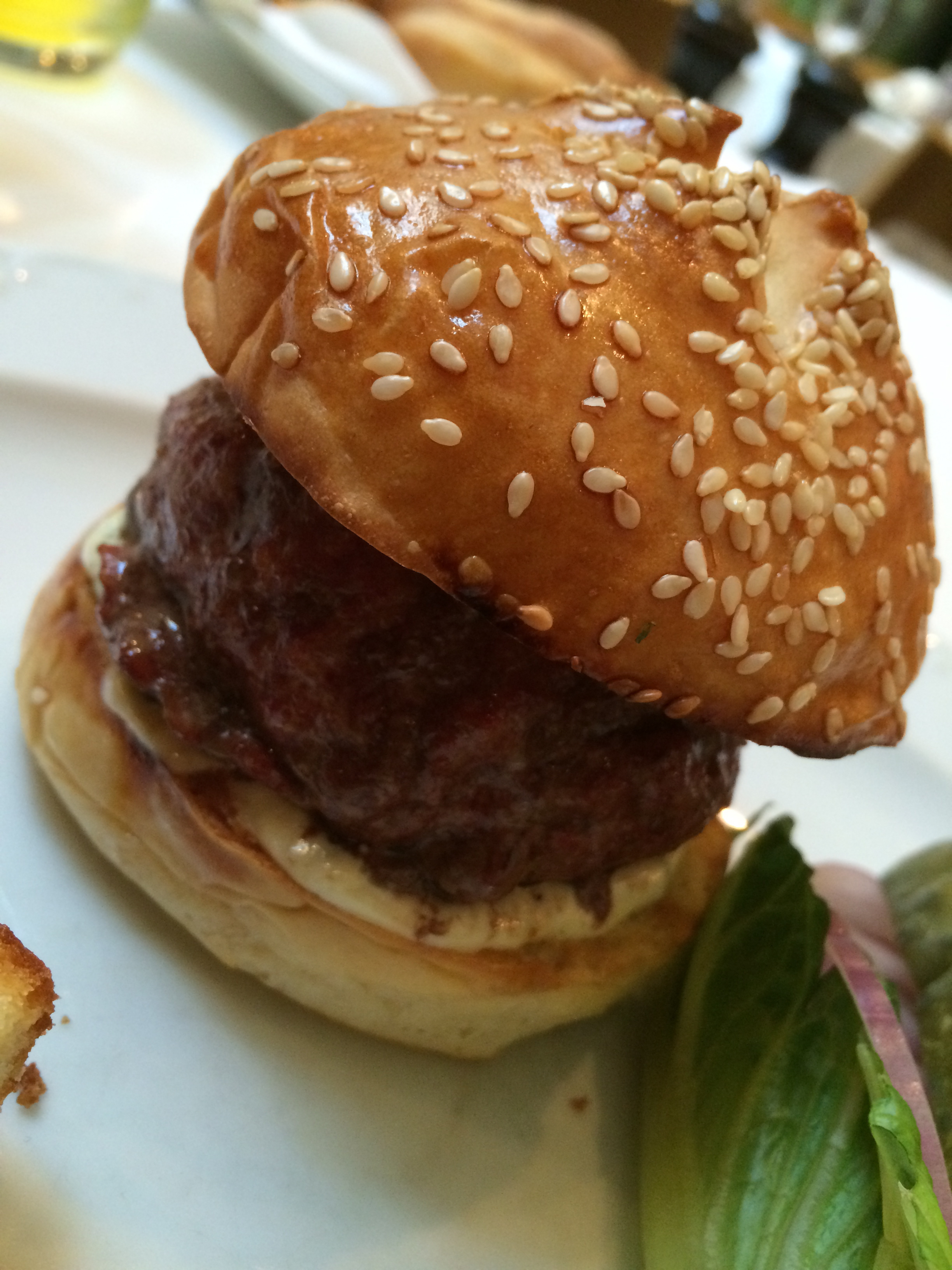
The burger

The burger

The last NYC meal was at this little French spot in Greenwich. We got there for a $28 set-menu late Sunday brunch so we had the place to ourselves before the kitchen closed. The menu changes depending on chef Galen Zamarra and available ingredients – which are locally grown. Our server was a super-friendly perky lady who was ready to explain each entree. Although she described everything as “delectable,” I don’t think she was exaggerating because regardless of the entree chosen, we were all making happy noises throughout the entire meal. Excellent fresh-squeezed OJ helped with the washing down of a whole platter of pastries (vanilla scones, blueberry muffins, croissants, and mini baguettes) with strawberry jam and sea-salt butter. We were not prepared for the hoovering of the “Grilled Short Rib Burger with Herb Mayonnaise on House-Made Kaiser Roll” but we pulled through. My oh my, that little mushroom shaped bun of meat. I was full until the next morning.

Welcome Home?

IMG_5871

After spending a few weeks in the States, my flight back to the Middle East snuck up on me. Upon arrival to my front door, the electricity cut, my friends were messaging about the Lebanese Army kidnappings, and I watched some videos and read some stats about unemployment & driving accidents in Lebanon. Did I mention we still have no president? At the moment, I’m spending my evening listening to Mashrou3 Leila and Wanton Bishops (a Beirut playlist I had made for my American family to listen to while there) and I feel like I never left. I feel at home instantly. It’s as if I hit the pause button here and went to another planet for 3 weeks. Maybe in my bubble it feels that way except it’s not true when you take a step back: the region has gotten worse. Gaza, Mosul, Syria, even our own Arsal. I want to write posts about my time in the US, new developments in the tech world, and perhaps even a post teasing Lebanese travelers and yet…

it all feels trivial and unfair when I see what’s going on around me. Thinking about all the negatives, especially when you feel powerless, is overwhelming. In the sea of news, I wouldn’t mind finding a lighter blogpost that doesn’t address such things just to escape all of the turmoil. It’s not about turning a blind eye and ignoring reality, it’s just giving yourself a breather.

Right now, I don’t feel up to writing one of those posts. Maybe it’s the perspective of leaving and coming back. Maybe it’s the jetlag. Maybe tomorrow will be the day I can’t stop typing about how much I missed this chaotic little place. But that’s not happening tonight.

Goodvertising at 2014 Cannes Lions

Last July, I wrote about Coca Cola’s “goodvertising” efforts. Goodvertising refers to when brands do good stuff that have an impact on people through their creative ideas/campaigns. This category of inspirational life-changing work is the kind that most people in the business aspire to do at some point in their professional life – not to mention, the reason a lot of young folk pursue a career in advertising. It was definitely a reason I joined the industry of communication: I want to be part of an initiative that improves a person’s life at the most basic level with an innovative idea that is human to the core.

Cannes Lions Festival of Creativity is an annual festival that acknowledges and awards great creative work. It’s a big deal to win at Cannes because your work is up against the best content produced all over the world. Winning a Cannes Lion is like getting a black belt in advertising. In the past few years, Cannes winners tend to be campaigns or ideas that had 3 things:

a) an unanswered problem
b) useful technology that answered this problem
c) integrated approach based on one human insight

More and more winning campaigns are becoming product-based. Not as in the product that is being sold but as in the advertisers are designing products or solutions to world problems. Technology is a device or facilitator but not the most important factor. The idea is still king. It is increasingly difficult to bring an idea to life that is not condescending yet relevant to the brand’s purpose. It is even more challenging to keep your idea simple: no extra fluff, just an easy low-effort solution. The following were winning campaigns at Cannes 2014 that were just SOME of this year’s best examples of GOODVERTISING:


HONORABLE MENTION: