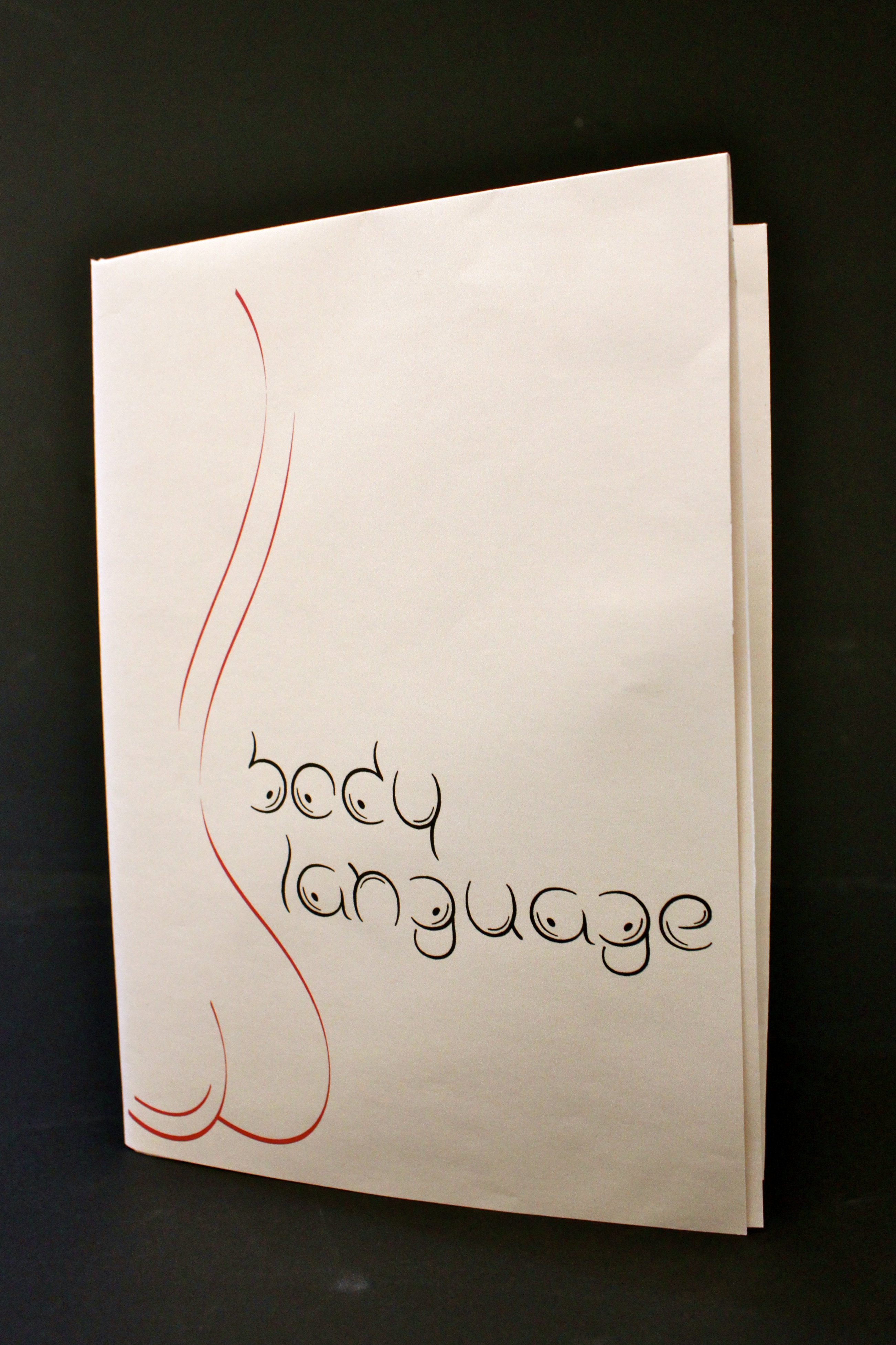
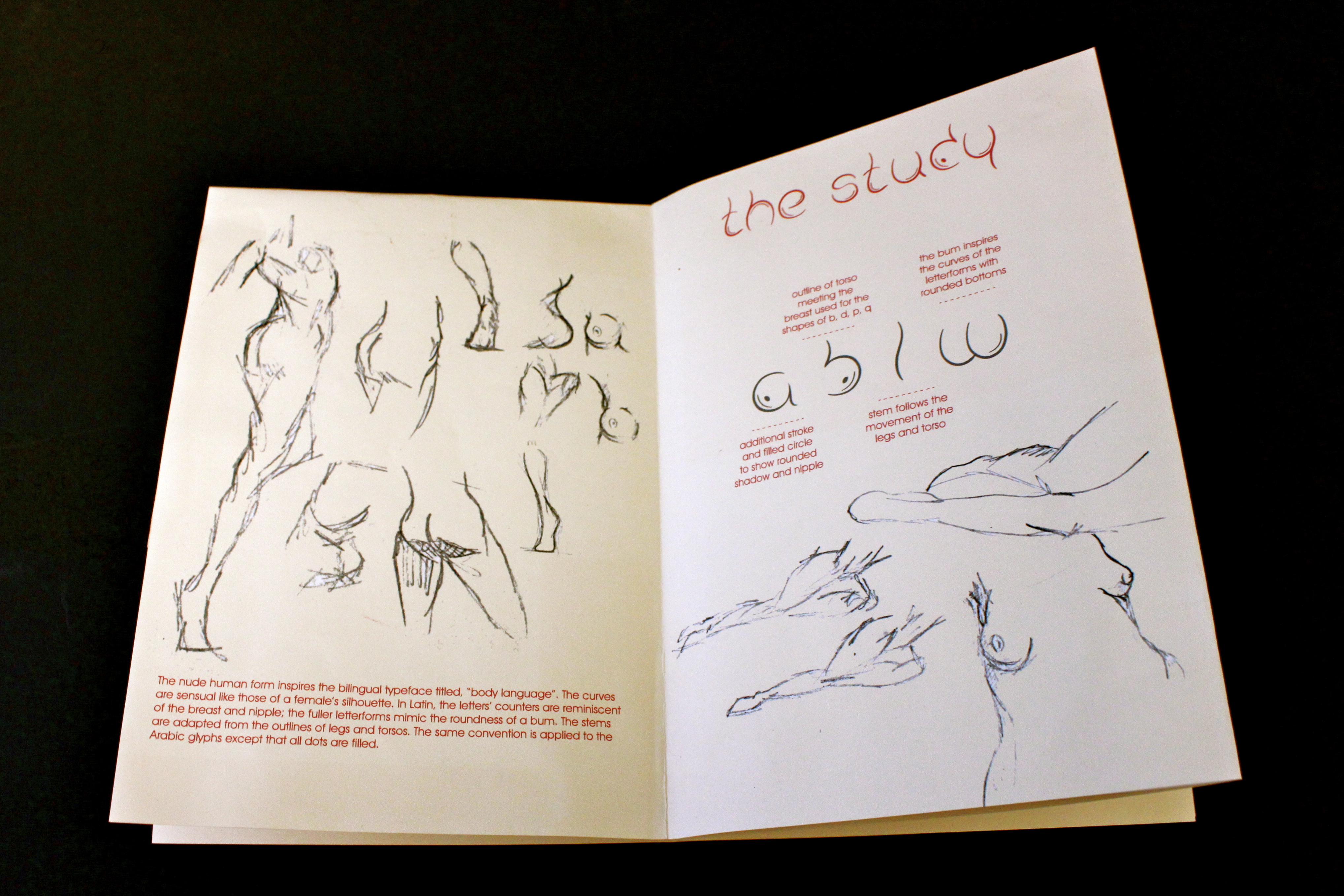
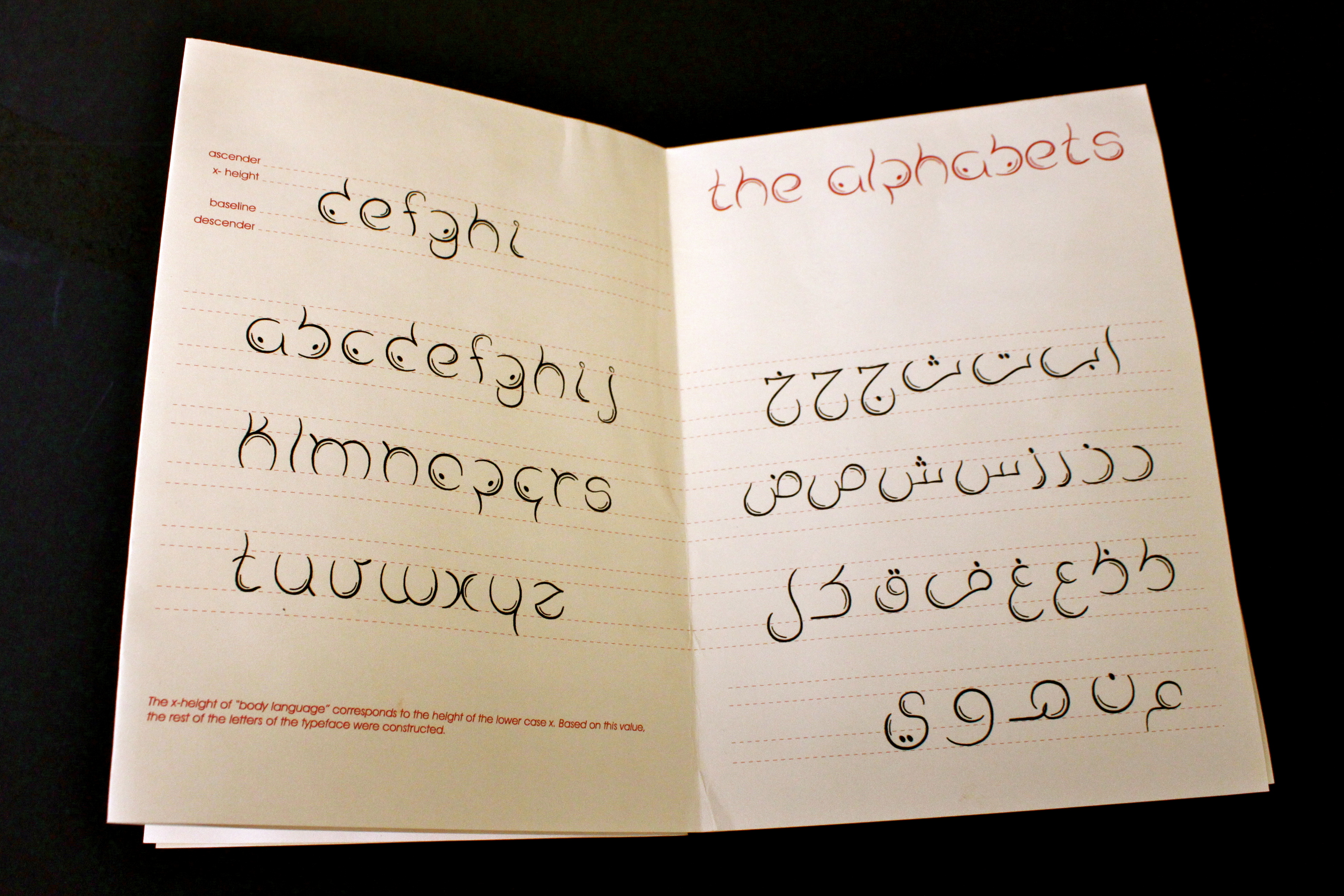
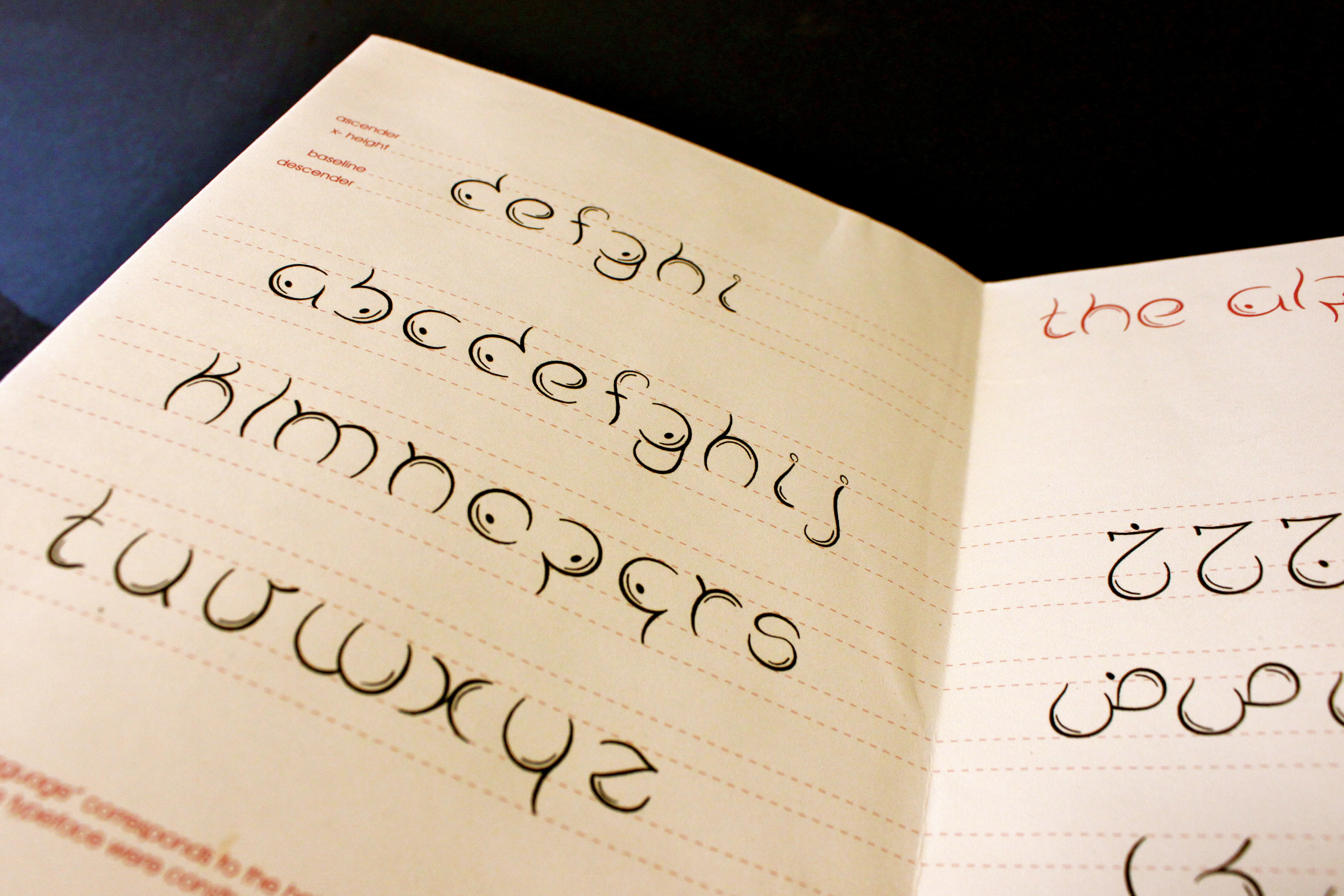
This week, I read about a newly designed font based on a female silhouette on glass. Oddly enough, the typeface I designed last semester is called “Body Language”- aka “the booby font.” I had wanted to pursue a similar feat to the one in the article but could not figure out how to do so (and the thought of going to that extreme didn’t occur to me), so I did it based on the outlines of a female’s body instead. It’s a bilingual typeface but only the Latin glyphs are functional as a font on the computer.
Below is the brochure; if you would like to download it for personal use, please let me know.
Some of you may recall a post from the beginning of this month that was about my weekend in the Beirut Digital District. Sari Awada, my fellow tweeter at the Beirut Service Jam, brought this video to my attention and I think it deserves a post all on its own. It’ll be interesting to see how this project comes together, no?
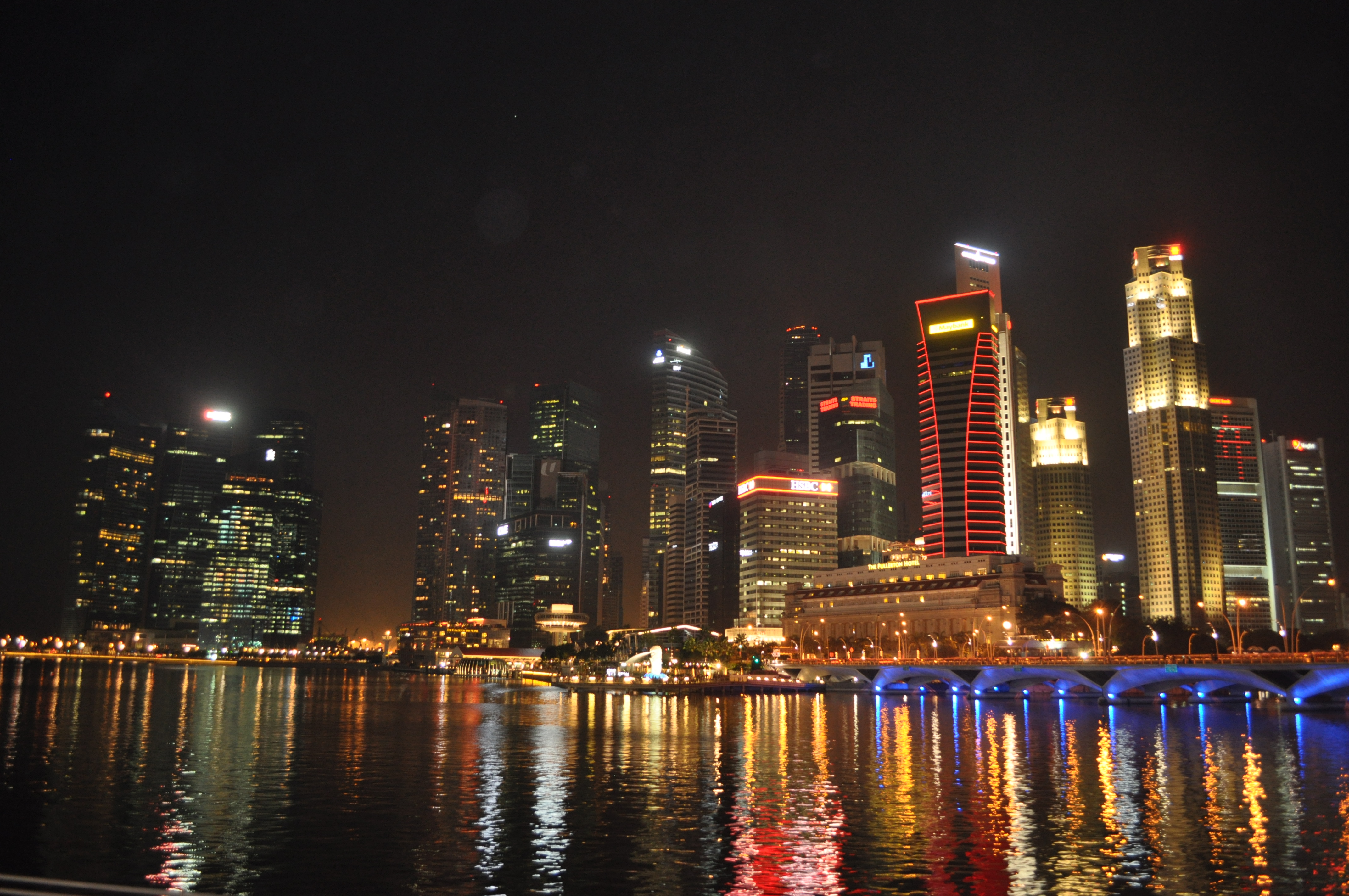
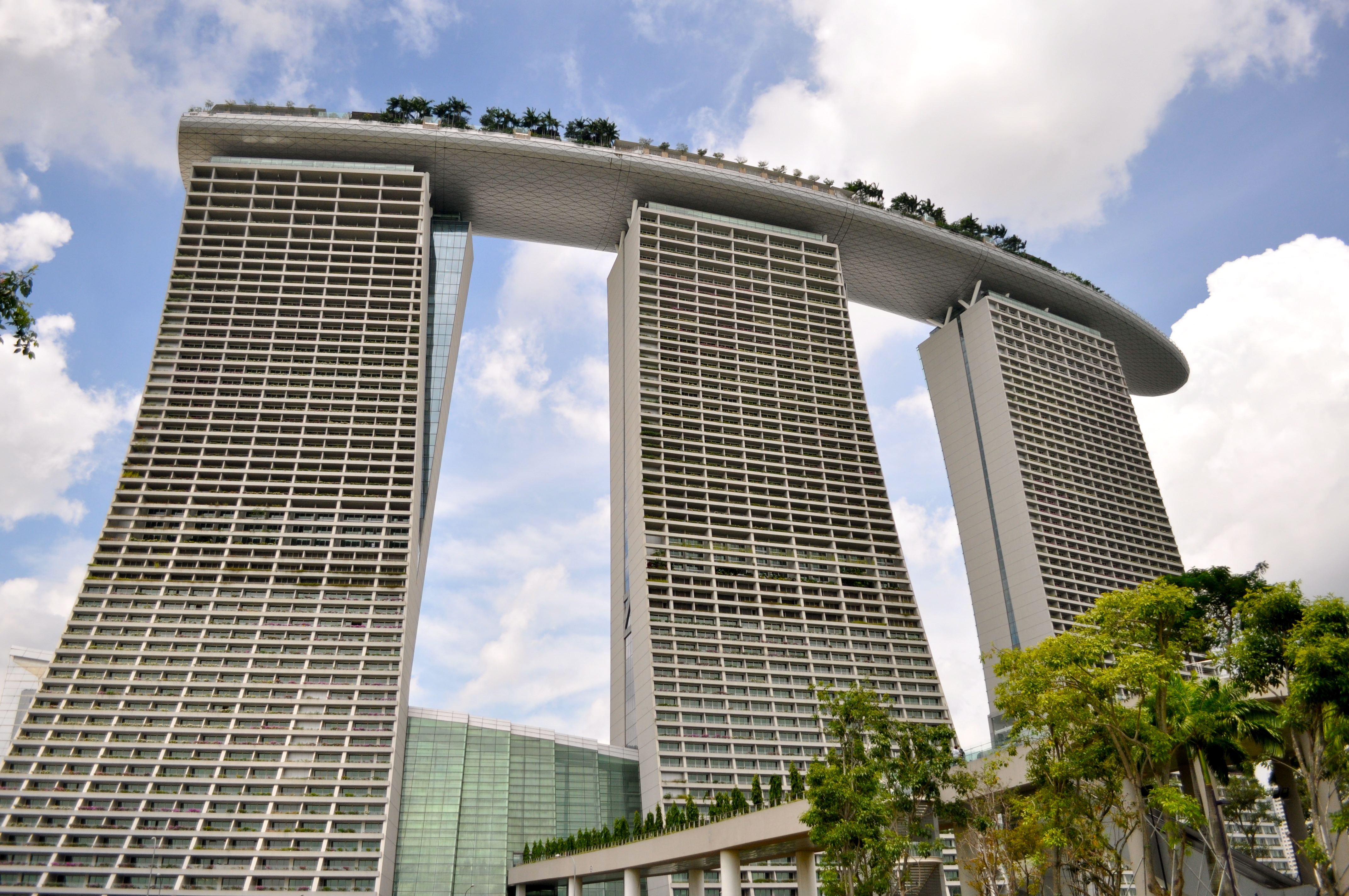
Possibly the biggest and most well-known chunk of the Singapore skyline, the Marina Bay Sands Hotel and Casino is made up of 3 towers with a giant boat-like structure joining them at the top (57th floor). On said floor, there’s an infinity pool overlooking the entire central district, a restaurant/chocolate bar, and the popular club, Ku De Ta. The ground level connects directly to the metro system and has it’s own shopping mall complete with gondola pond, skating rink, and food court. It’s the most expensive standalone casino property valued at $8 billion. It was designed by Israeli/Canadian architect, Moshe Safdie who says it’s design was inspired by card decks.
2. Helix Bridge
Due to the fact that this bridge brings together science and design in one structure, it is one of my favorites. The helical bridge leads straight to the Marina Bay Sands Hotel and the Artscience Museum (how appropriate). Designed by Australian and Singaporean architects and engineers, it was opened in 2010. Although I didn’t get to see it up close when lit at night, I’ve read that it’s lit in alternating colors to represent the nitrogenous bases of the DNA double helix. Don’t you love the level of geek?
3. Esplanade
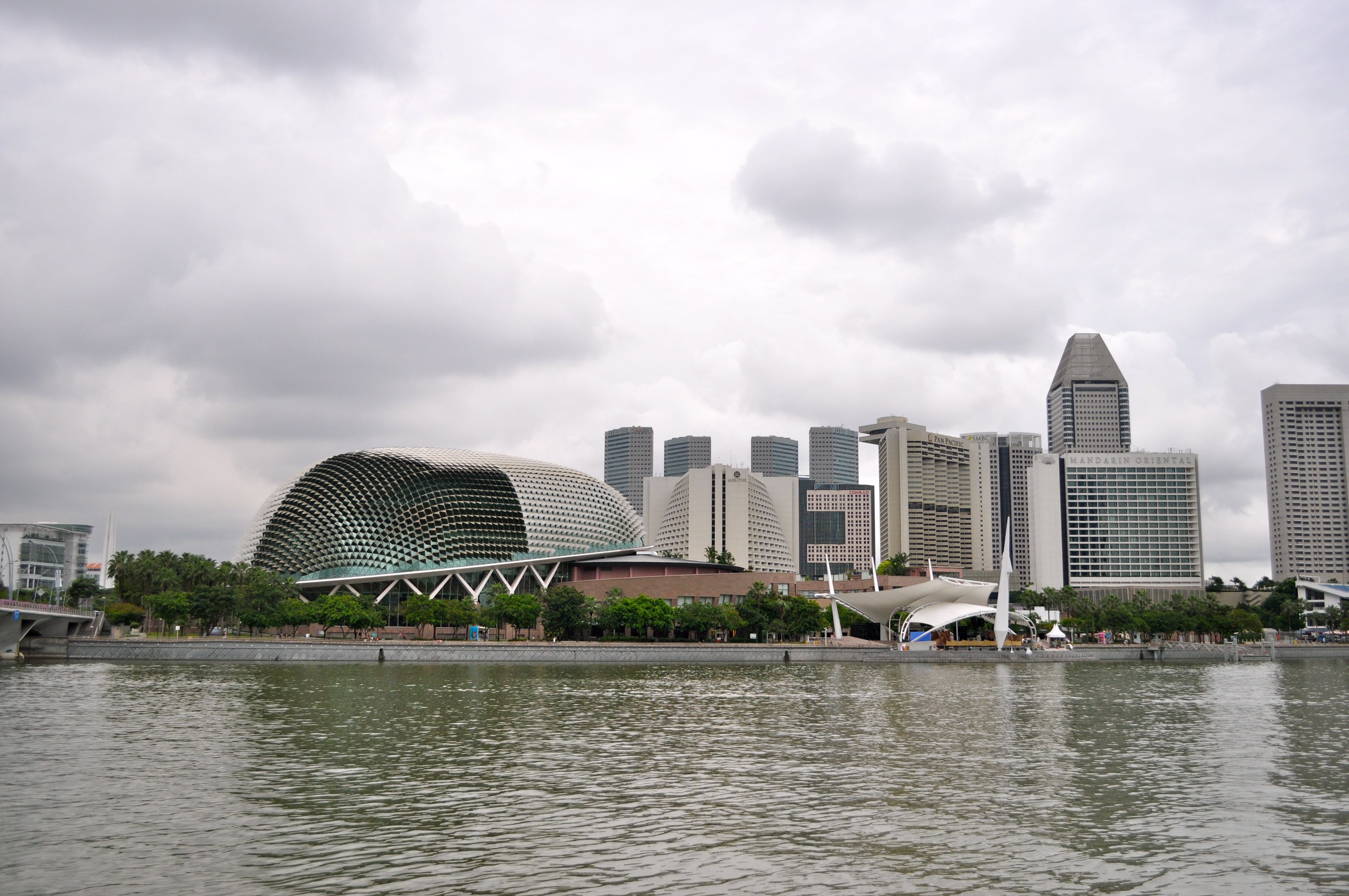
This center for theatre and the arts is located by the Bay and you can’t miss it because of one simple architectural detail: it looks like a huge durian. Now why anyone would want to design a building to look like the most vile smelling fruit on the planet is beyond me but it’s probably because the spiky organic grenade appearance is funky when applied to a gigantic 3D space. The building opened its doors in 2002, has triangular panels applied to its exterior, and is lit up at night – and no, it doesn’t smell.
4. Artscience Museum
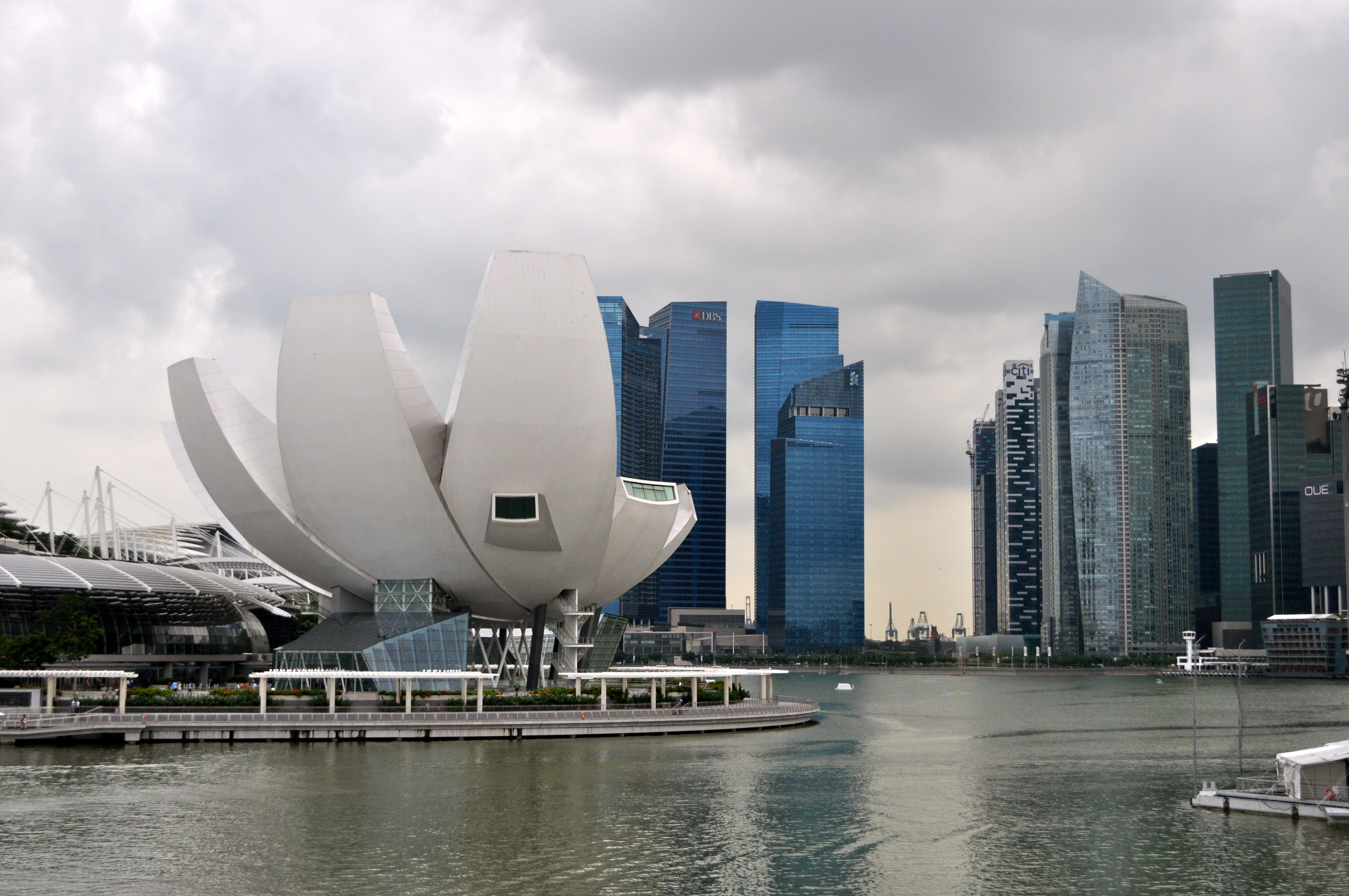
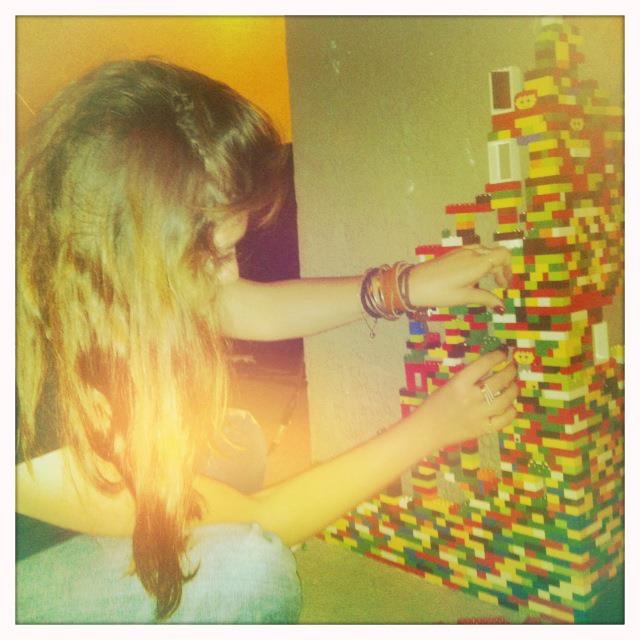
Also designed by Moshe Safdie, the museum’s shape is a blossoming lotus flower. It has 21 gallery spaces and usually hosts exhibitions that are shown at museums around the world. This February, they had the “Art of the Brick” exhibition for NY-based Lebanese artist, Nathan Sawaya. He builds sculptures using Lego pieces. There was also a photography exhibition that had a disposable camera under glass as if it were something sacred from the past. It seemed ridiculous but that didn’t stop me from feeling older than Maggie Smith.
5. Louis Vuitton by the Bay
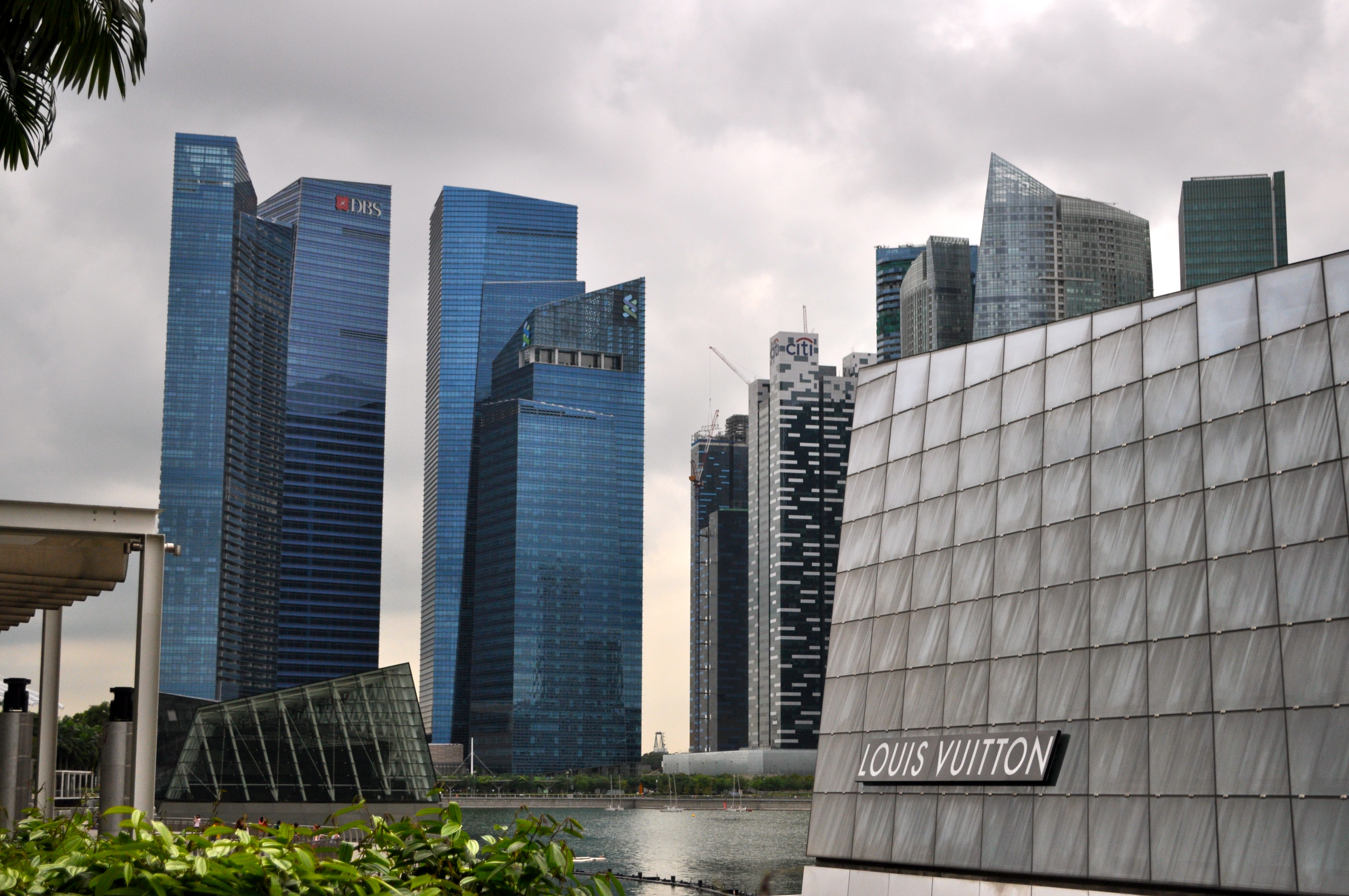
The LV Island Maison is a glass pavilion that sits on the water surface right outside the MBS hotel. The store has a nautical theme and resembles the Avalon, a club not too far down the strip that has a similar geometric glass box shape. It was a collaborative design by Moshe Safdie (again) and Peter Marino. The glass panels are fit with UV-resistant membranes so that the luxury goods inside are not affected. My picture doesn’t do it justice so watch this to see/learn more.
6. Ion Shopping Center
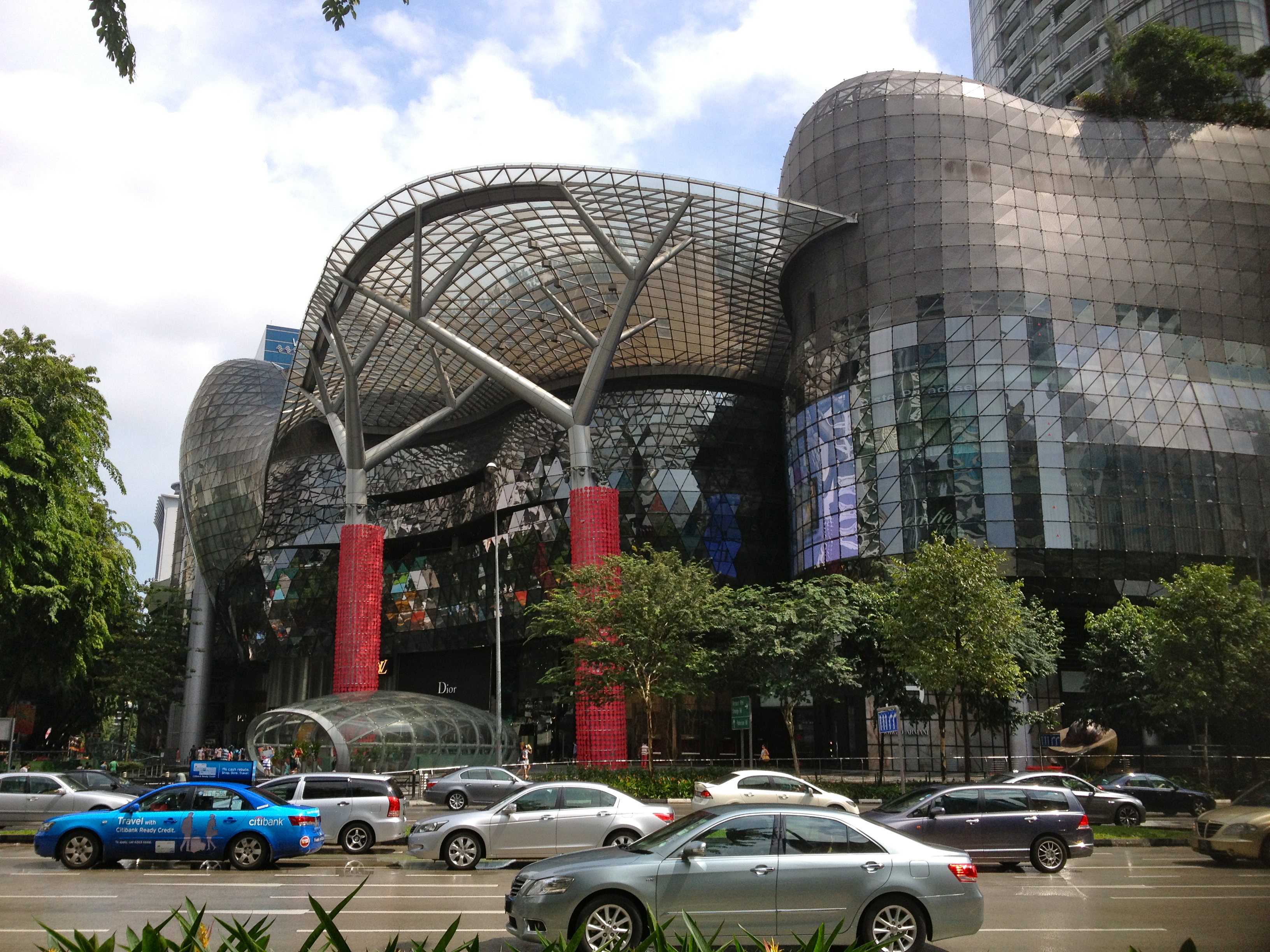
Being one of many underground shopping malls located on Orchard Road, Ion was the first I went to – and the only one I kept going back to. It’s curvaceous glass exterior makes it seem quite other-worldly. Even the MRT station entrance (the bubble between the two red columns in the photo) looks like a teleportation system from Kubrick’s Space Odyssey. The first few floors, which are above ground, are high-end luxury retail shops. Those below are the more pocket-friendly. It’s sort of like the Titanic, the lower you go, the cheaper it is.
7. Colonial Buildings & HBDs
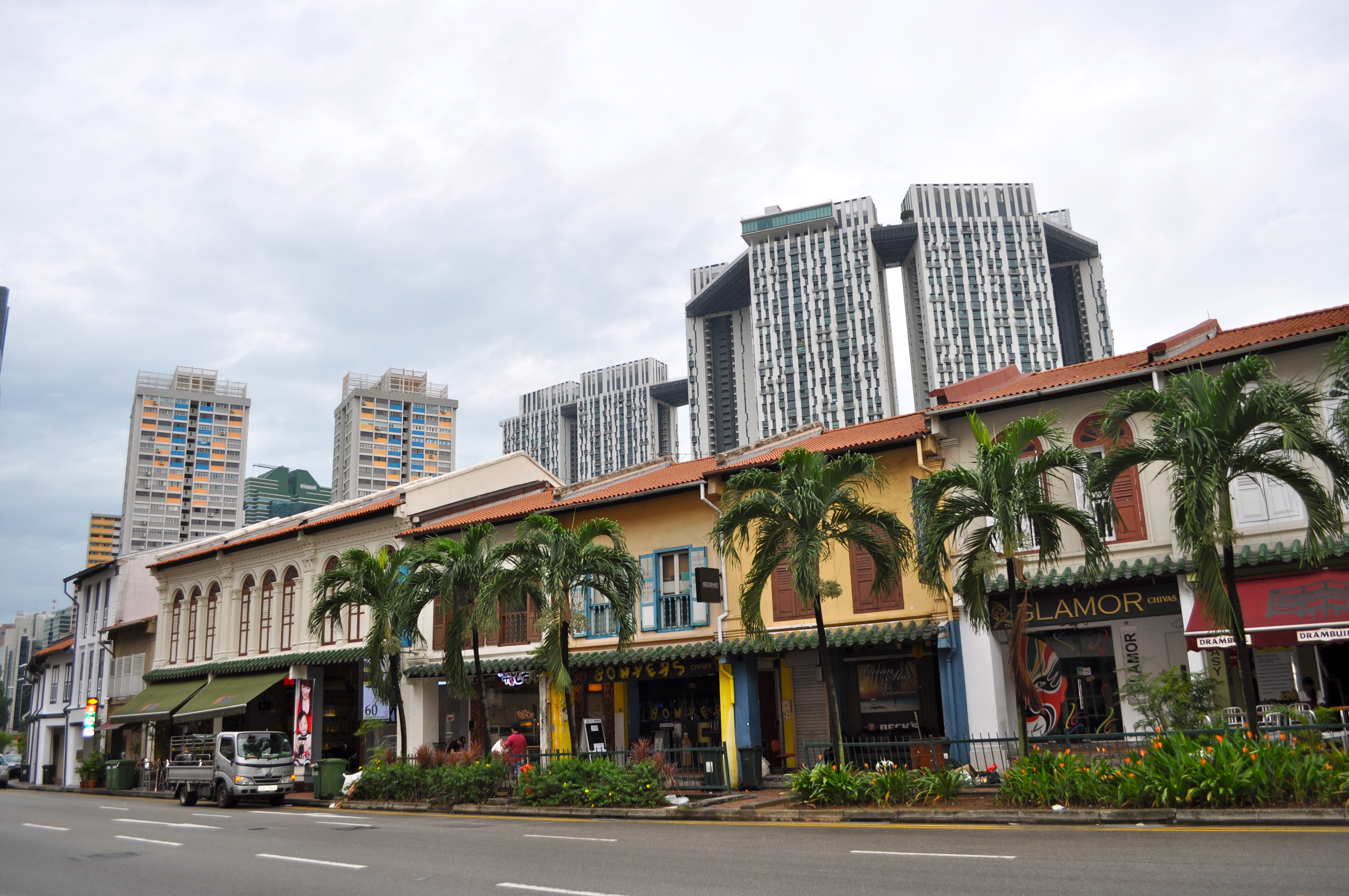
A lot of the non-skyscraper architecture of SG dates back to the colonial period; there are lines of shophouses (imagine those townhouses on a typical San Francisco street) and black & white bungalows. According to Wiki, “In Singapore, they were built from the 19th century until World War II. The style incorporated elements of UK’s Arts and Crafts and Art Deco movements as well as the need of wealthy expatriate families for airy and spacious family homes. Black-and-Whites were built by wealthy families, the leading commercial firms and above all, the Public Works Department and the British Armed Forces.”
These old-style residences are usually up against the backdrop of towering HBDs (Housing and Development Board), which are complexes that are a form of low-cost state-built public housing. The most colorful HBDs I saw were found in the area between Bugis & Arab Street – they reminded me of the pink and yellow houses of Ashrafieh.
8. The Gardens by the Bay
The two domes
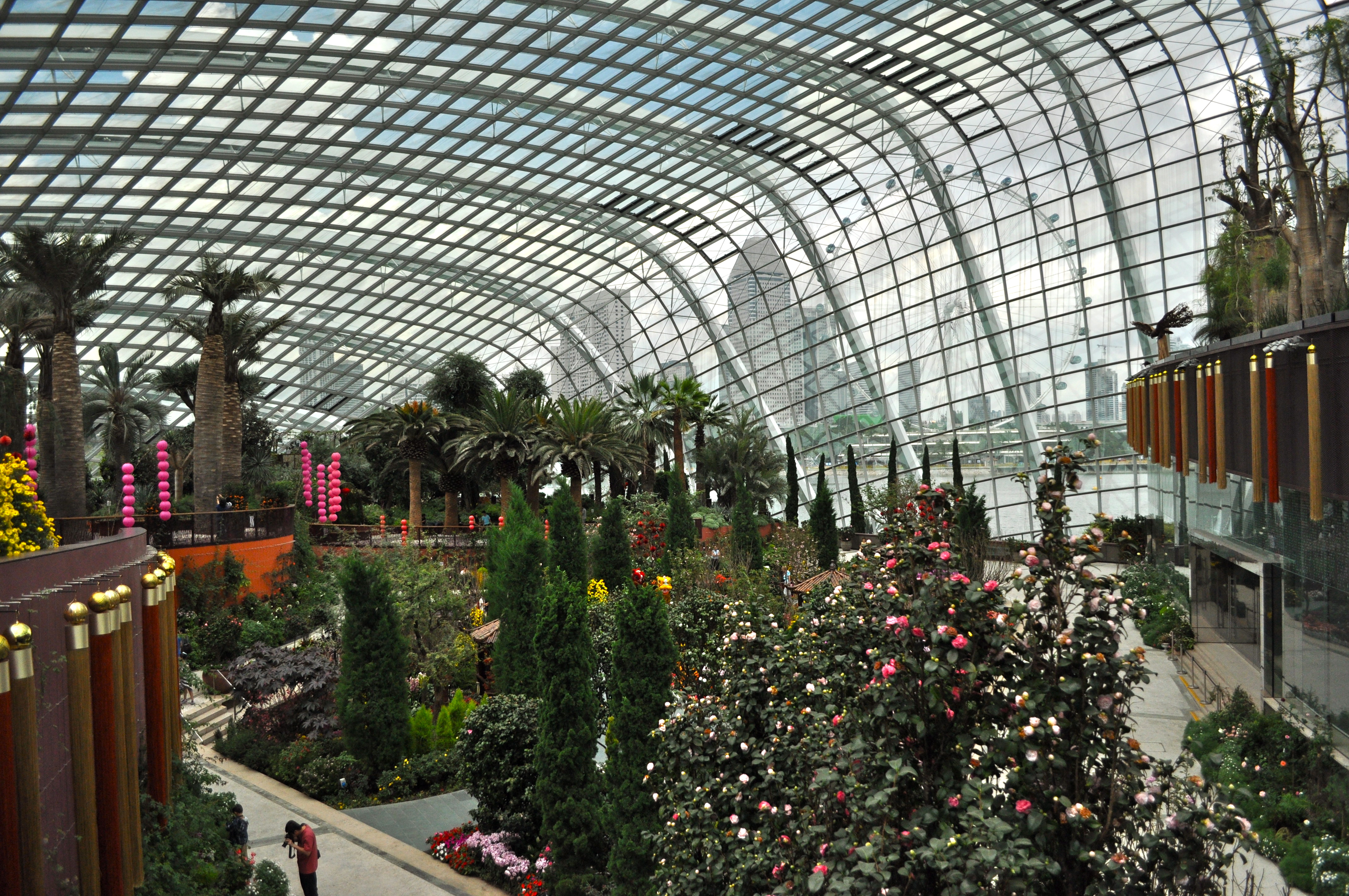
Inside the Flower Dome
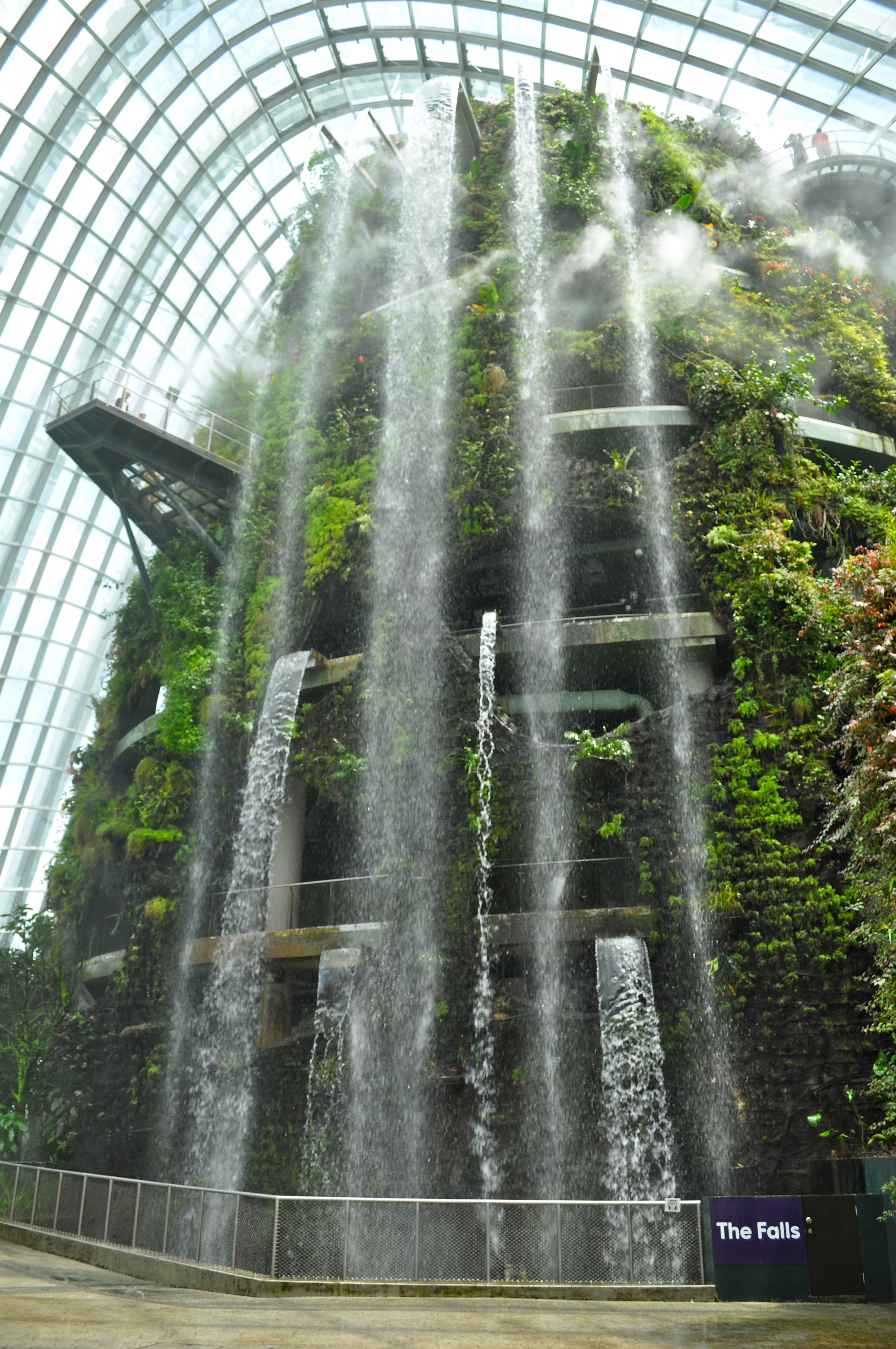
The Falls – inside The Cloud
The mountain inside The Cloud
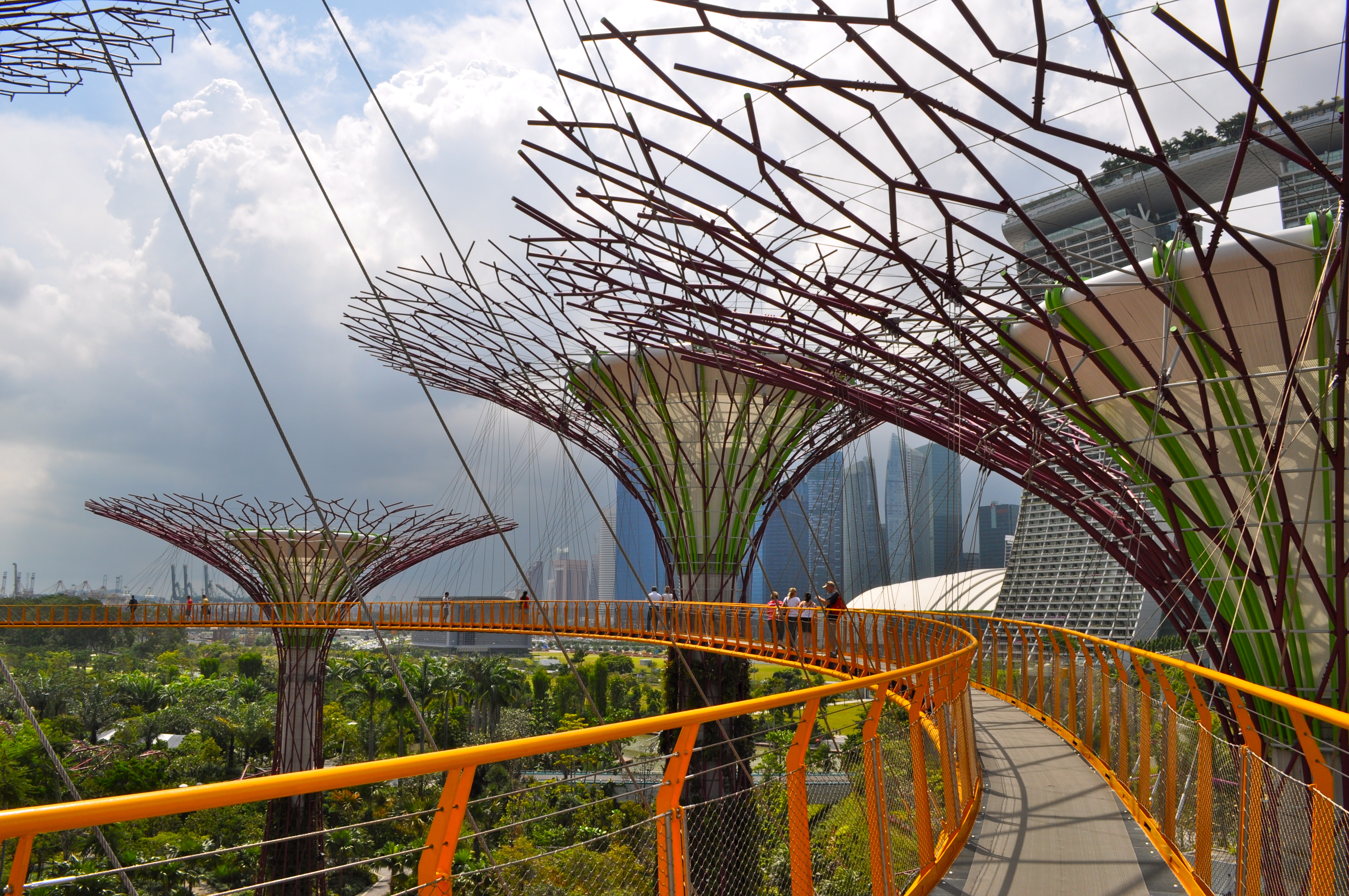
Taking a walk through the Supertrees
Recently opened in 2012, the 350 billion dollar project “Gardens by the Bay” is made up of two large domes, various gardens, and the Skyway. The two biodomes, The Flower Dome and The Cloud, house various species of flora within a temperature controlled environment. The Flower Dome has species from different parts of the planet divided based on geography/climate. The Cloud focuses on endangered flora that grow at higher altitudes – now at risk because of global warming. The Skyway is comprised of large tree canopies (also known as Supertrees) that are fitted with solar panels, hanging gardens, and rainwater catches. There’s a walkway that joins two of the trees so that you can walk across the 22-meter structures and take panoramic pictures of the gardens and the rest of the SG skyline.
9. Star Vista
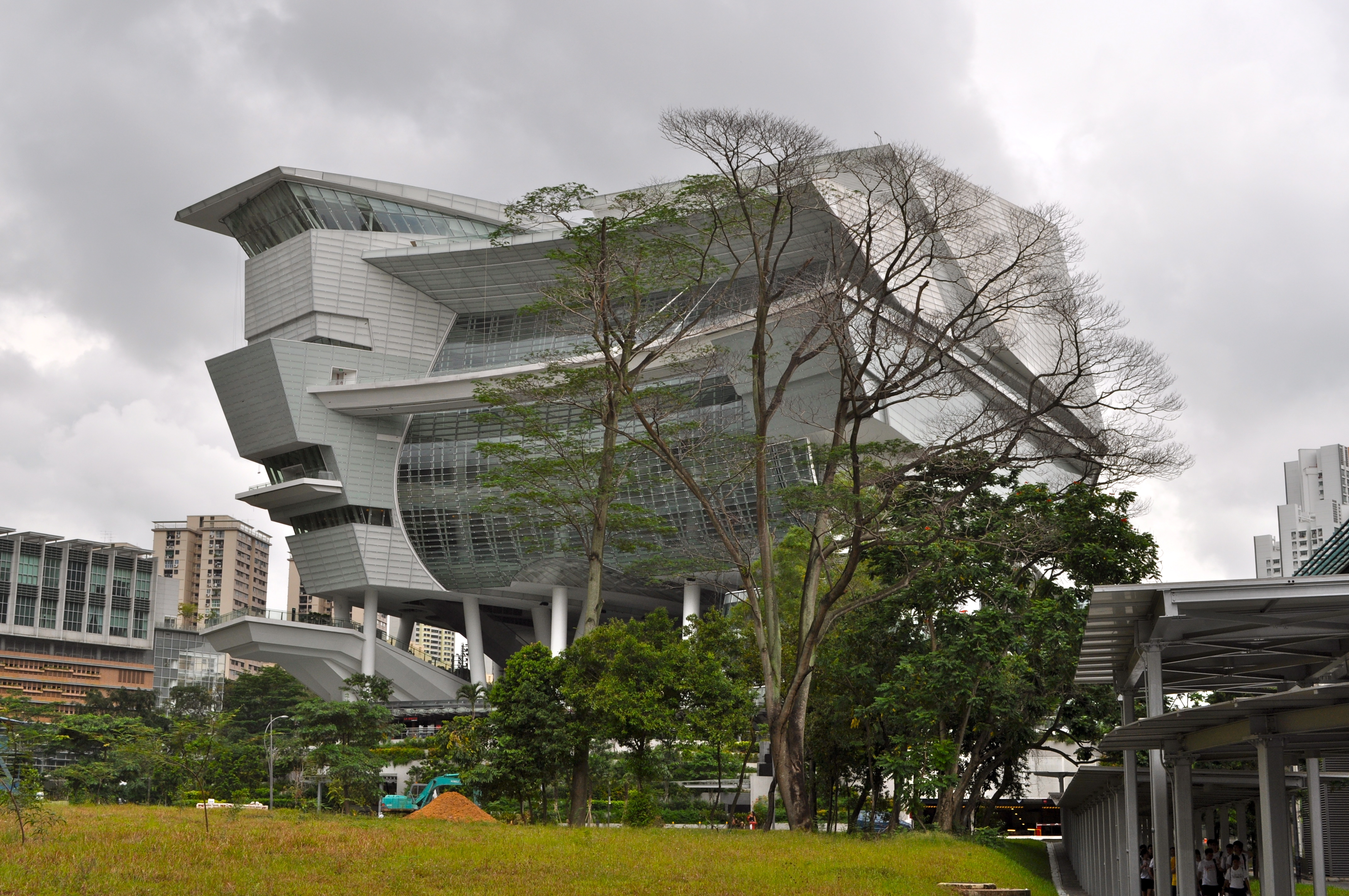
The Star Vista is another shopping/food plaza that also houses a large auditorium for shows. Located right outside the Buona Vista MRT exchange, it is one of the only shopping centers in SG without air conditioning. “The 15-storey mixed-development building keeps cool by optimising wind flow and air movement through open-air walkways and a 33m-high grand foyer that is not closed up so air can flow in. The shops, however, are air-conditioned.” (source) The $976 million project was brought to life by American architect, Andrew Bromberg of Aedes architectural firm.
10. Red Dot Traffic Building
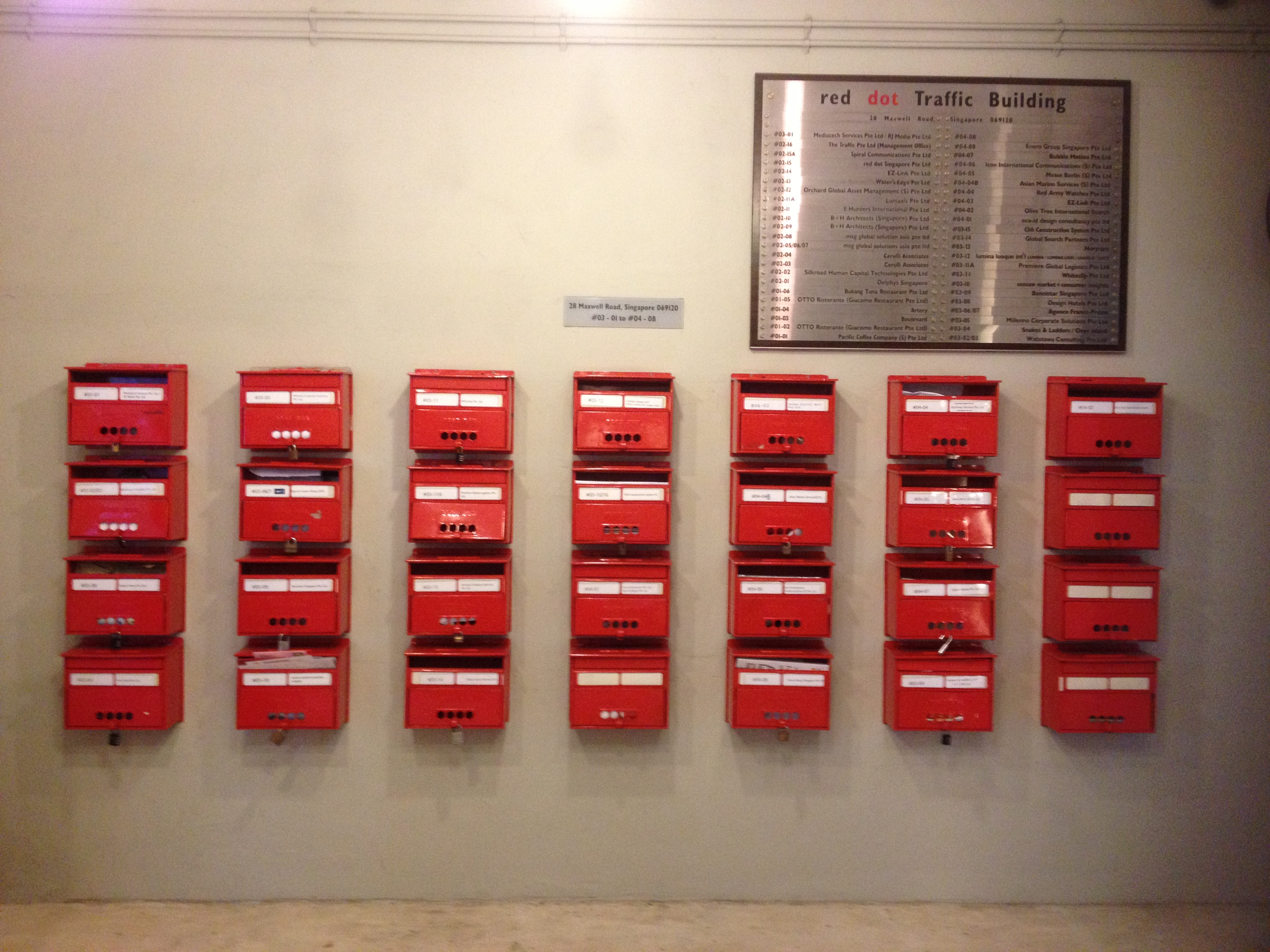
Pretty Red Mailboxes
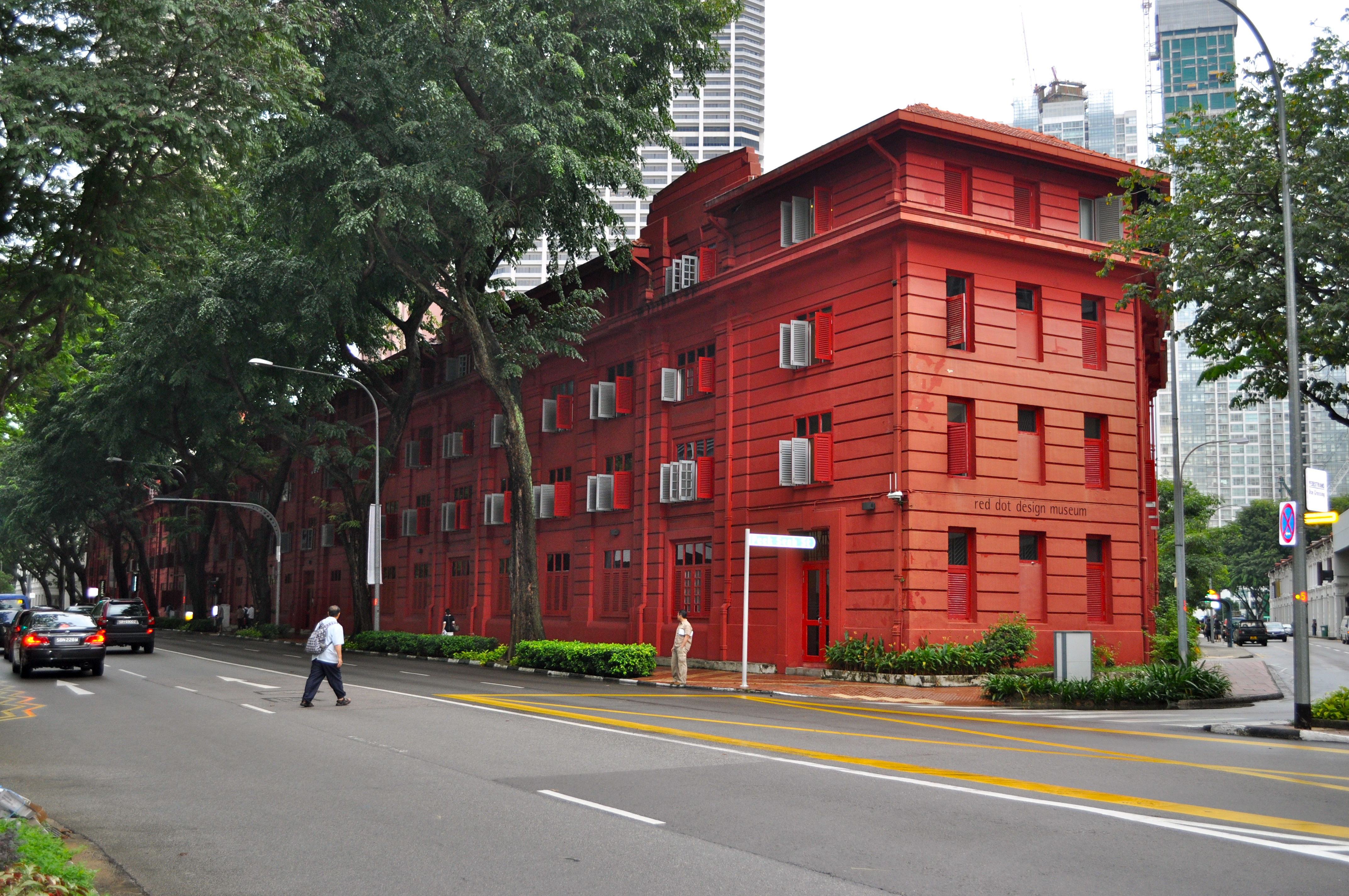
What used to be a traffic police headquarters is now home to restaurants and the Red Dot Design Museum. It’s located on Maxwell Road, walking distance from the Maxwell Hawker Centre so you can have a plate of chicken rice after you’re done sifting through the winners of the Red Dot Design awards (entrance to the museum is S$8, S$4 for students). When at the food stall, make sure to get all the little tubs of sauces and be generous with the combination that you prefer. When it’s boiled chicken, we all know the truth: it’s all about the sauce.
Disclaimer: These are just a FEW of the many architectural wonders of SG.
In honor of his newly released album (which was available for free on iTunes last week and will be followed by part 2 of the 20/20 Experience later this year) and official video for “Mirrors”, here are the reasons why Justin Timberlake has been dubbed “The Best Justin in the World”:
The song used above is said to be the retelling of his grandparents’ love story and that’s who it’s dedicated to, William & Sadie
JT is the man of boy bands. And before you go screaming about Michael and the Jackson 5, Michael Jackson doesn’t get the title because, regardless of his J5 days, Michael is king. *Nsync was a big part of JT’s emergence as a musical artist but the Jerry curl and toxic Britney was just a phase…that made him millions. Deep down, you all have a favorite *Nsync song. It’s tearing up my heart and yours to deny it, but this I promise you, you’re not alone. When you’re listening to *Nsync, know that I see right through you and that at least one other person is listening to them too- most likely, it’s gonna be me. By the way, Rami Yacoub, one of the songwriters for *Nsync (and other pop stars) is of Lebanese origin. WHAT UP.
His acting chops will get better. I’m still waiting for that breakthrough acting performance. Remember when we all thought Leo couldn’t act? Well now, Leonardo DiCaprio:Martin Scorsese::Johnny Depp:Tim Burton (without the costumes, undead drag queen makeup, and whoknowswhat with Helena Bonham Carter) It’s only a matter of time before JT drowns in the freezing Atlantic and comes back as [insert awesome director here]’s puppet.
Jessica Biel. Dat ass. Nuff said.
He’s Timbs’ muse, he can work a suit & tie, and thus he has the Jay seal of approval (turns out you have to score a 40/40 on those S-A-Zs and that’s what he’s indirectly referring to by his album title. Duh.)
He can dance better than Be in a spandex leotard. Again no offense Be, I love you, please don’t hurt me.
Being a Mickey Mouse Club member from Memphis, he started from the bottom and won’t throw snowballs at you from a Bentley
And he will always be the best Justin in the world because of this song. I have praised this song before, but unless he learns the rest of the English language, I don’t beliebe the Bieb could ever come close to a melody like that.
If you do live on your own, it’s most likely because you have no family in the country, you are a foreigner to begin with, or your parents are paying your rent/paid for the house you’re in/you camp on a rooftop. If you don’t fall into that category, you, like the majority of young professionals in Beirut, live with your parents because you can’t afford not to on an entry-level salary. And even if you could, there’s no point in blowing 70% of it renting a studio that’s 10 minutes away from your parents’, has half a bathroom, and smells like sewer cheese. That doesn’t exist, and yet, you know the smell.
Then there’s that whole morality live-alone-before-marriage-gasp-patriarchal-society bit but let’s just skip it and pretend we’re in the 21st century.
2- You live at home
As in you spend your weekends vegetating in front of your laptop or becoming the second layer of your living room’s couch. During the week, you work long hours, get stuck in traffic, and try to squeeze in some form of physical activity to combat office-slouch-fat. You live at home because you rarely ever want to leave again once you actually get there: your bed has never been your best friend until now – and not in a sexy way. Gone are the days that you would overnight endlessly, say “yes” to every outing, or even be conscious past 10:30pm on a Wednesday. You’re just too tired, too broke, and there’s a whole season of Boardwalk Empire to watch on a mountain of pillows.
“Sushi tonight at 10?” Yeah, I’m in bed already, it ain’t happening. *presses play*
3- You can’t explain what you do to your Teta
Because it’s just not important enough. Tetas only understand conventional job titles or anything that starts with “doctor.” Everything else leads to questions about whether or not you’ve met someone now that you’re done studying and have some form of employment to keep you busy while you spouse shop thus leading to them thinking…
4- Your next expected goal is marriage
The more you try to explain your job, the worse it gets. When you translate job titles from English to Arabic, they always sound more impressive because of the variety of word choice in the language. It leaves them deceived and then they figure “okay, you’re set up…what’s next?” You’re back to them wishing you to reach the next big “farha” (happiness) since you’re well on your way to being the next huge success = totally ready to play house and make babies. In reality, you watch goat parodies on YouTube while eating leftover cheese sticks in your Batman pjs. You wear gummy bear earrings for god’s sake.
5- You have a lunchbox
…packed by your mother. And you’re 27. Dude, come on, buy a cookbook and grow up.
I have never expressed my love for all the things that make you different – that make you shine on a pedestal and make me want to sing Gavin DeGraw songs to you in the middle of a small-town BBQ. The amount of gratitude I have for your very existence cannot fit between the covers of a book.
You have given me so much of yourself that it is baffling how there is still anything left of you. I think the greatest thing you do for me is tell me what I’m afraid to tell myself even if you’re just repeating the words in my head in a different form. And when I forget or doubt all that I have told you or etched into your very fibers, you are instantly there to remind me. You allow me to soak in my memories and float away on a lily notepad of neglected ideas. Even your blank stare is not daunting or intimidating, all I have to do is start over. I have yelled at you, cried on you, and torn you to pieces. I’ve even sliced you with a box-cutter and thrown you away. You have been here to show me one basic truth: all things are possible.
You have become a recycled resource – a quality that is delicious in that your texture has a history that only my fingertips know. Pixels and light, it’s just not the same. I like the way you feel when I touch you, and your smell is…sometimes I smell you in the wind and in that moment, if I close my eyes, I can still smell you on my skin.
You are a fundamental part of every piece of art and beauty. Everything that has been constructed, made, or invented by me has begun with you. You are quiet and humble. You do not hum, click, or buzz. You do not need protection or updates installed. You are ever-lasting and timeless. You could survive a tsunami or an iceberg. Your only enemy is fire and it is only natural that you are not invincible but it is poetic that the only thing that can destroy you is something that burns. You disintegrate into ash and join the earth again.
Everyone around me seems to be aiming for the next digital explosive discovery. Not you. You are a dying breed. I see less and less of you and that is not entirely your fault – I’ve made decisions that left you up on a shelf waiting for me to remember you’re still there in the shadows.
All I ask is this: when you are there in the darkness, please know that I cherish every inch of you.
Although shopping is a daily activity in the life of a Singaporean resident, the dress code remains very chilled and casual. Unlike London, Paris, and Beirut, Singapore did not strike me as a place where people were very concerned with their daily attire. It’s more like the States in that it is perfectly okay to go to the supermarket in your pajama bottoms, wife-beater, and flip flops – and that’s without it being your “look” like the ensemble was intentionally chosen. It may be difficult due to the weather.
To make this clearer, in Beirut, you have around 5 basic levels of attire based on where you’re going that increase in snazziness gradually: Home/Teta, Work/Hamra/Uruguay St, Gemmayzeh, Clubbing, and Wedding. When in SG, I did not go higher than Level 2.
2.) Rules
There are so many rules and laws in SG that I was missing the chaotic corruption of Beirut (I got over it). Gum to SG is what pot is to Amsterdam in that you can have it but you can’t import it. Most travel to Amsterdam because you can order hash like it’s a non-hash hashbrown – or is it? Not exactly the same thing with gum in SG. You are not going to travel to SG just to chew gum because a.) it’s gum b.) unlike Amsterdam’s pot, it is not sold in stores and c.) people will give you disgusted looks while you blow bubbles and chew like a camel. What can I say, I’m graceful.
Besides gum, the people are also pretty strict on each other. There are websites where people tattle on each other for doing god-awful things like murals…which were commissioned by their own government. Fail.
3.) Alcohol
Unless you stick to local beer and whatever you managed to bring in from the duty free, booze in SG will cost you. Don’t worry, there’s Ladies Nights and affordable supermarket wine. In Beirut, you can have a good bunch of drinks for under $50, enjoy happy hours galore, or just go to Ahla A’lam and drink alcohol straight up out of plastic turkish coffee cups – if you survive, you’ll have a hangover for 48 hours.
4.) Public Transportation
SG has a subway system. And public buses. And cabs. And merlions that take you to school when it’s raining. Okay, that one’s not true but I wouldn’t be surprised if that happened by next year since they’re development projects come to life so quickly. I love any city that has a functioning subway – and every time I remember that Beirut doesn’t have one, I cry. On the inside. Of my car.
5.) Greenery
SG is actually a long lost jungle that happens to have roads and a metro. It’s not even a joke. You can be sitting having a club sandwich at a cafe in the middle of a rainforest except it’s not the Rainforest Cafe, you’re just in the middle of the Asian Amazon. Some of the most visited attractions are tributes to plantlife and flowers like the Gardens by the Bay and the Singapore Botanic Gardens. On the other hand, the greenest area in Beirut would be the AUB campus or the ABC parking lot at 9 am. Yes, I mean the parking sensors.
SIMILARITIES
1.) Rooftop Bars
Perhaps because the central district has such a great view, SG rooftop bars are popular but not practical. Unpredictable rain doesn’t help outdoor terraces but the drizzle doesn’t stop anyone from taking it all in anyway. Without mentioning music preferences and ambiance, the better weather and cheaper alcohol may put Beirut ahead of SG in this category.
2.) Religious Melting Pot
Pagodas and Hindu temples are the equivalent to Beirut’s collection of churches and mosques. Buddhism, Christianity, Hinduism, Islam – there’s a whole mix of sects too. Sound familiar? Yay, three cheers for coexistence!
3.) Actual Melting Pot
Food tourism is a big similarity. In SG, you have the choice to eat from all kinds of Asian cuisine: Thai, Indonesian, Chinese, Malay, Japanese, Indian – there’s even a large selection of Western chains including California Pizza Kitchen and The Cut by Wolfgang Puck. If you’re not too adventurous, you can have the Teppanyaki Chicken Sandwich from McDonald’s – just a small dose of Asian on top of a chicken burger you’re used to. Beirut has the same array of food to choose from with a complete set of Mediterranean deliciousness. No CPK or Puck here yet, but we do have Gaucho and Le Relais de l’Entrecote. Even Asian is taking over in a not-just-sushi-way; however, I still would prefer a whole bowl of tabbouli over a wok of stir-fry. Represent.
4.) Compared to Dubai
Much like Beirut, Singapore has been compared to the city of Dubai except that their comparison is more accurate. Singapore went from an infertile island with no natural resources into a “highly developed Asian megalopolis”; a lot like the city that rose from the sands in the Emirates. A colleague of mine once said that if you visit Dubai, the skyline looks as if someone copied the outline of Singapore and pasted it in the Arab world. Regardless of how true that is, both have been artificially constructed to some extent – how much? I can’t say for I have yet to go to Dubai.
5.) Size Doesn’t Matter
Singapore and Beirut are both ridiculously tiny but that just goes to show that kilometers are just numbers; it’s how you use them that makes all the difference.
A new project titled “A Little Wonderland” is kicking off this Friday. The project, a collaborative effort between the “Geitawi On My Mind 2013” Festival, Paint Up’s Dihzahyners and Dispatch Beirut, will revolve around renovating an old home in the residential area of Ashrafieh. The team starts their work on the 8th- preparing it and creating the clean slate that will be open to public volunteers on March 22nd.
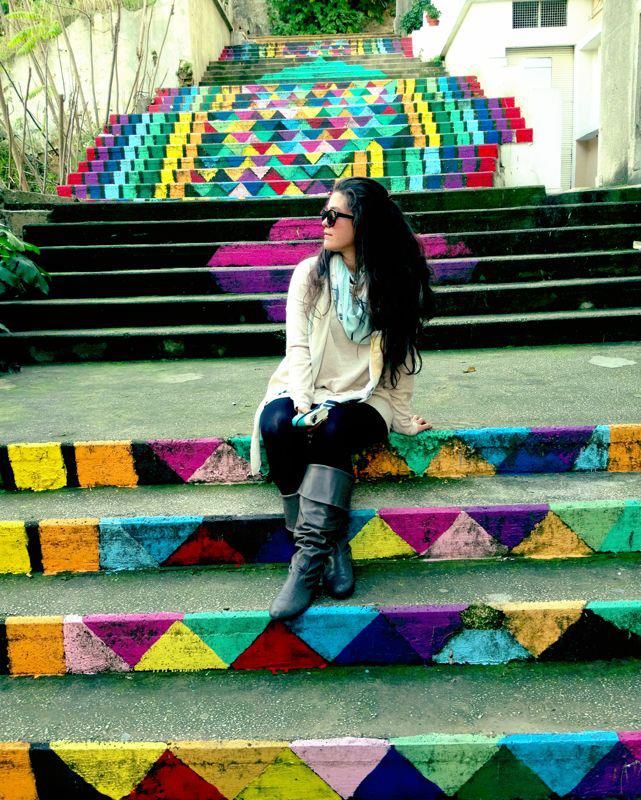
Lana Chukri, LAU Graphic Design graduate, is founder of Paint-Up, a group of proactive designers and artists on a mission to add color to Beirut. She recently gave a goosebump-inducing talk at TEDxLAU. Paint-Up are the ones to thank for all the snazzy staircases around the city.
Pamela Haydamous, AUB Landscaping Design graduate, founded Dispatch Beirut, the Beirut chapter of Jan Vormann’s idea of restoring a city using Legos.
Here’s an example of one of Dispatch’s projects last November:
To find out more about the Wonderland event, I contacted these two very inspiring young ladies – I’m lucky enough to call them my friends – to ask what this project is about. I also wanted to share some of their thoughts because they are perfect examples of how you can make a difference in your surroundings; all you have to do is try.
1.) What was the inspiration for the “A Little Wonderland” project?
LC: I feel we were inspired by the space itself – it seemed a perfect fit to recreate this home-like world and feel by bringing it back to life somehow. “A Little Wonderland” was just a descriptive way to package what wonder we felt this small forgotten space has and will have more of once we add our touch!
PH: Being in the space on a Sunday afternoon, we all felt a tiny breeze of memories, as if literally this house could open it’s door and an old lady would greet us with a cup of coffee. The inspiration for this project goes beyond only this space and house; it is a message to preserve the spirit of Beirut, which we all feel is slipping away right in front of our eyes. I know it’s a bit too poetic but seeing spaces like these being torn down to make way for lifeless skyscrapers is just too sad.
2.) Is there a design plan for the house or is it going to be a “blank canvas” where all volunteers can go wild?
LC: There is actually a design plan that the Crew have discussed thoroughly over the past few weeks and planned for. I feel the end product will speak for itself but the concept of the house is to revive it, bring some life to it, give it that essence – that it hasn’t been forgotten after all. That’s all I’m going to reveal for now!
PH: The design plan, as Lana said, is already set, but I’m sure there’s always room for the volunteers to leave their creative touches.
3.) Will the historic significance of Ashrafieh architecture be retained/emphasized in some way?
LC: I think the architecture is apparent and we aren’t changing it except to dress it in a brighter and more beautiful way. So yes, the elements of it will remain and we are staying true to the surroundings and build of the venue, the style and feel of it as well – but with our touches, of course, and little added things that will make it complete.
PH: The architecture in the house is its main attraction and the key rationale behind the project. We’re very keen on preserving it, it’s just getting the mini uplift that does it justice.
4.) What is to be of the house once it is completed?
LC: We will have to leave that up to nature, time, and whatever comes after we leave our mark on it. Let it inspire others, make someone smile, feel warmth, want to pull out a chair and have a nice afternoon outside it – who knows?!
PH: We really hope that the end product just sends happy vibes, a rush of memories; ideally motivates other people to follow the lead and preserve the few heritage spots we have left.
5.) You are currently working a full-time job while simultaneously handling the Paint-Up/Dispatch initiatives. How important are side-projects in one’s professional life?
LC: Having side-projects aren’t only important, they’re absolutely vital and necessary for every individual – designer or otherwise. We live in a day and age now where everything has been seen, done, experienced, everything’s mainstream and what’s new today is old tomorrow. Keep your day job for the experience and growth and patience it teaches you – and the income and financial independence. But keep your passions, your projects, and initiatives for yourself and the rest of the world – because it’s in those things that you truly reap the benefits of seeing your dreams come to life! I could go on forever about this because I am a workaholic in the office – so I’ll keep it short. Your side projects are what fuel your soul and your heart, and only through first-handedly inspiring others can you really stay inspired yourself.
PH: Wow! Side projects are where you really put yourself out there. You dare to be different and show the world that a little thought or initiative can really go a long way. As Lana said, we really live in a day and age where everything is so five minutes ago. The difference is where you actually take the idea to, how you recreate it as your own, and adapt it to your needs and your surroundings. Keeping a day job that feeds into your passion is definitely the best you can do- it shapes your thoughts, dreams and stretches your passion to its limits. Two things that I think are important here are:
1. The minute you feel too comfortable in your little bubble (that is your daily job, routine, friends and family) then you’re on the wrong track.
2. Always have a critic’s eye and always let your passion scare you to the point where you actually do something about it.
6.) What are the hurdles that you face when starting a new project and how do you tackle them?
LC: People, society, criticism, jealousy, and, in Beirut, public humiliation. If people don’t like what you do they’ll make it clear you fail or make sure you have hard time realizing your potential. But you have to kill the criticism with kindness. They show you disregard or hate, show them consideration and love tenfold – then they’ll truly stand by your side in your time of need. In return, you would’ve really moved someone and changed their life and perspective!
PH: When it comes to Dispatch Beirut, we faced quite a few issues mainly in communicating our idea and making other people believe in it as much as we do. It all started as our way to express our critical point of view towards the city, as we love to see it at its best. Our installations consist of building and restructuring broken walls, facades, mainly “rebuilding Beirut” bottom up. So it was a tough task to get permits and all the legal documents. We faced a few issues with the ISF and a few locals, who had dismantled a few of our installations. But we believe that when our installations are placed in the public realm, then any reaction from the public is just other people’s way of expressing their ideas and thoughts too. Democracy at its best!
7.) What’s your advice to young people looking to add a little spark to their life?
LC: If you have an idea, a passion, a dream, just really get out there and try it in any way possible – don’t think about money, power, fame, or all the rest of the pretentiousness that people waste their time and energy on. Inspire others. Write, draw, run, paint, build, share everything with the world that you possibly can – and do not, in any way be scared of rejection. Wear your heart on your sleeve. And get off YouTube and 9Gag and these crappy televised things that don’t give you any form of knowledge, drive, and inspiration! Watch great films, read great books, travel, browse blogs, and animations that are inspirational, create a blog yourself, go to exhibitions and events and get exposed and only then will feel that surge of excitement to expose others to your own passions too! Lastly, exhaust yourself. And be happy and fulfilled doing it because you’re only young once. Right here, right now is your time!
PH: A trick that always inspires me is to try something new, a new road to work, a new alleyway to get lost in, new music, new people… It’s crazy what exploring new options can do to your brain. And the second you are able to close your eyes and imagine your idea come to life; that’s your cue to go ahead and make it happen. It might turn out to be the worst idea in the world and still you would feel satisfied enough that you tried it out. Pick up from there, explore other options and keep trying until you get it just right. Most of all, stay on the lookout for inspiration anywhere around you, always carry a little sketchbook to jot down or draw ideas (or you would end up having a pile of diner napkins fully scribbled on just like me) and always believe that only you can make your dreams come to life.
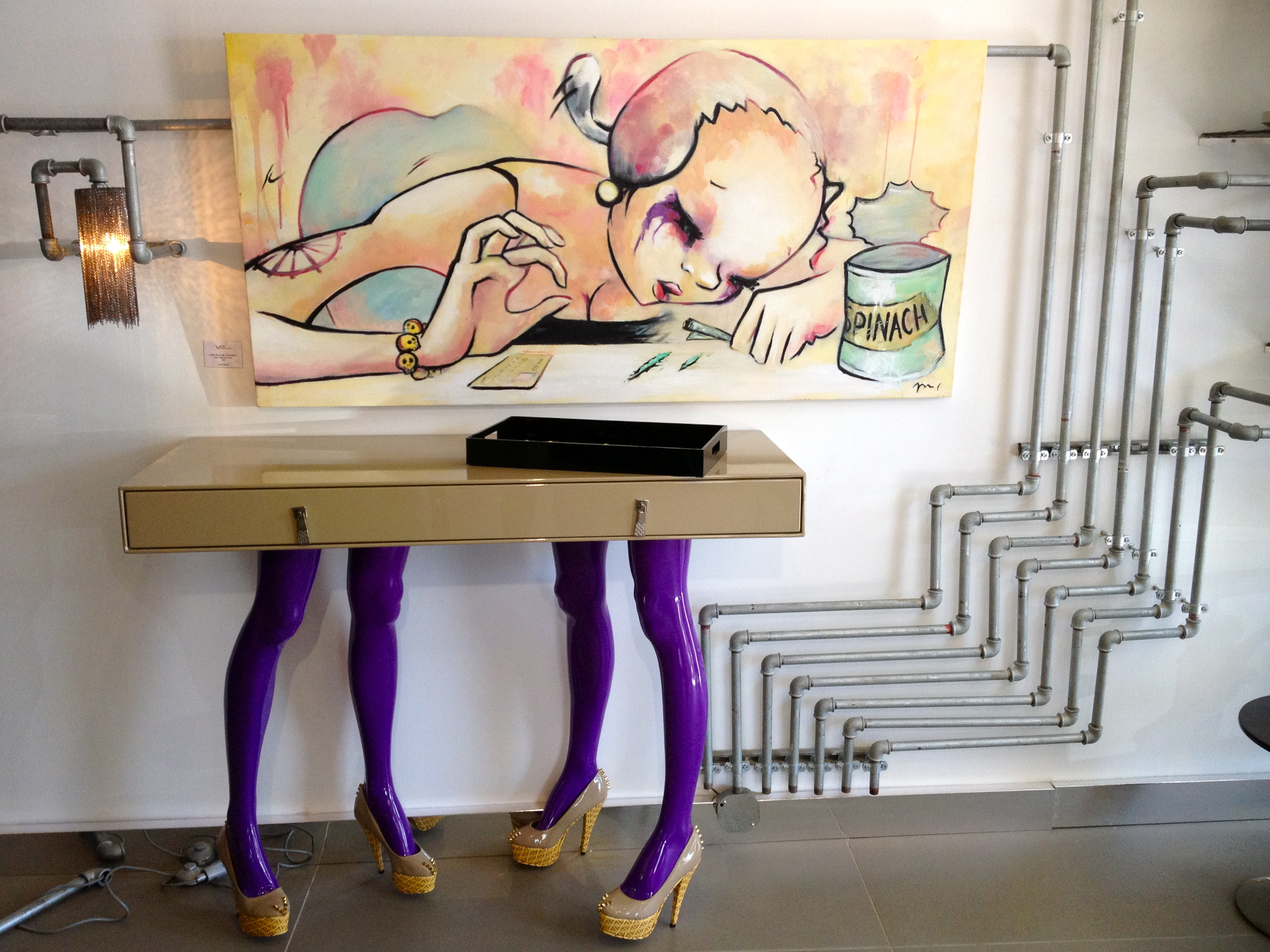
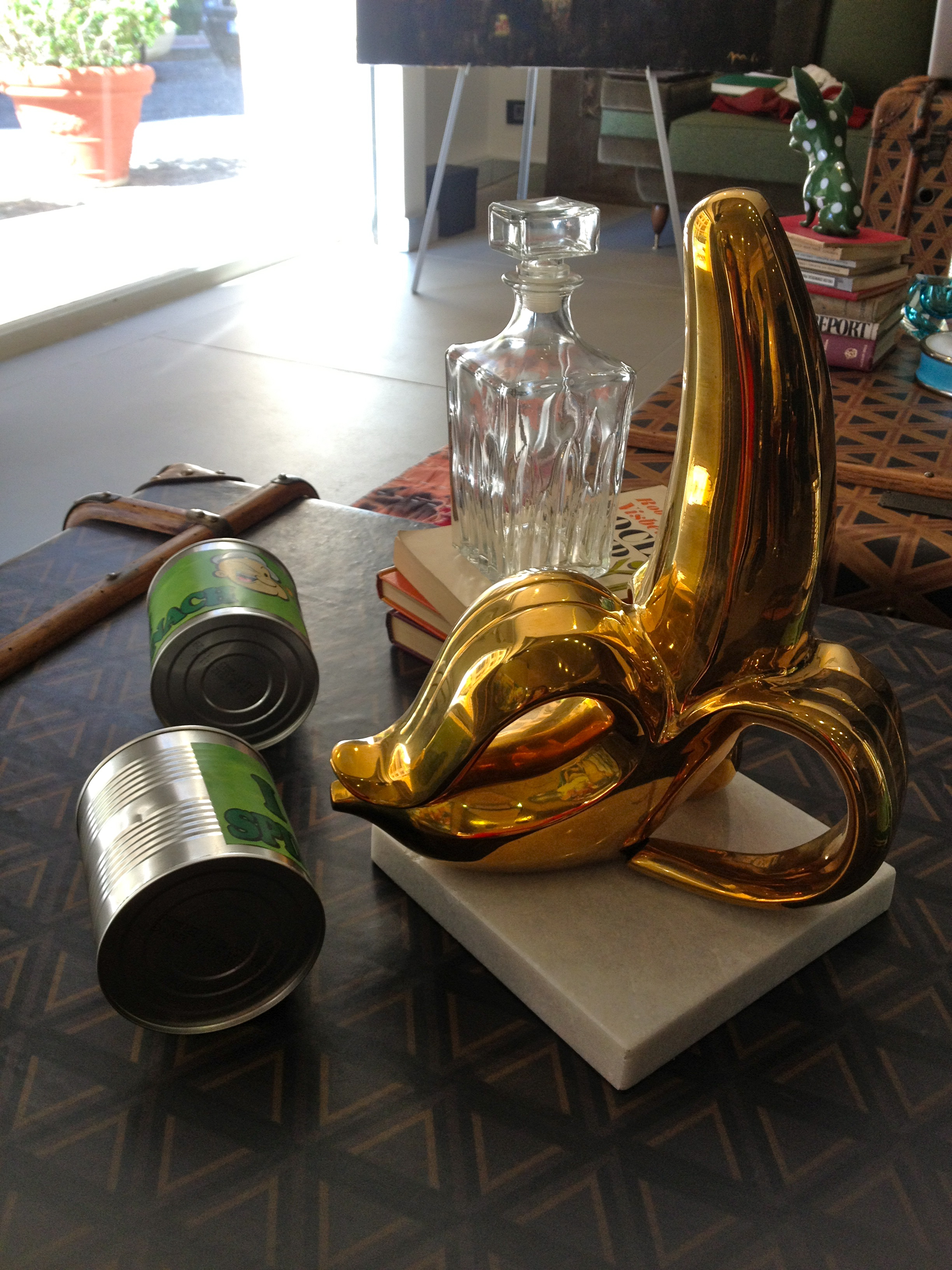
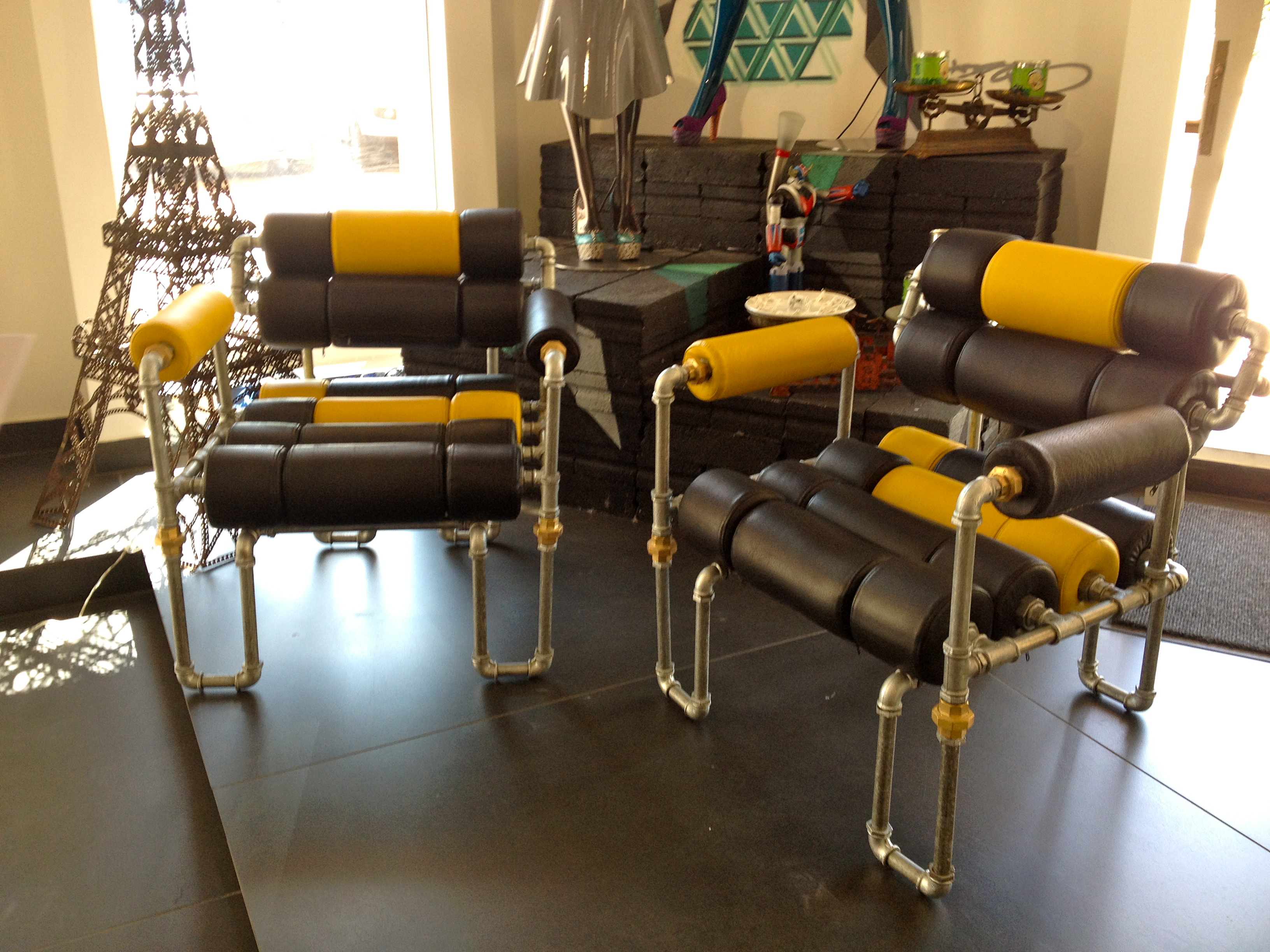
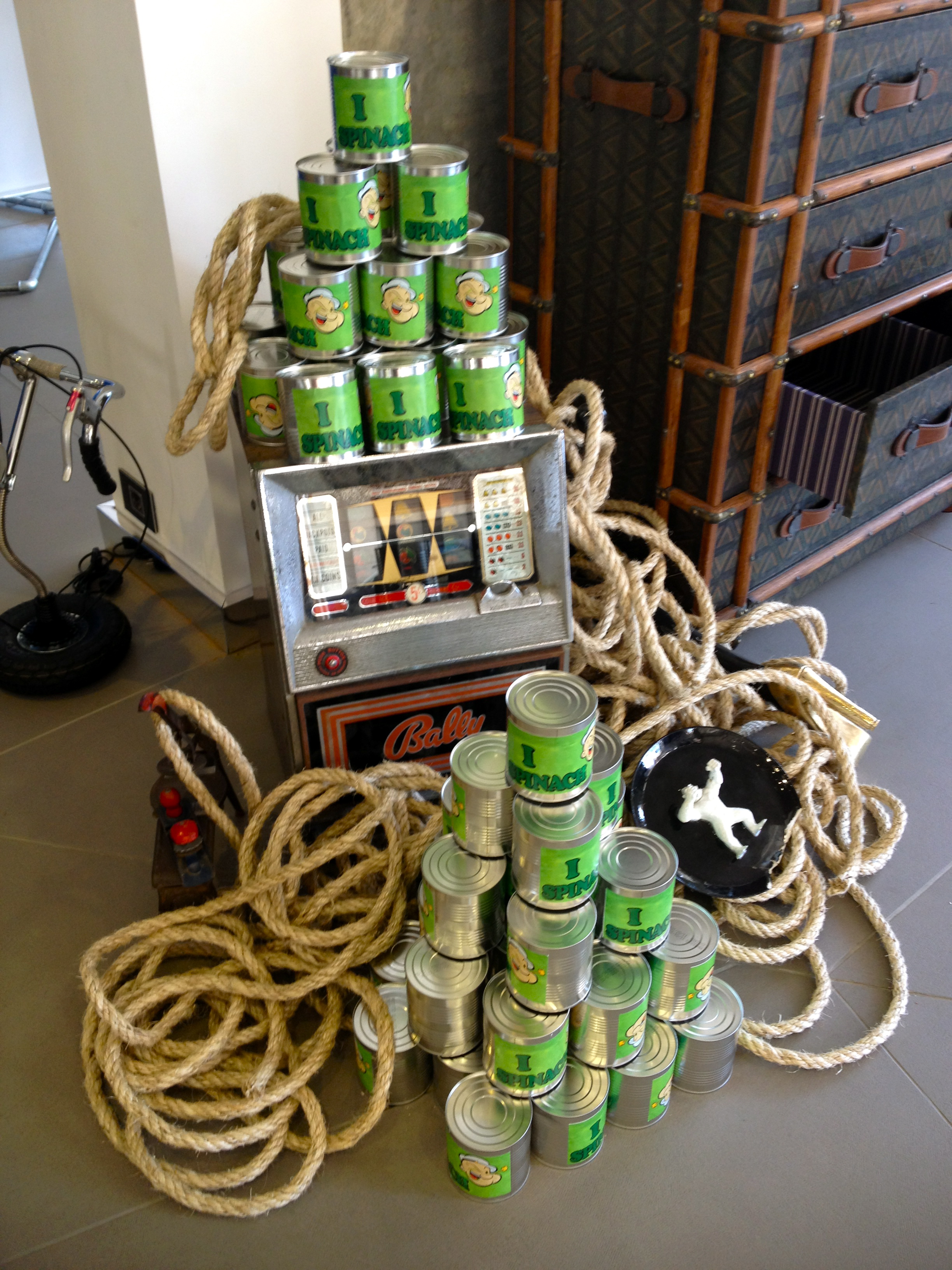
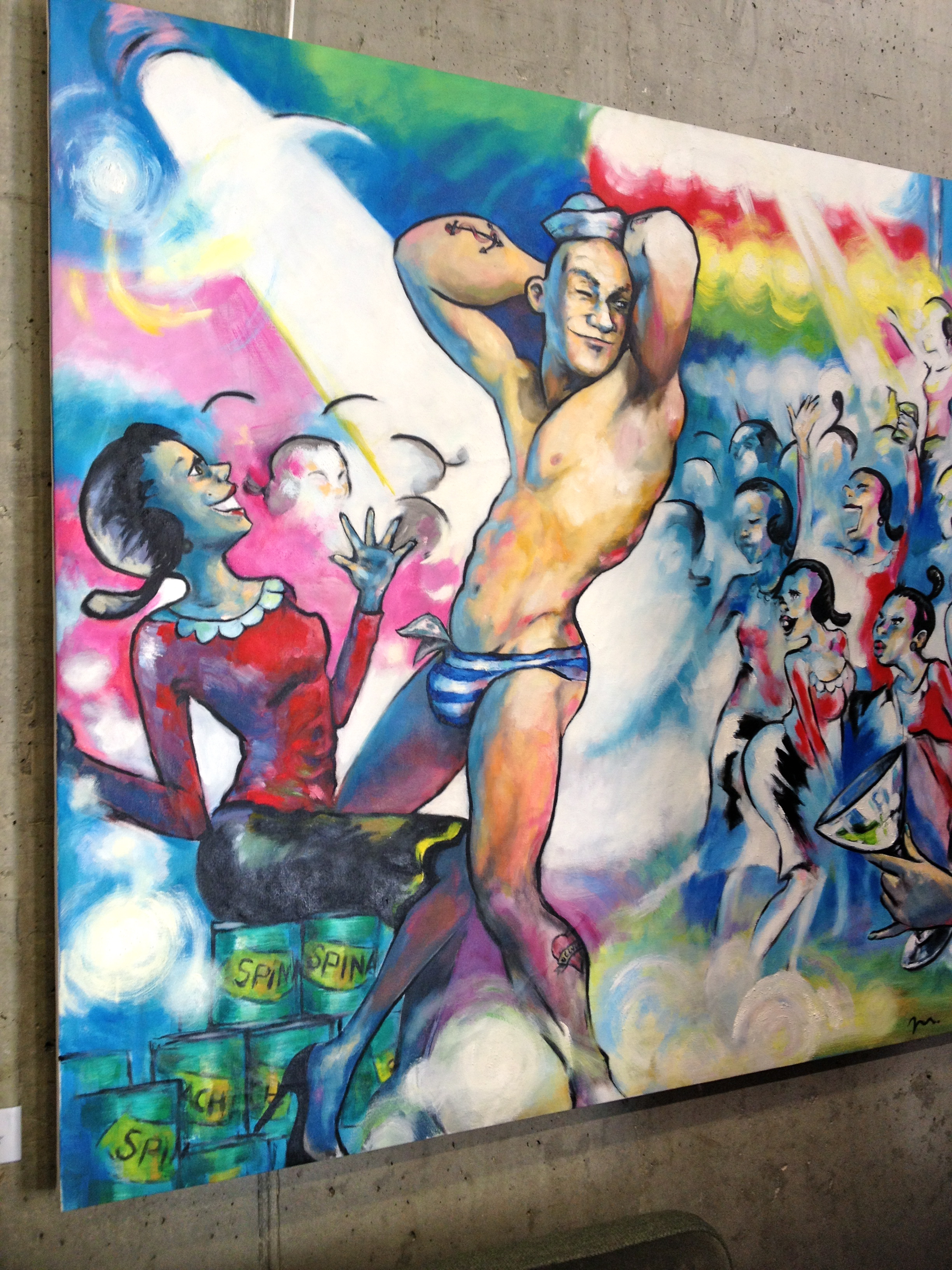
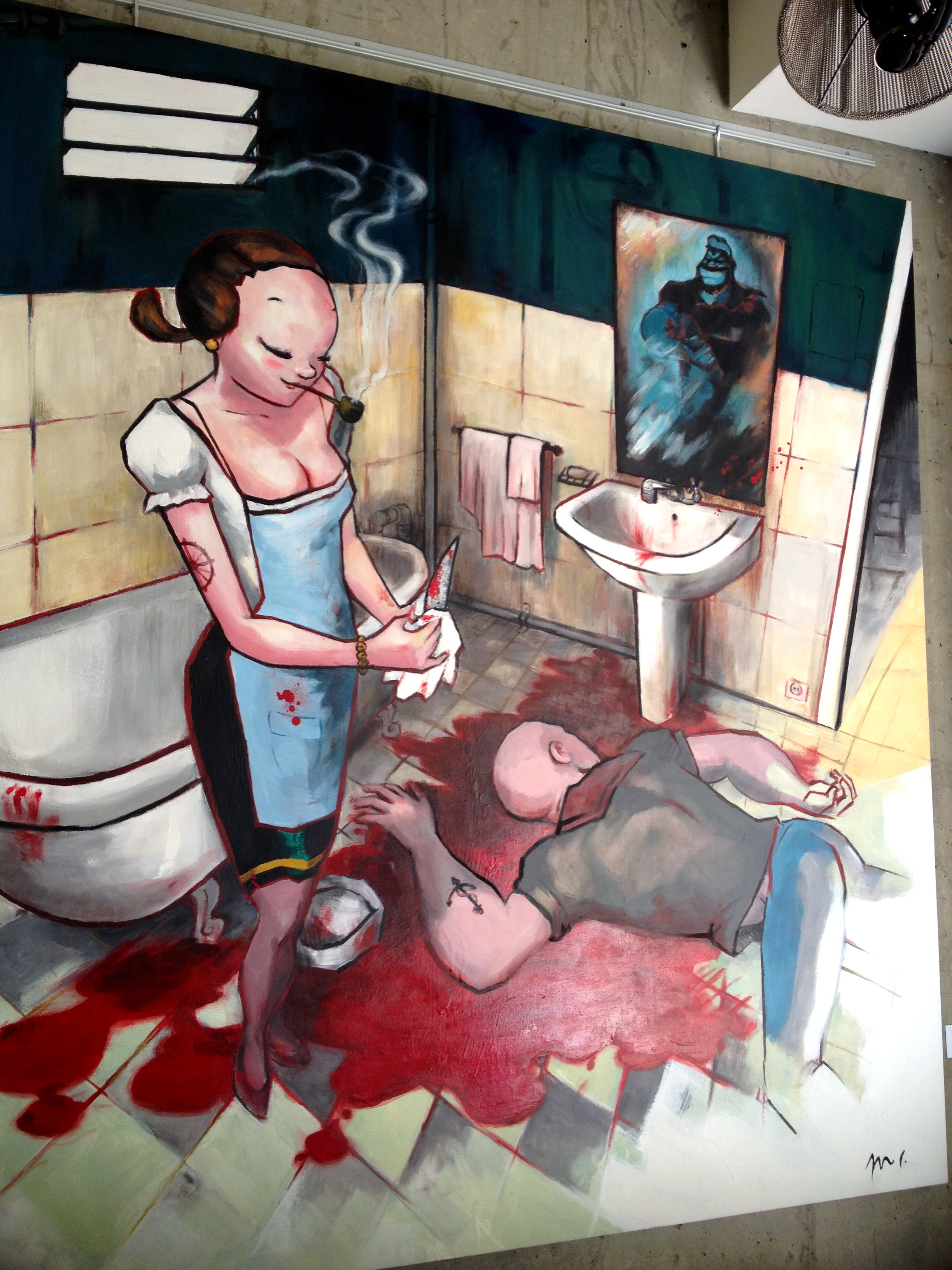
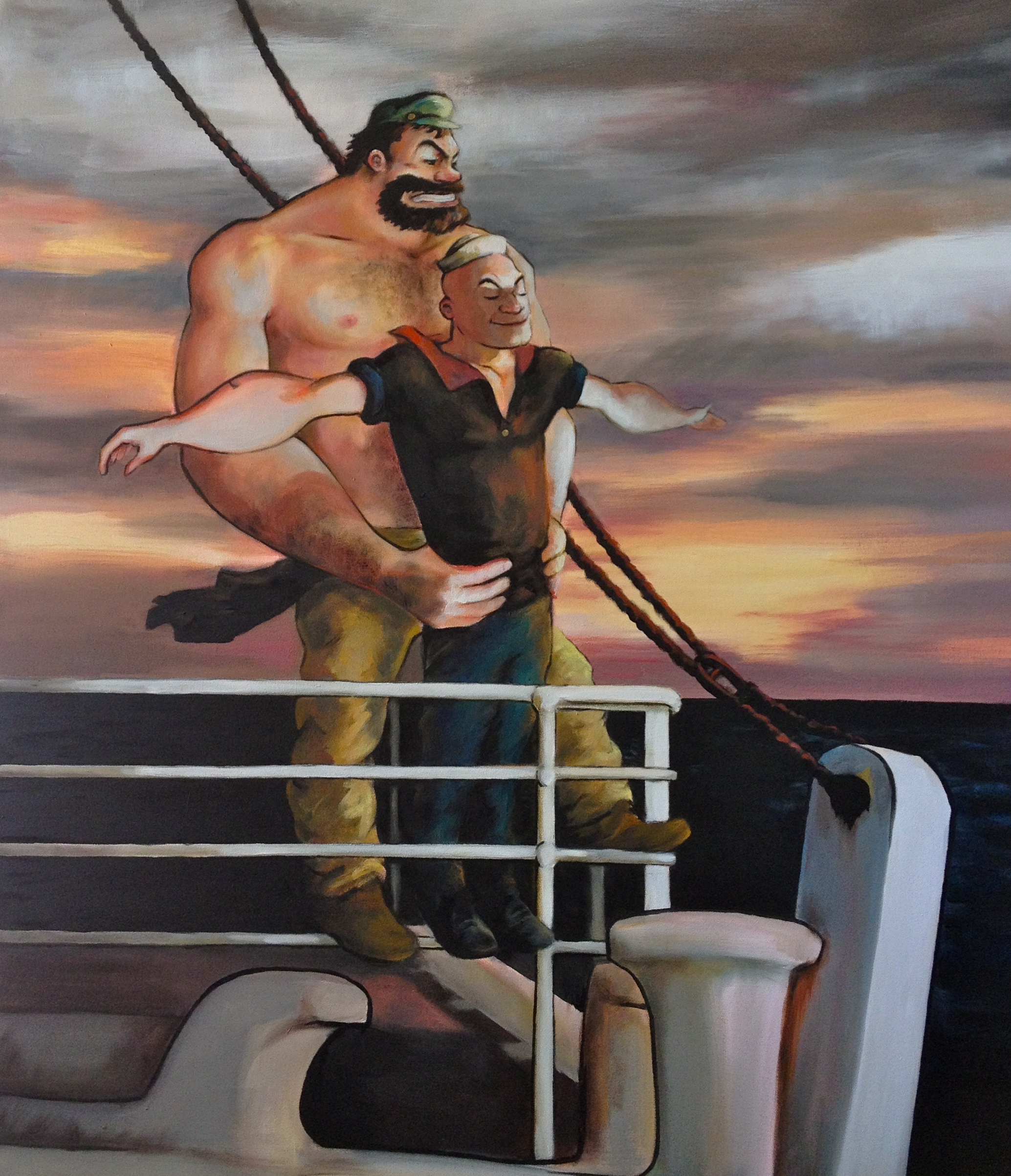
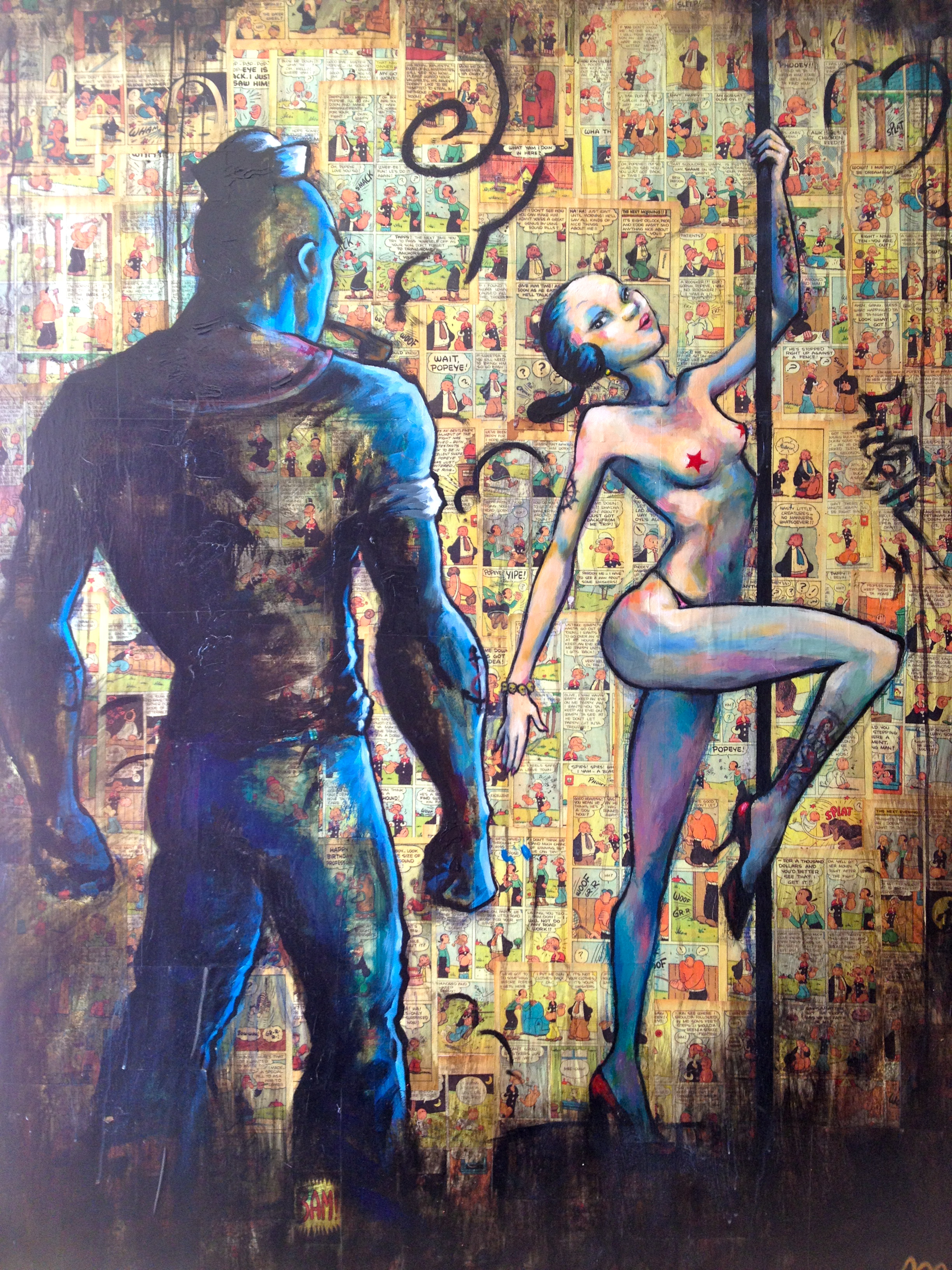
Vick Vanlian Gallery in Saifi Village, located next to Chenbai Restaurant, is having an exclusive exhibition of Jordi Machi’s Popeye collection. His art pieces feature the famous cartoons, Popeye and Olive Oil, in some very scandalous poses – and that’s why you love them. The exhibition itself is titled “PoPeye WTF Art Exhibition” after all, so it’s pretty obvious that the Spanish artist is very aware of the distorted reality he portrays in his work. I say distorted because I don’t remember ever seeing Olive snorting grinded spinach like it’s lines of coke…or strip. The gallery itself is the perfect place being that it has quirky furniture pieces with lady legs going everywhere, industrial pipe armchairs, and a giant metallic peeled banana.
Spinach cans as part of the set-up
I wouldn’t necessarily go out of my way to go see the show but if you happen to be in Downtown or having waffles at Balima, you might as well walk on over and take a look. It’s a small collection so it’ll only take 10 minutes tops – 2 have already been sold. If you want to buy any of the works, prices run between $2300 – $3800. You have until March 22nd – Go.
Imagine having one of these in your parents’ living room:
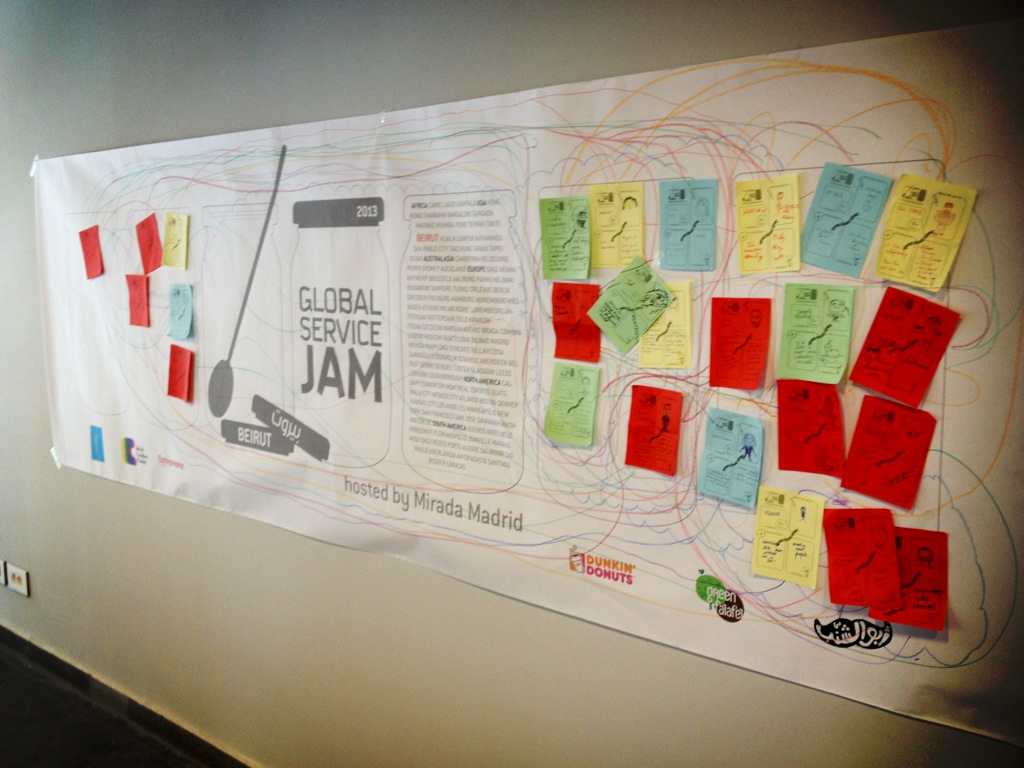
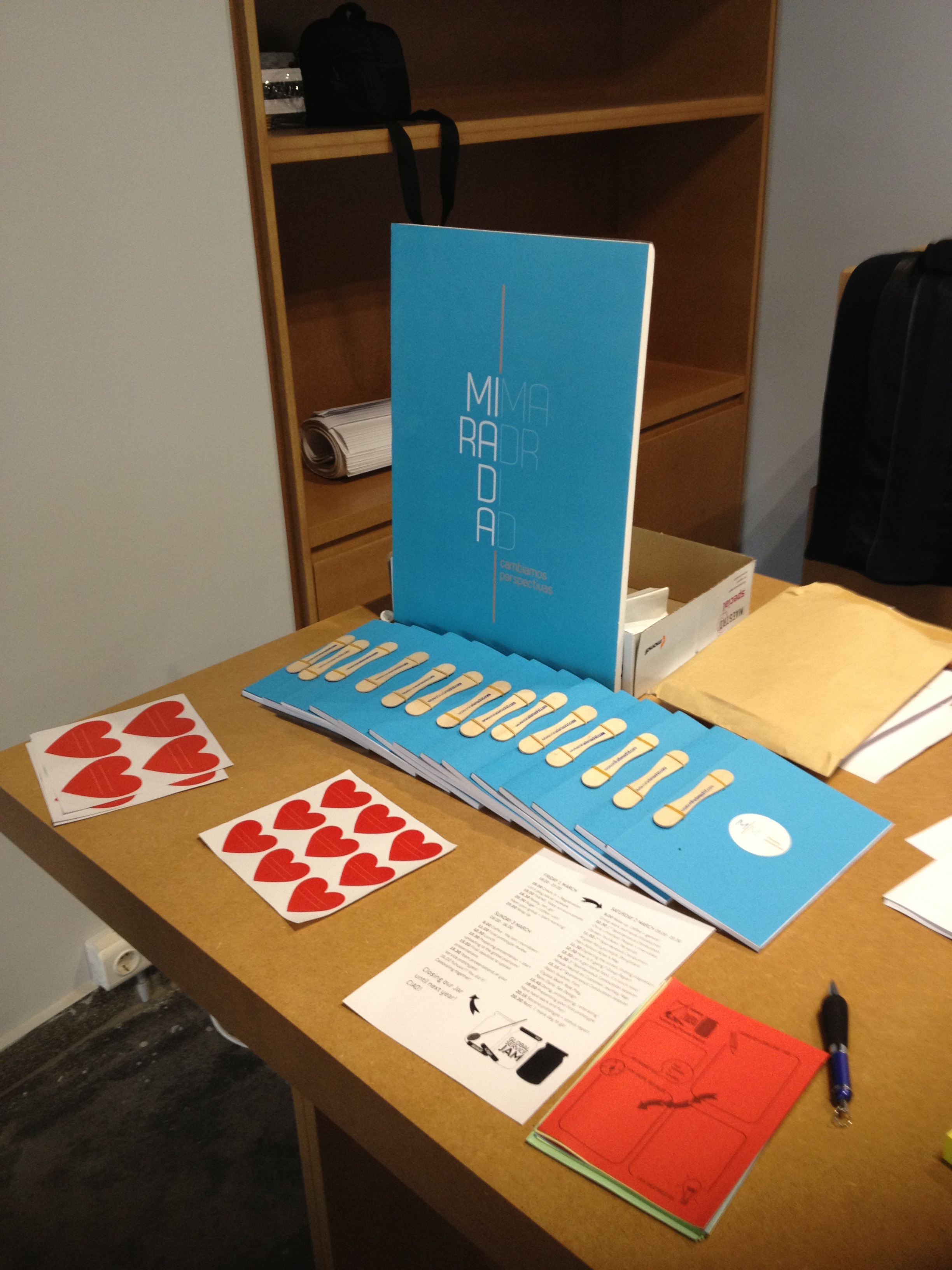
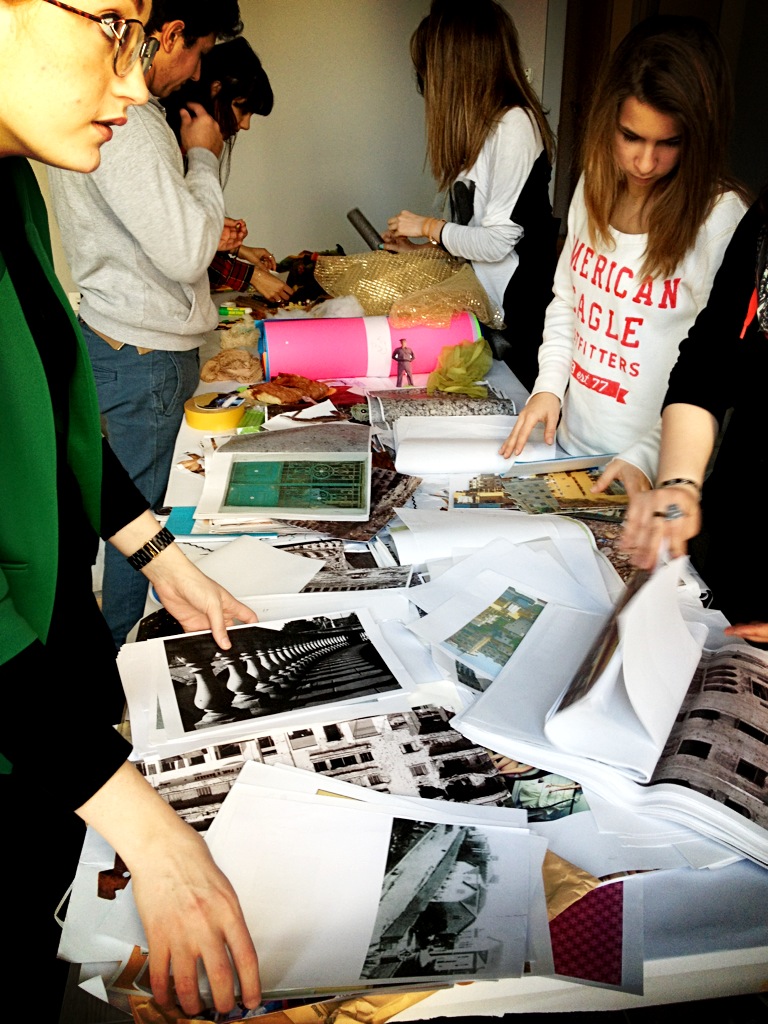
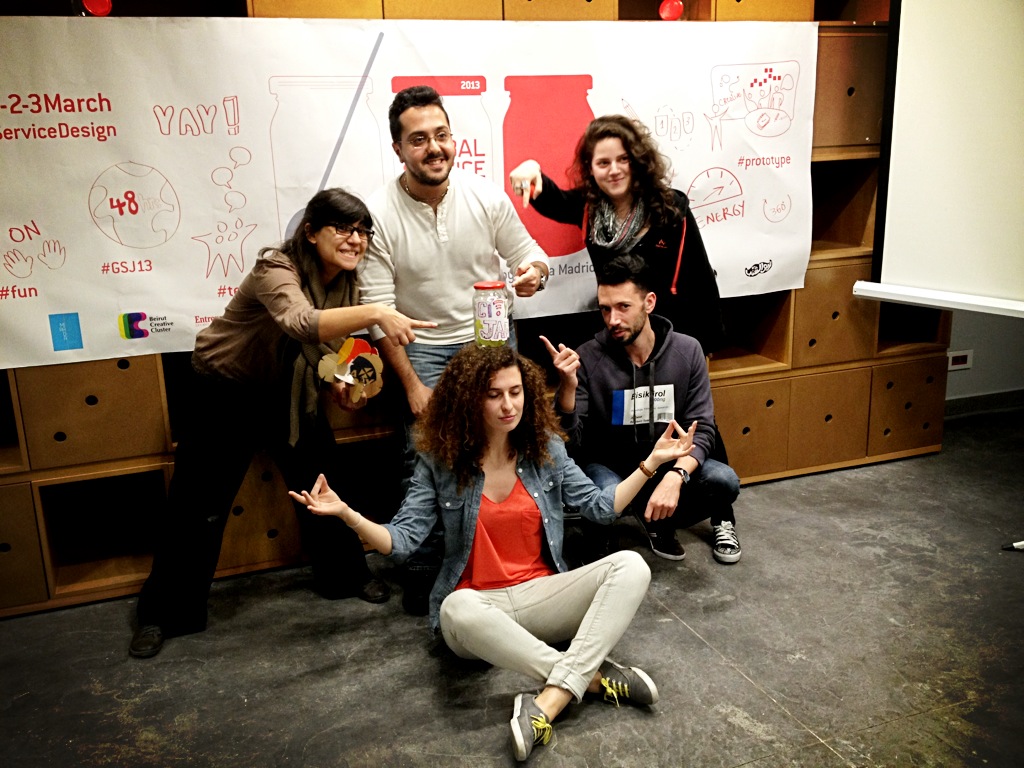
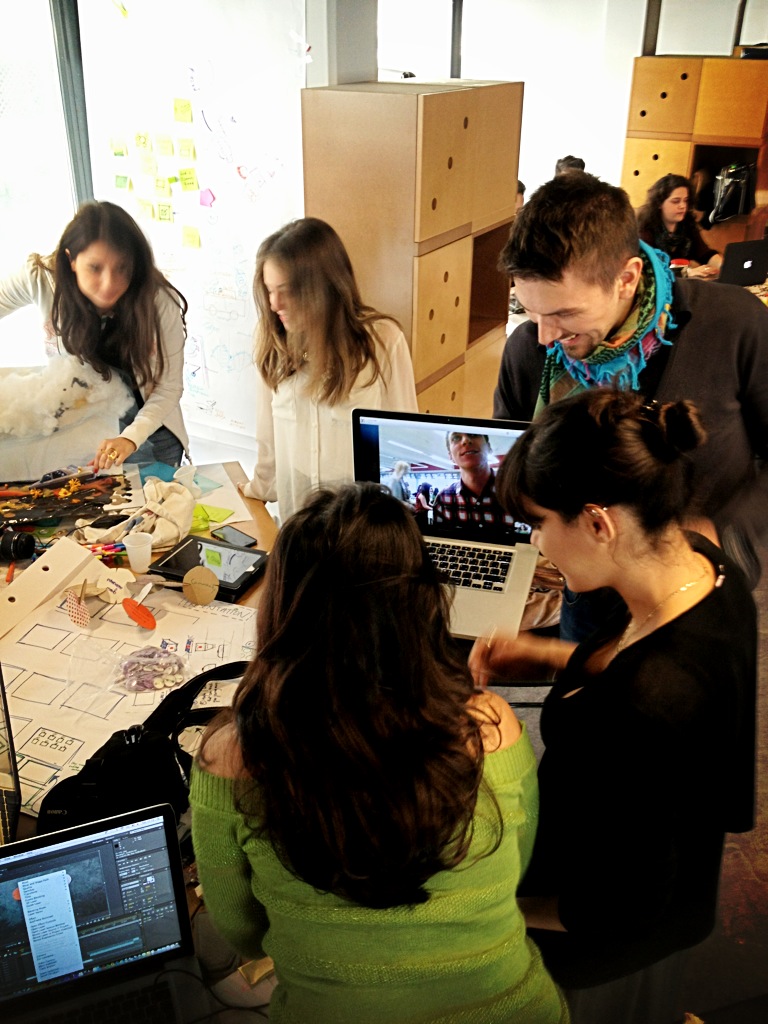
This weekend, I live-tweeted for the Beirut Service Jam, a part of the Global Service Jam event that took place around the world in 135 cities. The idea of a “Service Jam” is to get excited individuals from all disciplines to come up with a project that can serve the community* – and to do so in 48 hours. Participants have to go through all the steps including brainstorming, prototyping, as well as putting together a formal proposal of the idea. This year’s theme for the GSJ was “GROW.”
The event was held at Berytech in the new-and-still-in-it’s-preschool-phase Beirut Digital District. Most tech-savvy know it as the home of Geek Express, a café/shop/workspace open for those who want to experiment with technological DIY projects and attend weekly workshops. For those who don’t speak geek, it’s in Falafel Land – the street parallel to Falafel Sahyoun going towards Bechara El Khoury intersection. Some may wonder why it was decided that this would be the best location for the BDD – I couldn’t figure it out – but based on their brochure, the area, known as Bachoura, was chosen because it’s logistically close to major landmarks, shopping centers, and is a 15min drive from major educational and health centers. Plus, it said all this nice fluffy stuff about it being historically relevant to Lebanese heritage and scars of the war. Apparently this area used to house many public libraries – where’d those go?
The BDD’s aim is to “create the right environment for companies to invest, create jobs and grow our GDP.” They want to create a hub where the ICT sector (Information & Communication Technologies) can grow and entrepreneurs can get something started. Architecturally, there are still 3 projects to be completed in 2014, 2015, and 2016.
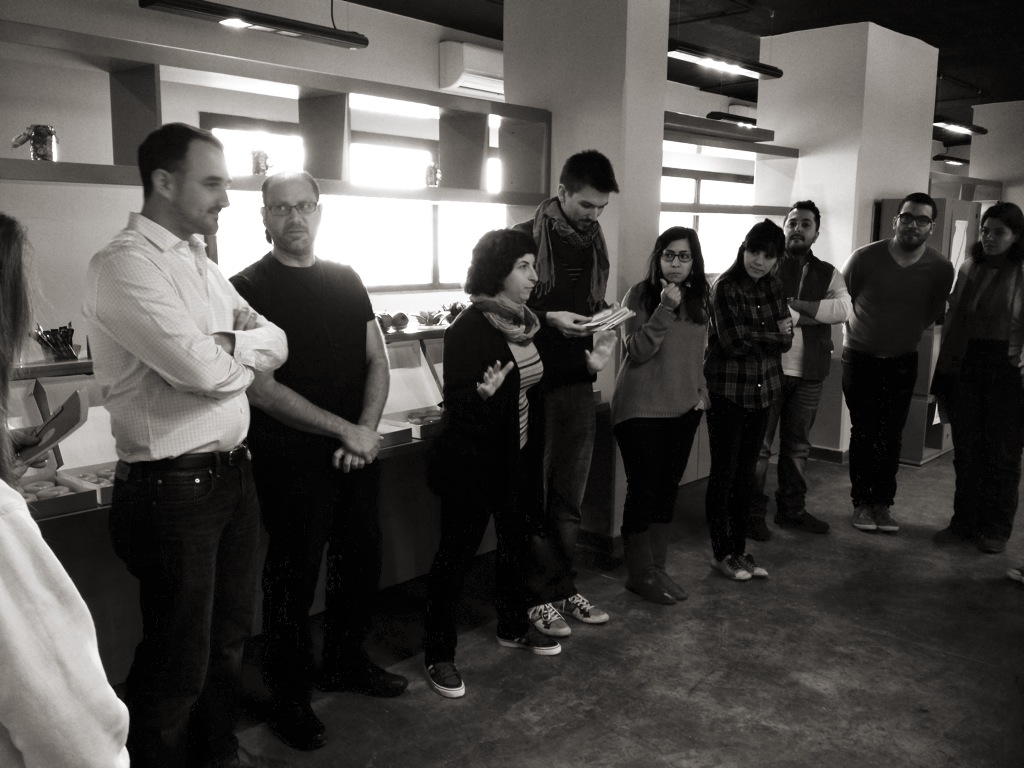
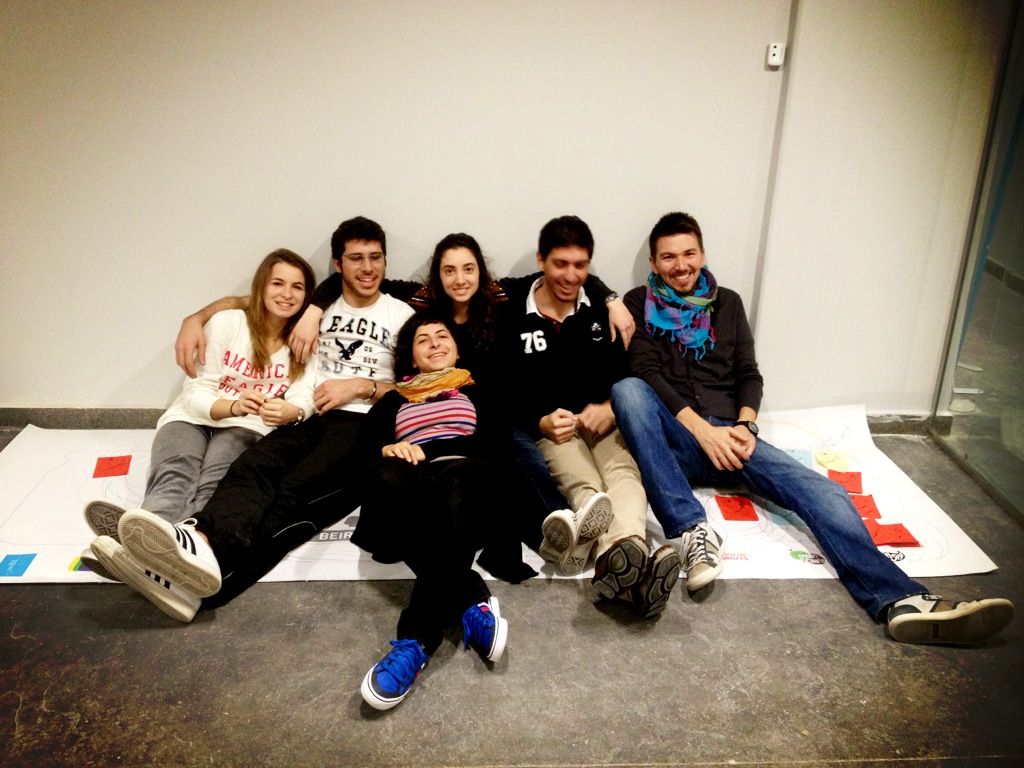
The Beirut Service Jam participants were split into 5 teams and directed by mentors specializing in different fields. Mentors included TedxBeirut 2012 speakers Chris Littlefield & Hani Asfour, and MENA Design Research Center’s Doreen Toutikian. Other mentors focused on the art of storyboarding (Krystel Kouyoumdjis, also a participant in the BSJ), film (Rabih Ibrahim), role play (Elyssa Skaff), and set design (Rami Dalle).
Projects touched on many topics like public space, social interaction, CSR initiatives in the agriculture sector, and recycling. You can check them out here.
Interesting Interaction for me as a designer:
Rami Dalle, a set designer, designs window displays for some shops in Beirut Souks. He specializes in embroidery, crochet, wool works, taxidermy, willow weaving, and attends workshops abroad to acquire new skills.
His #1 rule: there is no basic rule.
Highlight of the Event:
A Skype call with fellow Jammers in Dundee, Scotland
* “Jammers are simply challenged to design and prototype a service. While many choose to do something which is community oriented, this is not compulsory, or even suggested. Jammers are equally welcome to design a purely commercial service, for example.” – from Adam, Co-Initiator of Global Service Jam




 Dear Paper,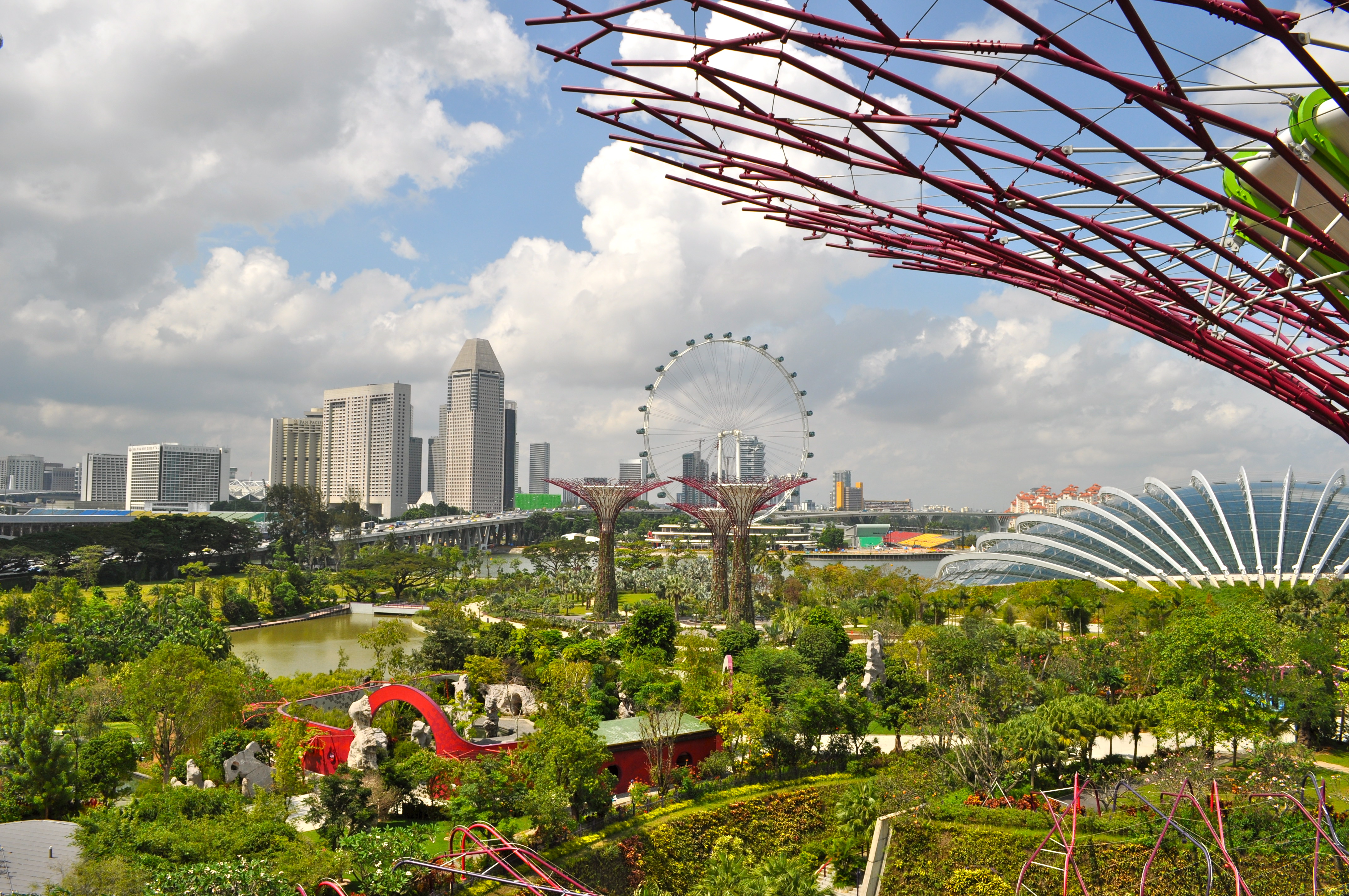

 Bambi's Soapbox