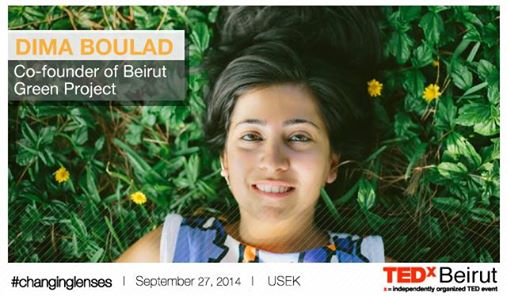
TEDxBeirut 2014 Series: Dima Boulad of Beirut Green Project

1610804_700062550042753_97555564372240127_n

“The conversation began 4 years ago,” says Dima Boulad of Beirut Green Project, an NGO that focuses on public green spaces in the literal sense – not a green lifestyle that involves recycling, but rather the lack of green parks in our urban landscape. After carrying out public interventions highlighting the need for public green spaces, it was clear that a movement should be formed and thus, the BGP was born. The team came together gradually in parallel with the planning efforts of new interventions.

When it comes to making an impact, BGP uses more of a guerilla strategy. “It’s much more efficient to start from the bottom and create small change on a one-to-one scale that will spread from one person to the next,” says Dima. Rather than going straight to the top and trying to behead the hierarchical monster, using baby steps to make the cause stronger is more effective. “It’s a longer process for sure, but this is how real change can happen.” Working with the system takes time but is advisable for long-term change. However, when there is a violent assault against your rights occurring, you need to take action in an unconventional way. BGP hasn’t used an aggressive approach with municipalities and, as a result, their ideas are not rejected and the officials are open to discussions on new initiatives. Nadim Abou Rizk, Vice President of the Beirut Municipal Council, has been cooperative with BGP efforts and is one of the most concerned members when it comes to the parks of Beirut.

All funds needed for their efforts have been from their own pockets or dependent on sponsorships and donated services. A partnership between BGP and WonderEight formed after AUB’s Talk20. WonderEight, an environmentally-friendly design studio based in Beirut, created their identity, guide, and additional design elements as a pro-bono company CSR project. Such community-based collaborations are what our country needs to get these types of activities off the ground: separate entities coming together for one goal for the common good of the society as a whole.

“For example, an NGO can propose a space by conducting a study of a tiny area in a neighborhood that has 3 schools – a place that is in need of a space where kids can relax on their way home from school. The municipality can then get the area ready and clear the location, then a private company comes and funds the remodeling and planting. The neighborhood people can come and participate, creating a sense of ownership of spaces. This allows people to feel like it’s their space.”

Dima believes that once you create a sense of ownership with these spaces, people will protect and respect them. By including the people in the process from the start, the Municipality will be giving citizens what they want and the people, in turn, will want to preserve what they have had a part in creating.

When discussing Horsh Beirut and the leading rumor as to why it remains closed,* it’s a bit like the logic that claims abstinence is the best contraceptive. You can’t cut people off from the park claiming that people do not know how to respect public green spaces yet expect them to simultaneously learn park culture without any parks to do so in. How do you learn how to treat a park if you don’t have one to begin with?

There are other rumored reasons as to why the Horsh is still closed ranging from the need for proper security guards, caretakers, and maintenance teams to it being located in a sensitive spot bridging neighborhoods of varying religious beliefs. The latter reason is the most infuriating in both Dima’s and my opinion. It should be a reason for opening the park rather than keeping it closed because it will blur the borders and allow people to socialize sans sect. Dima says, “they’re afraid that it will create conflict and tension. On the contrary, there is conflict and tension because there is no public space. If we had spaces, people would mingle and that fear of the other would go away.”
DSC_0797

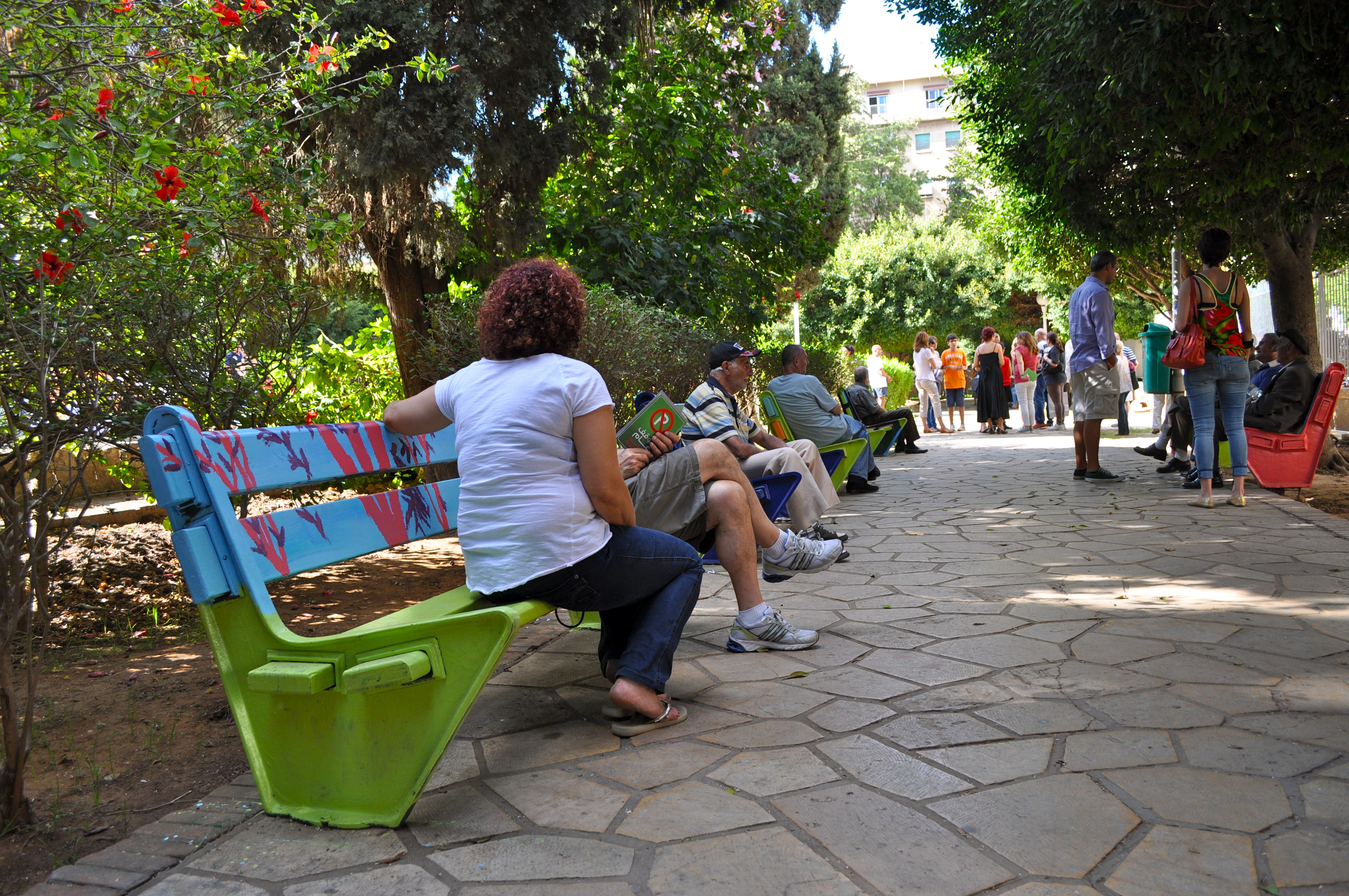
Jesuit Garden, Geitawi – Ashrafieh

With the many urban developments happening in our city, we cannot always blame the developers and investors. Dalieh, Ramlet el Baida, Fouad Boutros Highway. All of these developments can be halted and revisited if we, as a combined force, stand up and say no. The Jesuit Garden in Geitawi was a small victory that wasn’t publicized enough. We all heard about its impending conversion into a parking lot; however, we did not hear about how that plan was thwarted once the neighborhood came together to say no. This is evidence that the people can make a difference when they want to. We should not use “Eh, this is Lebanon” as an excuse for being passive. You must hold others accountable for violations of your rights as Lebanese citizens.

“If every person took one small step without thinking about whether or not it was making a difference, together it will create something. You have to look at the whole picture. It’s rare to see the results immediately. Each person has to do their small part and eventually it will create change.”

Up next for BGP is printing and distributing the Beirut Green Guide while educating schools about public green spaces and equipping students with their own copies of the Guide in order to keep the message going. For this month though, Dima has been invited to speak at Arq Futuro‘s Parks of Brazil event in Sao Paolo and will be touring South America for the next few weeks to get some greenspiration, as I’d like to call it. To keep up with BGP’s developments, check out their blog and Facebook page.
*Allowing people inside Horsh Beirut will ultimately ruin it as a green space because of littering and vandalism

AIGA Middle East | Morning Toast Series

IMG_4212

As the first affiliated international AIGA chapter, AIGA Middle East was launched last summer by Mo Saad & Leen Sadder, Lebanese graphic designers based in New York City. After the launch party at Coop d’etat rooftop in June 2013, the duo formed a Beirut Operations Team who would be the crew on the ground, creating a format to be duplicated in cities all over the region once the initial roots were established and AIGA ME was in full swing. Professional and student memberships for AIGA ME will be launched by the end of this year but, in the meantime, the Beirut team’s mission is to build the network, spread the word about AIGA and its importance in our part of the world, and start (and continue) a conversation about design. To avoid any confusion, this is not a promoted post. In full disclosure, I am part of the AIGA ME Beirut core team which is made up of a handful of young professionals who volunteer during their free time to make this organization work.

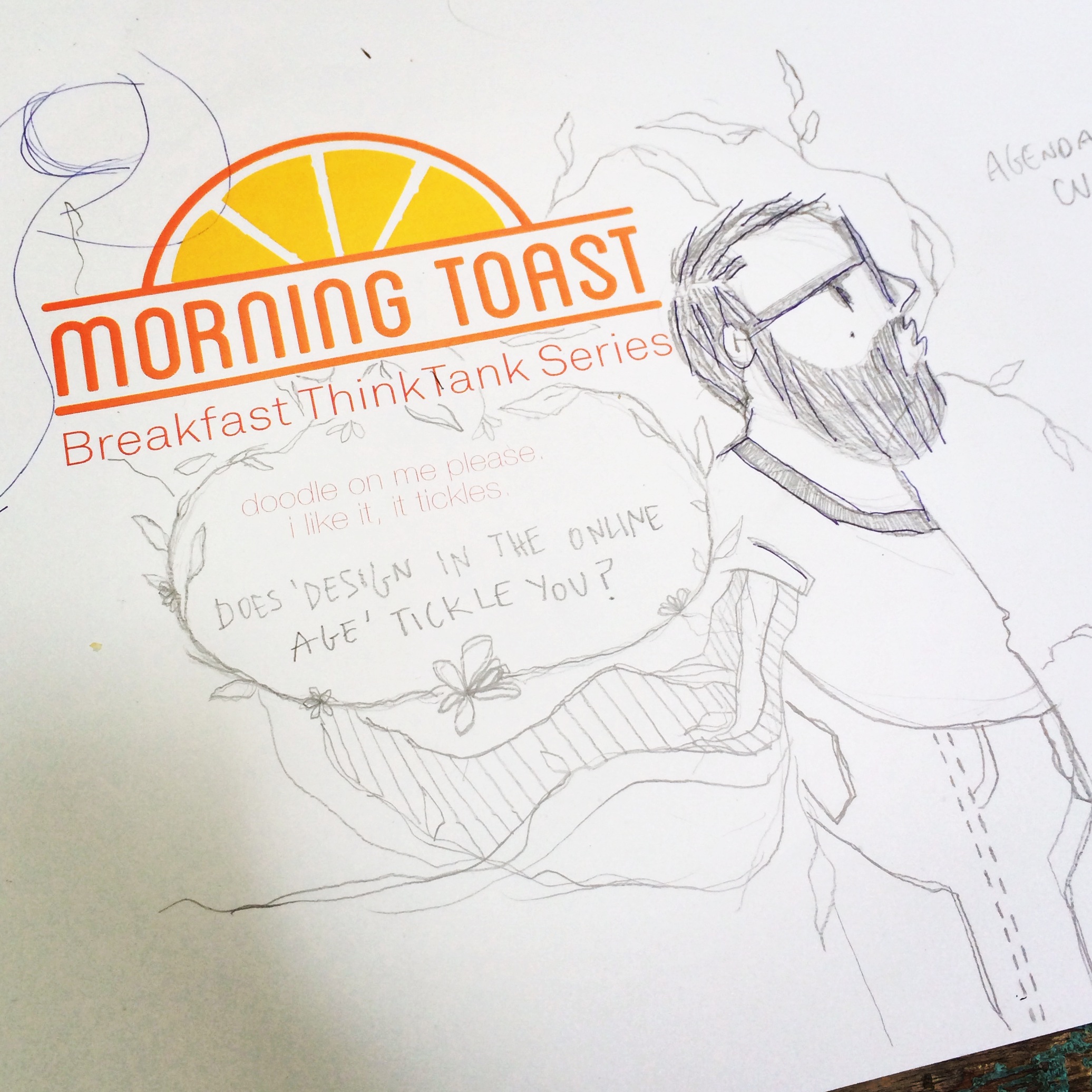
Doodled by Mo Abdouni, guest at Morning Toast Vol.2

Doodled by Mo Abdouni,
guest at Morning Toast Vol.2

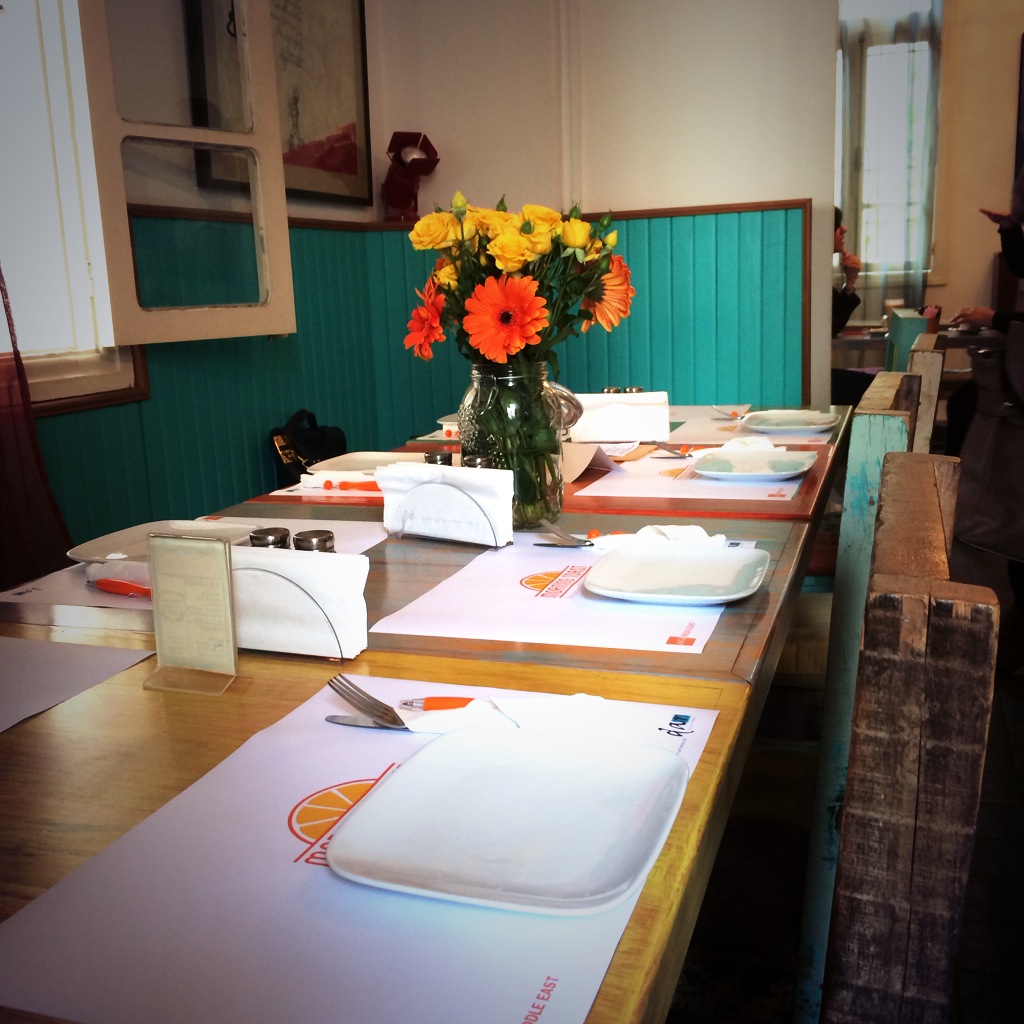
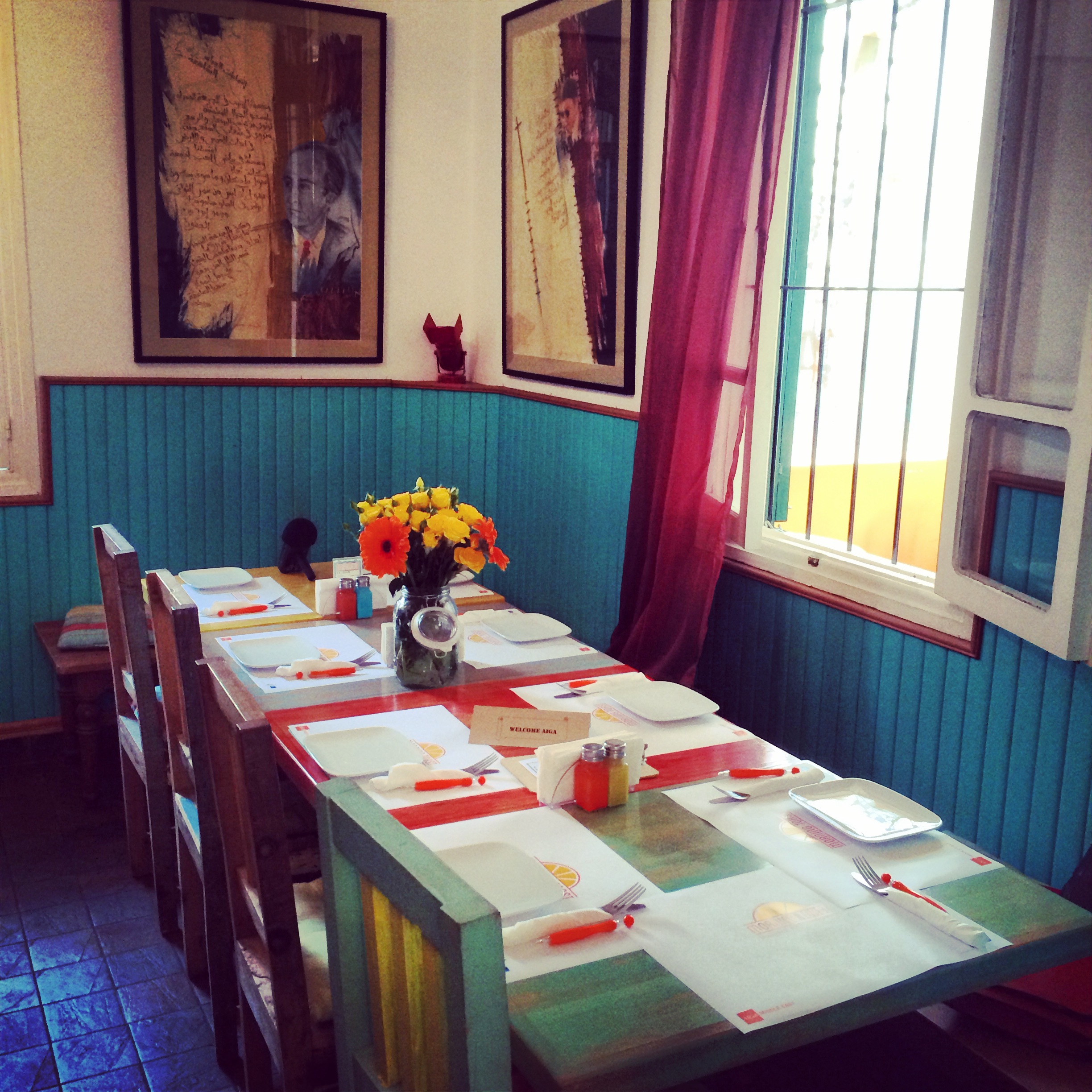
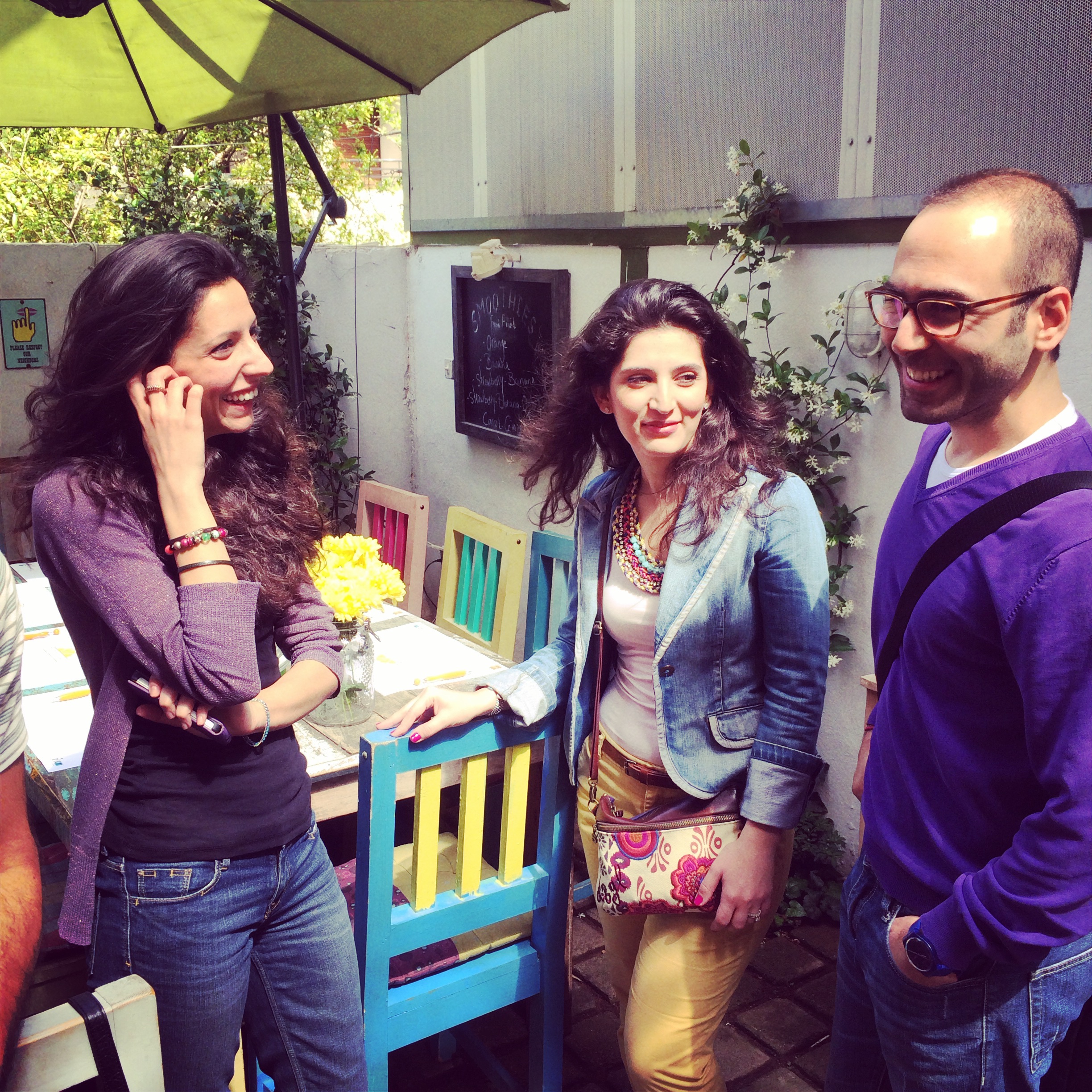
Back in March of this year, we launched Morning Toast, a breakfast think tank series. Held every two months at a local cafe, Morning Toast brings together 7 to 8 designers on a Saturday morning to talk about a design issue over coffee. Each MT is hosted by a professional who acts as a moderator for the discussion. They don’t lead or preach, they just keep everyone on topic during the allocated 2 hours. Usually, who the host is will hint as to what the Toast may be about. Themes for each Toast are announced the morning of, leaving attendees in the dark. This is not an evil surprise tactic, but meant to allow for unprepared and unpracticed rhetoric. In other words, it’s an informal get-together with potential for formal action later on. Conversation about design begins and continues because guests are put in contact with people they may not have met in other contexts. As for the 7-8 people that attend? It’s completely open: first come, first serve. There are a limited number of spots; if you snag one and confirm, you’re in.

IMG_2596

IMG_2619

IMG_2651

Dar Bistro & Books in Hamra, Beirut
Commonly known for supporting local initiatives, Dar seemed like the right place to launch the first string of Morning Toasts. Located between the AUB Alumni Association offices and the Central Bank, Dar is a popular spot for book and coffee lovers. It’s also a great hideout for work or chitchatting with friends as long as you don’t mind the sound of a coffee machine in the background. During our partnership, Dar was generous and gracious. They signed on for a 6-month period (3 Toasts total), offered complimentary breakfast to the MT guests, and created a space where strangers could have an open and unrehearsed discussion. On top of that, it’s photogenic and very Instagrammable: the perfect ingredients for filming the first MT webisode.

Cutting down a two-hour rich conversation into two-minutes just didn’t seem fair so we are now exploring the possibility of converting our Toasts into bi-monthly podcasts. This way, interested listeners can get a feel for the dynamic on the table and know the whole story. At the conclusion of each breakfast, comment cards are collected so that we can make every Toast better based on the feedback of those who experienced it first-hand. Because this is still a new initiative, there is room to improve and learn from what works and what doesn’t. After all, that is the job of the Beirut Operations Team – treating Beirut as the testing ground for what will eventually be a regional network of creative professionals.

MORNING TOAST VOL. 1
HOST: HANI ASFOUR, POLYPOD
THEME: THE FUTURE OF DESIGN IN THE REGION

MORNING TOAST VOL. 2
HOST: BANA BISSAT, BLOGGER OF BANANAPOOK.COM
THEME: DESIGN IN THE DIGITAL AGE

MORNING TOAST VOL. 3
HOST: KHAJAG APELIAN, MAAJOUN STUDIO & KRISTYAN SARKIS, KRISTYAN SARKIS STUDIO
THEME: DESIGN AND ARABIC TYPOGRAPHY

This is not the only attempt AIGA ME has made when it comes to connecting people. Unfortunately, when finding yourself in a networking event, it always seems forced and uncomfortable. I tend to see people gravitate to those they already know and the actual networking fails to really happen. Because of this, we thought we could learn from ArabNet’s speed-networking event. For Beirut Design Week, AIGA ME started Dak Warak: a gamified speed-networking event at Coop d’etat rooftop once again, symbolically marking our 1-year anniversary. Using a branded AIGA ME Dak Warak deck of cards, people had to go find others with matching suits, colors, or numbers during each 3-minute round, or dak. Seeing that it was a card game where people could exchange business cards too, dubbing it “Dak Warak” made sense since it translates to a round of cards. You could mingle with people, drink in one hand and an actual playing card in the other. Gamification of the networking process was the added layer that made breaking the ice just a little funner. Of course, I’m sure the free beer helped too.

The next Morning Toast is set to be held on the 13th of September at The Beazbee in Hamra, our latest partner in the MT Series. Sign-ups will be open within the next few days. Dr. Yasmine Taan, Chair of the Design Department at LAU, will be hosting this one – can you guess the theme? To stay informed about MT and other AIGA ME events & initiatives, check us out on Facebook,Twitter, or Instagram.

Welcome Home?

IMG_5871

After spending a few weeks in the States, my flight back to the Middle East snuck up on me. Upon arrival to my front door, the electricity cut, my friends were messaging about the Lebanese Army kidnappings, and I watched some videos and read some stats about unemployment & driving accidents in Lebanon. Did I mention we still have no president? At the moment, I’m spending my evening listening to Mashrou3 Leila and Wanton Bishops (a Beirut playlist I had made for my American family to listen to while there) and I feel like I never left. I feel at home instantly. It’s as if I hit the pause button here and went to another planet for 3 weeks. Maybe in my bubble it feels that way except it’s not true when you take a step back: the region has gotten worse. Gaza, Mosul, Syria, even our own Arsal. I want to write posts about my time in the US, new developments in the tech world, and perhaps even a post teasing Lebanese travelers and yet…

it all feels trivial and unfair when I see what’s going on around me. Thinking about all the negatives, especially when you feel powerless, is overwhelming. In the sea of news, I wouldn’t mind finding a lighter blogpost that doesn’t address such things just to escape all of the turmoil. It’s not about turning a blind eye and ignoring reality, it’s just giving yourself a breather.

Right now, I don’t feel up to writing one of those posts. Maybe it’s the perspective of leaving and coming back. Maybe it’s the jetlag. Maybe tomorrow will be the day I can’t stop typing about how much I missed this chaotic little place. But that’s not happening tonight.

Lebanon: Would You Miss Me?

photo1

I was in Dubai for another weekend and, this time, it wasn’t the same as last February. When I came back a few months ago, my love for you was revitalized and I was happy to be home. This trip was different. For the first time, home didn’t feel like it cared if I was even there. For the first time, I didn’t want to come back.

A year has passed since I stopped to ask myself, “why do you stay?”. A war, a string of explosions, and daily struggles did not scare me and yet, now, I can’t justify my current life choice. The reasons that kept my feet firmly buried in the sand don’t feel comforting anymore, they feel like excuses. I have dear memories but murky thoughts; you’re not what you used to be to me and I don’t know what happened. I am here wondering if I’m limiting myself from the growth that every young adult needs- the kind that is not satiated by rooftop bars, private beaches, and manouche. Growth that comes from being self-sufficient in a functioning forward-thinking society. Have I settled for less than what I deserve? Maybe I woke up, maybe I’m exhausted, maybe I outgrew you. Maybe you don’t want to be who I know you are. Maybe I don’t want to wait until you get your act together, if you ever do. Maybe I need to get my act together first.

Only a few days after returning, I am reminded that danger lurks while the people are concerned with foiled summer plans and football matches. Even I started to wonder how this would affect my social life rather than how it could affect my overall tomorrow or just my drive home from work – that’s when I knew there was a problem. Threats to your safety are not supposed to be seen as an “inconvenience.” I will still defend you to the vacationing foreigner in the hot tub who claims that we’re an aimless doomed country but something has changed. I still love you but something has changed. That future I saw with you is blurry after being in a place with 2020 vision – a place that has a common goal that they’re all working toward, all attempting to make into a reality.

A city can only claim superiority that springs from culture & authenticity for so long before it drowns in its own delusions and inflated pride. While we bask in our rich heritage, destroy what is left of it, and become our own worst enemy, some of our neighbors surpass us in ambition and development leaving us in their towering shadows. We need to work as one, with humility, toward the Lebanon that we dream of while being fully aware that it could slip through our fingers if we lose sight of what really matters.

I’m confident that I’ll find my way back to you. Perhaps then, I’ll be strong enough for the both of us but I feel like I can’t save you at the moment. I need to put the oxygen mask on myself before I try to help you – unfortunately, all the masks here give an inadequate supply leaving me gasping for air.

I have another vacation coming up. Being away for more than just a few days may give us the break we need. However, if I were to leave for good at some point, my greatest fear is that you wouldn’t even notice, you wouldn’t even miss me if I was gone.

But I know I’d miss you.

5 Eco-friendly Technologies Lebanon Needs

Sparkling Sidewalks
Using the energy captured from the sun during the day, sidewalks and pedestrian-friendly areas can be lit up at night. “Starpaths” are created by spraying the surface with Pro-Teq. It consists of a polyurethane glue base, followed by the particles, followed by a biodegradable sealant. At night, it looks like a path right out of Alice in Wonderland. Considering our street lamps aren’t very reliable, this would be a easy way to keep the walkways lit in the dark evenings.

Falling Sand Energy
Danielle Trofes uses the energy from falling sand to light LEDs. Although the fixture needs to be flipped to keep it working, it’s a simple solution to an electric problem we face in the land of generators. Many product designers use the principle of harnessing kinetic energy from basic movements in order to have a self-sustaining product. Check out the Soccket and the Voltmaker. No need for external sources of electricity when it’s power source is built in.

Swing Generators
To power public spaces and parks – yes, I still have hope – Morodavaga swings can be set up. As the riders swing back and forth, energy is created. The system was created as an installation for the Pop Up Culture program by Guimarães, in Portugal. Simple swing sets with this technology could be used and be the power source for the lights within parks.

Algae Powered Lamps and Light Sources
By inserting nanoelectrodes into the chloroplasts of algae, a small current can be drawn from them while they photosynethsize. The simple process allows the organism to create energy for a battery which can be used later. Peter Horvath’s biolamps also depend on liquid algae to purify the air. The biomass produced from the process is used as biofuel that power the street lamp. Solar trees can also replace street lamps but we have something resembling that installed in certain areas of the country. Whether or not your district has them depends on your governing municipality.

Double-Sided Solar Panels
USA’s SunPower Design designed a carport that has a canopy of solar panels above it. The panels provide shade for the cars while being able to generate power for 200 homes nearby. What makes this carport so special is that the panels are designed in a way that allows them to capture light from both sides. The fabric underneath reflects the light onto the backside of the panels so you end up with double the energy. Solar panels, however, need to be cleaned regularly so that they absorb as much sunlight as possible. Stanford University researchers had the idea of using the water than runs off the panels to cultivate agave (the plant that makes tequila). In our case, we could incorporate this method to create root systems that “help keep soil in place and prevent erosion.” Or we can just use it to grow hashish.

A Cedar Environmental Update

IMG_3817

So once again, I attended a TEDxBeirut event and, once again, I got to hear about certain upcycling eco-friendly efforts going on in Lebanon including Chreek and the recent developments at Cedar Environmental. Ziad Abi Chaker was one of the live speakers and his presentation showed the audience what he’s been up to since his first TEDx talk in 2011.

MRFs (Material Recovery Facility)
These facilities are like garbage filters in that they extract the usable material from waste thrown away by communities. One issue with these facilities is space. According to Cedar Environmental’s website, “Land is an exceptionally scarce resource in Lebanon, and large terrain cannot be sacrificed as a waste dumping and burning site. A MRF using the Dynamic Composting™ technology takes only 1000 m2 of land to treat 5 to 10 tons of waste DAILY. Outside the Beirut area, a 5 and 10 tons per day waste stream is generated by a community of 10,000 & 20,000 inhabitants respectively.” However, Cedar Environmental has built 7 MRFs in Lebanon; each MRF treats up to 96 tons of waste daily.

Organic Fertilizer
Animal waste produced in Lebanon used to be dumped in the sea or burned. The waste is now converted into the first organic fertilizer made in Lebanon making it cheaper than imported alternatives. Before 2005, there were close to 90 certified organic farmers. Now, there’s about 400 thanks to the price of fertilizer dropping by 70% since there’s a local supplier.

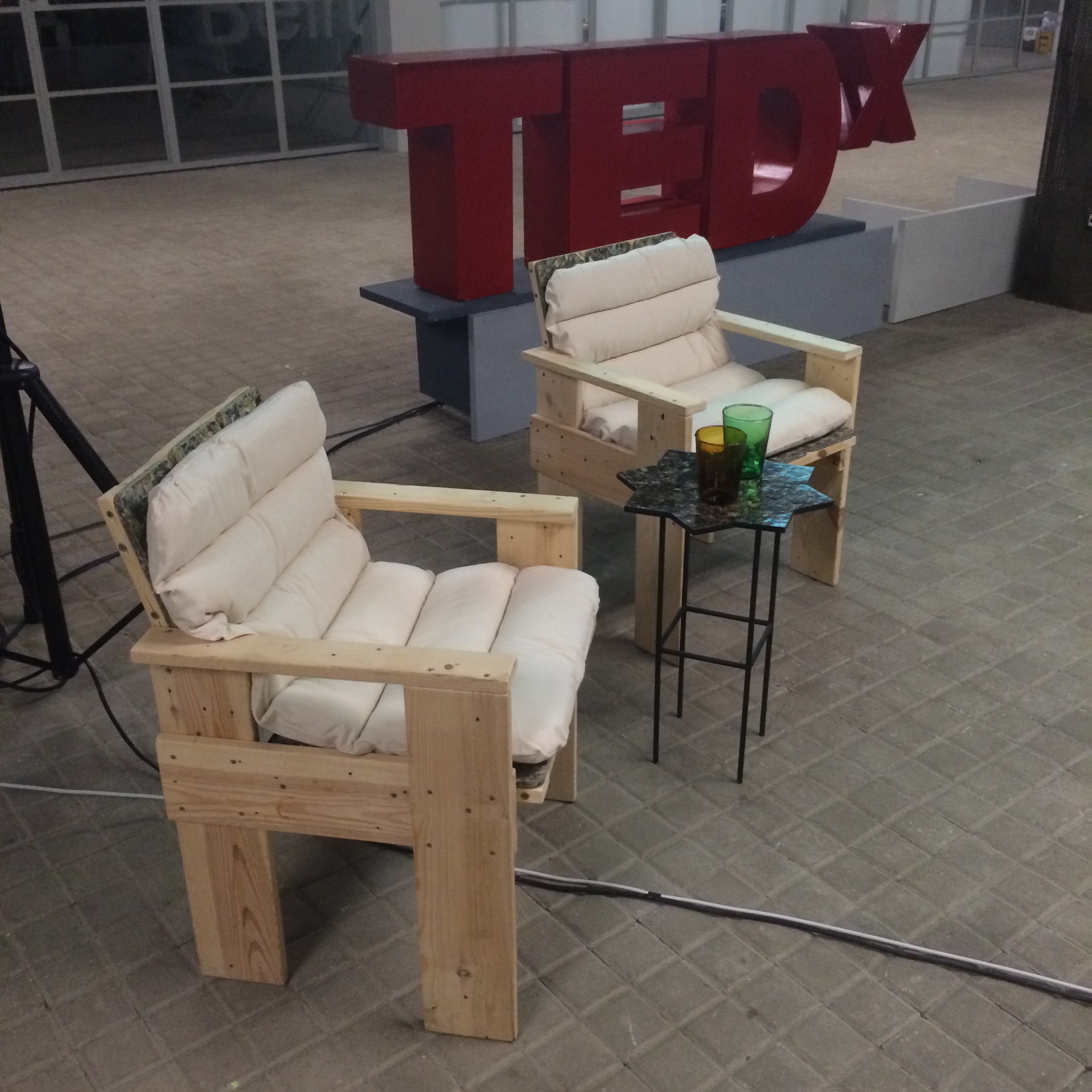
Eco-boards within the pallet chairs

Eco-boards within the chairs

Eco-board
The Eco-board, a board made of 3600 compressed plastic bags, is being used for construction of small houses, porta-potties, furniture, and conveyor belts in factories. One eco-board conveyor belt exists in the slaughterhouse of Beirut. The boards can now be painted as well (painting plastic is not the easiest feat) so the not-so-glamorous ingredients aren’t detectable when you see the material. Honestly, I prefer the non-coated boards because the Eco-board has a nice textured pattern.

Colonel Microbrewery in Batroun
Many blogs and newspapers have been reporting the story of the new microbrewery that’s being built near the Batroun coast. This new craft beer will be concocted in an eco-friendly brewery that is made entirely out of recycled materials. Like the Ixsir winery, they will depend largely on natural light. There will be a 370 sq. mt. green roof and the walls are made of Eco-boards that will double as vertical gardens. Herbs including zaatar (thyme) and mint will be grown and, in turn, used at the restaurant there. The Microbrewery will also have a bed & breakfast. The structure, which is made out of 2 million plastic bags, 3000 shipping pallets, and 109 sq. mt. of glass panels, should be done in 3 weeks. I’d love to be part of a grand tour.

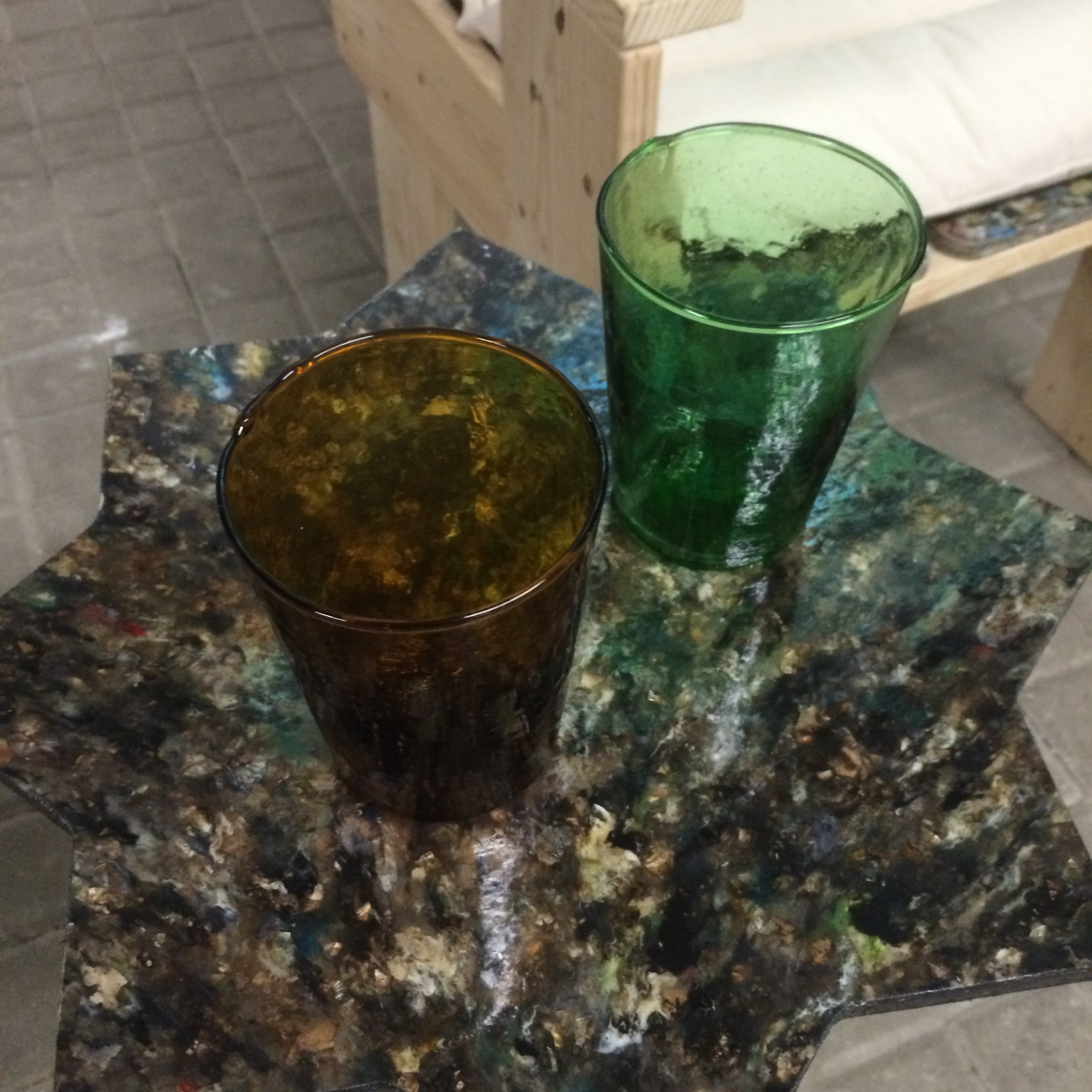
GGRIL Cups on an Eco-board table

GGRIL Cups on an Eco-board table


GGRIL Accessories
Mentioned before on the blog, GGRIL accessories are upcycled glass home accessories and decorative items. The team provides the glass bottles and the designs while the glass blowers take care of the production. All proceeds that come from the sales of these items go back to the artisans that created them. Because glass blowers were almost extinct prior to this initiative, it’s admirable to see that they’re craft is being preserved. As Ziad said, next time you’re invited to a dinner, instead of bringing a bottle of wine, get an GGRIL item that’s made out of used wine bottles. You’ll spend around the same amount, help the environment and be supporting local craftsmen. Cheers to that.

Beirut vs. Budapest

IMG_3456

Like anyone who visits a city for the first time, I was automatically comparing all things to my home city of Beirut. I don’t know what it is about you Beirut but I see you no matter where I am. It’s a “wherever you go, there you are” sort of thing. You can travel thousands of miles but you’ll never really escape something that’s constantly in your heart.

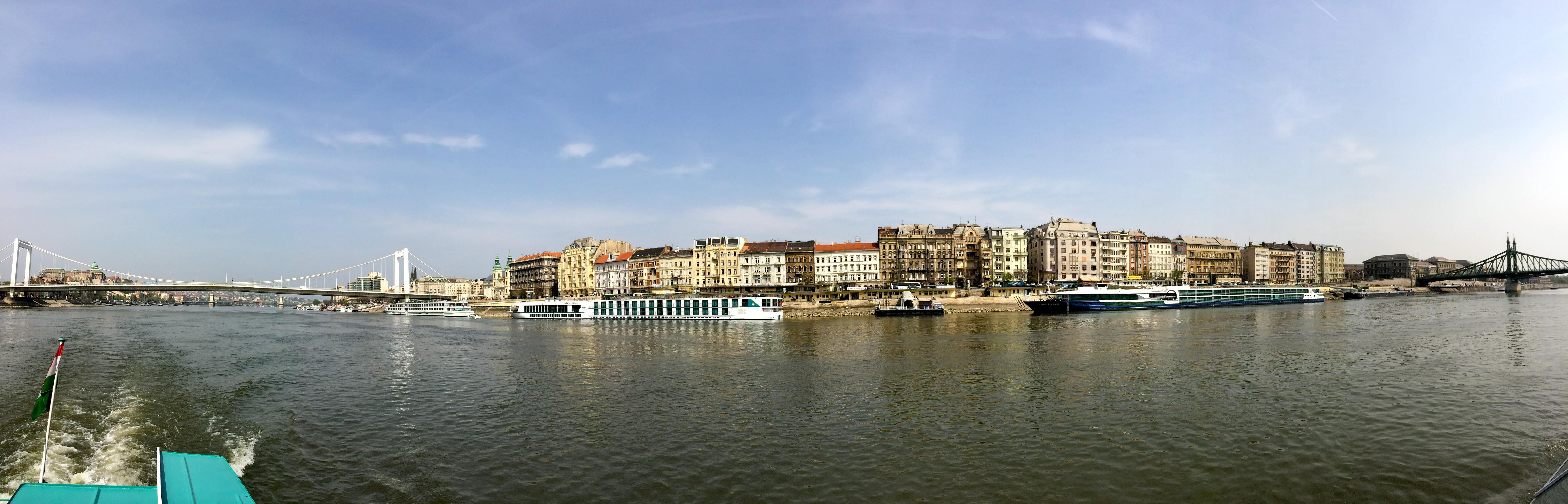
Upon arrival, I received a guidebook that described Budapest as the “sandwich city” and not because of its huge array of sausages, deli cuts, and blood pudding. It’s called so because it is two strips of a city split by the Danube. Buda, the hilly residential half, and Pest (pronounced Pesht), the SoHo-like flat land. Buda overlooks Pest because of the contrast in elevation and they’re connected with 3 main híds, or bridges.

Wine
There are 23 wine areas in Hungary but the two that seem to have the best are the Eger and Szekszard regions. It’s good stuff – as in, you would drink the wine because it actually tastes good rather than just to feel a little lighter/giddy. Hungarians are very proud of their wine and it’s a big part of their nightlife; most of the streets in the downtown area are filled with wine bars. Most bottled water there is fizzy and, because of this, it’s easy to transform your glass of rosé into a spritzer on ice. Innio is one wine bar near Ersebet Tér that has a chill atmosphere and yummy cheeses. Their slogan is “innio, ennio, elnio” meaning “to drink, to eat, to live.” Goat cheese with paprika and a glass of Hungarian cuvée, yes please.

Identity
When addressing a Hungarian, you use their family name then first name. There are some mixed feelings when it comes to their neighbors, the Romanians, because of history and the claim of Transylvania. Due to the Turkish, Austrian, and Roman influences (and others), Budapest is filled with various classical European architectural styles. The newer buildings stand out immediately up against Gothic, Baroque, and Art Nouveau-inspired exteriors. The whole city is a mesh of old & new much like my beloved BEI. I particularly hate the Intercontinental Hotel’s disgraceful contribution to the Pesh side’s waterfront but that’s just me. In Hungary, identifying Hungarians as anything other than Hungarian is illegal. Some Hungarians fought to be registered as Jedis in the census just to make it a point. This is something we should adopt: we should be Lebanese and nothing else.

Hungarians Invented Everything
Hungarians invented the button, the Rubik’s cube, and the ballpoint pen. They also claim to have invented trousers. Hungarians’ official language was Latin until 1844…but Phoenicians invented the alphabet. This belief that your own nation is the center of the world may not be a Hungarian or Lebanese thing; when we were discussing this with a colleague from Geneva, he said “yeah, you guys probably got that from the Greeks.” Did I mention he’s Greek? It seems that all countries are ethnocentric to some extent.

Government
All week long, the current government was pulling out all stops trying to impress the public including completing the newest Metro line. Although no one really uses that particular line and its practicality is questionable, residents thought it would never finish but it miraculously has. Why? Because parliamentary elections are this weekend. The Metro plus public markets, a club opening, and classical concerts in the park – they’re trying very hard to win the vote using anti-EU rhetoric even though 97% of their projects are EU funded. The leading governmental party is orange. It seems they use colors too. “Do people like them?” I inquire. “Depends who you ask.” Well there’s a diplomatic answer that sounds all too familiar.

Neighborhood Names
Budapest is split into 23 districts and some of these districts are broken down further into neighborhoods. It’s the same as our Hamra/Geitawi/Horsh Tabet/etc divisions. They have great respect for their history and their past. Small plaques on buildings commemorating someone have small wreaths hung below them. There is evidence that they cherish what came before them. Another lesson we could learn from the Hungarians.

Rom kocsma (Ruin Pubs)
This trend started in 2002 at Szimplar Kert, the oldest ruin pub in Pest. The concept was that pubs would open in temporarily abandoned inner city blocks. Once it got popular, more and more pubs opened up and people would bar-hop from one to the other shifting to quasi-snobbism. We visited the Gozsdu Aracade which used to be social housing during the Communist days. The recipe according to this site is: “search for an old building in downtown Pest, rent the cellar and the ground floor, do not renovate anything, invite some contemporary artists and designers, recreate the atmosphere of the 70’s, build a bar and serve some drinks, invite a band and be open until the morning comes.” And it’s no fun to live in the same area but partying is great. Sounds a lot like our Monot/Gemmayzeh/Mar Mikhael culture. By the way, our latest rom kocsma area is Badaro but that’s for another post.

Bambi Recommends: Bayrut Express

IMG_3174

Bayrut Express is a shop I found on Facebook while researching eco-friendly projects in Lebanon. Next thing I know, Ziad from BE comments on that post telling me to come check out their shop. Little did he know, I’d been wanting to go since discovering their page and finally managed to do so thanks to having today off. It’s located in Asos Center near Sassine Square, Ashrafieh. If you’re driving toward Sassine from Sodeco, it’s in the alley to the right before you reach the main intersection. I didn’t mention my blog while investigating the shelves – let it be clear, this is not a sponsored post.

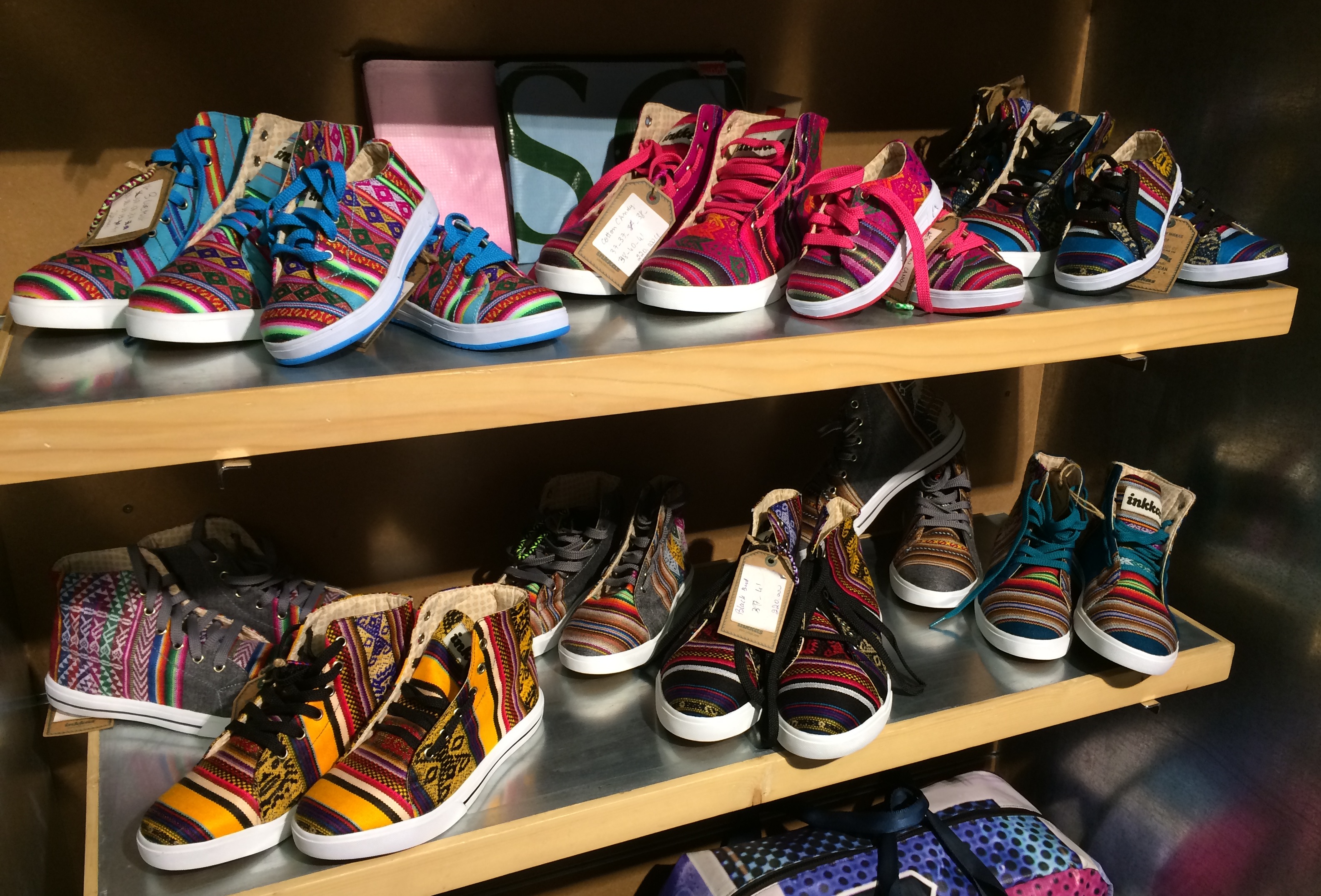
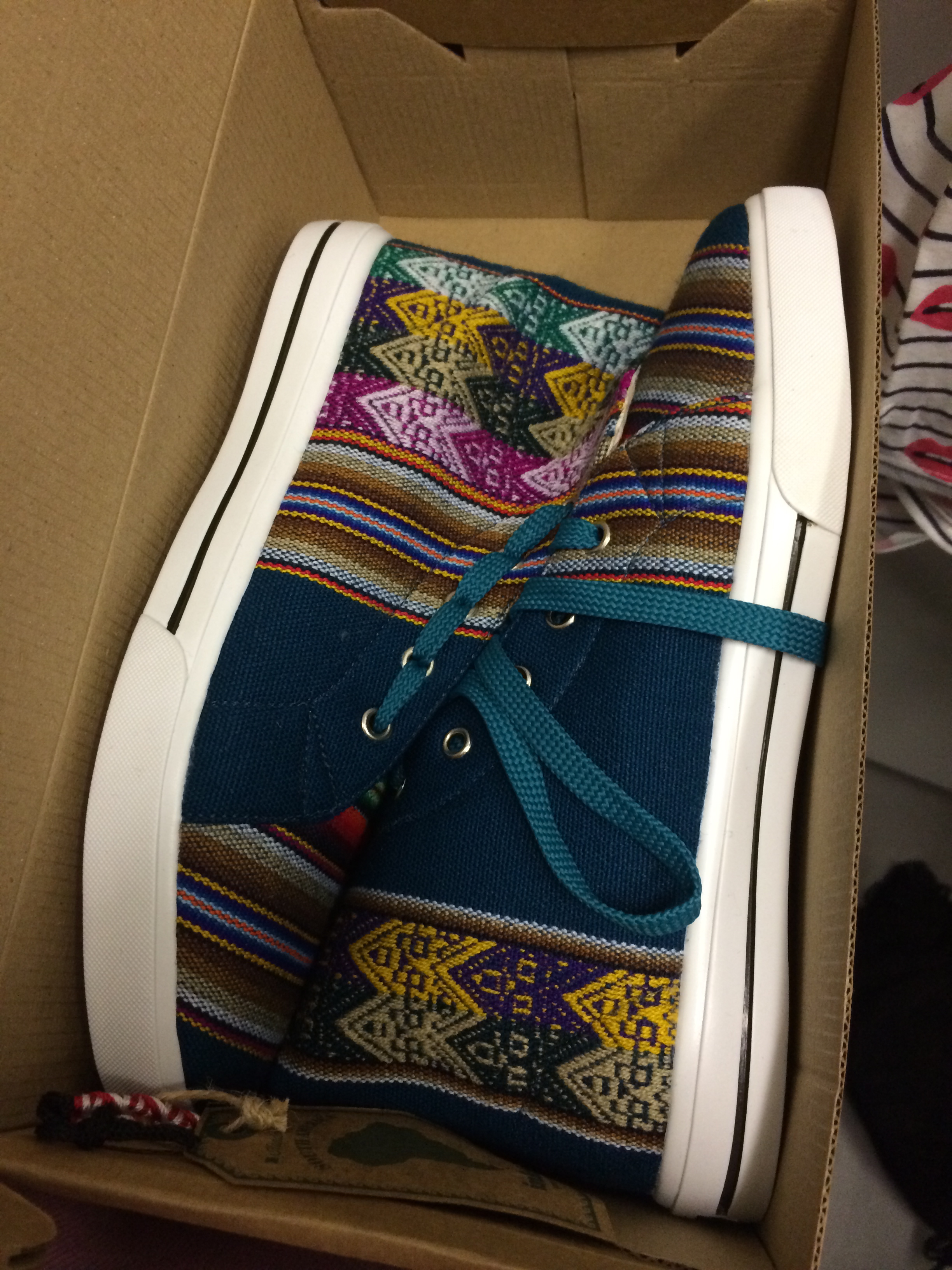
BE sells clothing, shoes, and accessories but all the merchandise they have is related to a cause. GGRIL and Waste products are sold there along with Inkkas, handmade sneakers made by artisans from Peru, Bolivia, and Argentina. Inkkas is a kickstarter project that was successfully funded last December. Each pair is a combination of colorfully patterned South American textiles and bright nylon shoelaces. On their Kickstarter page, they state, “From the beginning, Inkkas set out to be a company that would have a beneficial impact on the world, not an exploitative one. The company was founded on the principles of fair trade, philanthropy and authenticity.”

The product is made to counter planned obsolescence and the whole initiative backs South American causes and communities. For example, with every Inkkas purchase, 10% is donated to preserving the Amazon rainforest. Above is the shelf of Inkkas at Bayrut Express. The high-tops run at 220,000 L.L. (~147 USD) but are on special this week at 155,000 L.L. (~100 USD). Can’t wait to rock mine tomorrow.

IMG_3176

Blissful Memories & Meals

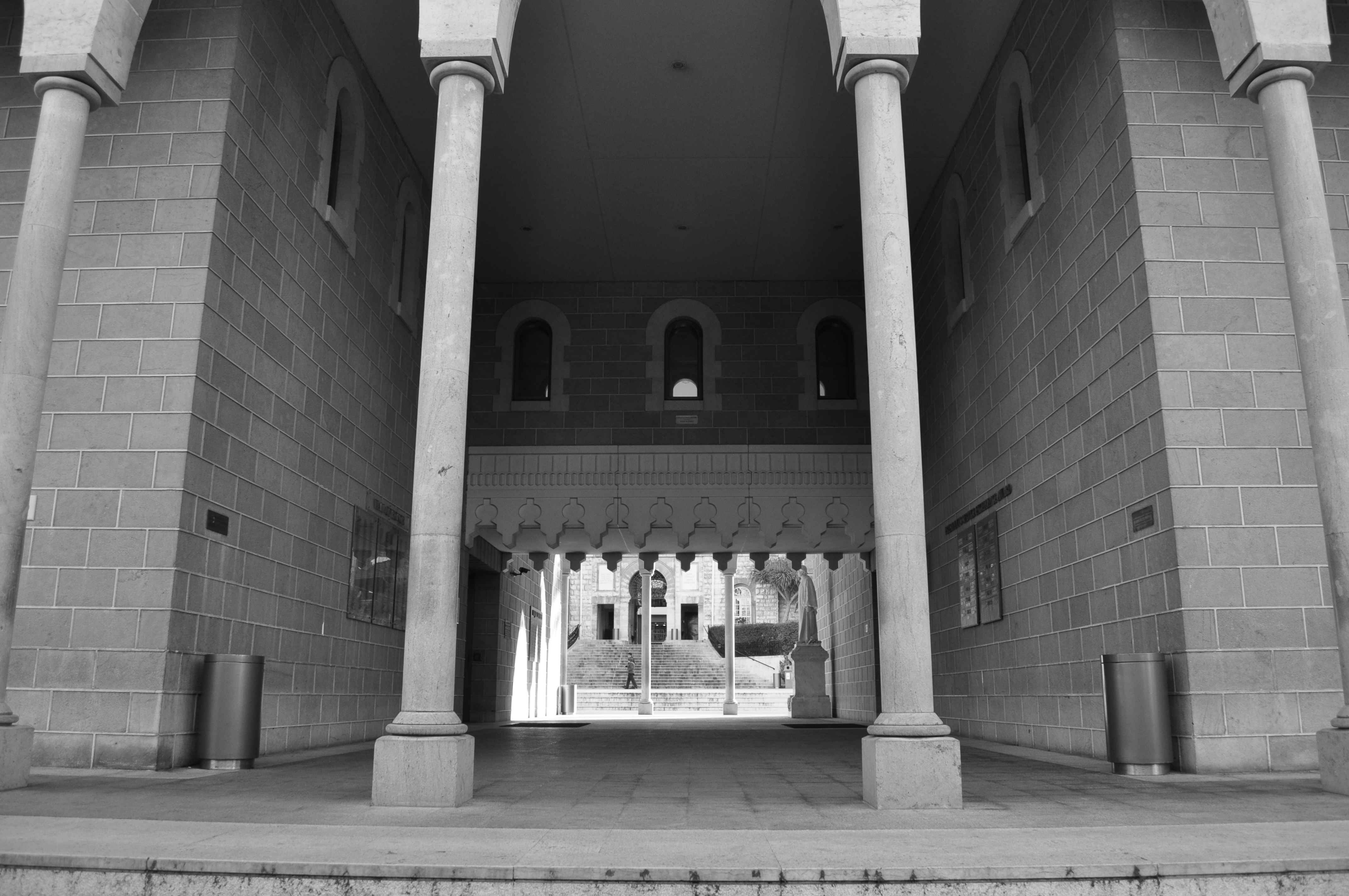
College Hall

The Steps of College Hall

Bliss Street equals two things in my mind: food & AUB. It also equals a lot of memories that combined these two things. Upon reflection, I saw that the selection of where you were to eat lunch on Bliss was determined according to 4 factors:

• Money: how much you want to spend/have on you
• Health: how healthy you’re trying to be
• Time: how long before your next class that you’re actually attending
• Party of n: how many people are joining

So if you were eating alone, had only 5,000 L.L., and 10 minutes to spare – health goes out the window and you’re going to inhale a handful of Happy Meal burgers. However, if you’re 6 people with an hour and a half and 10,000 L.L. to blow, you’re having a Subway 6-inch on the Oval. This theory’s accuracy is not set in stone and does not count when determining whether you should go have a nutella crepe from Tonino because, in that case, the answer is always yes.

Here are a few examples of when this logic was used, unknowingly at the time, to determine where we should fuel up. Please keep in mind that this was pre-Urbanista/Paul/Roadster and, therefore, quinoa was still just the staple food in Peru. As you’ll see below, the health factor becomes more important as you age within the walls of AUB.

McDonald’s
It was election day during the first semester at AUB and we were having lunch at “McDo” while students and people filled the street outside and chanted “Abou Taymoor! Abou Taymoor!” Somehow, our lunch transformed into a discussion about the political parties in Lebanon and whose actions could be considered justifiable given that the 2006 war had concluded just a few months prior. It was the first and last time I ever debated politics with my high school friends or anyone for that matter.

Burger King
Some time in Sophomore year, after a Bio 201 quiz II, we learned that Whoppers were the best medicine for failing pre-medical students. Vegetating on the couches in the back and singing along to their radio in a daze, this was the only way to numb the pain of a Charbel Tarraf multiple choice exam that included every letter of the alphabet as a choice. BUT WHAT DOES “a & b, except c – h” EVEN MEAN?

Universal Snack
Under the illusion that this was healthier than other options because it was “like eating at home”, Universal used to win the lottery quite often. It started out because of the escalope. Then it was for the potato salad. Then it was because you could have a huge plate of fattoush for 4,000 L.L. I think it was for the 80s music and the fact that you could have lunch with the whole restaurant at once – which was usually filled with a bunch of people you knew from other classes – since the tables were so snug. My dad keeps talking about how it was one of the first places to sell hamburgers in Beirut. He wants to go with me sometime because he hasn’t been since the 70s but I feel like I’d be betraying my AUB memories. Ah, the loyalties we form.

Forn Bakkar
An old couple worked at this bakery. It was up the street that leads to Ghali’s, right before Books & Pens. They used to make the dough fresh every morning and have falafel Fridays. One of us would go pick up the manoushes while the rest waited by Jafet library. It became a morning ritual until we saw the granny lick her fingers one too many times while kneading the dough as we waited for our kishik to come out of the oven. It’s closed now.

EuroDeli
This was the first place I had ever eaten at on Bliss Street. I was in the 8th grade and my cousin had brought me to AUB to help her with a Powerpoint presentation. I remember analyzing the graffiti on the benches while we waited for the computer lab to open. When I saw “Kiss from a Rose” carved into one of the beams, I knew AUB was going to be a university that had people like me…in 5 years. I had a chicken avocado sandwich from EuroDeli as a reward for all my hard work. Before it closed in 2010, it was a place we’d frequent because we could order “salads.” Oh Pasta Chicken Salad with Honey Mustard Dressing, where have you gone?

Zaatar w Zeit
“Kafta 3adeh bas bela jibneh. W ana kafta 3adeh bas bela mayonnaise. w ana kafta FULL OPTION. w ana kafta bela jibneh w shawiyit mayonnaise bas m7amas ktir. Orders at ZwZ were all combinations of kafta that always took too long and made us late for class. But they were good.

Kababji
Eventually, you get over the fast food craze and realize that you need to take care of your cholesterol levels. The BigMac just isn’t worth the hour on the treadmill – at least, not this week. Kababji became the healthier option because you could order half portions and have salads that didn’t taste like glorified grass. Most of senior year was spent here, and then many post-grad visits too when I was briefly employed at AUB.

Bliss House
Spicy chicken sandwiches on the steps of College Hall facing Jafet. When your Party of n > 10 and you have no classes to get to, the health factor is ignored, and you just enjoy life. After all, you’re only young once.

Bambi Goes to ArabNet Beirut 2014

Screen shot 2014-03-08 at 8.30.16 PM
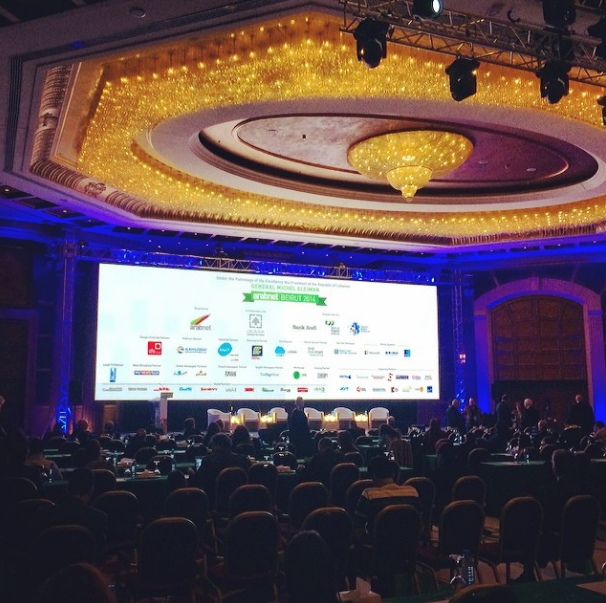
The ArabNet Beirut conference, a 3-day event held at the Hilton Habtoor Hotel, has been going for five years now. As it states on all the banners, it is the “largest regional event for the digital creative sectors.” The three days are split into one day for design & coding and two days for panels & talks (forum days). ArabNet as a whole is done in collaboration with the Banque du Liban (BDL).

This conference is organized so that digital professionals and entrepreneurs can connect and learn from each other. It also creates opportunities for new start-ups to showcase their work, young creatives to compete for funding, and throw a whole bunch of geeks into a hall so they can bond. Although I missed out on the first day, the bits and pieces I got to see were awesome and I was amused that they used a bell to signal when a break was over. We were cattle and we loved it.

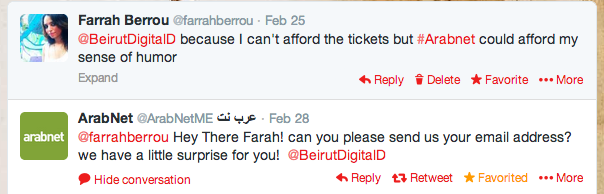
I have to say that ArabNet doesn’t seem to cater to the average Lebanese employee. Sure, there are many people flying in from abroad to attend but the citizens of the hosting country cannot afford to pay for a ticket given typical salaries here. I would be worried that I wouldn’t get my money’s worth when ticket prices are that hefty. It is also scheduled in the middle of the work week meaning that, if you chose to fork over the fees, you would have to take days off to attend. Having three full days smack dab in the middle of the week is not ideal for young professionals in the workforce – many of whom would like to attend and may not have a company who will sponsor it. Seeing that this conference is made for empowering entrepreneurs and strengthening the Arab knowledge economy, I feel it could be more wallet-friendly in the future.

HOW I GOT THERE

Screen shot 2014-03-08 at 8.07.05 PM
Screen shot 2014-03-08 at 8.05.03 PM
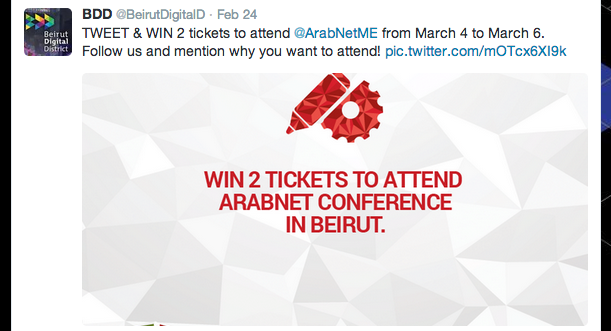
After reading my blog, the folks at ArabNet invited me as an official blogger. BAMBI FTW.

TOP 3 ACTIVITIES

Entrepreneurship and Investing in MENA (Panel)
This panel, moderated by Mike Butcher of TechCrunch, revolved around what was needed to create a better ecosystem for entrepreneurial efforts in the region. A main concern was that entrepreneurs need room to test ideas, but to have that, they need access to information, funds, and support. Other issues raised included the lack of visibility entrepreneurs have, the lack of mentors or investors to fuel the ambition in the region, and the call for the government to break down the barriers faced when setting up a company. Starting-up is challenging and moving between countries is not a simple endeavor. For example, in Lebanon, you cannot loan a company money unless you own 20% or more of said company and many entrepreneurs are afraid of dilution even though it may be best for the company in the long run and thus, more beneficial to the entrepreneur.

People can learn from those with experience and can then scale products that can penetrate the region and the world. There is an immense need for collaboration versus regional competition; we need to put our own money into the ecosystem in order to strengthen it and we need to invest in our own country’s capital. BDL seems to be on the right track: they’re to match 75% of other banks’ investments in start-ups and has pledged 400 million USD to the start-up efforts of entrepreneurs.

Speed-Networking
Based on the concept of speed-dating, speed networking is an hour and a half of 3-minute-blocks to network with a room full of people. I think this is an effective method. My experience with big conferences is that most people, when released into a crowd during coffee breaks, end up gravitating towards someone they know; networking doesn’t happen when you’re always talking to people you’ve already met. This forced-networking changes that. Hassan Kanj talked to me about MENAVERSITY, a website that offers university courses for free like coursera.com except they’re in Arabic. Lara Noujaim told me about Game Cooks, a group of game developers who created Escape from Paradise, a game app that was inspired by Lebanon. Nima Adelkhani, CEO of PITME (Progress in the Middle East), came all the way from San Francisco/Silicon Valley. When I asked him if it was his first time in Beirut, he said, “eighth.” I then asked why he keeps coming back and his reply was, “because it’s the best city in the world.” Check out his webseries titled “Technology in a Tent.” It would be a good idea to do more than one speed-networking session or schedule it on the first day so that you’ve already made some new friends from the start. You’ll be more likely to talk to them throughout the conference if you’ve exchanged names without peeking at their badge or stalking them on Twitter. I only did it once.

Creative Combat
Three teams were given a common brief they needed to create a campaign for. The panel of judges included 4 members of society: Ziad Abichaker of Cedar Environmental, Lara Tarakjian of Silkor, Ziad Nassif of Exotica, and Vera Hassan of Patchi. They’re not realms from GOT, these are companies in the Levant. The brief was to create an awareness campaign about the importance of trash separation. A lot of debate broke out regarding the language used to communicate the campaign. Should it be in English because the online population of Lebanon communicates mostly in English or should it be in Arabic because the Lebanese population communicates generally in Arabic (and makes it more culturally relevant)? After all, the campaign’s target audience was supposed to be the Lebanese population, not the people in the Emirates Hall of the Hilton. After each team presented, the judges evaluated them and questioned their thought process. I enjoyed this but maybe it’s because I work in advertising. It was interesting to just be a spectator.

HIGHLIGHTS OF THE CONFERENCE

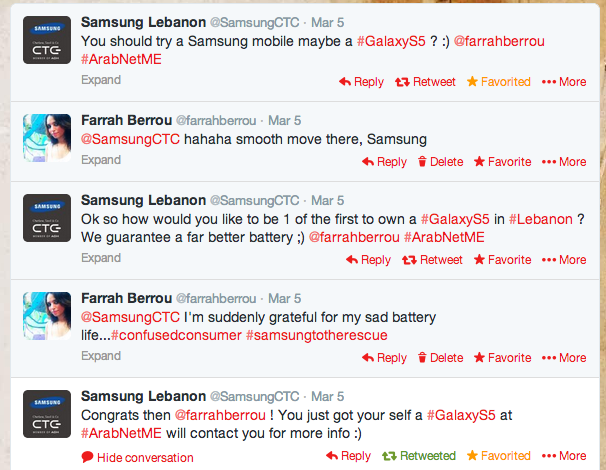
Samsung CTC
This is what happened after I tweeted that my iPhone was not made for live-tweeting implying that my battery was on the verge of death using the hashtag #batterylife.
Screen shot 2014-03-08 at 8.01.22 PM

Taste of Beirut
At the end of day two, the Beirut Digital District hosted the attendees of the conference in a white tent filled with free food & booze from 16 F&B establishments. From Couqley steak frites to Bittersweet Cocktail Bar’s passion fruit cocktails along with 961 Beer, Brgr Co. fresh-off-the-grill miniburgers, and samosas from Alhindi – let’s just say it ended with a happily self-induced food coma.

Twitter Fall
Reading the Twitter Fall while all the talks, panels, and interviews happened was as entertaining as the action on stage. Because the TF was on the screen above their heads, they were unaware of what the audience was tweeting about the discussion. Some people can be so mean from behind a screen.

In the opening ceremony, Omar Christidis, CEO of ArabNet, said that they were “committed to being and staying in Lebanon.” That’s good to hear. As Adelkhani says, “People who are busy working and building cool companies are less likely to start revolutions and fight wars.” And remember folks, good things come to those who tweet!