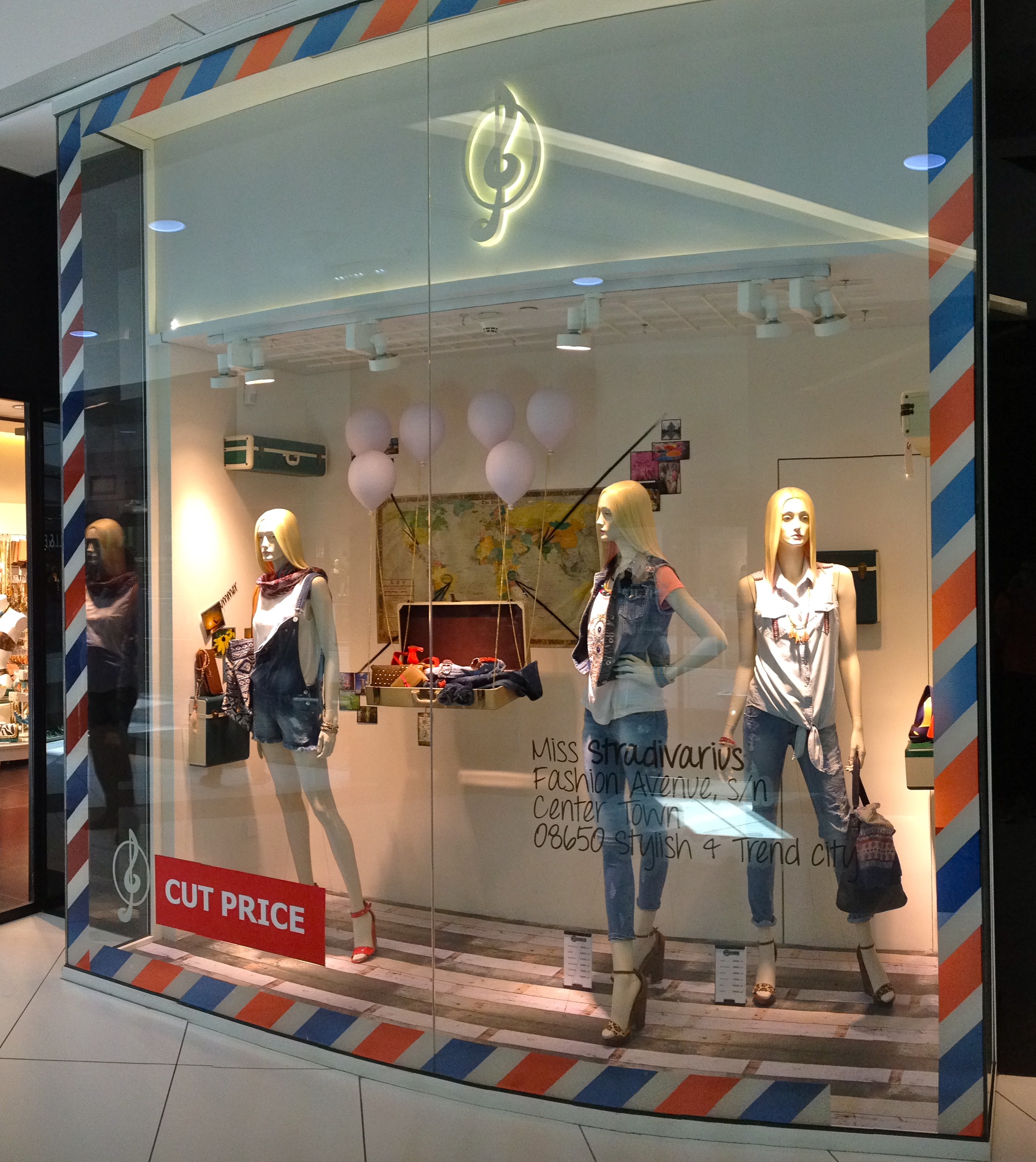
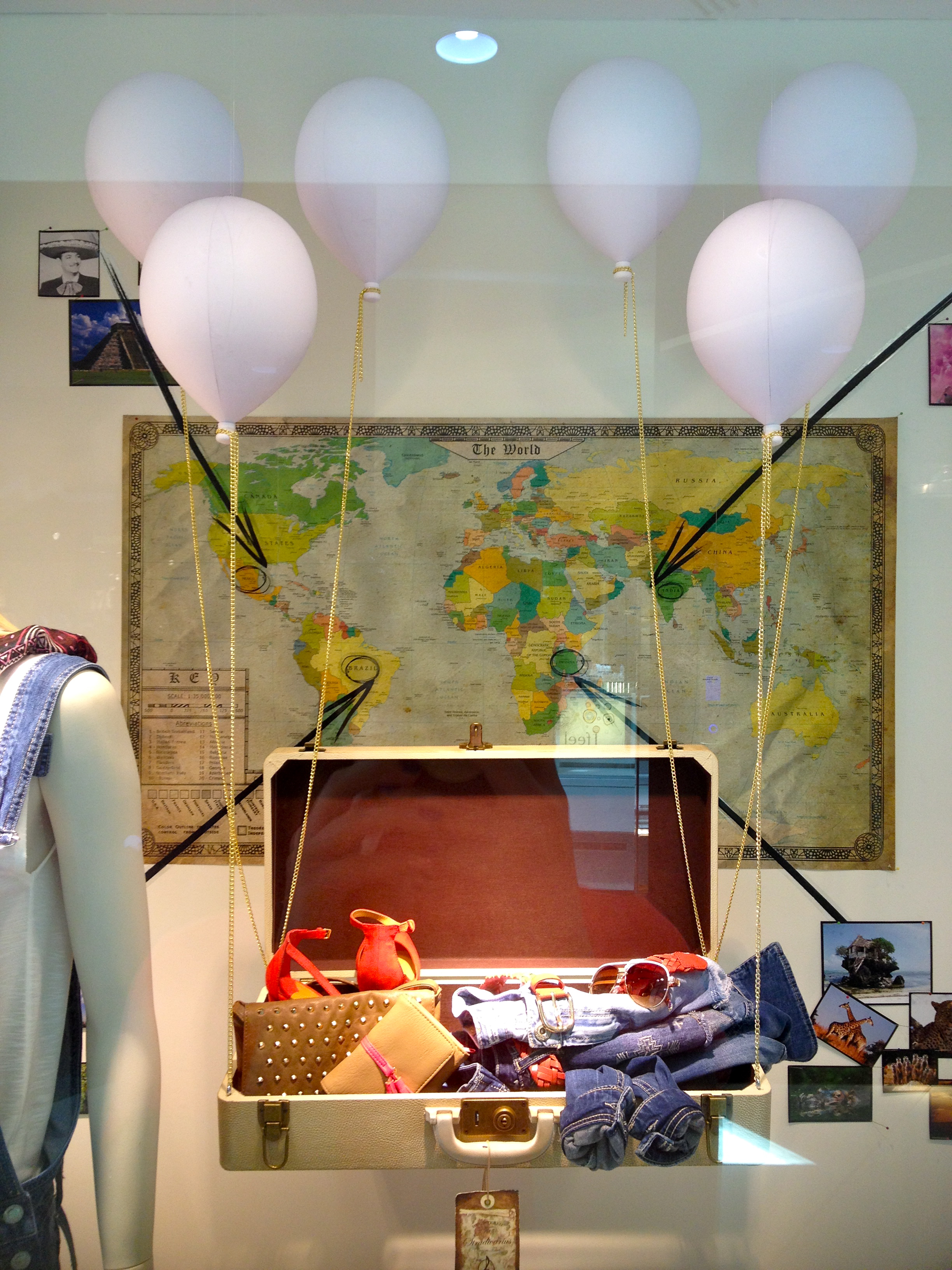
Concept: Air Mail framing of window with travel theme, suitcases held up by balloons with a vintage world map backdrop. It’s all very dreamy and whimsical – perfect for the upcoming summer season when everyone wants to pack their bags and get away.
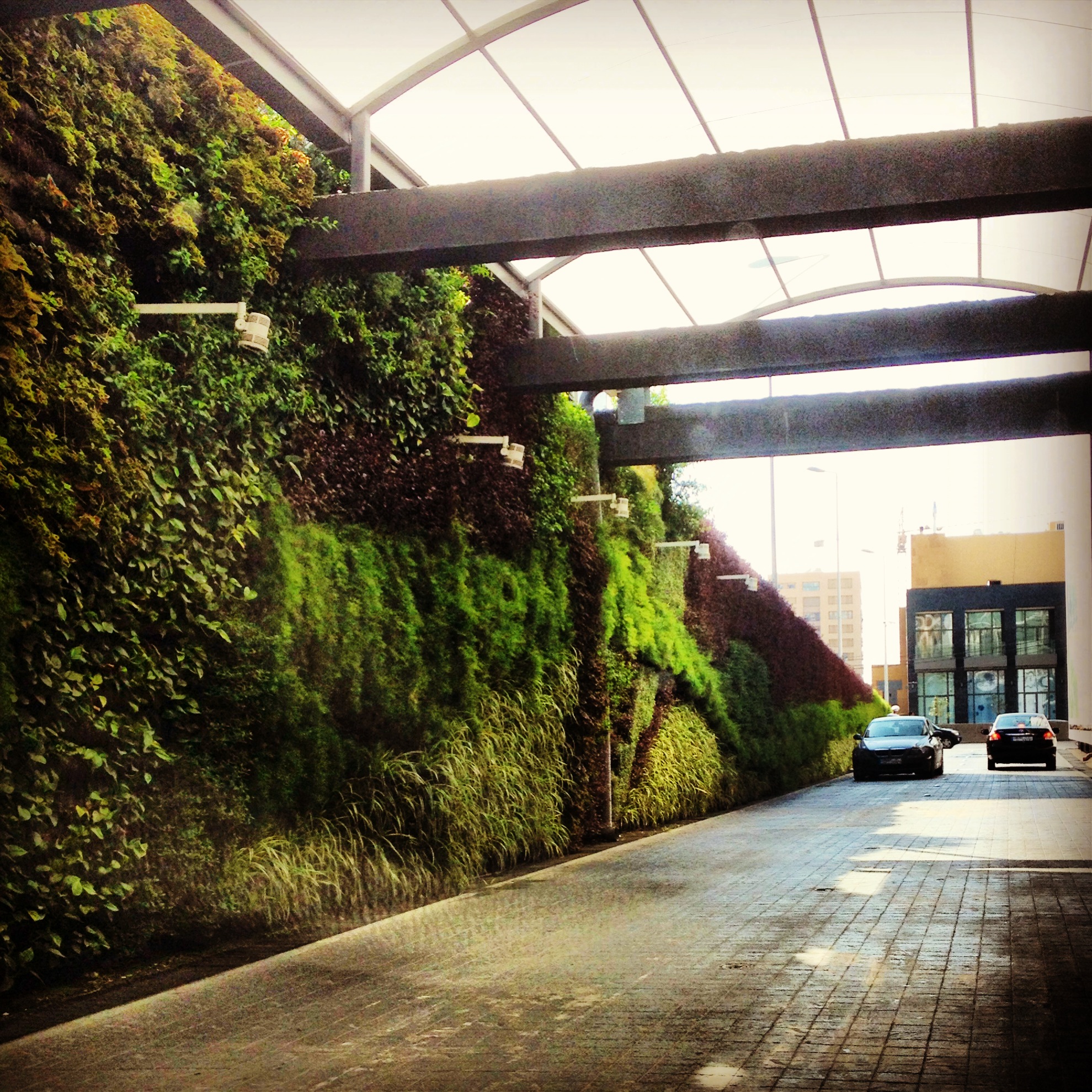
Le Mall Dbayeh is my new favorite mall because it has all the stores for good twenty-something shopping and some great restaurants too. The fact that the ceiling is all glass plates makes it well-lit on good days so you don’t miss out on the beautiful weather while still being indoors. Another plus: vertical gardens on the entrance to the parking lot:
As said in last week’s post, a series about street art in the region is being produced and Lebanon’s was released a few days ago. I haven’t even seen some of the pieces featured in the clip but I’m sure many will recognize the artists in there from their tags. Sadly, I think there is so much great work that didn’t get its proper dues but this is probably due to time constraints.
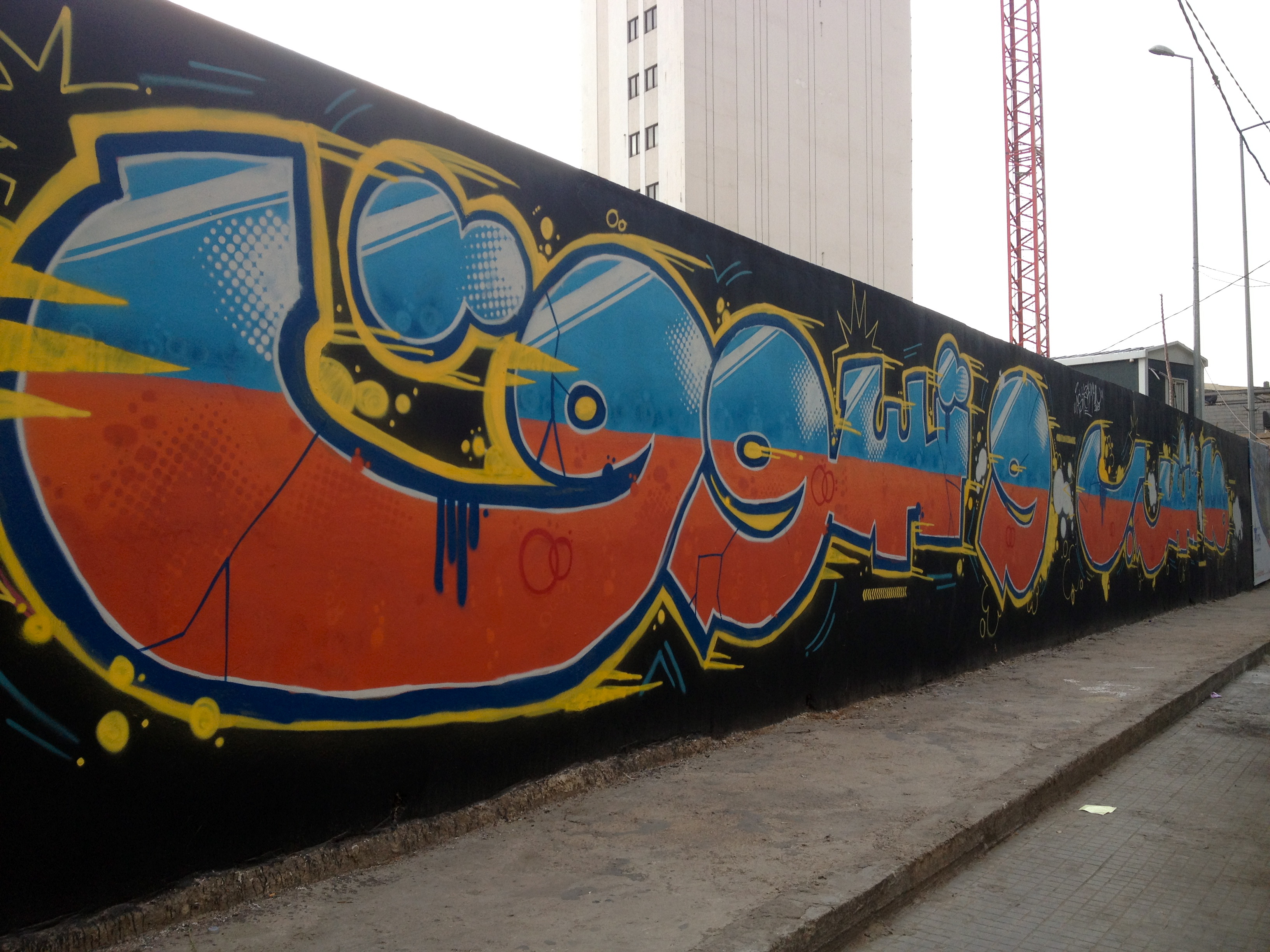
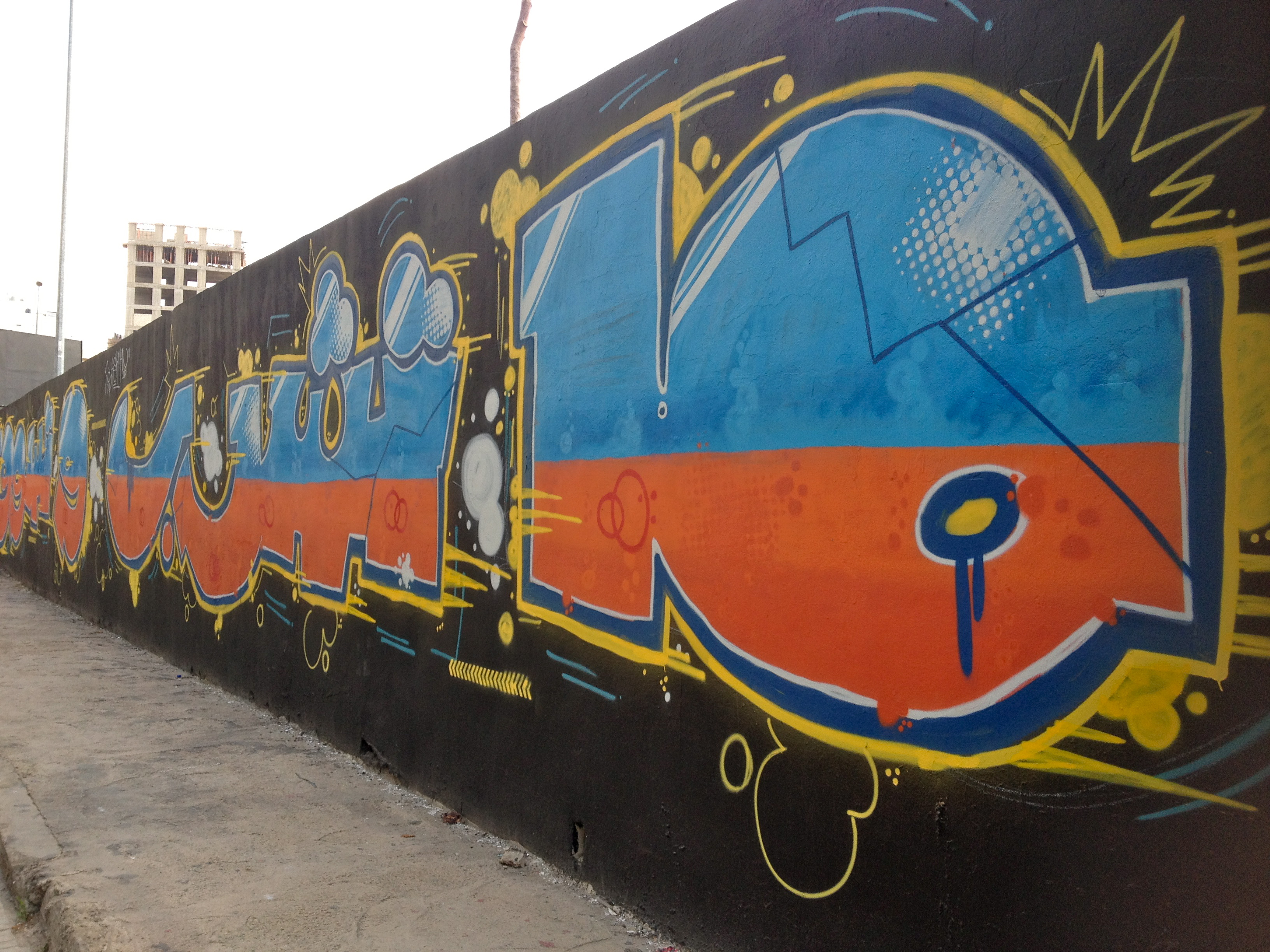
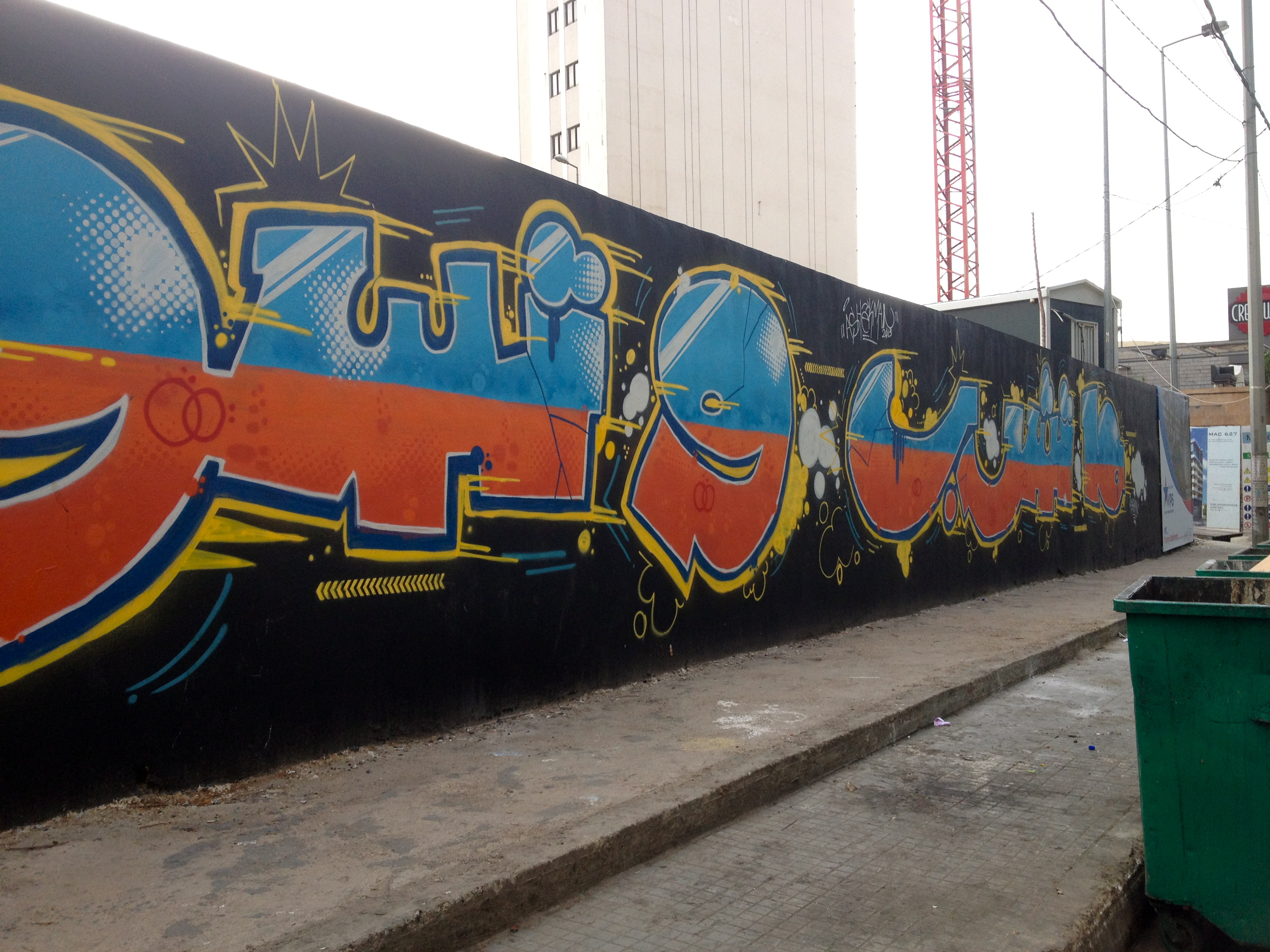
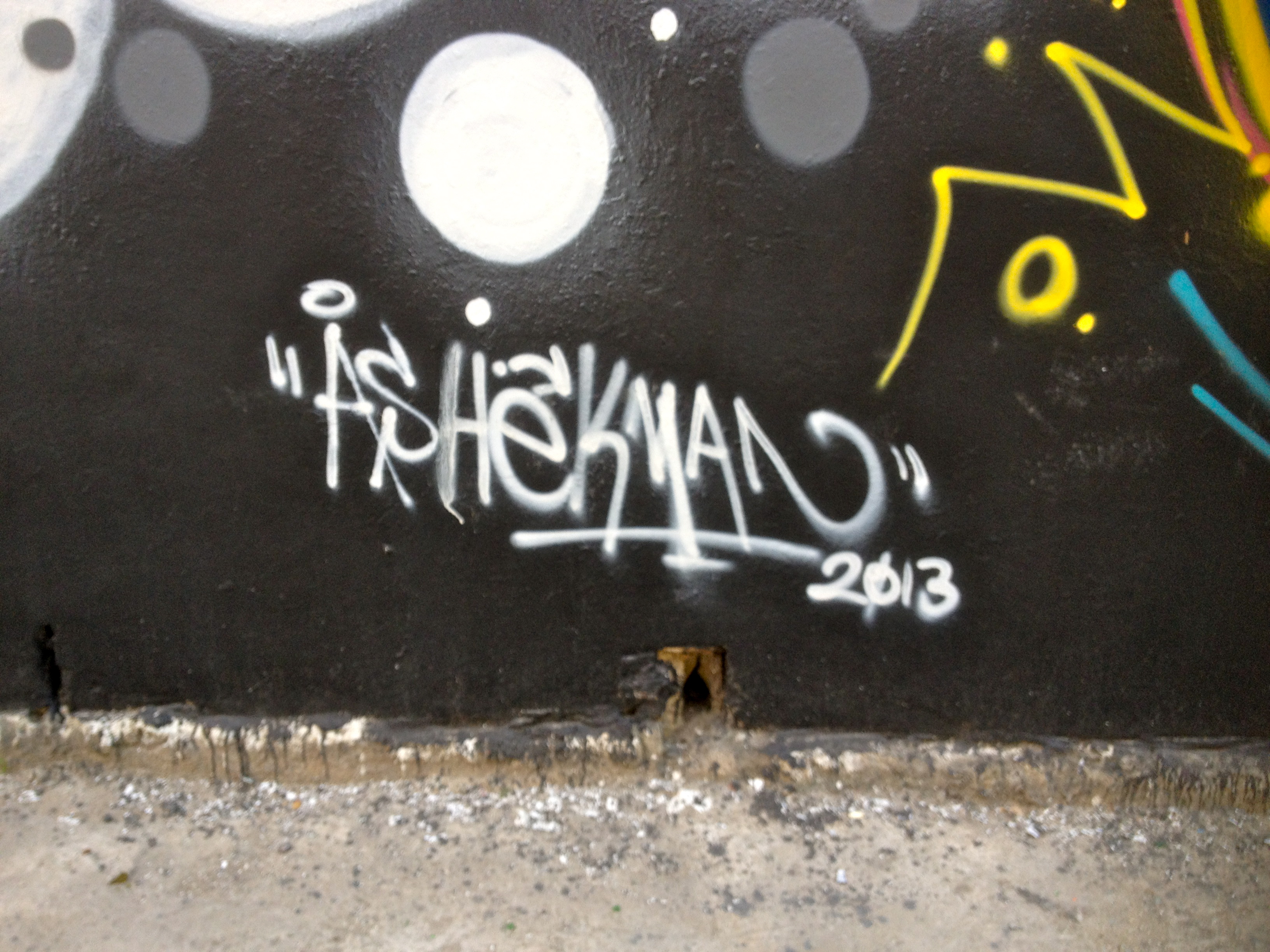
The Ashekman twins have painted the walls of Beirut once again – this time with a great message: “ma tishrab w tsouk” or “don’t drink and drive.” The very large piece of street art is located near Monot and Sodeco, along the same street as Falamanki and right after La Piazza. If you had noticed before, there were existing pieces of graffiti on this strip, some focusing on the same issue, before the Ashekman twins took it over with their striking orange/turquoise on black combo. As is their style, it’s a lovely example of Arabic typography (which is also used in the tshirt & sweatshirt designs sold at their store in Hamra).
Although already notorious for their work throughout the city, I feel this one is quite special because of it’s message. There is nothing original in what it is saying but it is vibrant enough that it will hit you when you see it – as it should because drunk driving is a preventable problem. This tag in specific was done for Kunhadi, an NGO focused on youth awareness for road safety. Too many people, many of them too young, have been victims of reckless driving. Based on the The Lebanon I Dream Of documentary from 2009, car accidents increase 13% annually leading to 700 deaths/year. Based on Blogbaladi via YASA (Youth Association for Safety Awareness), a 20% increase in accidents is expected for 2013. Drunk driving is one of the “accidents” we can avoid.
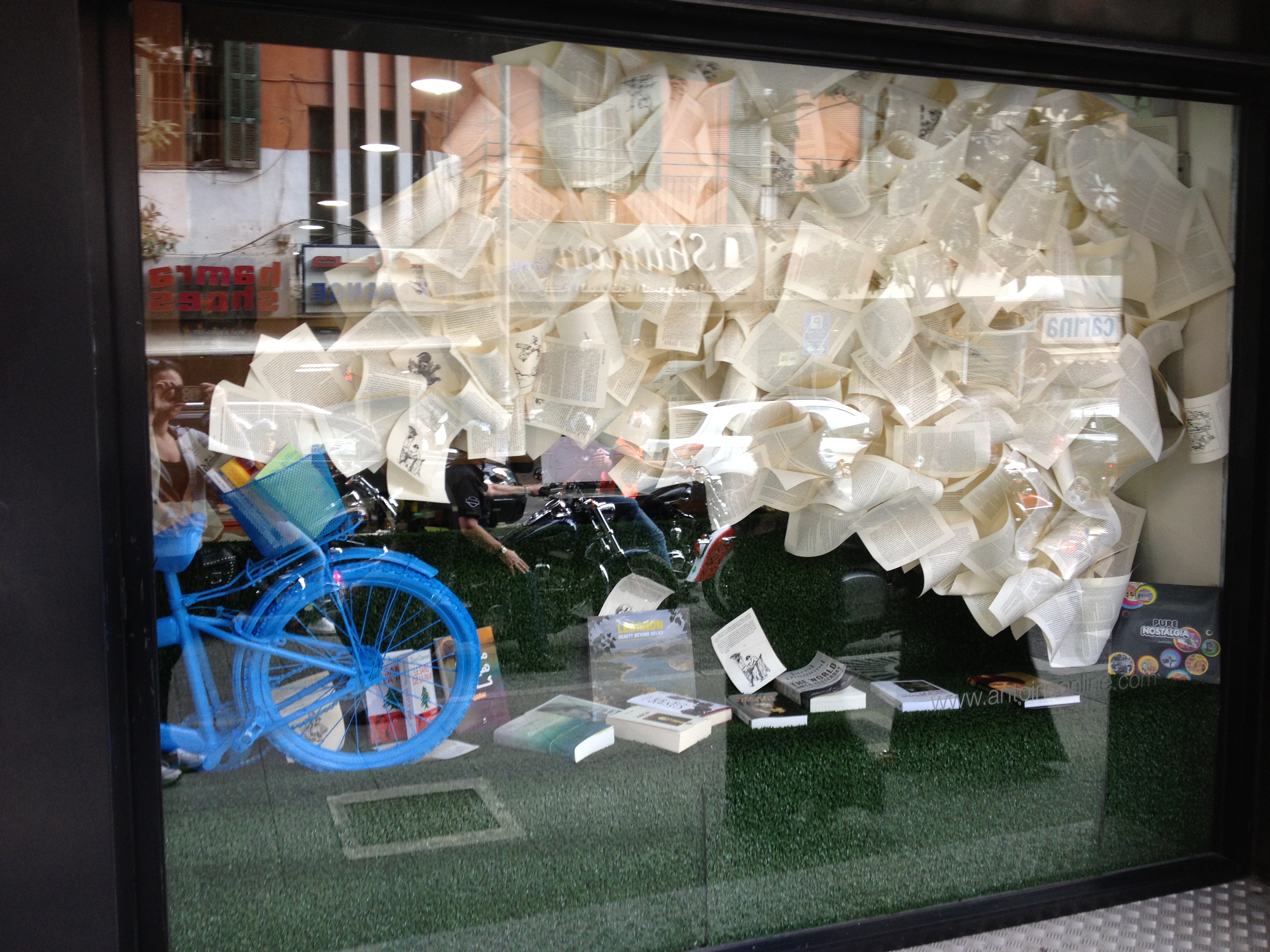
I haven’t done one of these in a while because 1) there wasn’t anything that particularly caught my eye and 2) they don’t seem to be very popular with readers. Plus, it seems that there is always a tie between the two big display-design experts: Aizone’s Sagmeister/Walsh & the great Louis Vuitton windows and I wanted to feature something else for the next one. So here we go:
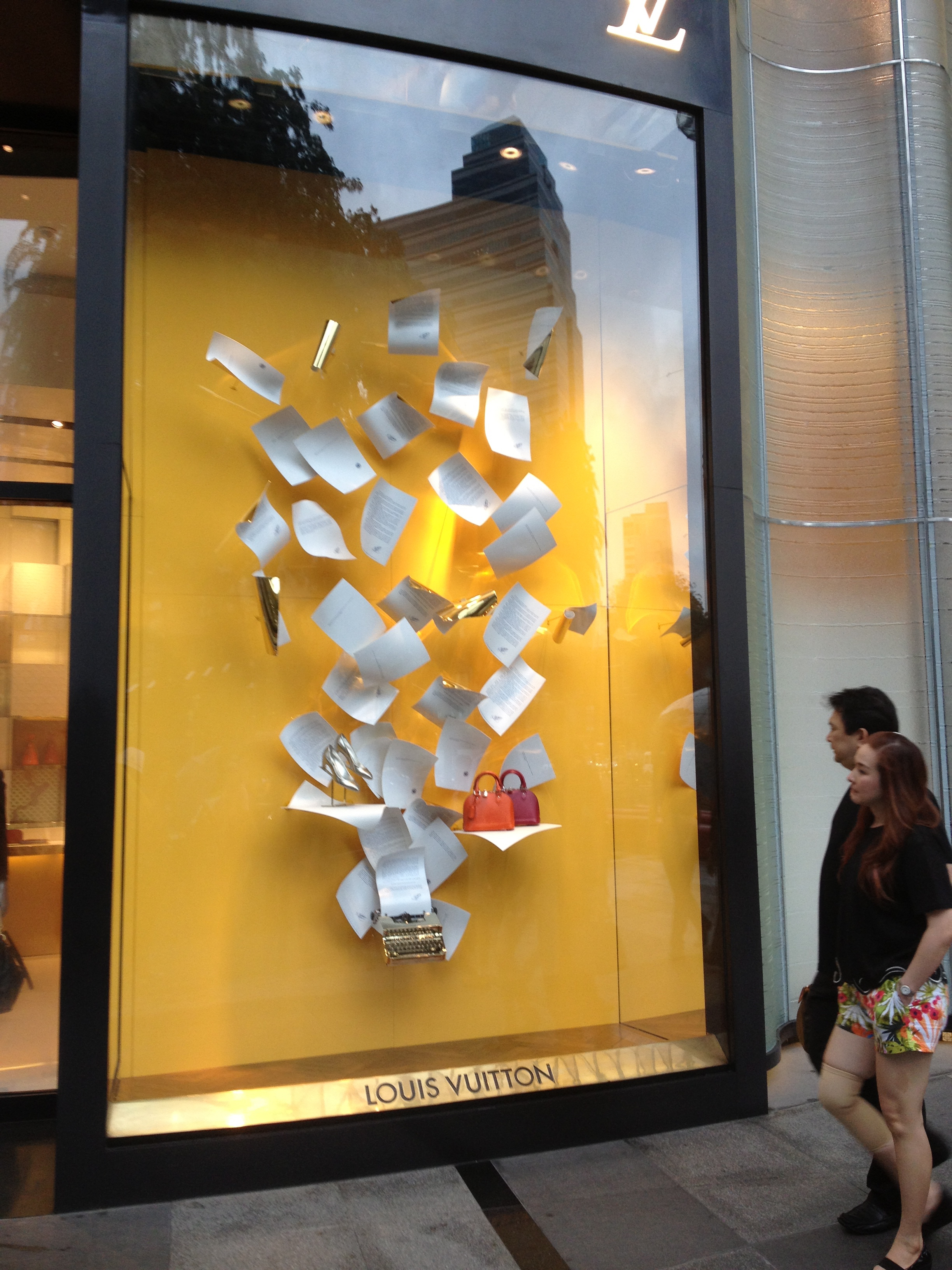
This Box was found today while wandering in Hamra. It features a little member of society: Librairie Antoine. Very similar to the Louis Vuitton flying papers of this season (I’m sorry but I can’t help but praise them – even in Singapore, I’d stop and admire each display even though they were all identical). Back to the point. Librairie Antoine has a small bicycle featuring a crazy cascade of book pages flying all over the span of the vitrine. You should stop by just to take a look and read some of the pages.
Sorry, not the best shot with all that reflection (all the more reason to go see it!)
Louis Vuitton, Singapore
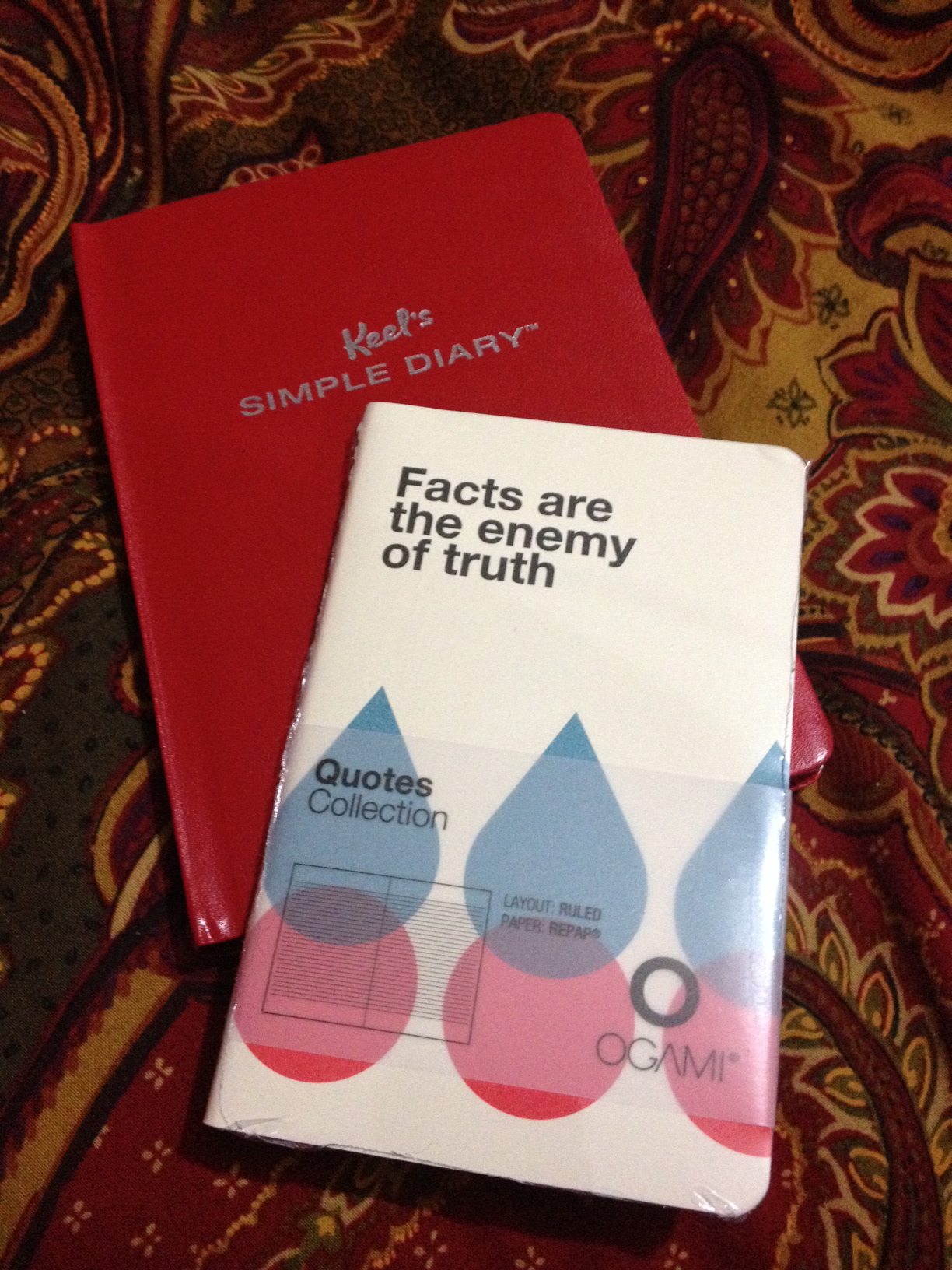
Besides this, there’s a new selection of notebooks available: the OGAMI Collection. As said on the label:
“OGAMI uses Repap in all the products lines. Repap is made up of 80% calcium carbonate (CaC03) and a small percentage, 20%, from non-toxic resins (high-density polyethylene). The calcium carbonate present in Repap comes from the limestone recovered from caves and used in creating Repap, a resistant and durable, as well as a waterproof paper. A paper that is also soft, smooth, bright white.”
Their tagline is “Paper made from Stone.” Best part is they’re not that expensive. A small mini notebook for your purse costs 9,000 L.L. ($6) and an A5-sized one is 13,500 L.L. ($9). A5 is half the size of your regular printer paper. As a friend said, “writing on this paper is magical, everything looks better.” Yes, she is a designer too. Check out their website here.
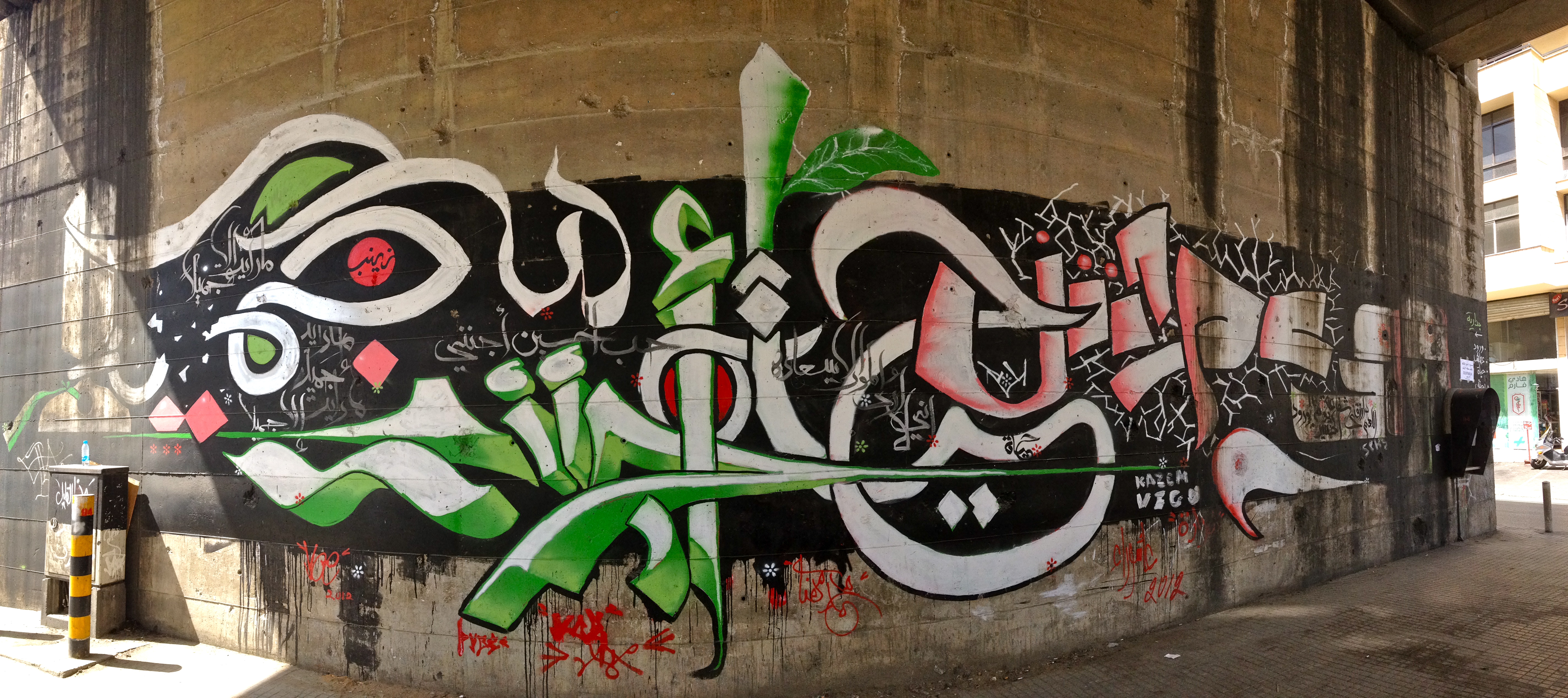
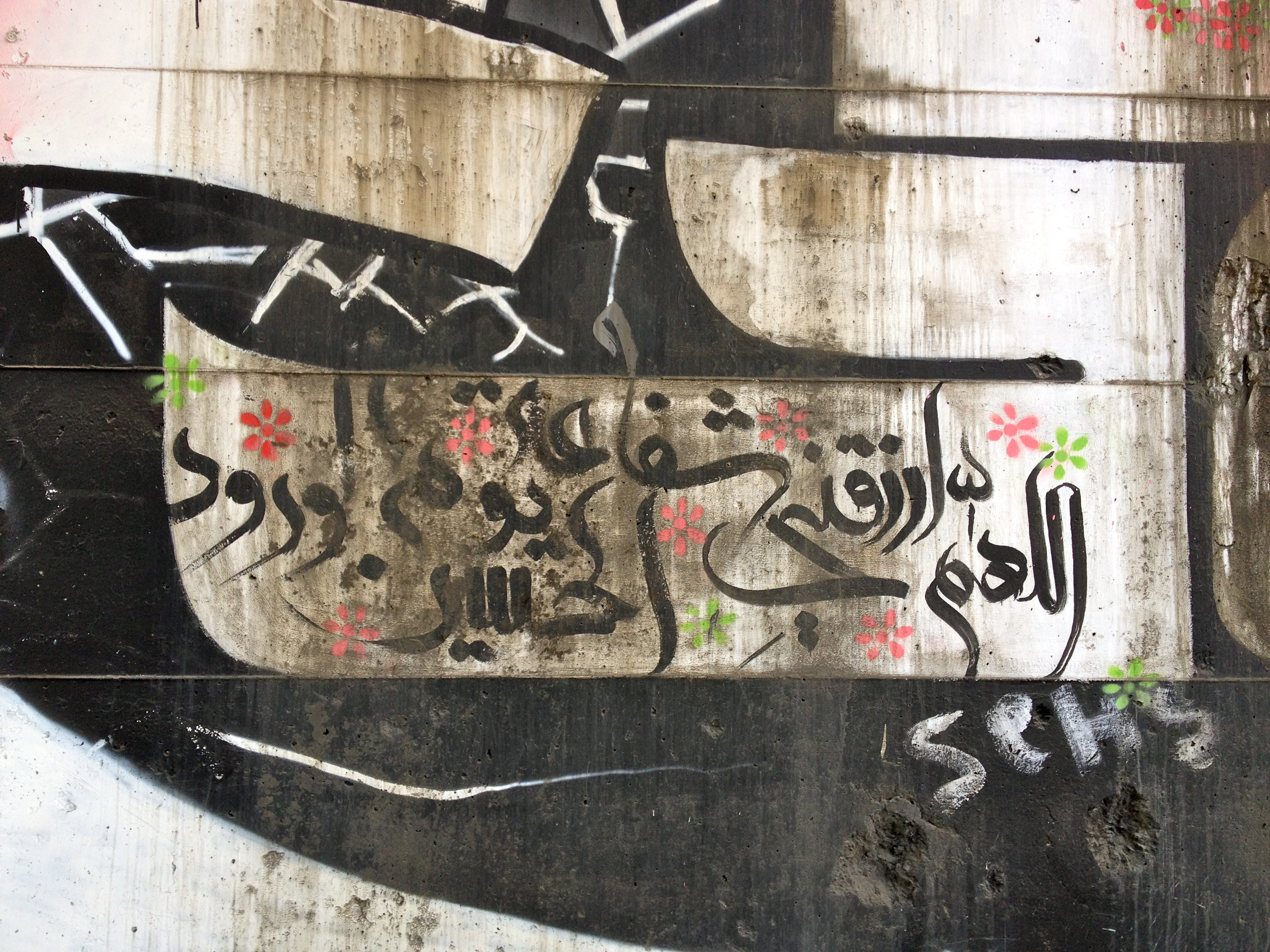
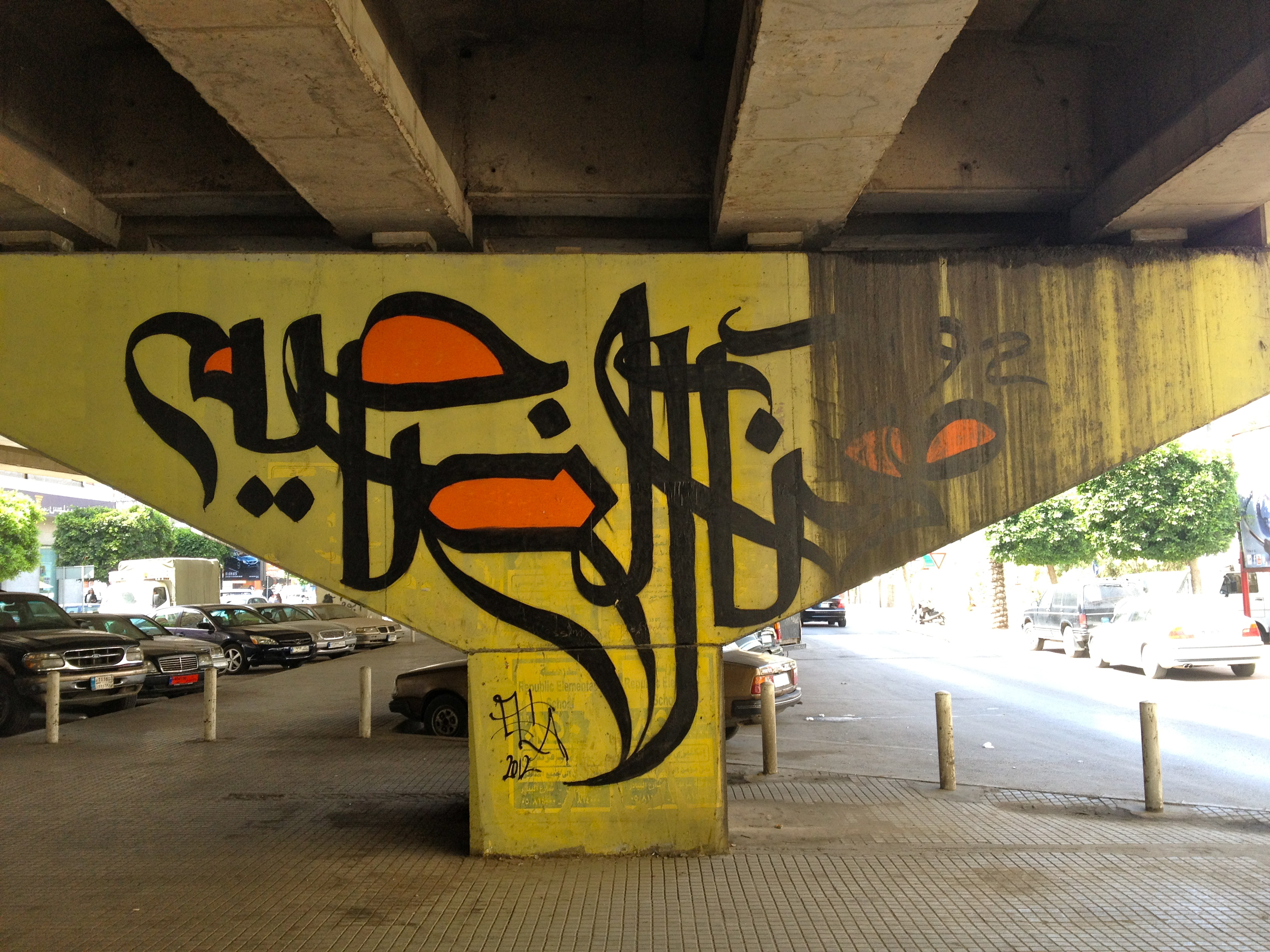
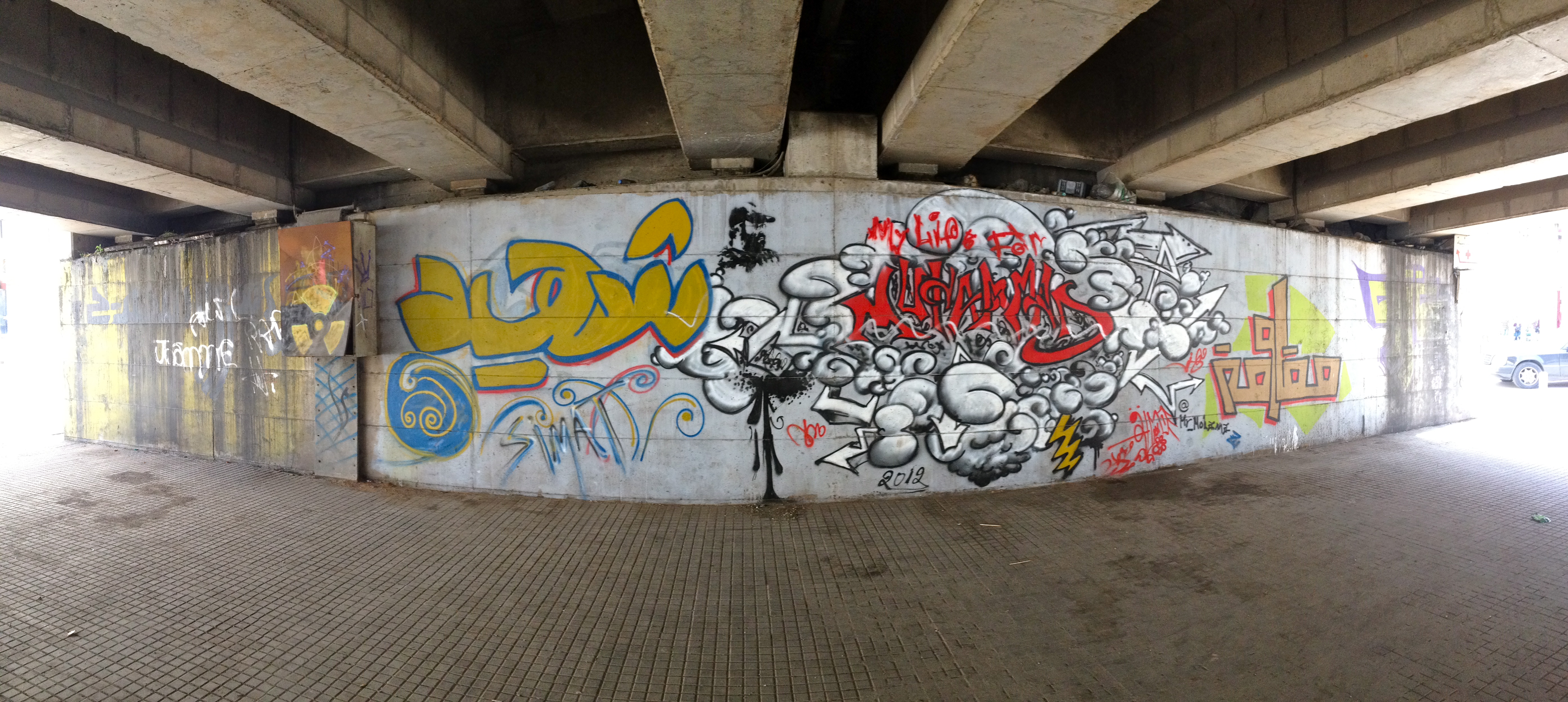
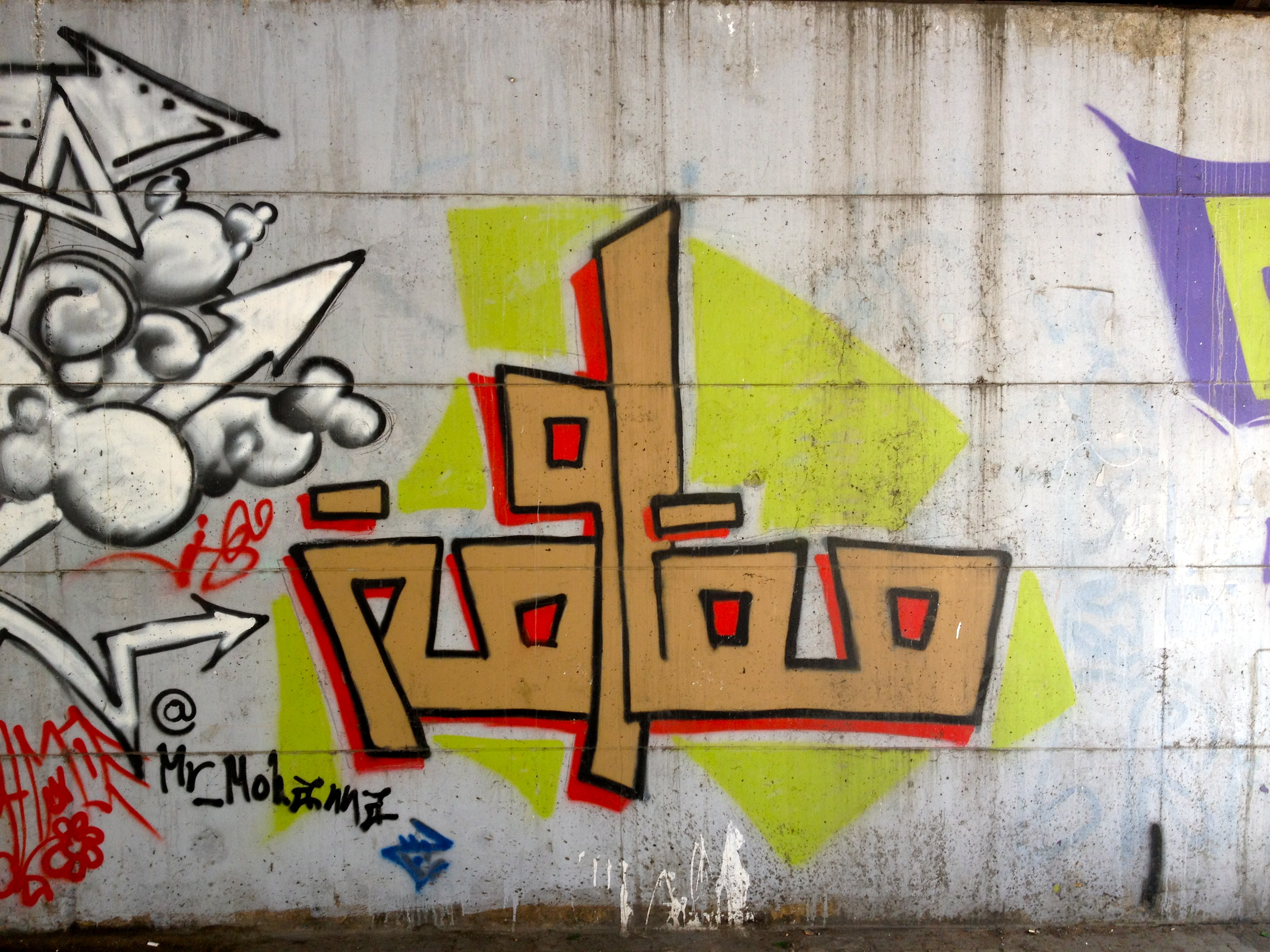
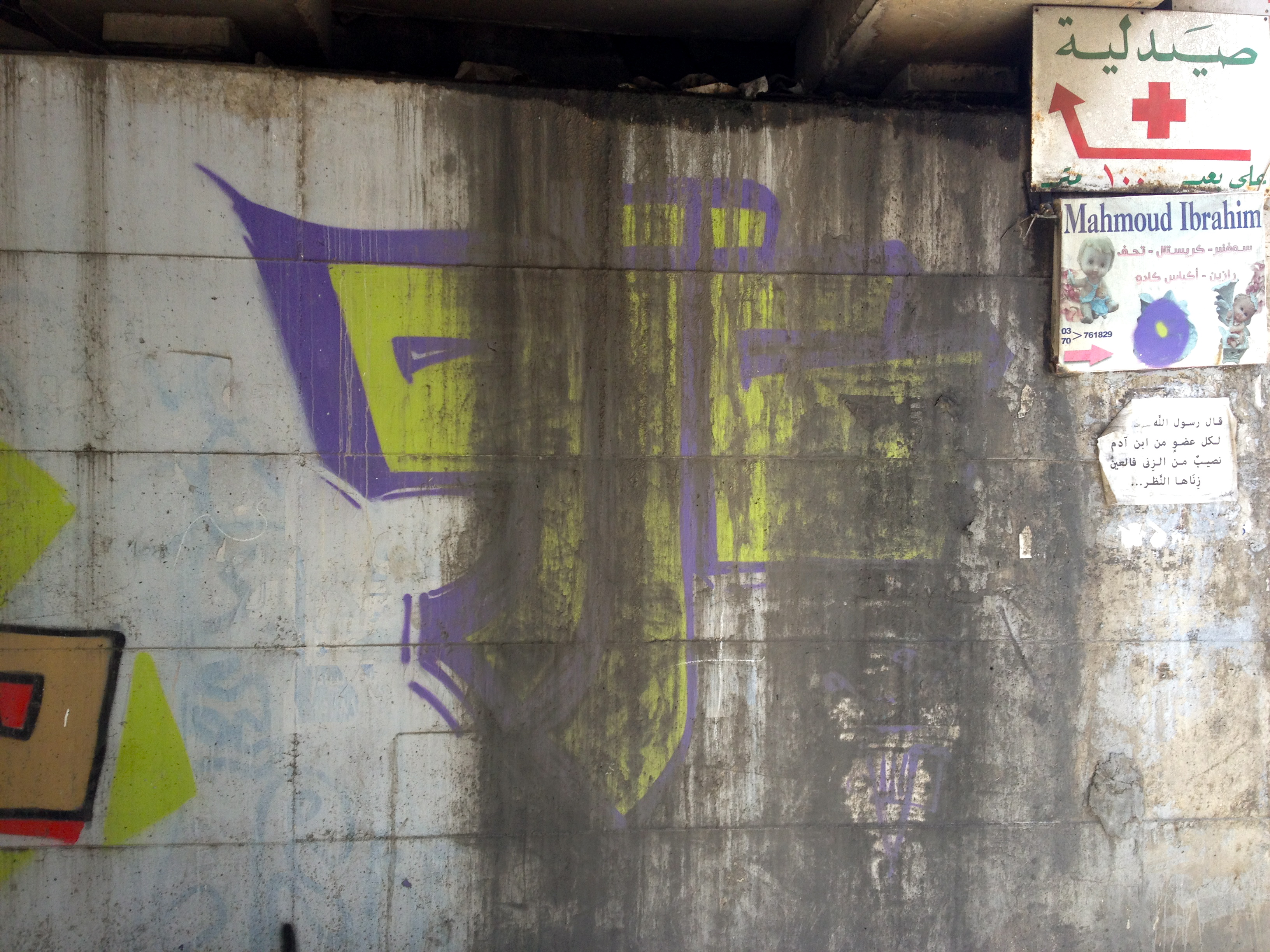
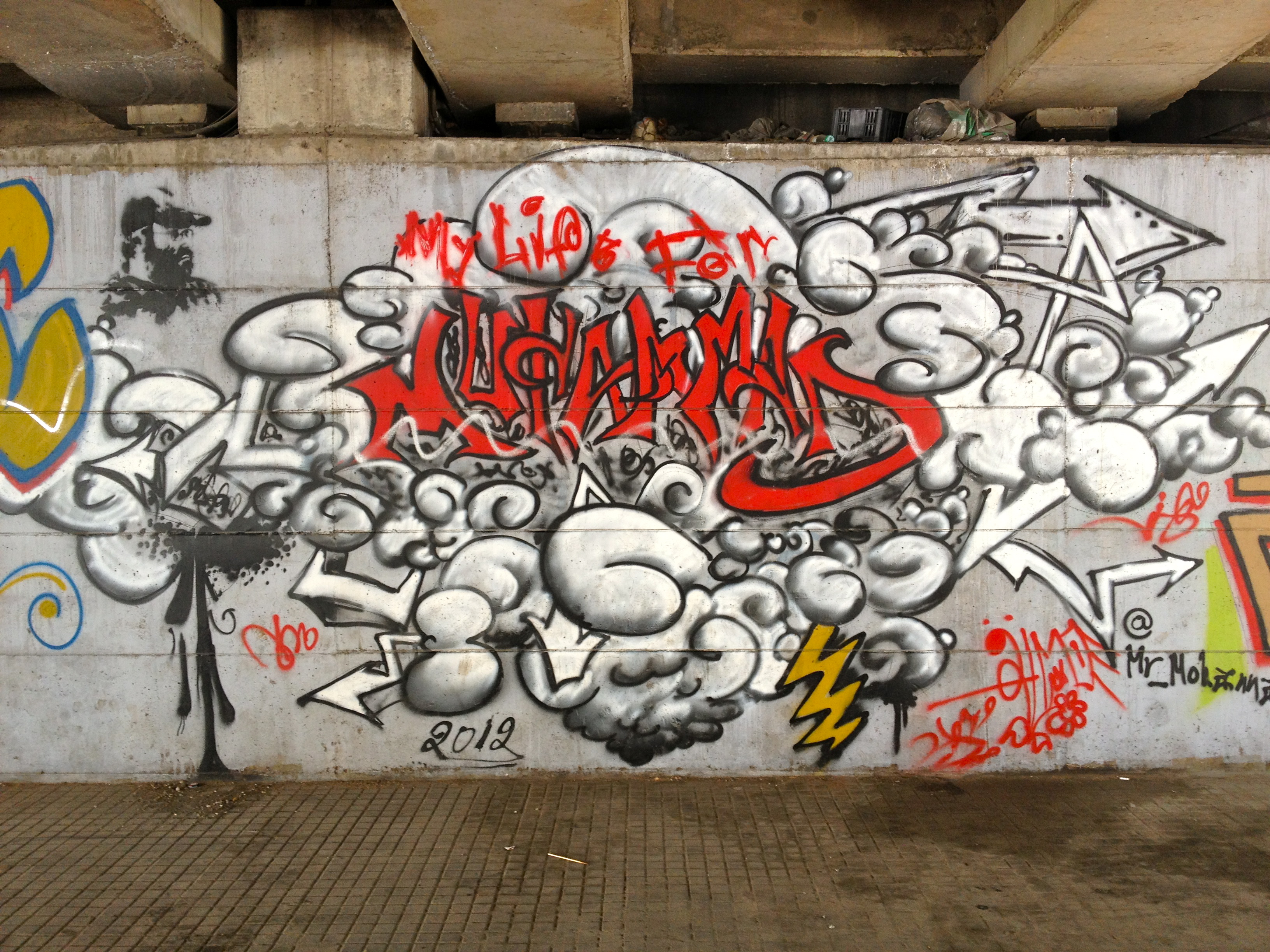
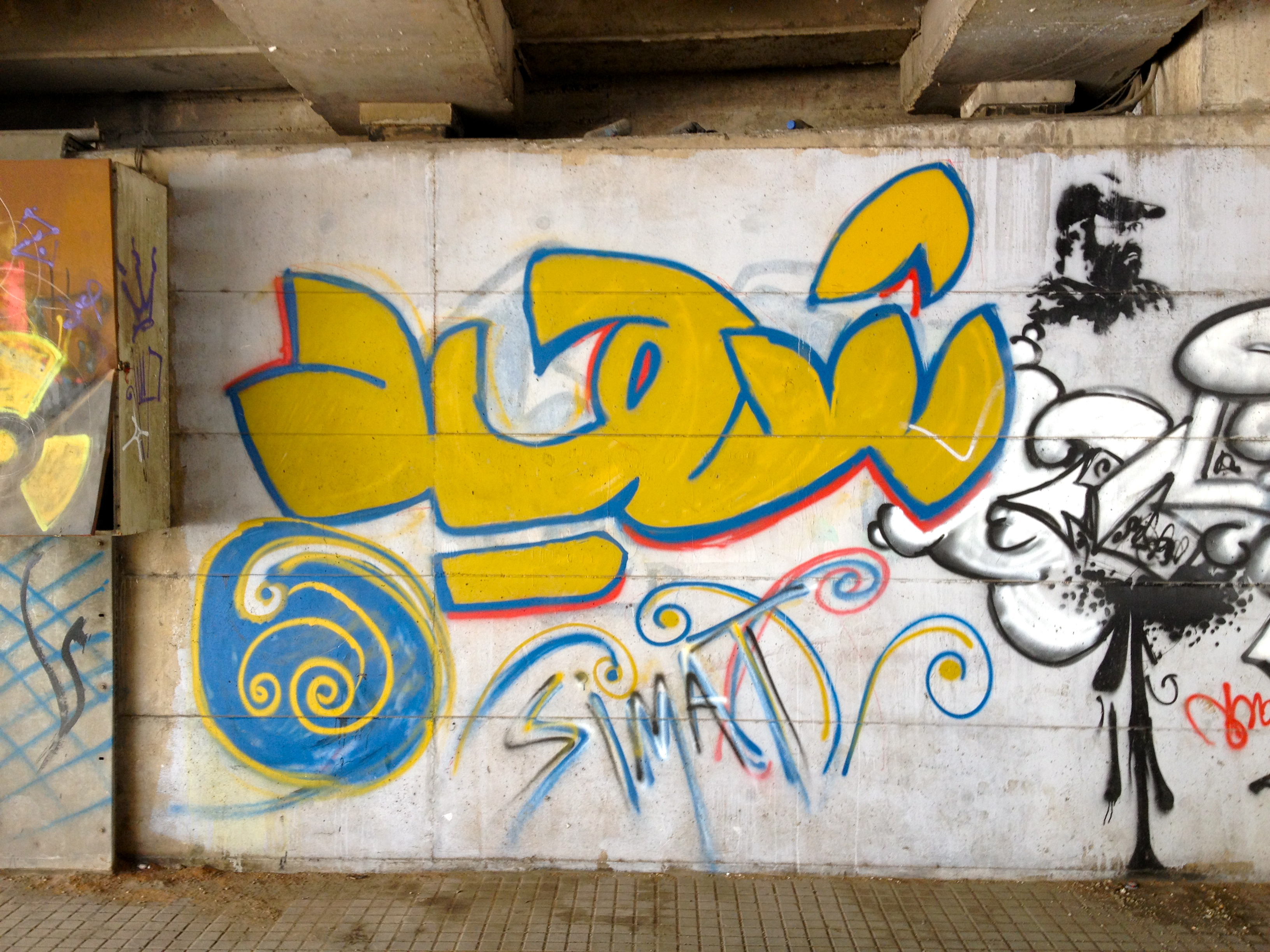
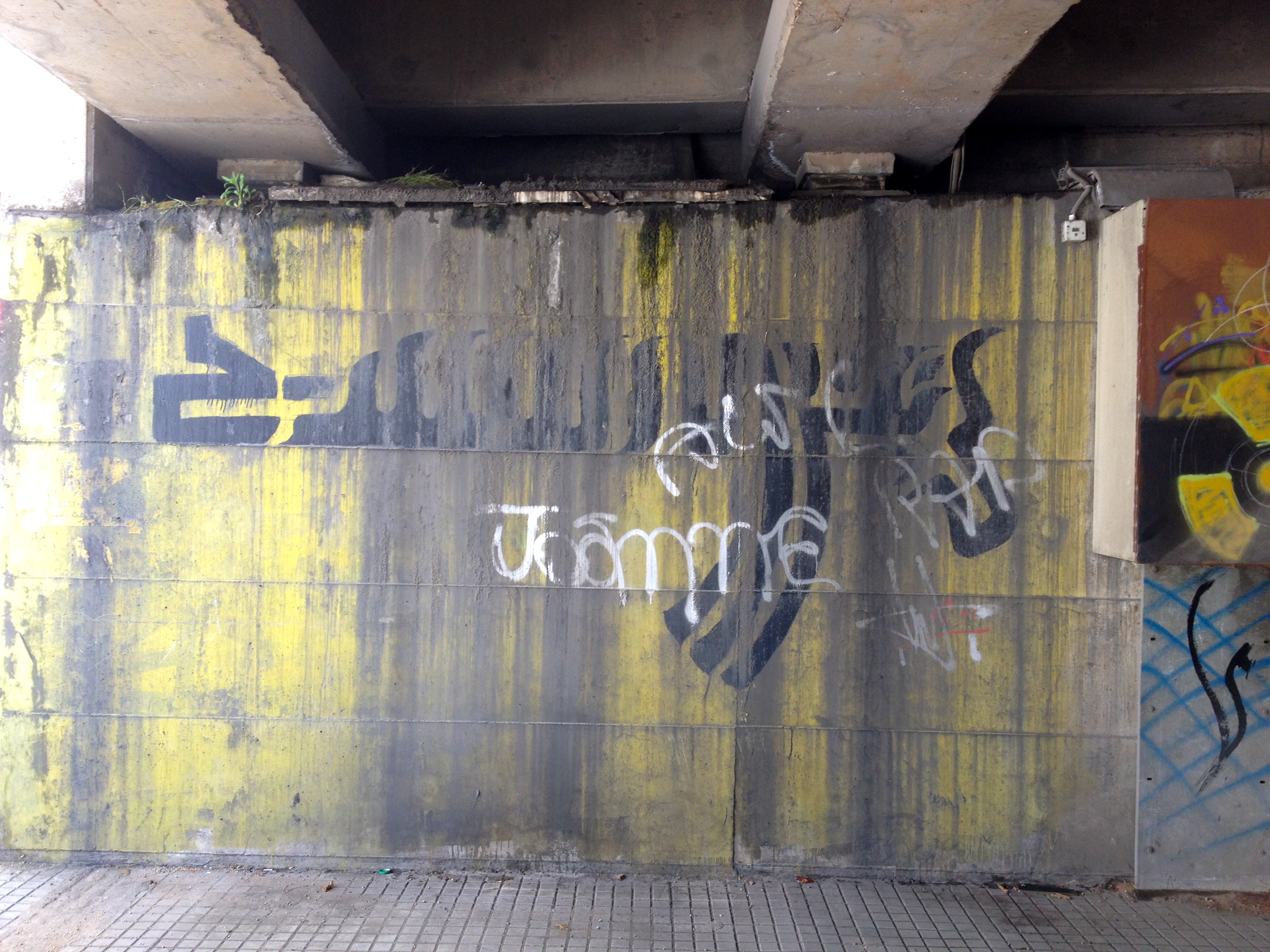
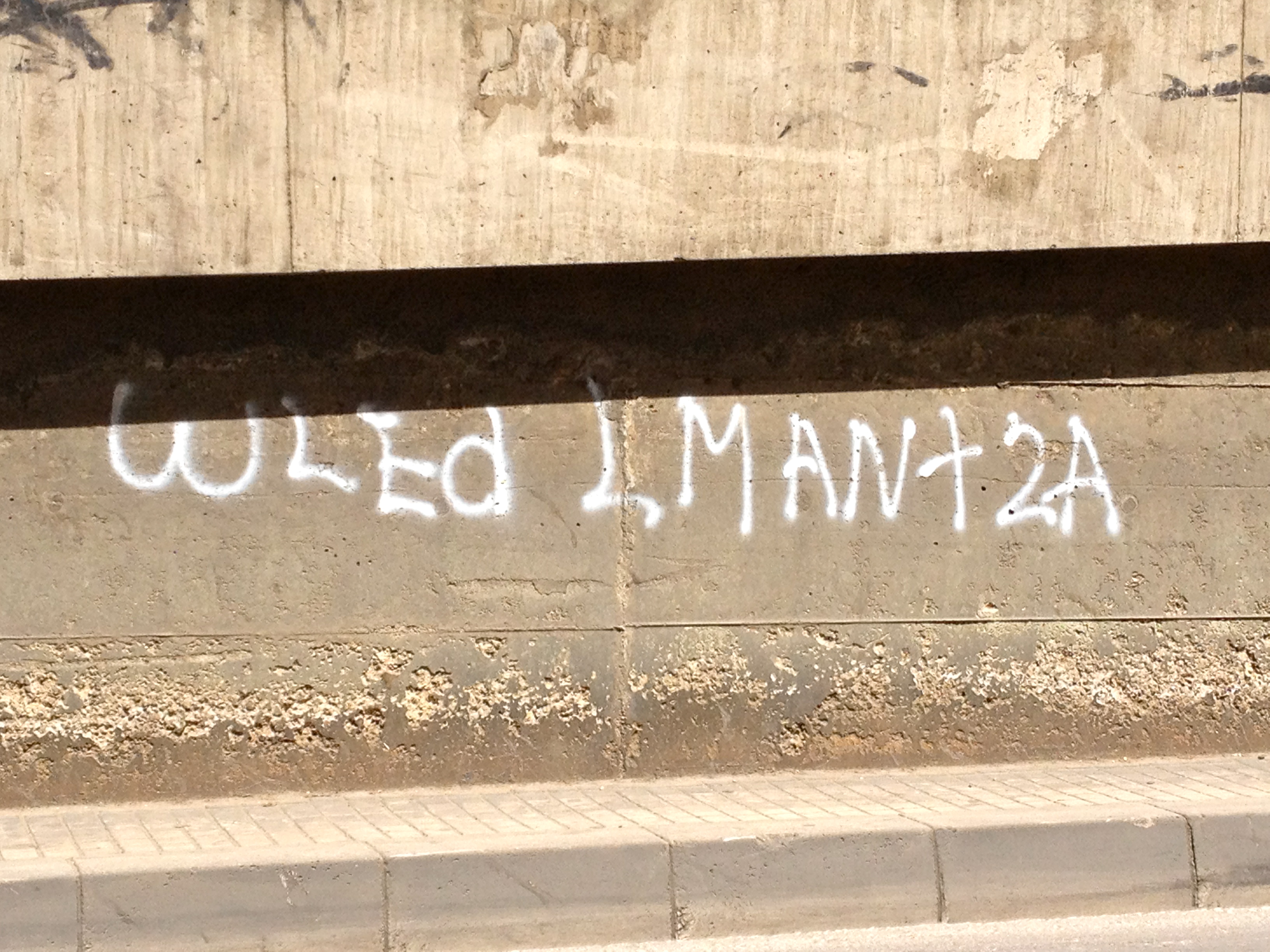
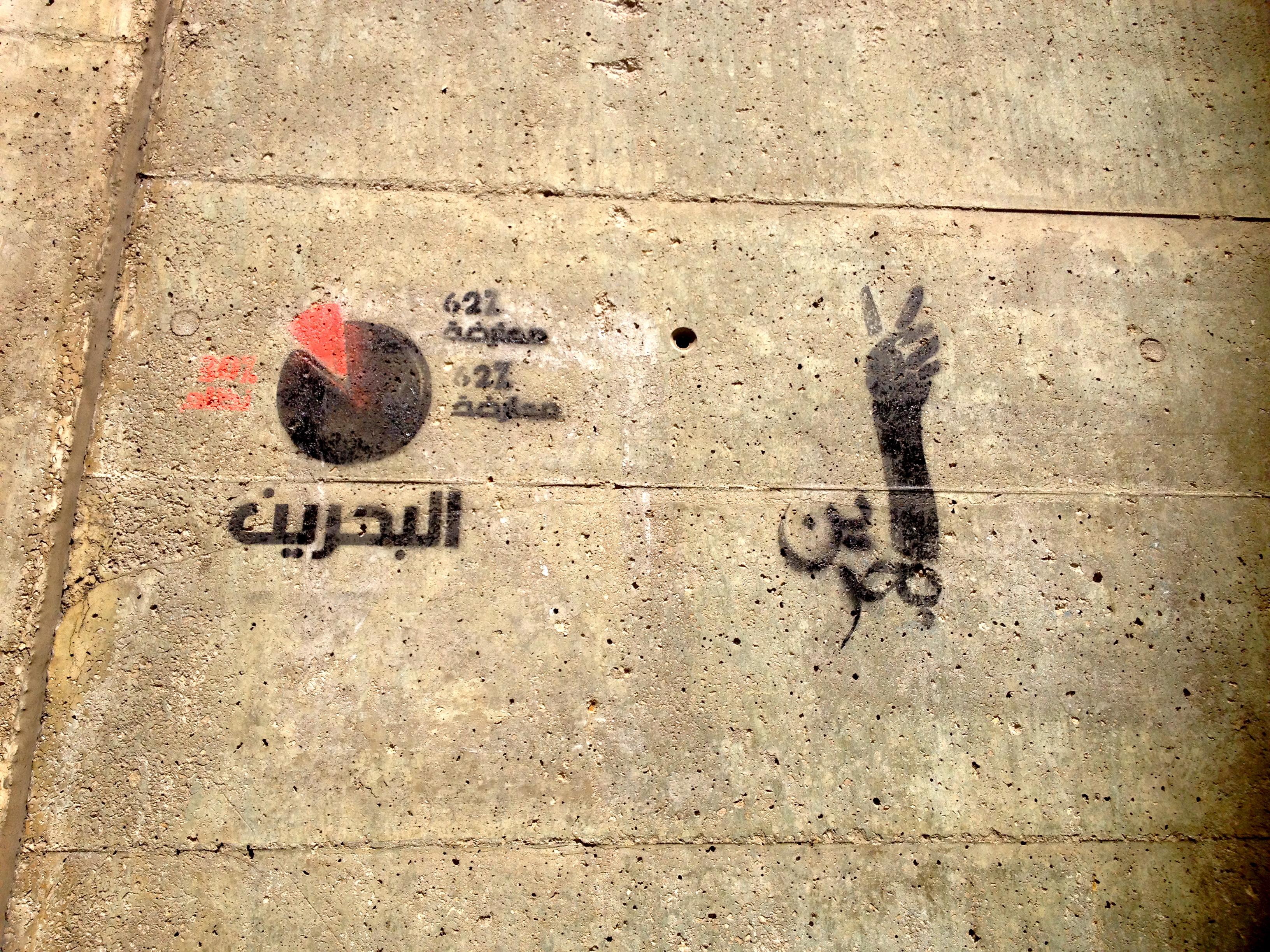
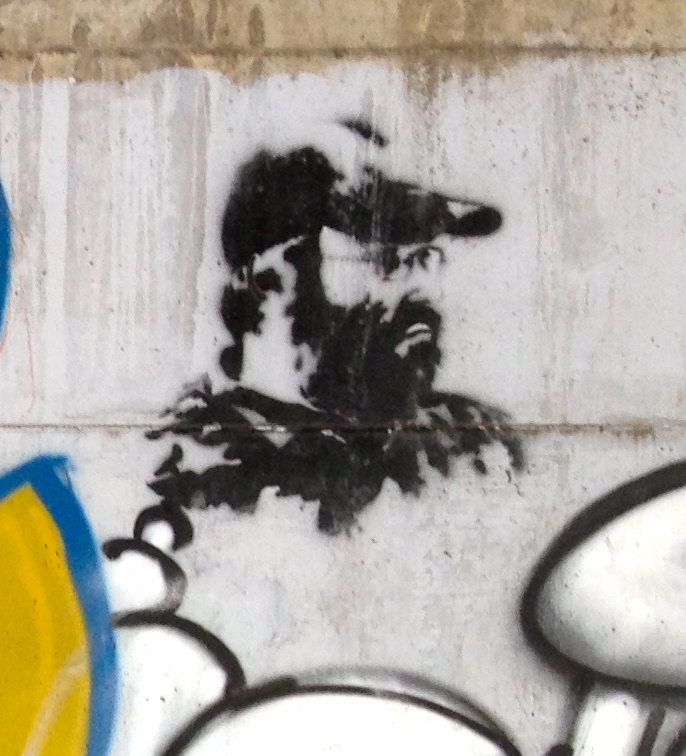
On the edge of Haret Hreik and the outskirts of Dahiyeh, there is a highway made up of a series of bridges that connects to Hazmieh. These bridges cut through the neighborhood of Sfeir. That is where there are a few hidden pieces of street art that most people don’t know about:
Believed to be a collection of names of Islamic figures
Details
“B’ismillah Irahman Iraheem” = “In the name of God, most gracious, most compassionate”
Panorama of a wall underneath one of the bridges
“Moukawama” = “resistance”
Water damage so it’s not very legible…any ideas?
Muhammad
“Shaheed” = “martyr”
“Lanatrok Alsilah” = “we will not surrender our arms/weapons”
Souraya Morayef, Egyptian blogger from Suzee in the City, has started a YouTube documentary series on street art in the Arab world. It’s being commissioned by the Museum of Contemporary Art, Los Angeles. There’s already 3 episodes up on MOCAtv, the Museum’s channel, featuring Egypt, Libya, and Palestine. Lebanon’s to be released next week!
HA. This is not about the economy. It’s about flying Economy. 3al Libnené.
Assuming that luck has not been on your side [ a) you were not upgraded b) there are lots of babies on board c) there are no empty seats near you d) you got no spare pillows and you’re caged in a non-window non-aisle seat surrounded by people with whom you share no common language], then let this be known: you are not alone in your struggle. Others have been there too.
Before boarding, you will have to say bye to your departure-team of peeps who will preach about the airport being a metaphor for life; people coming & going and there being a sacred bond between those you see around you saying goodbyes and others being reunited with those that were temporarily lost to them as they were suspended in the air. Yes, my team is my parents and it is all morbid and profound.
Immigration control at the Beirut Airport is like watching MBC dramas without subtitles – you can create your own stories. In the line for “foreigners”, travelers with non-Lebanese passports, there’s a bunch of dual-nationality Lebanese people with 3 purebred white Americans. Everyone in this line is wearing sneakers and there’s at least one guy with a fanny pack (banana hammock). Two very Arab looking men with no luggage, who you will automatically nickname The Osamas, will be discussing their kids’ Australian tuition while you wonder where they’re keeping all their travel gear. One Osama only has a neck cushion and the other is just wearing this military khaki vest. He opens said utility vest to reveal multiple pockets and you’re like “ohhhh, note to self, tell Air Marshal.” Another victim of the media’s effective brainwashing. Your racial profiling dudes who could basically be your own dad. The 3 legit foreigners turn out to be 1 French man who has no patience for this merde, and 2 Americans who happen to be from the same town. Or at least that’s what the guy said to get the girl talking, “NO WAY, Bayford Junction?” The Lebanese-passport line is a bunch of Pointure boots attached to entities with chronic bitchface.
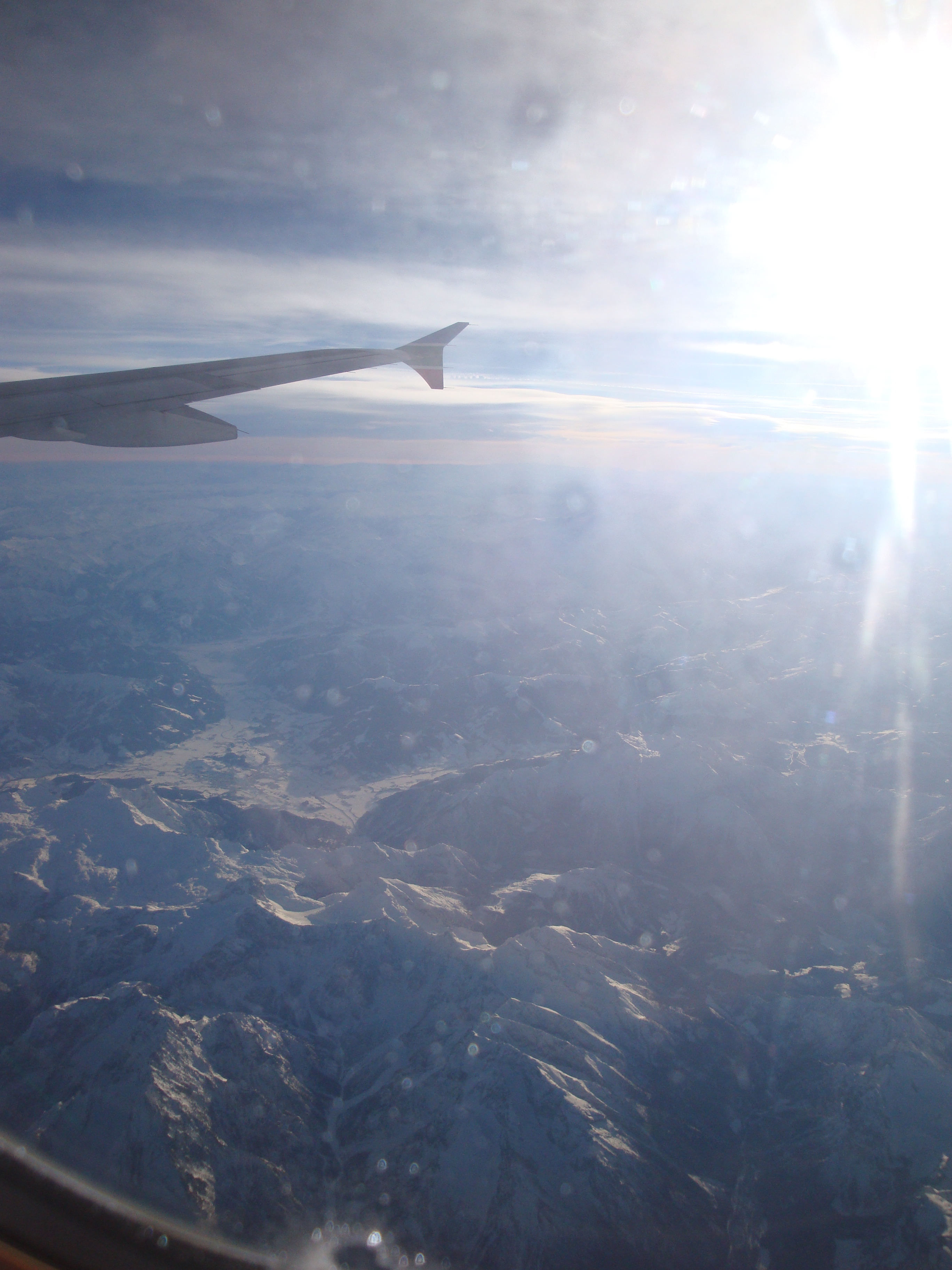
After being delayed because of some “mechanical issues” – oh, that’s comforting – you’re nice and snug in the seat that might as well be a glorified barstool. You’re in for a real treat; you can watch the plane take-off because they’ve got cameras installed on the belly of the aircraft. How nifty technology can be. These kids from Melbourne are bouncing around behind you with their adorable little accents that make a destination sound like an endangered species from down under. Or a house elf. “Mummay, are we going to stawp in the eyre above Aboo Dahby?” As it turns out, they’re watching the take-off too and no, you’re not eavesdropping because it’s Economy, everyone just has one big conversation. Since you’re taking off at midnight and the resolution is worse than a Skype call on dial-up, there’s not much to see but you stare at the runway lights that melt into stars.
“Look mum, it’s granddad.” “Yeah we’re a bit closer to him now.”
Oh, bloody hell now you’re tearing. Everyone’s a poet.
A selection of 97 movies with classics including Dial M for Murder, Roman Holiday, and a bunch of stuff from Bollywood- but you will scroll through them all, save one for later, and still manage to go “meh, I’ll just watch Friends again.” Just goes to show, people will never be satisfied.
What a cute menu! Oh you’re having the fish with a side salade Chinois, assorted cheeses & crackers, and mango cheesecake? Look, unless you’re in First Class, the chicken tastes like the fish and the fish tastes like the chicken, that other stuff is what they decorate entrees with in real restaurants, and you know that cheesecake came out of a can. BYOB: bring your own buffet. Just don’t pack it in the…
Carry-on in the overhead compartment. Because everyone placed the equivalent of a mid-sized sedan trunkful in your little designated spot, you had to jam your Swiss carry-on 5 rows down. Not only can you not get to your bag easily during the flight but you also have to wait for everyone to disembark the aircraft when you want to leave because no one is going to let you go backwards down the aisle when they want to GTFO. Sit tight because that bought you an extra 45 minutes in the same position.
Eight hours of pure nothingness pass. Time gets screwed when you’re up in the air. First, there’s “airplane eternity sleep”. Remember that time you woke up after a night out and you were like “LOL it’s 3 pm, so what’s for lunch?” It’s like that, only you didn’t sleep 14 hours, you’re still flying over India, and that armrest has nudged itself into your back again. Where’s that damn pillow? Then, the last 3 minutes of a flight are in microwave minutes: it’s just like when you’re heating up a plate of leftover Szechuan chicken and the last 15 seconds go slower than the first 120 just because appliances are secretly evil. You will trudge out in your sweatpants looking like you rolled out of a tapestry without the effortless sex appeal of Cleopatra. You’re a frumpy mess that’s 3 hairbrush-strokes away from Mufasa. You will search for a normal sized bathroom stall that doesn’t smell of humans and Detol. You will spend the next week possibly jet-lagged and groggy.
Some of you may recall a post from the beginning of this month that was about my weekend in the Beirut Digital District. Sari Awada, my fellow tweeter at the Beirut Service Jam, brought this video to my attention and I think it deserves a post all on its own. It’ll be interesting to see how this project comes together, no?
If you do live on your own, it’s most likely because you have no family in the country, you are a foreigner to begin with, or your parents are paying your rent/paid for the house you’re in/you camp on a rooftop. If you don’t fall into that category, you, like the majority of young professionals in Beirut, live with your parents because you can’t afford not to on an entry-level salary. And even if you could, there’s no point in blowing 70% of it renting a studio that’s 10 minutes away from your parents’, has half a bathroom, and smells like sewer cheese. That doesn’t exist, and yet, you know the smell.
Then there’s that whole morality live-alone-before-marriage-gasp-patriarchal-society bit but let’s just skip it and pretend we’re in the 21st century.
2- You live at home
As in you spend your weekends vegetating in front of your laptop or becoming the second layer of your living room’s couch. During the week, you work long hours, get stuck in traffic, and try to squeeze in some form of physical activity to combat office-slouch-fat. You live at home because you rarely ever want to leave again once you actually get there: your bed has never been your best friend until now – and not in a sexy way. Gone are the days that you would overnight endlessly, say “yes” to every outing, or even be conscious past 10:30pm on a Wednesday. You’re just too tired, too broke, and there’s a whole season of Boardwalk Empire to watch on a mountain of pillows.
“Sushi tonight at 10?” Yeah, I’m in bed already, it ain’t happening. *presses play*
3- You can’t explain what you do to your Teta
Because it’s just not important enough. Tetas only understand conventional job titles or anything that starts with “doctor.” Everything else leads to questions about whether or not you’ve met someone now that you’re done studying and have some form of employment to keep you busy while you spouse shop thus leading to them thinking…
4- Your next expected goal is marriage
The more you try to explain your job, the worse it gets. When you translate job titles from English to Arabic, they always sound more impressive because of the variety of word choice in the language. It leaves them deceived and then they figure “okay, you’re set up…what’s next?” You’re back to them wishing you to reach the next big “farha” (happiness) since you’re well on your way to being the next huge success = totally ready to play house and make babies. In reality, you watch goat parodies on YouTube while eating leftover cheese sticks in your Batman pjs. You wear gummy bear earrings for god’s sake.
5- You have a lunchbox
…packed by your mother. And you’re 27. Dude, come on, buy a cookbook and grow up.
Although shopping is a daily activity in the life of a Singaporean resident, the dress code remains very chilled and casual. Unlike London, Paris, and Beirut, Singapore did not strike me as a place where people were very concerned with their daily attire. It’s more like the States in that it is perfectly okay to go to the supermarket in your pajama bottoms, wife-beater, and flip flops – and that’s without it being your “look” like the ensemble was intentionally chosen. It may be difficult due to the weather.
To make this clearer, in Beirut, you have around 5 basic levels of attire based on where you’re going that increase in snazziness gradually: Home/Teta, Work/Hamra/Uruguay St, Gemmayzeh, Clubbing, and Wedding. When in SG, I did not go higher than Level 2.
2.) Rules
There are so many rules and laws in SG that I was missing the chaotic corruption of Beirut (I got over it). Gum to SG is what pot is to Amsterdam in that you can have it but you can’t import it. Most travel to Amsterdam because you can order hash like it’s a non-hash hashbrown – or is it? Not exactly the same thing with gum in SG. You are not going to travel to SG just to chew gum because a.) it’s gum b.) unlike Amsterdam’s pot, it is not sold in stores and c.) people will give you disgusted looks while you blow bubbles and chew like a camel. What can I say, I’m graceful.
Besides gum, the people are also pretty strict on each other. There are websites where people tattle on each other for doing god-awful things like murals…which were commissioned by their own government. Fail.
3.) Alcohol
Unless you stick to local beer and whatever you managed to bring in from the duty free, booze in SG will cost you. Don’t worry, there’s Ladies Nights and affordable supermarket wine. In Beirut, you can have a good bunch of drinks for under $50, enjoy happy hours galore, or just go to Ahla A’lam and drink alcohol straight up out of plastic turkish coffee cups – if you survive, you’ll have a hangover for 48 hours.
4.) Public Transportation
SG has a subway system. And public buses. And cabs. And merlions that take you to school when it’s raining. Okay, that one’s not true but I wouldn’t be surprised if that happened by next year since they’re development projects come to life so quickly. I love any city that has a functioning subway – and every time I remember that Beirut doesn’t have one, I cry. On the inside. Of my car.
5.) Greenery
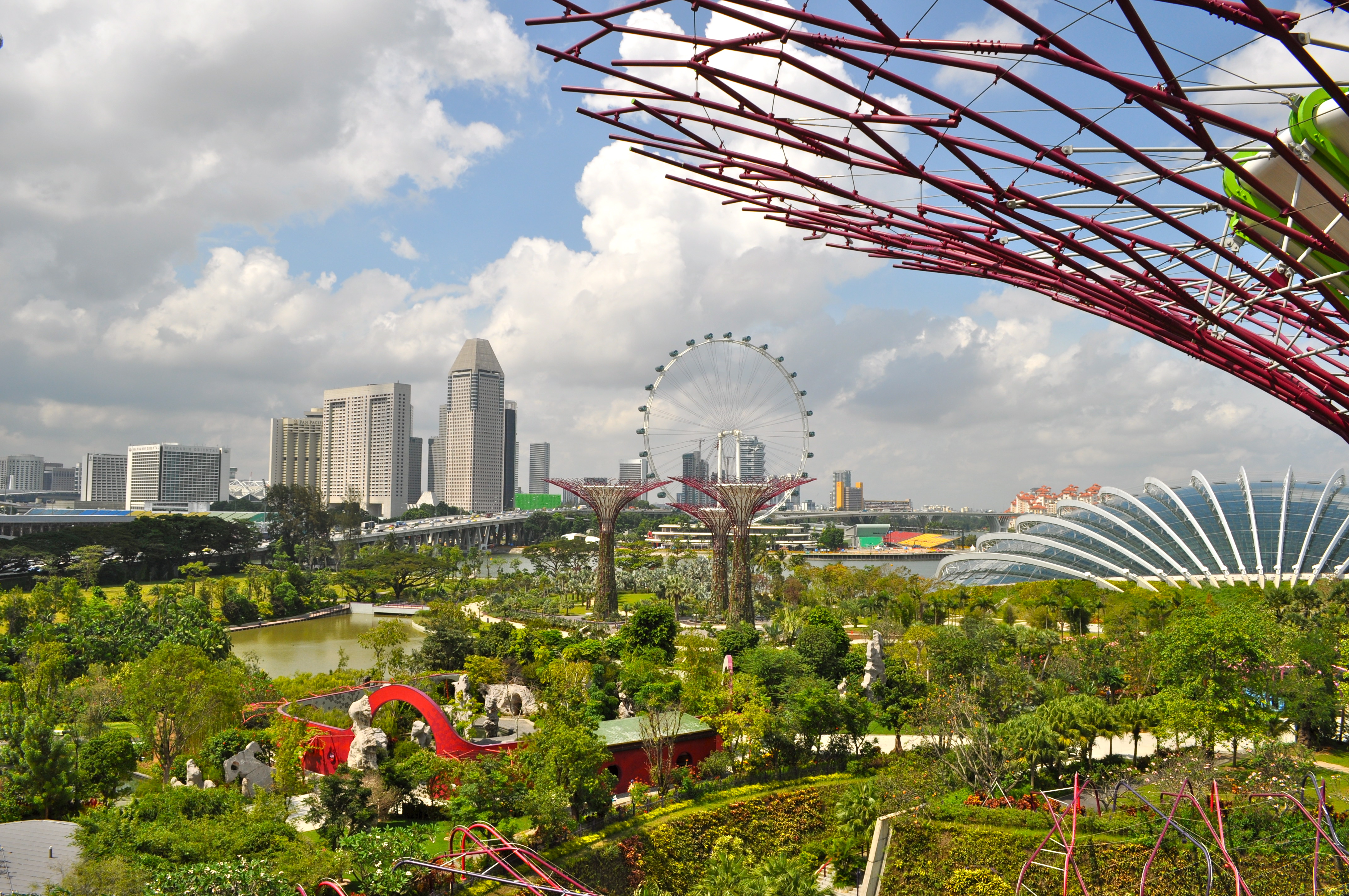
SG is actually a long lost jungle that happens to have roads and a metro. It’s not even a joke. You can be sitting having a club sandwich at a cafe in the middle of a rainforest except it’s not the Rainforest Cafe, you’re just in the middle of the Asian Amazon. Some of the most visited attractions are tributes to plantlife and flowers like the Gardens by the Bay and the Singapore Botanic Gardens. On the other hand, the greenest area in Beirut would be the AUB campus or the ABC parking lot at 9 am. Yes, I mean the parking sensors.
SIMILARITIES
1.) Rooftop Bars
Perhaps because the central district has such a great view, SG rooftop bars are popular but not practical. Unpredictable rain doesn’t help outdoor terraces but the drizzle doesn’t stop anyone from taking it all in anyway. Without mentioning music preferences and ambiance, the better weather and cheaper alcohol may put Beirut ahead of SG in this category.
2.) Religious Melting Pot
Pagodas and Hindu temples are the equivalent to Beirut’s collection of churches and mosques. Buddhism, Christianity, Hinduism, Islam – there’s a whole mix of sects too. Sound familiar? Yay, three cheers for coexistence!
3.) Actual Melting Pot
Food tourism is a big similarity. In SG, you have the choice to eat from all kinds of Asian cuisine: Thai, Indonesian, Chinese, Malay, Japanese, Indian – there’s even a large selection of Western chains including California Pizza Kitchen and The Cut by Wolfgang Puck. If you’re not too adventurous, you can have the Teppanyaki Chicken Sandwich from McDonald’s – just a small dose of Asian on top of a chicken burger you’re used to. Beirut has the same array of food to choose from with a complete set of Mediterranean deliciousness. No CPK or Puck here yet, but we do have Gaucho and Le Relais de l’Entrecote. Even Asian is taking over in a not-just-sushi-way; however, I still would prefer a whole bowl of tabbouli over a wok of stir-fry. Represent.
4.) Compared to Dubai
Much like Beirut, Singapore has been compared to the city of Dubai except that their comparison is more accurate. Singapore went from an infertile island with no natural resources into a “highly developed Asian megalopolis”; a lot like the city that rose from the sands in the Emirates. A colleague of mine once said that if you visit Dubai, the skyline looks as if someone copied the outline of Singapore and pasted it in the Arab world. Regardless of how true that is, both have been artificially constructed to some extent – how much? I can’t say for I have yet to go to Dubai.
5.) Size Doesn’t Matter
Singapore and Beirut are both ridiculously tiny but that just goes to show that kilometers are just numbers; it’s how you use them that makes all the difference.
A new project titled “A Little Wonderland” is kicking off this Friday. The project, a collaborative effort between the “Geitawi On My Mind 2013” Festival, Paint Up’s Dihzahyners and Dispatch Beirut, will revolve around renovating an old home in the residential area of Ashrafieh. The team starts their work on the 8th- preparing it and creating the clean slate that will be open to public volunteers on March 22nd.
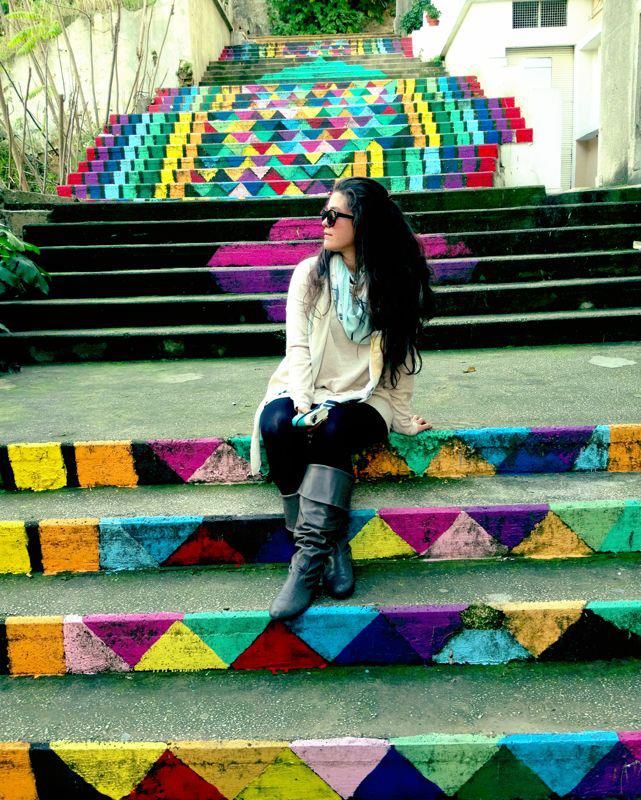
Lana Chukri, LAU Graphic Design graduate, is founder of Paint-Up, a group of proactive designers and artists on a mission to add color to Beirut. She recently gave a goosebump-inducing talk at TEDxLAU. Paint-Up are the ones to thank for all the snazzy staircases around the city.
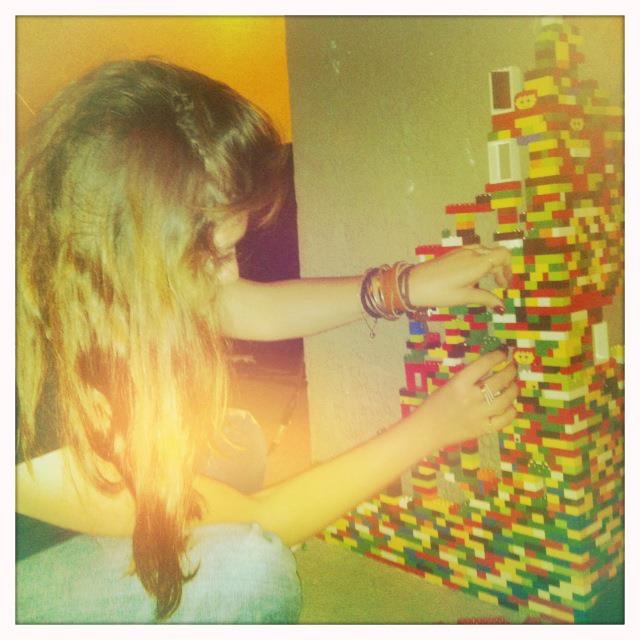
Pamela Haydamous, AUB Landscaping Design graduate, founded Dispatch Beirut, the Beirut chapter of Jan Vormann’s idea of restoring a city using Legos.
Here’s an example of one of Dispatch’s projects last November:
To find out more about the Wonderland event, I contacted these two very inspiring young ladies – I’m lucky enough to call them my friends – to ask what this project is about. I also wanted to share some of their thoughts because they are perfect examples of how you can make a difference in your surroundings; all you have to do is try.
1.) What was the inspiration for the “A Little Wonderland” project?
LC: I feel we were inspired by the space itself – it seemed a perfect fit to recreate this home-like world and feel by bringing it back to life somehow. “A Little Wonderland” was just a descriptive way to package what wonder we felt this small forgotten space has and will have more of once we add our touch!
PH: Being in the space on a Sunday afternoon, we all felt a tiny breeze of memories, as if literally this house could open it’s door and an old lady would greet us with a cup of coffee. The inspiration for this project goes beyond only this space and house; it is a message to preserve the spirit of Beirut, which we all feel is slipping away right in front of our eyes. I know it’s a bit too poetic but seeing spaces like these being torn down to make way for lifeless skyscrapers is just too sad.
2.) Is there a design plan for the house or is it going to be a “blank canvas” where all volunteers can go wild?
LC: There is actually a design plan that the Crew have discussed thoroughly over the past few weeks and planned for. I feel the end product will speak for itself but the concept of the house is to revive it, bring some life to it, give it that essence – that it hasn’t been forgotten after all. That’s all I’m going to reveal for now!
PH: The design plan, as Lana said, is already set, but I’m sure there’s always room for the volunteers to leave their creative touches.
3.) Will the historic significance of Ashrafieh architecture be retained/emphasized in some way?
LC: I think the architecture is apparent and we aren’t changing it except to dress it in a brighter and more beautiful way. So yes, the elements of it will remain and we are staying true to the surroundings and build of the venue, the style and feel of it as well – but with our touches, of course, and little added things that will make it complete.
PH: The architecture in the house is its main attraction and the key rationale behind the project. We’re very keen on preserving it, it’s just getting the mini uplift that does it justice.
4.) What is to be of the house once it is completed?
LC: We will have to leave that up to nature, time, and whatever comes after we leave our mark on it. Let it inspire others, make someone smile, feel warmth, want to pull out a chair and have a nice afternoon outside it – who knows?!
PH: We really hope that the end product just sends happy vibes, a rush of memories; ideally motivates other people to follow the lead and preserve the few heritage spots we have left.
5.) You are currently working a full-time job while simultaneously handling the Paint-Up/Dispatch initiatives. How important are side-projects in one’s professional life?
LC: Having side-projects aren’t only important, they’re absolutely vital and necessary for every individual – designer or otherwise. We live in a day and age now where everything has been seen, done, experienced, everything’s mainstream and what’s new today is old tomorrow. Keep your day job for the experience and growth and patience it teaches you – and the income and financial independence. But keep your passions, your projects, and initiatives for yourself and the rest of the world – because it’s in those things that you truly reap the benefits of seeing your dreams come to life! I could go on forever about this because I am a workaholic in the office – so I’ll keep it short. Your side projects are what fuel your soul and your heart, and only through first-handedly inspiring others can you really stay inspired yourself.
PH: Wow! Side projects are where you really put yourself out there. You dare to be different and show the world that a little thought or initiative can really go a long way. As Lana said, we really live in a day and age where everything is so five minutes ago. The difference is where you actually take the idea to, how you recreate it as your own, and adapt it to your needs and your surroundings. Keeping a day job that feeds into your passion is definitely the best you can do- it shapes your thoughts, dreams and stretches your passion to its limits. Two things that I think are important here are:
1. The minute you feel too comfortable in your little bubble (that is your daily job, routine, friends and family) then you’re on the wrong track.
2. Always have a critic’s eye and always let your passion scare you to the point where you actually do something about it.
6.) What are the hurdles that you face when starting a new project and how do you tackle them?
LC: People, society, criticism, jealousy, and, in Beirut, public humiliation. If people don’t like what you do they’ll make it clear you fail or make sure you have hard time realizing your potential. But you have to kill the criticism with kindness. They show you disregard or hate, show them consideration and love tenfold – then they’ll truly stand by your side in your time of need. In return, you would’ve really moved someone and changed their life and perspective!
PH: When it comes to Dispatch Beirut, we faced quite a few issues mainly in communicating our idea and making other people believe in it as much as we do. It all started as our way to express our critical point of view towards the city, as we love to see it at its best. Our installations consist of building and restructuring broken walls, facades, mainly “rebuilding Beirut” bottom up. So it was a tough task to get permits and all the legal documents. We faced a few issues with the ISF and a few locals, who had dismantled a few of our installations. But we believe that when our installations are placed in the public realm, then any reaction from the public is just other people’s way of expressing their ideas and thoughts too. Democracy at its best!
7.) What’s your advice to young people looking to add a little spark to their life?
LC: If you have an idea, a passion, a dream, just really get out there and try it in any way possible – don’t think about money, power, fame, or all the rest of the pretentiousness that people waste their time and energy on. Inspire others. Write, draw, run, paint, build, share everything with the world that you possibly can – and do not, in any way be scared of rejection. Wear your heart on your sleeve. And get off YouTube and 9Gag and these crappy televised things that don’t give you any form of knowledge, drive, and inspiration! Watch great films, read great books, travel, browse blogs, and animations that are inspirational, create a blog yourself, go to exhibitions and events and get exposed and only then will feel that surge of excitement to expose others to your own passions too! Lastly, exhaust yourself. And be happy and fulfilled doing it because you’re only young once. Right here, right now is your time!
PH: A trick that always inspires me is to try something new, a new road to work, a new alleyway to get lost in, new music, new people… It’s crazy what exploring new options can do to your brain. And the second you are able to close your eyes and imagine your idea come to life; that’s your cue to go ahead and make it happen. It might turn out to be the worst idea in the world and still you would feel satisfied enough that you tried it out. Pick up from there, explore other options and keep trying until you get it just right. Most of all, stay on the lookout for inspiration anywhere around you, always carry a little sketchbook to jot down or draw ideas (or you would end up having a pile of diner napkins fully scribbled on just like me) and always believe that only you can make your dreams come to life.




 Bambi's Soapbox